Learn who invented the IQ test, who first introduced the IQ concept, how ratio IQ differed from deviation IQ, and how intelligence testing evolved into modern CHC-based assessment.
1 Who Invented the IQ Test? Alfred Binet and Theodore Simon (1905)
Updated April 4, 2026 by Structural. The history of IQ testing is not one single invention story. It is a chain of linked ideas: Binet and Simon created the first practical test, William Stern introduced the intelligence quotient concept, Terman popularized IQ scoring in the Stanford-Binet, and Wechsler later replaced ratio IQ with deviation IQ.
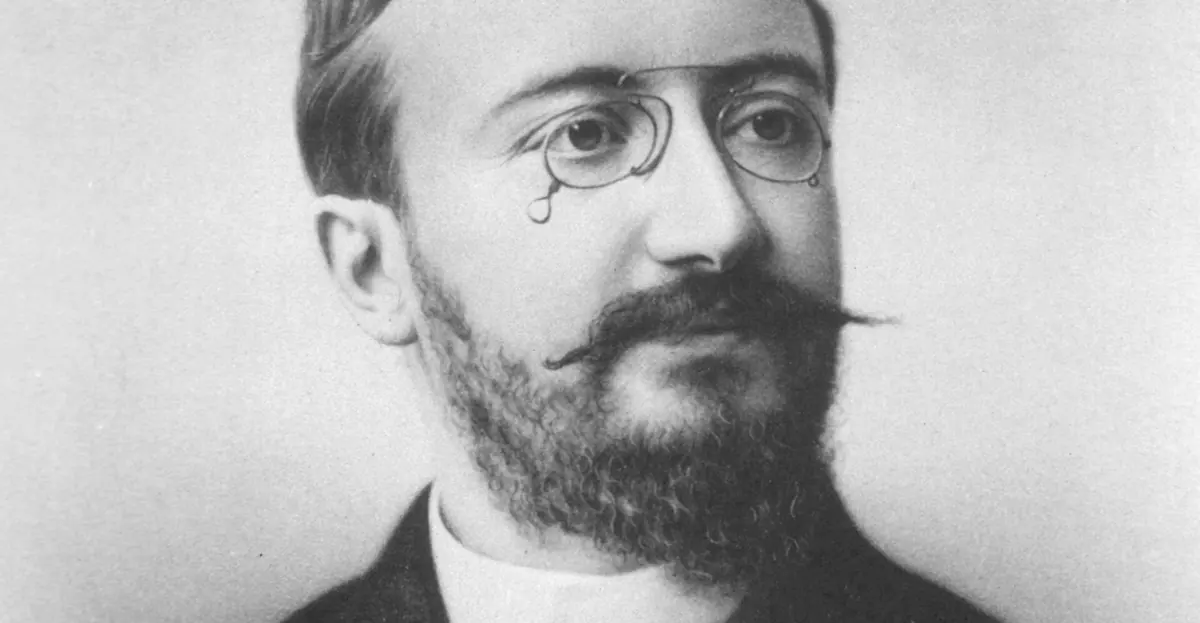
The first practical IQ test was developed by Alfred Binet and Theodore Simon in Paris in 1905. Their goal was not to rank human worth, but to identify schoolchildren who needed extra educational support.
The story of IQ testing begins in Paris, 1905, when Binet and Simon were commissioned by the French Ministry of Education to develop a method for identifying children who needed educational assistance.
At the time, thousands of children were struggling in the newly mandated public schools, but there was no objective way to determine who needed special help versus who simply wasn't trying. Binet's innovation was creating a standardized series of tasks - arranged in order of difficulty - to measure cognitive abilities independently of schooling or social class.
The original Binet-Simon Scale (1905) included 30 tasks of increasing difficulty, from following a moving object with the eyes to defining abstract concepts. Binet introduced the revolutionary concept of "mental age" - comparing a child's performance to what was typical for different age groups.
Crucially, Binet explicitly warned against misusing his test. He viewed intelligence as malleable, not fixed, and designed his test for a specific educational purpose - identifying children who could benefit from additional instruction. He wrote: "With practice, training, and above all method, we manage to increase our attention, our memory, our judgment, and literally to become more intelligent than we were before."
2 The Stanford-Binet, William Stern, and Ratio IQ (1912-1916)
Lewis Terman of Stanford University brought Binet's test to America, substantially revising and extending it. But the concept of IQ itself is usually credited to German psychologist William Stern, who proposed the intelligence quotient formula before Terman popularized it in the Stanford-Binet. This distinction matters because many people ask who invented the IQ test when they really mean who introduced the IQ idea. Ratio scoring collapses once mental growth levels off, which is the historical reason adult IQ testing needs its own norms instead of a formula that divides one age by another.
The Napoleon IQ review illustrates how an early historical rating project applied numerical estimates to a person who predated modern intelligence testing.
IQ = (Mental Age / Chronological Age) x 100
A 10-year-old performing like an average 12-year-old would have an IQ of 120 ((12 / 10) x 100). This ratio IQ method worked reasonably well for children but proved problematic for adults, since mental development does not continue linearly into adulthood. That problem eventually set the stage for Wechsler's deviation IQ revolution.
Terman's version was more extensive than Binet's, standardized on American children, and included detailed administration and scoring procedures. It became the gold standard for intelligence testing for decades. The Stanford-Binet went through multiple revisions (1937, 1960, 1986, 2003) and remains in clinical use today as the Stanford-Binet 5.
Terman also initiated the famous "Terman Study of the Gifted" (1921), which tracked over 1,500 high-IQ children throughout their lives - one of the longest-running longitudinal studies in psychology, continuing until 2010. That study is also what undid the vocabulary of the era, because the classification row that placed genius above 140 sat on page 79 of Terman's own 1916 manual, and thirty five years of following those children argued against the label he had printed.
3 World War I: Intelligence Testing Goes Mass Scale
World War I marked a turning point, demonstrating that intelligence tests could be administered to large groups efficiently. Psychologist Robert Yerkes led the development of the Army Alpha and Army Beta tests, which screened over 1.7 million military recruits between 1917-1919. That split between group screening and individual examination still shapes where to take an IQ test today, since diagnosis, accommodations and legal reports all require the individually administered route.
Army Alpha: A written test for literate English speakers, including verbal analogies, number series, and following directions.
Army Beta: A non-verbal test for illiterate recruits or non-English speakers, using picture completion, digit-symbol coding, and maze tracing.
These tests were used to assign recruits to appropriate positions and identify officer candidates. While revolutionary in scale, they were later criticized for cultural bias and misinterpretation of results (some researchers drew questionable conclusions about group differences without adequate consideration of educational and environmental factors).
Nevertheless, the Army testing program established intelligence testing as a practical, large-scale assessment tool and trained a generation of psychologists in test administration. Many of these psychologists went on to develop civilian tests after the war.
4 Spearman and the Discovery of g (1904-1927)
Charles Spearman, a British psychologist, made perhaps the most fundamental theoretical contribution to intelligence research. In 1904, he published his discovery of the general factor of intelligence (g). His work is still cited in modern research; see Schmidt & Hunter (1998) for meta-analytic validation of g's predictive validity.
Using a statistical technique he developed called factor analysis, Spearman observed that people who performed well on one cognitive test tended to perform well on most others. He called this pattern the "positive manifold" and proposed that it reflected a single underlying ability - g - that influenced all cognitive tasks.
Spearman's "two-factor theory" proposed that performance on any cognitive task reflects both:
g: General intelligence, common to all mental tests
s: Specific abilities unique to particular tasks
This discovery of g remains one of the most replicated findings in all of psychology. The existence of a general factor has been confirmed in hundreds of studies across cultures and continues to structure how we think about cognitive abilities.
5 Wechsler's Revolution and Deviation IQ (1939-1955)
David Wechsler, chief psychologist at Bellevue Hospital in New York, transformed intelligence testing with a series of innovations that still define modern tests:
The Wechsler-Bellevue Intelligence Scale 1939
The first adult intelligence test designed from the ground up (not adapted from a children's test). It introduced the dual-scale structure with Verbal and Performance components.
WAIS - Wechsler Adult Intelligence Scale 1955
Revised and standardized version for adults aged 16-64. Now in its fifth edition (WAIS-V, 2024), it remains the most widely used individual intelligence test for adults worldwide.
WISC - Wechsler Intelligence Scale for Children 1949
Adapted from the adult test for children aged 6-16. Now in its fifth edition (WISC-V, 2014), it's the most commonly used intelligence test for school-age children.
Wechsler's key innovations included:
Deviation IQ: Replaced ratio IQ with standardized scores based on age norms (mean 100, SD 15), making adult testing meaningful and scores directly comparable within age groups.
Performance Scale: Added non-verbal visual-construction and picture-completion tasks alongside verbal measures, providing a more complete cognitive profile.
Subtest Analysis: Enabled examination of cognitive strengths and weaknesses, not just an overall score.
Standardization: Careful norming on representative samples with detailed age-stratified norms.
6 Cattell, Horn, and the Gf-Gc Theory (1941-1998)
Raymond Cattell was a student of Spearman who both extended and challenged his mentor's work. In 1941, Cattell proposed that general intelligence could be divided into two distinct components. His foundational work is documented in Horn & Cattell's research:
Fluid Intelligence (Gf): The ability to solve novel problems using reasoning, independent of acquired knowledge. Peaks in early adulthood and declines with age.
Crystallized Intelligence (Gc): Accumulated knowledge and skills developed through education and experience. Continues to grow throughout life.
John Horn, Cattell's student, significantly expanded this theory. Through decades of factor-analytic research (1965-1998), Horn identified additional broad abilities beyond Gf and Gc:
Visual Processing (Gv)
Auditory Processing (Ga)
Processing Speed (Gs)
Short-Term Memory (Gsm)
Long-Term Storage & Retrieval (Glr)
Quantitative Knowledge (Gq)
The Horn-Cattell Gf-Gc model emphasized that intelligence is not a single entity but a constellation of relatively independent abilities, each with its own developmental trajectory and neural substrate. The fluid half of that split became the most heavily g loaded domain in modern batteries, and the tasks a fluid reasoning test uses still follow Cattell's criterion that the rule be discoverable inside the item rather than recalled from schooling.
Carroll systematically reanalyzed over 460 datasets spanning nearly a century of intelligence research - virtually every published factor-analytic study of cognitive abilities. Using modern computing power and consistent methodology, he extracted the common threads across this vast literature.
His conclusion: cognitive abilities are organized in a three-stratum hierarchy:
Stratum III: General intelligence (g) at the apex - the common factor underlying all cognitive tasks
Stratum II: Approximately 8-10 broad abilities (similar to Horn's extensions of Gf-Gc)
Stratum I: Over 70 narrow, specific abilities that cluster within the broad domains
Carroll's work validated both Spearman's g and the multiple abilities identified by Horn and Cattell, showing they weren't contradictory but rather different levels of the same hierarchical structure. This synthesis set the stage for CHC theory.
8 The CHC Integration (1999-Present)
In the late 1990s, psychometrician Kevin McGrew recognized that the Horn-Cattell and Carroll theories were describing essentially the same structure from different perspectives. His work formally integrating these frameworks created Cattell-Horn-Carroll (CHC) theory. Breadth became a measurement requirement rather than a stylistic preference, and it still sits beside reliability and norms when deciding how accurate an IQ score really is.
CHC theory rapidly became the dominant framework in the field because it:
Unified decades of research into a coherent model
Provided a common vocabulary for discussing cognitive abilities
Offered clear guidelines for test development
Enabled cross-battery assessment across different test publishers
Connected theoretical constructs to practical clinical applications
By the mid-2000s, all major test publishers had aligned their instruments with CHC theory. The Woodcock-Johnson III (2001), Stanford-Binet 5 (2003), KABC-II (2004), and subsequent editions of the Wechsler scales explicitly reference CHC constructs.
CHC theory continues to evolve. Updates in 2012 distinguished Working Memory Capacity (Gwm) as separate from Short-Term Memory (Gsm). Ongoing research refines our understanding of processing speed factors and domain-specific knowledge abilities.
9 Major Historical Timeline
1869
Francis Galton's "Hereditary Genius"
Galton helps launch the scientific study of individual differences and introduces statistical thinking that later becomes central to psychometrics.
1905
Binet-Simon Scale
The first practical intelligence test is created to identify children who need additional educational support.
1916
Stanford-Binet and the IQ Label
Terman adapts Binet's work for the United States and popularizes the IQ score concept.
1939-1955
Wechsler's Deviation IQ Era
Wechsler introduces modern adult testing and standardized deviation IQ scoring with mean 100 and SD 15.
1990s-2000s
CHC Becomes Dominant
Cattell-Horn-Carroll theory becomes the main framework for broad-ability interpretation and modern test construction.
10 ACIS: The Next Evolution
ACIS represents the culmination of 120 years of intelligence testing science, combining the best insights from across this rich history:
From Binet: The practical orientation - testing should serve a purpose and help people understand themselves.
From Spearman: The primacy of g. ACIS is designed to capture general cognitive ability through a broad battery rather than a single narrow task.
From Wechsler: The multi-domain structure - ACIS provides index scores across six cognitive domains, not just an overall IQ.
From Cattell & Horn: The distinction between fluid and crystallized abilities - ACIS measures both extensively.
From Carroll & CHC: The theoretical foundation - ACIS is explicitly grounded in contemporary CHC theory with 20 subtests sampling broad and narrow abilities.
What ACIS adds is online accessibility. Its goal is to bring broad-domain cognitive assessment to a format that is easier to access while still taking modern psychometric structure seriously.
With 20 subtests and a standard ceiling of 160 (175 with extended Full Scale norms), ACIS is positioned as a broad online assessment rather than a simplistic one-page quiz. Detailed reliability and validity coefficients are intended to be published as validation work matures.
Cousin of Darwin; pioneered statistical methods in psychology; first to systematically study individual differences in mental ability; coined the term "eugenics" (now discredited).
Alfred Binet 1857-1911
French psychologist who created the first practical intelligence test; developed the concept of mental age; emphasized that intelligence is not fixed.
Charles Spearman 1863-1945
British psychologist who discovered the general factor (g); invented factor analysis; established the psychometric foundation of intelligence research.
Lewis Terman 1877-1956
Stanford psychologist who adapted Binet's test for America; introduced the term "IQ"; conducted the longest longitudinal study of gifted individuals.
David Wechsler 1896-1981
Created the WAIS and WISC test families; introduced deviation IQ; pioneered the verbal/performance distinction and subtest profile analysis.
Raymond Cattell 1905-1998
Distinguished fluid from crystallized intelligence; major contributions to both intelligence and personality research; mentor to John Horn.
John Carroll 1916-2003
Conducted the most comprehensive meta-analysis of cognitive abilities; established the three-stratum model that forms half of CHC theory.
12 Further Reading
For those wishing to explore this history in greater depth:
Fancher, R.E. (1985): The Intelligence Men: Makers of the IQ Controversy. Norton. WorldCat.
Gould, S.J. (1996): The Mismeasure of Man (Revised Edition). Norton. [Critical perspective] WorldCat.
Carroll, J.B. (1993): Human Cognitive Abilities: A Survey of Factor-Analytic Studies. Cambridge University Press. WorldCat.
Deary, I.J. (2001): Intelligence: A Very Short Introduction. Oxford University Press. WorldCat.
Hunt, E. (2011): Human Intelligence. Cambridge University Press. WorldCat.
Schneider, W.J. & McGrew, K.S. (2018): The Cattell-Horn-Carroll theory of cognitive abilities. In Contemporary Intellectual Assessment (4th ed.). Guilford.
Flynn, J.R. (1987): Massive IQ gains in 14 nations: What IQ tests really measure. Psychological Bulletin, 101(2), 171-191. DOI: 10.1037/0033-2909.101.2.171.
Neisser, U. et al. (1996): Intelligence: Knowns and Unknowns. American Psychologist, 51(2), 77-101. DOI: 10.1037/0003-066X.51.2.77.
Nisbett, R.E. et al. (2012): Intelligence: New Findings and Theoretical Developments. American Psychologist, 67(2), 130-159. DOI: 10.1037/a0026699.
Deary, I.J., Penke, L. & Johnson, W. (2010): The Neuroscience of Human Intelligence Differences. Nature Reviews Neuroscience, 11, 201-211. DOI: 10.1038/nrn2793.
Plomin, R. & Deary, I.J. (2015): Genetics and intelligence differences: Five special findings. Nature Reviews Genetics, 16, 359-371. Nature.
McGrew, K.S. (2009): CHC theory and the human cognitive abilities project. Intelligence, 37(1), 1-10. DOI: 10.1016/j.intell.2008.08.004.
Horn, J.L. & Cattell, R.B. (1966): Refinement and test of the theory of fluid and crystallized general intelligences. Journal of Educational Psychology, 57(5), 253-270. DOI: 10.1037/h0023816.
13 FAQ: History of IQ Testing
Who invented the IQ test?
The first practical intelligence test was created by Alfred Binet and Theodore Simon in 1905 for educational screening.
Who first introduced the concept of IQ?
William Stern introduced the intelligence quotient concept, and Lewis Terman later popularized IQ scoring through the Stanford-Binet.
What is the history of IQ testing in one sentence?
IQ testing evolved from Binet's school-support scale to ratio IQ in the Stanford-Binet, then to Wechsler's deviation IQ and later CHC-based multi-domain assessment.
What is the difference between ratio IQ and deviation IQ?
Ratio IQ used mental age divided by chronological age, while deviation IQ compares performance to age-based norms with a mean of 100.
Why was Wechsler so important in IQ history?
Wechsler made adult intelligence testing more meaningful by replacing ratio IQ with deviation IQ and by emphasizing multi-subtest, multi-domain interpretation.
How did the Stanford-Binet change IQ history?
The Stanford-Binet helped formalize IQ scoring, standardize intelligence testing in the United States, and shape clinical assessment for decades.
How did World War I change intelligence testing?
World War I showed that intelligence testing could be scaled to massive groups through Army Alpha and Beta, transforming psychometrics into a large institutional tool.
What framework shapes modern IQ testing today?
Modern IQ testing is strongly shaped by CHC theory, which organizes intelligence into broad and narrow abilities within a hierarchical model.
What was the first IQ test called?
The earliest practical intelligence test is usually called the Binet-Simon Scale, the 1905 instrument created for educational screening in France.
Why was ratio IQ replaced?
Ratio IQ was replaced because mental-age formulas stop working cleanly across adolescence and adulthood, while deviation IQ compares people to age-based norms more consistently.
Did Alfred Binet believe intelligence was fixed?
No. Binet did not treat intelligence as a perfectly fixed trait and saw testing mainly as a practical way to identify students who needed support.
Are modern IQ tests still based on ratio IQ?
No. Modern professional IQ tests use deviation IQ based on age norms, not the old mental-age divided by chronological-age formula.
14 Modern Descendants of Classic Subtests
Many of the classic formats in IQ history still survive in updated form. In ACIS, Figure Weights carries forward balance-style reasoning, Digit Span preserves the span tradition, Coding continues the digit-symbol processing-speed lineage, and Antonyms plus Similarities reflect enduring verbal-comprehension formats.
Looking at those pages makes the historical thread easier to see: older item families did not disappear, they were standardized, reorganized, and embedded inside broader multi-subtest models.
The claims on this page follow the published literature rather than our own assertions. These are the primary papers and reference bodies worth reading directly, with what each contributes.
Binet, A. & Simon, T. (1905). New methods for the diagnosis of the intellectual level, full text at Classics in the History of Psychology. The starting point of practical intelligence testing.
Spearman, C. (1904). General intelligence, objectively determined and measured. American Journal of Psychology, full text at Classics in the History of Psychology. The paper where the g factor entered psychology.
Cox, C.M. (1926). The Early Mental Traits of Three Hundred Geniuses, full text at the Internet Archive. The historiometric study behind most IQ figures still attached to historical figures.
Nisbett, R.E. et al. (2012). Intelligence: new findings and theoretical developments. American Psychologist, 67(2). The broad APA review of what moves measured intelligence and what does not.
Plomin, R. & Deary, I.J. (2015). Genetics and intelligence differences: five special findings. Molecular Psychiatry. Open access. The standard modern review of what twin and DNA evidence does and does not show.
Gottfredson, L.S. (1997). Mainstream Science on Intelligence, the editorial signed by 52 researchers. Intelligence, 24(1), hosted by the University of Delaware. A consensus statement on what IQ tests measure.
Voncken, L., Albers, C.J. & Timmerman, M.E. (2019). Improving confidence intervals for normed test scores. Behavior Research Methods. Open access. Documents the mean 100, SD 15 metric and the uncertainty that norming from samples adds to any score.
Pearson Clinical Assessment Scientific Council (2023). Standardized Clinical Assessment for Practitioners: A Primer. How standard scores, percentile ranks and the standard error of measurement are meant to be read together.
Pearson (2008). WAIS-IV Score Report sample. What a real report contains: every composite paired with a percentile rank, a 95% confidence interval and a qualitative description, never a bare number.
Take the assessment
You get a profile, not a number
ACIS measures six CHC domains across 20 subtests and reports each one with its own normed score and confidence interval, so you can see where you are strong and where you are not.