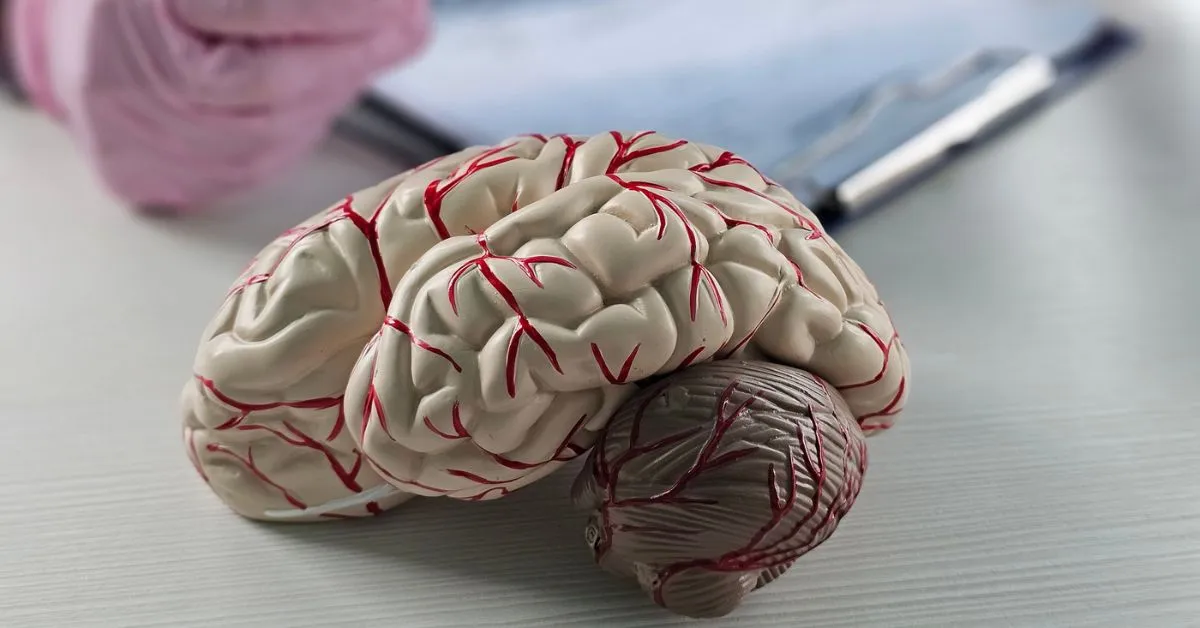
IQ tests estimate general intelligence plus a profile of cognitive domains. This guide explains what that score can measure, what it cannot measure, and why ACIS uses a broad CHC-aligned battery.
0 Quick Answer
Updated April 25, 2026 by Structural. IQ tests mainly measure general intelligence (g) plus a profile of broad cognitive abilities such as verbal comprehension, fluid reasoning, visual-spatial processing, working memory, processing speed, and quantitative reasoning.
Direct answer: a good IQ test does not measure every valuable human trait. It estimates how a person performs on structured cognitive tasks relative to same-age peers. The best interpretation combines the overall score, domain scores, percentile rank, reliability, confidence intervals, and the purpose of the assessment.
Core signalg
The general factor shared across many cognitive tasks.
Domains6+
Reasoning, knowledge, memory, speed, visual and quantitative abilities.
Scale100
The standard IQ midpoint, usually with SD 15.
LimitNot all
IQ does not fully measure motivation, wisdom, creativity, or character.
In ACIS, that means a 20-subtest battery built to sample multiple CHC-aligned domains instead of relying on one short puzzle set. If you want the practical interpretation layer, use the Full Scale IQ guide, the IQ Score Chart, the IQ Percentile Calculator, and What Is a Good IQ?. If you want the theory behind the structure, see The CHC Model. For the general factor itself, read G Factor Explained. If you want the scoring framework behind those comparisons, see How IQ Scores Are Normed. If you are choosing between serious web-based assessments, use the Best Online IQ Tests comparison to see which tests are broad enough to support meaningful interpretation.
At the core of IQ testing is the concept of general intelligence (g), discovered by British psychologist Charles Spearman in 1904. He observed a remarkable phenomenon: people who perform well on one type of cognitive task tend to perform well on most others. This "positive manifold" suggests an underlying general ability that influences performance across all cognitive domains. That manifold is also what validity means in practice: a score is accurate when it tracks the shared factor rather than one task, which is one of the three conditions laid out in the reliability, validity and norms behind an accurate score.
Spearman used factor analysis to identify this common factor - g - that accounts for the correlations among diverse cognitive tests. In statistical terms, g is the first principal component extracted from a battery of cognitive tasks. It typically accounts for 40-50% of the variance in individual differences on cognitive tests.
Modern IQ tests like ACIS are designed to maximize their loading on g - the common variance shared across all cognitive tasks. Detailed g-loading coefficients for ACIS will be published after validation is complete. This is accomplished through carefully selected subtests that tap into diverse cognitive abilities while all loading substantially on the general factor.
What exactly is g? Researchers have proposed various interpretations: processing speed, working memory capacity, neural efficiency, or the ability to form abstract representations. Most likely, g reflects a combination of these factors working together as a system for efficient information processing.
2 Fluid vs. Crystallized Intelligence
In the 1940s, Raymond Cattell made a fundamental distinction that transformed our understanding of intelligence:
Fluid Intelligence (Gf)
The ability to reason and solve novel problems independently of acquired knowledge. Includes pattern recognition, abstract reasoning, and logical thinking. Peaks in mid-20s and gradually declines. Less influenced by education and culture. That trajectory is the reason an adult score has to be read against people of the same age, which is why the guide to an IQ test scored against adult norms explains how ability changes across adulthood alongside how to read a result.
Crystallized Intelligence (Gc)
The depth and breadth of acquired knowledge - vocabulary, general information, verbal reasoning. Developed through education and experience. Continues growing throughout lifespan. More culturally influenced.
This distinction has profound implications. A person's fluid and crystallized abilities may differ substantially. An older adult might have exceptional vocabulary and general knowledge (Gc) but struggle with novel abstract puzzles (Gf). A young person might show remarkable abstract reasoning but limited factual knowledge due to less life experience. For a dedicated comparison, read Fluid vs. Crystallized Intelligence.
ACIS measures both types extensively - fluid reasoning through Matrix Reasoning, Complex Relations, and similar subtests; crystallized intelligence through Vocabulary, Information, and verbal reasoning tasks. This dual measurement provides a complete picture of cognitive capacity.
Interestingly, fluid and crystallized intelligence interact dynamically: higher Gf facilitates faster learning, which builds greater Gc over time. This is called the "investment theory" of intelligence - fluid ability is "invested" in learning, producing crystallized knowledge.
3 The Major Cognitive Domains
Beyond g, modern IQ tests measure several distinct cognitive domains, each contributing unique information:
Verbal Comprehension: Language knowledge, vocabulary depth, verbal reasoning, and the ability to understand and express ideas through words. This domain is highly correlated with academic success, particularly in humanities and social sciences. It reflects both innate language aptitude and environmental exposure to language.
Visual-Spatial Processing: Mental rotation, spatial visualization, perceiving relationships among objects, and constructing mental models of physical space. Critical for STEM fields, architecture, surgery, athletics, and any activity requiring manipulation of objects or navigation through space.
Fluid Reasoning: Solving novel problems, identifying patterns, drawing inferences, and thinking logically when prior knowledge doesn't help. The "purest" measure of reasoning ability, least influenced by education, most heritable, and most predictive of learning potential.
Working Memory: The ability to hold information in conscious awareness and manipulate it - like a mental workspace. Crucial for complex cognition: following multi-step instructions, mental arithmetic, reading comprehension, and any task requiring simultaneous processing of multiple pieces of information.
Processing Speed: The speed and efficiency of simple cognitive operations under time pressure. While seemingly simple, processing speed underlies more complex abilities and is sensitive to brain health, aging, and neurological conditions.
Quantitative Reasoning: Mathematical knowledge, numerical facility, and the ability to reason with numbers and quantities. Combines crystallized knowledge (learned math facts) with fluid reasoning (solving novel quantitative problems).
Each domain provides unique clinical and educational information. A person might have strong verbal abilities but weaker spatial skills - valuable information for career planning and identifying optimal learning strategies.
4 What ACIS Domains Actually Measure
The cleanest way to understand IQ is to separate the general score from the domains underneath it. ACIS uses the overall score to estimate broad cognitive ability, but the domain profile explains where that ability is coming from. A memory score inside that profile is narrower than most readers assume, since the idea of camera-like recall bundles at least five separate phenomena, from eidetic imagery in children to trained mnemonic performance, and none of them has been shown to be effortless permanent storage.
Domain
What It Measures
Example ACIS Pages
Interpretive Caution
Fluid Reasoning
Novel problem solving, rule discovery, abstraction, and reasoning when learned facts are not enough.
Instruction history matters because some quantitative tasks include acquired knowledge.
Practical definition: IQ is best read as a structured estimate of cognitive performance, not as a complete description of intelligence, personality, talent, or life potential.
5 What IQ Does NOT Measure
Understanding the boundaries of IQ testing is as important as knowing what it measures. IQ tests are powerful tools, but they don't capture everything we might call "intelligence" in everyday usage:
Emotional Intelligence: The ability to perceive, understand, and manage emotions in yourself and others. Some research suggests EI is relatively independent of IQ and predicts certain outcomes (like relationship quality) that IQ does not.
Creativity: While moderately correlated with IQ (correlations around .20-.40), creative thinking involves divergent processes and ideational fluency that standard IQ tests don't fully capture. You need a minimum IQ threshold for creativity, but beyond that, more IQ doesn't guarantee more creativity.
Practical Intelligence: Sometimes called "street smarts" - tacit knowledge for solving real-world problems. Knowing how to navigate a bureaucracy, read social situations, or handle practical challenges may be partially independent of academic intelligence.
Motivation & Grit: Personality traits like conscientiousness, persistence, and growth mindset significantly impact achievement independently of cognitive ability. A highly motivated person with average IQ may outperform a less motivated person with superior IQ.
Domain-Specific Expertise: Deep knowledge in particular fields - chess, music, medicine - involves pattern recognition and problem-solving that may not transfer across domains, even though it looks like "intelligence" within the domain.
Wisdom: The application of intelligence and experience to make good life decisions. Wisdom involves values, judgment, and metacognition that go beyond raw cognitive ability.
Social Intelligence: Understanding social dynamics, reading nonverbal cues, and navigating interpersonal relationships involves processes not measured by standard IQ tests.
Physical/Kinesthetic Intelligence: Bodily coordination, athletic ability, and motor skills - while they involve cognitive components, they're not what IQ tests measure.
For a broader cleanup of common misunderstandings about score meaning, genetics, success, and online testing, see Common Myths About IQ Tests Debunked.
6 How IQ Scores Are Standardized
Modern IQ scores are deviation IQ scores, standardized to have a mean of 100 and standard deviation of 15. This provides a consistent scale for interpretation:
IQ Score
Percentile
Classification
Rarity
< 40
< 0.003
Profound Impairment
1 in 41,937
40-54
0.003-0.108
Severe Impairment
1 in 952
55-69
0.135-1.938
Mild Impairment
1 in 55
70-79
2.275-8.076
Borderline
1 in 17
80-89
9.121-23.168
Low Average
1 in 7
90-109
25.249-72.575
Average
1 in 2
110-119
74.751-89.736
High Average
1 in 7
120-129
90.879-97.340
Superior
1 in 15
130-134
97.725-98.829
Moderately Gifted
1 in 91
135-144
99.018-99.832
Highly Gifted
1 in 123
145-159
99.865-99.996
Exceptionally Gifted
1 in 765
160-174
99.997-100.000
Profoundly Gifted
1 in 31,983
175-177
100.000-100.000
Profoundly Gifted
1 in 6.9M
This standardization means IQ scores are always relative to a comparison group - typically same-age peers from the norming sample. A score of 115 means you performed better than approximately 84% of people your age, regardless of which test was used (assuming proper norming). For a quick reference table of ranges and percentiles, see our IQ Score Chart. To convert a score directly into percentile, use the IQ Percentile Calculator. For a focused explanation of age norming, see Average IQ by Age and How IQ Scores Are Normed. If you are trying to answer the practical question behind the number, see What Is a Good IQ?.
ACIS uses the same standardization, allowing direct comparison with other major professional intelligence tests. Scaled scores for individual subtests have a mean of 10 and SD of 3, with scores of 8-11 considered average range.
7 Reliability and Validity
For a test to be meaningful, it must demonstrate both reliability (consistency) and validity (accuracy in measuring what it claims to measure):
Test-Retest Reliability: If you take the same IQ test twice (with appropriate intervals), scores should be highly correlated. Modern IQ tests achieve reliabilities of .90-.95, meaning 90-95% of variance is true score variance, not measurement error.
Internal Consistency: Items within the same subtest should correlate with each other, indicating they measure the same construct. ACIS currently uses internal composite reliability estimates in score interpretation, while fuller public technical reporting on finalized coefficients is still being prepared.
Criterion Validity: IQ scores should predict real-world outcomes - academic achievement, job performance, income, and some occupation-selection patterns. Research by Schmidt & Hunter (1998) confirms correlations of .50-.70 with academic success and .30-.60 with occupational success. For career-group estimates, see Average IQ by Profession.
Construct Validity: The test should measure what the theory says it measures. Factor analysis should reveal the expected structure (g plus broad abilities). ACIS was designed around factor-analytic review and a CHC-aligned structure during development.
Convergent Validity: Different IQ tests purporting to measure the same thing should correlate highly. Major IQ tests correlate .80-.95 with each other.
ACIS was developed with rigorous attention to these psychometric properties so score interpretation rests on a broader technical foundation than most short online quizzes, while fuller public documentation is still being finalized.
No psychological measurement is perfectly precise. The Standard Error of Measurement (SEM) quantifies how much scores might vary due to random factors:
For ACIS, the SEM for Full Scale IQ will be published alongside the finalized reliability coefficients after validation is complete. This means observed scores can vary across repeated testings.
This has important implications:
Small score differences (5 points or less) may not be meaningful
Confidence intervals are more informative than point estimates
A score of 128 vs. 132 doesn't reliably distinguish ability levels
Score ranges should be interpreted, not exact numbers
When interpreting your ACIS results, consider scores within 5-7 points of each other as essentially equivalent, and focus on larger patterns in your cognitive profile.
9 The Value of a Cognitive Profile
Beyond a single IQ number, ACIS provides a detailed cognitive profile showing relative strengths and weaknesses across domains. This profile reveals information a composite score cannot:
Personal Strengths: Areas where you perform above your own average - these represent talents to leverage
Development Areas: Domains where you're weaker relative to yourself - may benefit from targeted strategies or accommodations
Learning Style Indicators: Strong verbal with weaker spatial suggests preference for text-based learning; the reverse suggests preference for diagrams and visual materials
Career Guidance: Certain profiles align better with different occupations - high spatial suggests engineering/architecture; high verbal suggests law/writing/teaching
Clinical Indicators: Large discrepancies between domains can sometimes suggest learning disabilities, processing differences, or conditions worth investigating
Educational Planning: Knowing your own cognitive profile can help you choose learning strategies, training priorities, and enrichment that better fit your strengths and weaknesses
ACIS provides index scores for six cognitive domains plus an overall FSIQ, and scaled scores for all 20 subtests. This granular information enables much more nuanced interpretation than simple "your IQ is X" feedback.
10 Common Misconceptions
Several persistent myths about IQ testing deserve clarification:
"IQ is fixed from birth": While IQ has substantial heritability (~80% in adulthood, per Plomin & Deary, 2015), it's not completely fixed. Early interventions, education quality, and cognitive engagement can influence development, especially in childhood.
"IQ tests are culturally biased": Modern IQ tests are carefully constructed to minimize bias. Statistical techniques (differential item functioning analysis) identify and remove biased items. Tests like ACIS use many non-verbal tasks that don't require specific cultural knowledge. However, extreme cultural/linguistic differences from the norming sample may affect validity.
"High IQ guarantees success": IQ is a strong predictor of many outcomes but not the only factor. Personality, opportunity, motivation, social skills, and luck all matter.
"IQ tests only measure test-taking ability": While test-taking skills can influence scores modestly, they cannot create high scores without genuine cognitive ability. The predictive validity of IQ for real-world outcomes demonstrates it measures something meaningful beyond test performance.
"Online IQ tests are meaningless": While many free online tests are poorly constructed, a longer and better-normed online battery can still provide serious, interpretable measurement when it is designed carefully.
11 FAQ: What IQ Measures
Do IQ tests measure intelligence directly?
No. They measure performance on cognitive tasks and use that performance to estimate latent constructs such as g and broad abilities.
What is g?
G is the general factor that appears because many cognitive tasks correlate positively. Broad IQ batteries try to estimate that shared factor.
Is IQ the same as g?
No. IQ is an observed standardized score. G is the latent general factor that helps explain why many subtests move together.
Does IQ measure memory?
Partly. Broad tests include working memory or short-term memory, but IQ also includes reasoning, knowledge, speed, visual processing, and quantitative ability.
Does IQ measure creativity?
Not directly. Creativity can overlap with intelligence, but standard IQ tests do not measure originality, artistic taste, or creative production.
Does IQ measure emotional intelligence?
No. Emotional awareness, social judgment, empathy, and relationship skill are not the main targets of standard IQ tests.
Does IQ measure processing speed?
Many broad batteries include processing speed. It is useful, but it should be interpreted as one domain rather than the whole score.
Does IQ measure verbal ability?
Yes, when the battery includes verbal comprehension, vocabulary, analogies, knowledge, or language-based reasoning tasks.
Does IQ measure math ability?
It can measure quantitative reasoning, numerical pattern solving, or working memory for numbers. It is not the same as school math achievement.
Why do subtests matter?
Subtests show the profile behind the total score. Two people can have the same IQ but very different verbal, spatial, memory, or speed patterns.
Why does norming matter?
Norms convert raw performance into a score relative to a comparison group. Without norms, a percent-correct result is not a real IQ score.
What does IQ not measure?
IQ does not fully measure motivation, wisdom, character, mental health, creativity, opportunity, personality, or acquired expertise.
Can two people share an IQ but differ cognitively?
Yes. The same Full Scale IQ can come from different combinations of strengths and weaknesses across domains.
Why does ACIS use 20 subtests?
A broader battery reduces narrow format effects and helps separate general ability, domain strengths, and task-specific noise.
What should I read next?
Read the CHC Model guide for domain structure, G Factor Explained for the general factor, and the IQ Score Chart for score interpretation.
12 Summary: What Your ACIS Score Means
Your ACIS results tell you several things:
Full Scale IQ: Your overall cognitive ability relative to same-age peers - a summary statistic of general intellectual capacity
Index Scores: Your abilities in six major cognitive domains - revealing your unique pattern of strengths and weaknesses
Scaled Scores: Performance on individual subtests - the most granular level of analysis
Percentile Rankings: Where you stand relative to the population - useful for understanding rarity of abilities
Confidence Intervals: The range in which your true score likely falls - accounting for measurement error
Use this information for self-understanding, educational planning, career exploration, and identifying areas where you might want to develop compensatory strategies. Remember that IQ is one dimension of who you are - important, but not the whole picture.
13 Explore IQ Score Encyclopedia
Want to understand what specific IQ scores mean? Our comprehensive IQ Encyclopedia covers every score from 40 to 160 on the standard scale; Full Scale extended norms reach 175. It includes detailed explanations, percentiles, and real-world context:
For readers who want primary sources and authoritative overviews:
Spearman, C. (1904). General intelligence, objectively determined and measured. American Journal of Psychology.
Carroll, J.B. (1993). Human Cognitive Abilities: A Survey of Factor-Analytic Studies. Cambridge University Press.
Horn, J.L. & Cattell, R.B. (1966). Refinement and test of the theory of fluid and crystallized general intelligences. Journal of Educational Psychology, 57(5), 253-270.
McGrew, K.S. (2009). CHC theory and the human cognitive abilities project. Intelligence, 37(1), 1-10.
The theory becomes easier to understand when you look at live public task pages. Figure Weights makes fluid reasoning concrete, Digit Span shows short-term storage plus manipulation, Coding shows timed processing speed, and Antonyms with Similarities show two different verbal-comprehension formats.
Together those pages make the construct less abstract: reasoning without learned facts, holding and reordering information, rapid visual-symbol output, and language-based meaning contrast versus conceptual abstraction.
ACIS measures six CHC domains across 20 subtests and reports each one with its own normed score and confidence interval, so you can see where you are strong and where you are not.