Verbal Comprehension
Antonyms, Information, Vocabulary, Similarities, Paragraph Reading.
- Adaptive reading
- Pragmatic markers
Take the ACIS test and get a detailed cognitive profile across 20 subtests and 6 cognitive domains. Built on the Cattell-Horn-Carroll model and normed on adults ages 16 to 90.
A next-generation intelligence assessment designed with scientific precision and unprecedented depth.
20 subtests spanning 6 cognitive domains for a complete profile of your strengths and areas for growth.
Built on CHC theory, refined through factor-analytic review, and normed on 2,278 adults ages 16 to 90.
Anonymous assessment with encrypted data handling. Your results are private and securely stored.
Each domain is measured through multiple subtests, providing granular insight into distinct cognitive faculties.
Antonyms, Information, Vocabulary, Similarities, Paragraph Reading.
Visual Puzzles, Block Design, Spatial Comprehension.
Matrix Reasoning, Figure Weights, Visual Number Series, Logic Grid, Complex Relations.
Mathematical Achievement, Arithmetic.
Digit Span, Alphanumeric Sequencing, Visual Sequence.
Coding, Symbol Search.
Select the depth of your cognitive evaluation. From a quick check to a comprehensive analysis, ACIS adapts to your needs.
Unlock your cognitive assessment
13 Key Subtests — Balanced Profile
Loading payment options...
This information helps us improve the accuracy of our norms. All data is anonymous and securely stored.
Your data is securely stored and never shared. We use it only to improve test norms.
Please confirm each condition below to ensure the most accurate and valid assessment results.
These conditions help ensure your results accurately reflect your true cognitive abilities.
Please read carefully before enabling
Extended norms allow measurement beyond the standard ceiling of 160 (up to 175 in Full Scale), but please be aware:
Extended norms are best suited for research or exploratory purposes.
ACIS is built on the Cattell-Horn-Carroll (CHC) framework, the most widely accepted theory of cognitive abilities. We focus on adult norms, structured subtest coverage, careful score interpretation, and continuous technical refinement.
Internal composite reliability estimates currently used in score interpretation vary by tier and index.
Adult norms currently cover ages 16 to 90 and continue to be refined.
Factor-analytic review is used to evaluate how subtests align with their intended domains.
Access comprehensive documentation on structure, norming, and psychometrics.
If you are trying to interpret a raw score before reading the manuals, start with What Is a Good IQ?, IQ Score Chart, and IQ Percentile Calculator.
For a faster public-facing overview, see How IQ Scores Are Normed, Reliability vs. Validity, Average IQ by Country, and Average IQ by Education.
Twenty subtests organized into six cognitive domains. A symmetrical framework designed for comprehensive assessment.
Antonyms, Information, Vocabulary, Similarities, Paragraph Reading.
Visual Puzzles, Block Design, Spatial Comprehension.
Matrix Reasoning, Figure Weights, Visual Number Series, Logic Grid, Complex Relations.
Mathematical Achievement, Arithmetic.
Digit Span, Alphanumeric Sequencing, Visual Sequence.
Coding, Symbol Search.
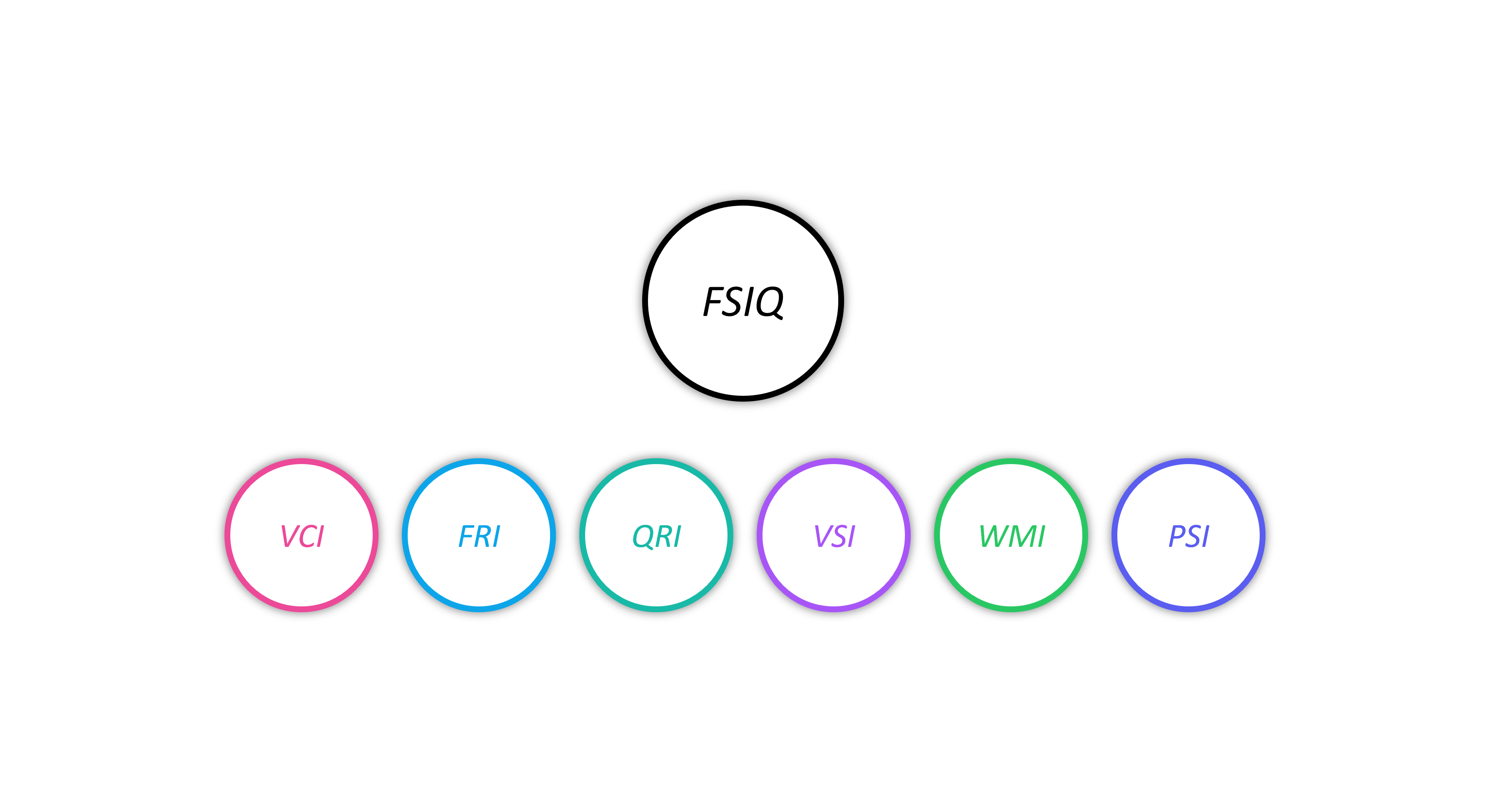
The ACIS framework is built on a symmetrical, hierarchical model. This blueprint visualizes the interconnections between the six core indices and their respective subtests, ensuring comprehensive cognitive coverage.
Measures the ability to access and apply acquired word knowledge. Involves verbal concept formation, reasoning, and expression.
Evaluates the ability to evaluate visual details and understand how visual and spatial relationships work together.
Measures the ability to solve new problems, use logic, and adapt to novel situations without relying on prior knowledge or experience.
Measures the ability to perform mental math operations and solve quantitative problems using numerical reasoning.
Measures the ability to register, maintain, and manipulate visual and auditory information in conscious awareness.
Measures speed and accuracy of visual scanning, decision making, and rapid implementation of simple cognitive tasks.
ACIS is the result of years of dedicated research, psychometric calibration, and a passion for cognitive science. From 2022 to 2025, we built a tool for everyone.
ACIS was developed between 2022 and 2025 through sustained research, iterative item development, and ongoing psychometric calibration. My goal has been to provide a rigorous assessment that is far more accessible than traditional in-person testing while still supporting careful interpretation of cognitive profiles.
ACIS will continue to evolve through regular normative updates and improvements to measurement quality, usability, and accessibility. The platform is now compatible with mobile devices as well as larger screens, while expanded language support and ongoing cross-device refinements remain active priorities. Thank you for taking the time to explore ACIS. Feedback and collaboration inquiries are welcome.
From concept to calibration, the evolution of ACIS.
Conceptualization of the CHC-based framework. Initial item drafting and domain selection.
Platform engineering and rigorous item creation. Pilot testing of subtest mechanics.
Extensive norming studies. Psychometric validation against g-loadings and reliability checks.
Official release of ACIS v1.0. Continuous improvement of norms and accessibility features.
Transparent answers about validity, scoring, and the science behind ACIS.
The Advanced Comprehensive Intelligence Scale (ACIS) is a high-range cognitive assessment tool designed to measure general intelligence (g) through 20 distinct subtests. It is built on the Cattell-Horn-Carroll (CHC) theory of cognitive abilities, the most widely accepted and empirically validated model of human cognitive abilities in modern psychometrics.
ACIS is built around psychometric best practices, normed on a sample of 2,278 participants, and refined through factor-analytic review. Internal composite reliability estimates used in score interpretation currently range from .94 to .99 depending on the tier and index, and a formal technical report with finalized g-loading and external-validity statistics is in preparation.
The Full-Scale IQ (FSIQ) is a composite score derived from the sum of scaled scores across all subtests. It is standardized with a mean of 100 and a standard deviation of 15, allowing for direct comparison with other major standardized intelligence scales.
ACIS is a 20-subtest cognitive assessment built for careful online measurement and adult self-understanding. It provides structured score reporting across six broad domains, while the public technical report with finalized g-loading and convergent-validity statistics is being prepared. The primary difference from traditional assessments is the administration format: ACIS is self-administered online and is best used for personal insight, educational planning, and structured cognitive self-understanding, while many official pathways still prefer or require proctored evidence.
All ACIS assessments require a one-time payment: Quick ($10), Optimized ($25), and Full Scale ($40). Our mission is to provide high-quality cognitive testing at accessible prices. All results, detailed reports, and comprehensive insights are provided without hidden fees for any assessment tier you complete.
You can contact Structural via Reddit (u/407-proxy-MR). For methodology details and technical context, see the About and FAQ pages.
The Cattell-Horn-Carroll (CHC) theory is the most comprehensive and empirically supported framework for understanding human cognitive abilities. It organizes intelligence into three strata: narrow abilities (specific skills), broad abilities (like fluid reasoning and crystallized intelligence), and general intelligence (g). ACIS measures five primary broad abilities: Verbal Comprehension (Gc), Fluid Reasoning (Gf), Visual-Spatial Processing (Gv), Working Memory (Gwm), and Processing Speed (Gs).
Verbal Comprehension (VCI) measures crystallized intelligence—your accumulated knowledge and verbal reasoning. Fluid Reasoning (FRI) assesses your ability to solve novel problems without relying on prior knowledge. Visual-Spatial (VSI) evaluates spatial reasoning and mental manipulation of visual information. Working Memory (WMI) measures your capacity to hold and process information in conscious awareness. Processing Speed (PSI) assesses how quickly you can process simple visual information. Quantitative Reasoning (QRI) measures mathematical reasoning and numerical problem-solving abilities.
The complete ACIS assessment, which includes all 20 subtests, has an estimated average completion time of about 165 minutes (roughly 2 hours and 45 minutes). Quick averages about 45 minutes and Optimized averages about 100 minutes. These are average completion estimates based on the current subtest mix and stopping rules, so individual pace will vary. Your progress is automatically saved, allowing you to return and continue at any time.
Yes, you can retake any subtest at any time. However, keep in mind that practice effects can artificially inflate your scores on subsequent attempts, particularly on subtests involving novel problem-solving. For the most accurate results, your first genuine attempt is recommended as the best representation of your ability.
Multiple subtests are necessary for comprehensive cognitive assessment. Each subtest measures different narrow abilities that contribute to broader cognitive domains. Having multiple measures per domain increases reliability and allows for a more nuanced understanding of your cognitive profile. The 20-subtest structure ensures that the FSIQ is based on a robust sampling of your cognitive abilities across all major domains.
ACIS emphasizes breadth, accessibility, and structured score reporting. With 20 subtests, it provides a broader online cognitive profile than many shorter internet tests. Traditional professional assessments still offer in-person observation, clinician judgment, and official-use pathways that a self-administered online battery cannot replace. ACIS is best understood as a rigorous self-assessment tool rather than a substitute for licensed, proctored evaluation.
A scaled score is a standardized score that allows comparison across different subtests. In ACIS, scaled scores have a mean of 10 and a standard deviation of 3. A scaled score of 10 represents exactly average performance, while scores of 7 or 13 represent performance one standard deviation below or above average, respectively. This standardization makes it possible to compare your performance across subtests that have different raw score ranges.
The g-loading refers to how strongly a battery measures general intelligence. ACIS was designed to achieve strong g saturation across its subtests, but the finalized public coefficient will be released in the technical documentation once validation reporting is complete.
ACIS norms were established through a rigorous norming study with 2,278 participants. The normative sample was carefully analyzed to ensure appropriate representation. Statistical procedures including item analysis, reliability testing, and factor analysis were applied to calibrate scoring tables. The norms are continuously refined as more data is collected to improve accuracy and representativeness.
ACIS is designed to measure IQ scores ranging from 40 to 160 on the standard scale (mean = 100, SD = 15) for Standard, Quick, and Optimized assessments. Full Scale extended norms reach 175. This range covers from significantly below average to highly gifted levels of cognitive ability. The test includes items of varying difficulty to ensure accurate measurement across this entire range without significant floor or ceiling effects.
For the public interpretation layer behind those score bands, see What Is a Good IQ? and the IQ Score Chart.
No. High-IQ societies require scores from approved, proctored assessments administered by qualified professionals. ACIS is a self-administered online test and therefore cannot be used for official membership applications. However, ACIS can give you a reliable indication of whether pursuing official testing might be worthwhile.
Your test progress and results are stored locally in your browser using localStorage. Additionally, when cloud sync is enabled, limited assessment data (anonymous ID, demographic info, scores, and integrity signals) may be transmitted to our secure backend (Supabase) to support test integrity and improve norms. We do not sell or share your personal information. Clearing your browser data will remove locally stored results. For full details, see our Privacy Policy.
ACIS is compatible with desktop computers, laptops, tablets, and modern smartphones. For the best experience on visual and timed subtests, a larger screen, stable internet connection, and quiet environment are still recommended. A physical keyboard can be helpful for tasks like Coding, and headphones are recommended for audio-based subtests like Digit Span.
Time limits serve different purposes depending on the subtest. For Processing Speed subtests (Coding, Symbol Search), time limits are essential as they directly measure how quickly you process information. For other timed subtests, limits prevent excessive rumination and ensure scores reflect spontaneous problem-solving ability rather than unlimited deliberation. Untimed performance on fluid reasoning tasks, for example, would measure persistence rather than cognitive ability.
Several factors can influence your performance: fatigue, sleep deprivation, stress, distractions, illness, and medication can all lower scores. Test anxiety may also impact performance, particularly on timed subtests. For the most accurate results, take ACIS when you are well-rested, alert, and in a quiet environment free from interruptions. Avoid caffeine crashes and ensure you have stable internet connectivity.
Many online IQ tests rely on short item sets, unclear norms, or inflated scoring. ACIS differentiates itself with 20 subtests, adult norms based on 2,278 participants, structured score reporting, and openly stated technical limitations. It is best used for personal insight, educational planning, and careful interpretation rather than official clinical, employment, or membership decisions.