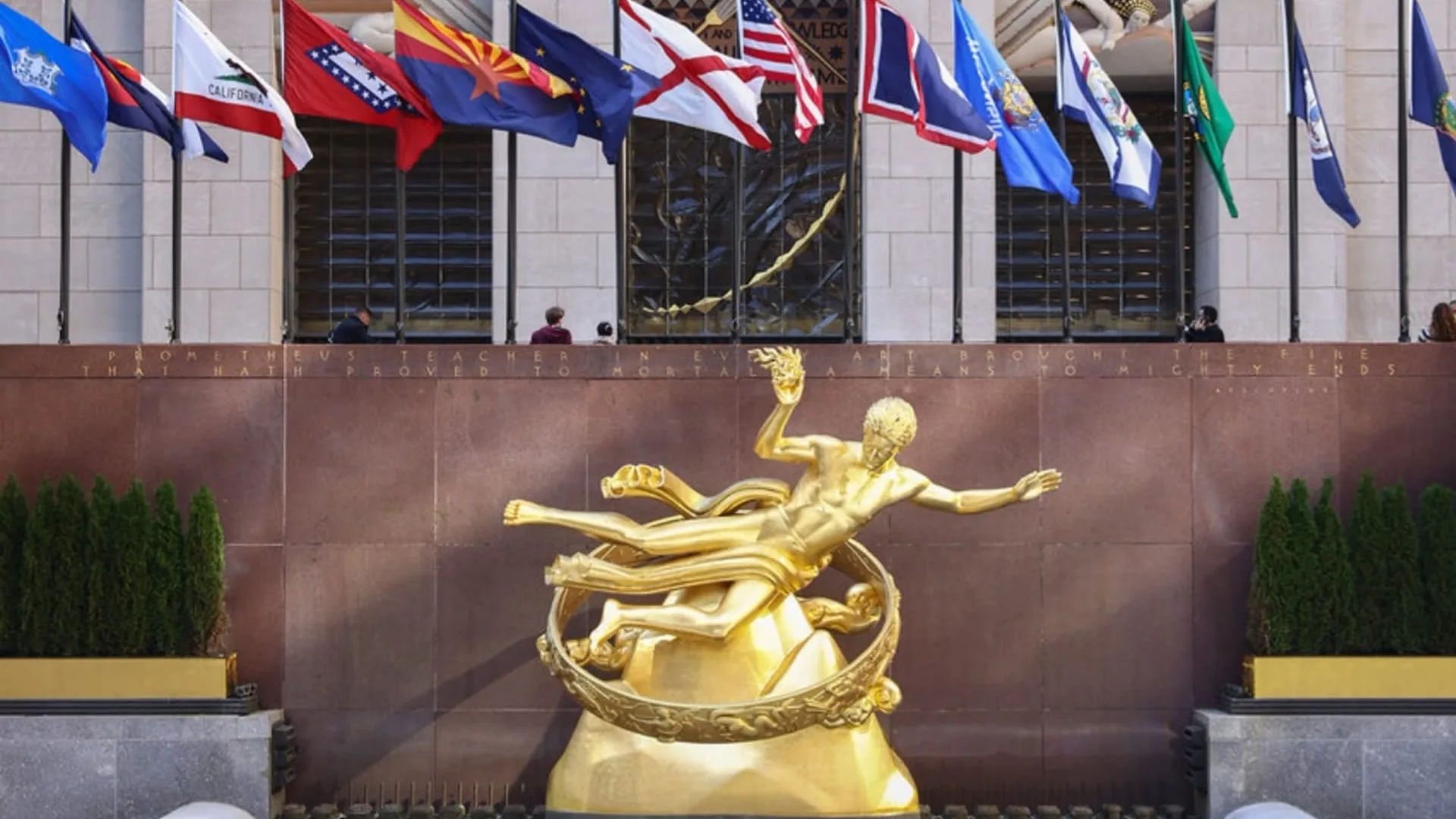
The Prometheus Society asks for one in 30,000, and lists no live test
The Prometheus Society admits adults who score at or above the top one in 30,000, which is about 160 on a scale with a standard deviation of 15. This page reads the society's own pages as of November 4, 2026, lists every test they name and the window in which each counts, explains why so few instruments can measure at that rarity, and shows what an adult can do before paying anyone a fee.
The Prometheus Society asks for a standard of 1 in 30,000, which its home page calls the 99.997th percentile.
0 The short answer
The Prometheus Society admits adults whose score on an accepted test reaches the top one in 30,000 of the general population, which is about 160 on a scale with a standard deviation of 15 (our arithmetic), and its own admissions page states that no test is currently being administered and scored that the society has approved. What it accepts today are scores from tests taken inside closed date windows, such as the old SAT before April 1, 1995 or the Miller Analogies Test before November 15, 2023, so the practical question is whether you already hold one of those scores. If you want an adult normed picture of where you stand before paying any fee, ACIS is one option among several: Quick costs 25 dollars and takes about 45 minutes, Optimized costs 35 dollars and takes about 110 minutes, Full Scale costs 59 dollars and takes about 175 minutes (prices read on November 4, 2026, and they can change), and a free trial needs no card. The decisive limit is that ACIS is online and unsupervised, is not accepted by any high IQ society and cannot predict whether you would pass.
1 in 30,000
The Prometheus Society admission standard, which its home page calls the 99.997th percentile (read November 4, 2026).
8 tests
The number of tests in the society's table of accepted scores, each valid only for a test taken before a stated date.
10 dollars
The society's dues for one year (12 months), read on its dues page on November 4, 2026.
The Prometheus Society is a very exclusive high IQ society that admits only adults whose documented score on an accepted test is equal to or greater than that of the highest one thirty thousandth of the general population. The wording comes from its own pages, which this article read on November 4, 2026. Its home page describes it as "a very exclusive high-IQ society," says it screens at the 99.997th percentile, or 1 in 30,000, and sets that against Mensa's top 2 percent. Its constitution states the same rule in Article III, Section 2, where membership is open to anyone who can provide satisfactory evidence of a score on an accepted IQ test that equals or exceeds the highest one thirty-thousandth.
Two features of that rule matter more than the number. The first is that the society defines the standard as a position in a population and not as an IQ. Its pages do not state an IQ number. The second is that the society decides which tests count. Under Article III of the constitution, the President appoints a Membership Committee to rule on the acceptability of IQ tests, and an accepted test is one the society has determined to be acceptable for admission purposes. The consequence is that the rarity is fixed while the list of instruments that can document it is a moving administrative decision, and the later sections show how much that list has shrunk.
The society is small. Its home page says that as of October 2020 there were fewer than three dozen current members worldwide, down from a high of well over 100 active members. That sentence is dated by the society itself, and this article found no more recent count on the pages it opened, so the current membership is not stated here. The pages also give no founding date: the footers show copyright years and nothing else.
The society publishes a journal called Gift of Fire. Its Join or Subscribe page says that one year of access to the library of past issues costs 10.00 dollars, and the home page says that applicants who do not qualify can subscribe to the journal. The constitution refers to the publication only as the newsletter. What the society does not do is test anyone: the same page says, "We do not administer tests," and it makes finding and obtaining test results the applicant's responsibility.
That last point separates the Prometheus Society from the more familiar route to Mensa, where a supervised session is part of the product. The page on how the high IQ societies compare sets the main societies side by side, and the neighbouring pages on the Triple Nine Society and the Mega Society cover those two in detail. This page stays with the Prometheus Society and with the measurement question that its standard forces.
2 What does one in 30,000 mean as an IQ score?
One in 30,000 corresponds to about 160 on a scale with a standard deviation of 15, but the society states a rarity and not an IQ, so the same standard reads as a different number on every scale that uses a different spread. The arithmetic is ours, and it assumes a normal distribution, which is the assumption that the rarity itself is built on. A rarity of 1 in 30,000 is a percentile of 99.9967. The standard score at that point in a normal distribution is about 3.99 standard deviations above the mean. On the scale used by the Wechsler tests and by ACIS, where the mean is 100 and the standard deviation is 15, that is a score of about 159.8. The page on why a standard deviation of 15 matters explains what the spread means, and the page on converting a percentile into an IQ shows the same conversion at other points of the curve.
Scale (mean 100)
Standard deviation
Score at 1 in 30,000
Basis
Wechsler style
15
about 160
Our arithmetic, normal curve
A scale with a wider spread
16
about 164
Our arithmetic, normal curve
A scale with a much wider spread
24
about 196
Our arithmetic, normal curve
The second and third rows are the reason a search for the "Prometheus Society minimum IQ" returns several numbers. Nothing in the society's pages fixes one. A reader who sees 160 and a reader who sees 164 are looking at the same rarity expressed on scales with different spreads, and a reader who sees a much larger number may be looking at a scale that stretches the same rarity further out. Whenever a society, a test publisher or a website gives a high IQ, the first question is the standard deviation of the scale behind it.
A second point concerns what the rarity can mean. The sample size needed to observe one person at 1 in 30,000 is itself about 30,000. Pearson's WAIS-5, the current Wechsler adult battery, was analyzed in a study by Canivez, Watkins, McGill and Dombrowski (2026) using its standardization sample of 2,020 people. Our arithmetic is that a sample of that size would be expected to contain about 0.07 people at or above that level, and that the chance of containing even one is about 6.5 percent. A test normed on a sample that size can therefore carry a score for 1 in 30,000 on its conversion table only by model or by extrapolation, not by observing people there. The next sections come back to that point, because it decides which instruments can be used at this rarity.
To see how a given score maps to a rarity, the calculator for how rare an IQ is turns a score into a percentile and a "1 in" figure, and the IQ score chart lists the common bands. Both use the normal curve, so both inherit the limits just described.
3 Which tests does the Prometheus Society accept?
The society's page lists eight tests, every one of them valid only if taken before a stated date, and it states that no test is currently being administered and scored that it has approved. The table below reproduces what the "Tests and Scores We Accept" table on the Join or Subscribe page shows, read on November 4, 2026. The page introduces the table with the sentence that these tests are acceptable only if taken during the indicated times, and its columns are labeled Test, Score and Notes.
Test
Score the society requires
Notes column (as printed)
SAT (old)
1560
Taken before April 1, 1995
GRE (old)
1600 (V+Q)
Taken before October 1, 1981
Miller Analogies Test (old)
98 (raw score)
Taken before November 1, 2004
Miller Analogies Test (new)
500 (scaled score)
Taken before November 15, 2023
Mega Test
36
Taken before April 25, 1999
Mega27
21
Taken before November 17, 1999
Titan Test
36
Taken before April 25, 1999
LAIT
164
Taken before January 1, 1994
The page does not explain the dates. It states the rule and prints the cutoffs, and this article does not guess at the reasons. Two of the dates can be checked against other sources, and both checks show how the list was bound to time. The College Board's table of average SAT scores carries a footnote saying that the SAT was renormed in April 1995, when mean scores were set at or near the midpoint of 500 on the 200 to 800 scale, a process it calls recentering. The society's old SAT window closes on April 1, 1995, in the same month. Whether that is the reason is not stated by either source, but it is consistent with a rule that separates scores on the old scale from scores on the recentered one.
The Miller Analogies Test dates are checked more directly. Pearson's announcement says the test "was officially retired on November 15, 2023, and is no longer available," and adds that official transcripts and personal score reports are no longer available effective November 15, 2024. The notice was read on November 4, 2026. So the one entry in the table that still looked like a live path, the new Miller Analogies Test with a scaled score of 500, has no remaining way to be taken, and a transcript of an old result can no longer be ordered from the publisher. Anyone who took the test before the retirement and kept their own copy of a report is the only person that entry can still serve.
The old SAT and GRE entries have the same structure: the score has to date from a window that closed decades ago. The Mega Test, Mega27 and Titan Test entries are high range tests, not admissions aptitude tests, and the windows for the Mega Test, the Titan Test and Mega27 closed in 1999. The page on Mensa qualifying test scores covers how a documented score is read on the Mensa side, for readers who want to compare the two routes.
One more reading of the table is worth stating plainly. Every entry is a score, not a test you can sit. The society's table works as a list of historical documentation, and the sentence on the same page that there are no tests currently being administered and scored is the society's own summary of the position. For a reader without a document from one of those windows, the society's pages offer no live route, and this article does not know of an official one.
4 How do you apply to the Prometheus Society, and what does it cost?
You apply by sending score documentation through the society's contact form, and the only fees printed on its pages are 10 dollars for a year of dues and 10 dollars for a year of journal access. The Join or Subscribe page lists three steps, read on November 4, 2026. You submit the Contact Us form with the score documentation attached. You then wait for the Membership Officer, who may ask for more information. If you are accepted, you receive an email with instructions for paying dues and activating the membership. The page adds a warning that applicants who submit an invalid test, or a phony or frivolous application, may not receive a response.
The society's dues page states that membership dues are 10 dollars for one year (12 months) and that subscriptions to the journal are 10 dollars for one year. Payments go through PayPal, and each payment covers 12 months. The page lists no admission or initiation fee and shows no effective date, only a copyright year in its footer, so the amounts are as read on November 4, 2026 and may change. The dues page does not name a currency; the subscription line on the Join or Subscribe page does say USD.
How is the decision made? The constitution describes the first step. Under Article IV, the Membership Officer forwards a recommendation for or against admitting the applicant, and that opinion stands unless the Ombudsman raises a formal objection. This is a document review by volunteer officers, not an examination, which is why the society puts the burden of finding the test result on the applicant.
Three practical consequences follow for a reader. First, the application cannot start with a new test, because none is approved, so it starts with a document that already exists: a score report, a transcript or a certificate from a test taken inside one of the windows in the table. Second, the society says it may not reply to applications built on tests outside its list, so it is worth checking each line of the table before sending anything. Third, a reader who holds no such document can still follow the society's work: the home page says that people who do not qualify can subscribe to the journal, and that route needs no score.
A reader who is unsure whether an older result qualifies can ask the society through the same contact form. The pages do not promise an answer, and this article cannot say what the Membership Committee would decide about a case outside the table. The honest summary is that the rarity is public, the table is public, and any further interpretation sits with the society's officers.
5 Why can so few tests measure at one in 30,000?
A test can only place a person at 1 in 30,000 if it has items hard enough that almost nobody solves them, a norm group large or well modeled enough to say how rare each score is, and an error band small enough at that height to be worth reporting, and very few instruments meet all three. The first requirement is the ceiling. A test with too few hard items sends many strong performers to the same top score, and the score then says only that they reached the top. Pearson says on its WAIS-5 page that the test has a higher ceiling than the WISC-V for examinees of high ability, and the page gives no numeric ceiling for the adult battery. It describes the WAIS-5 as an individually administered clinical instrument for ages 16 years to 90 years 11 months, with 45 minutes for the 7 subtest Full Scale score and 60 minutes for the 10 primary index subtests (page read November 4, 2026). No Wechsler scale appears in the society's table of accepted scores, and the pages opened for this article do not say why.
The second requirement is the norm. The earlier section showed that a standardization sample of about 2,000 cannot contain people at 1 in 30,000 in any dependable number. The Standards for Educational and Psychological Testing (AERA, APA and NCME, 2014) say what a publisher owes the reader in that situation. Standard 5.9 asks that reports of norming studies include a precise specification of the population sampled, the sampling procedures and participation rates, any weighting, the dates of testing and descriptive statistics, and that technical documentation indicate "the precision of the norms themselves." A conversion table that reaches a rarity the norm group never contained is an extrapolation, and the Standards expect the precision of such a table to be documented, not hidden inside a number.
The third requirement is the error band. Standard 2.14 says that, when possible and appropriate, conditional standard errors of measurement should be reported at several score levels unless there is evidence that the error is constant across levels, and that where cut scores are specified the errors should be reported in the vicinity of each cut. An admission standard is exactly such a cut. Measurement error is not usually the same at every height of a scale: items are most informative near the ability level they were written for, so a test built to be fair to most adults is least informative at the far end. The page on reliability and validity explains the vocabulary, and the page on how IQ scores are normed explains how a raw score becomes a position in a reference group.
What the three requirements imply for the society is simple. A live approved test would need a publisher able to document a ceiling, a norm and an error band at the far end of the distribution, and a Membership Committee willing to accept the result. The society's table lists no clinical battery and no test on sale, and the next section shows what the documentation behind one of the listed high range tests looks like.
6 How were the high range tests scaled?
The test author's own account of the Mega Test says its scale was calculated against reported SAT scores in the middle of its range and extrapolated above that, which is what the rarity behind its cutoff in the society's table rests on. In a March 12, 1998 letter reproduced in the Noesis archive of the Mega Society, Ronald Hoeflin wrote that scores from 4 right (an IQ of 120) to 39 right (an IQ of 168) were calculated by comparing them with 222 SAT scores reported by Mega Test participants. Above 39 right, he wrote, the graph was extrapolated, and opinions differ on how to do that. He favored a straight line there, which would have moved the one in a million level from 43 right back to 46 right (page read November 4, 2026).
A second letter in the same archive, also by Hoeflin, shows that the shape of the curve was itself disputed. He defended a curved relation between raw score and scaled score, citing a 1967 method by Cureton and Scott that permits curved and not just straight lines. He said the upper part of the curve allows for ceiling bumping, an effect he treated as the mirror image of floor bumping at the bottom. Kevin Langdon argued for a strictly linear relation, and in the exchange he accepted a one point allowance for ceiling bumping. These are statements by the people who built and disputed the scale, and they are primary evidence of how it was built. They are not evidence of how well it works.
Three features of that account matter for a reader weighing a score from such a test. The comparison group was people who took the test and reported an SAT score, so the sample was formed by the participants themselves. The calculated part of the scale ended at 39 right, and the rarer scores were extrapolated by a rule the author and his critic disagreed about. And the proposed move of the one in a million level from 43 to 46 right shows that a score's rarity could shift as the method was revised. The society's cutoff for the Mega Test is 36 right, which lies inside the stretch the letter calls calculated; the letter dates from March 1998 and the society's window closes in April 1999, so this article cannot establish that the two refer to the same version of the norms. The page on the Mega Society covers that test and the society built around it.
None of this implies bad faith. Building a scale at the top of the ability range with participants who volunteer is hard, and the author set out his reasoning in public, which lets a reader see what the scale rests on. It does imply that a reader should treat a rarity assigned by extrapolation as an estimate with an unknown error, not as a measurement. The page on the hardest IQ test discusses what difficulty buys and what it does not.
7 What is known about how well extreme range tests work?
The best evidence on measuring ability at the far end of the distribution comes from long studies of young people selected by talent searches, and it supports group level prediction while leaving the quality of the tests in the society's table untested. Two papers show what that evidence looks like. Kell, Lubinski and Benbow (2013) in Psychological Science tracked 320 youths identified before age 13 as having profound mathematical or verbal reasoning ability, defined as the top 1 in 10,000, for nearly three decades. Their awards and creative accomplishments by age 38, together with their occupational responsibilities, led the authors to describe many of them as outstanding creators of modern culture. The authors conclude that identifying such potential requires assessing multiple cognitive abilities and using atypical measurement procedures.
Makel, Kell, Lubinski, Putallaz and Benbow (2016), also in Psychological Science, asked whether the accomplishments of profoundly gifted participants (IQs of 160 or higher, in the authors' words) in the Study of Mathematically Precocious Youth were representative of equally able 12 year olds. Duke University's Talent Identification Program had identified 259 such young adolescents. By age 40, 37 percent had earned doctorates, 7.5 percent had achieved academic tenure and 9 percent held patents. The authors report that differential ability strengths predicted contrasting developmental trajectories even though essentially all participants had mathematical and verbal reasoning far above those of typical doctorate recipients.
These are group results from cohorts, and they say three things that matter here. Measurement near the top can predict outcomes when it uses purpose built procedures and large talent search pools. Level is not the whole story, since the pattern of strengths also separated the groups. And the first paper's conclusion points to multi ability assessment, not a single number. They do not say that an adult who reaches a high range test cutoff has the profile of those cohorts, and they do not evaluate any of the tests in the society's table. This article did not find a peer reviewed validation of those tests at the society's cutoffs among the sources it opened, which is a statement about what was searched and not proof that none exists.
There is also a design limit that applies to any claim about the extreme tail. The Standards for Educational and Psychological Testing (AERA, APA and NCME, 2014) note, in the comment to Standard 1.18, that data collections employing test takers selected for their extreme scores on one or more measures typically cannot provide adequate information about the association between a test and a criterion. A club whose members were chosen because they scored high is exactly such a group. Comparing its members with the public cannot tell you how well the selecting test works, because the test has already shaped who is in the room.
For a reader, the lesson is to separate three questions that headlines merge. Does ability at the far end of the distribution matter? The talent search literature says yes, in groups. Can a given instrument locate a person there? That needs a documented ceiling, norm and error band, as the previous sections argued. And does membership in a society show it? Membership shows that a document met the society's rule. The pages on gifted testing for adults and on the highest IQ ever recorded cover the neighbouring questions of confirming where you stand and why the top of the scale has no reliable record.
8 What do the tests on the society's list actually measure?
The tests in the society's table sample mostly verbal and quantitative reasoning and knowledge, which in the Cattell-Horn-Carroll (CHC) model map to comprehension-knowledge (Gc), quantitative knowledge and reasoning (Gq) and fluid reasoning (Gf), and a score on them leaves out working memory, visual spatial ability and processing speed. The labels in the table itself show the first part. The old GRE entry is a combined verbal and quantitative score, written "V+Q" on the society's page, and the College Board's table of SAT averages reports a verbal column and a math column. The Miller Analogies Test is named for its format, the analogy, and the Mega Test, Mega27, Titan Test and LAIT are high range tests whose publishers, not the society, decide what they sample. This article does not describe any item from any of them.
CHC is a taxonomy of cognitive abilities in which a general ability sits above broad abilities such as Gf, Gc, Gq, visual processing (Gv), short term working memory (Gwm) and processing speed (Gs), each with narrower abilities beneath it. The page on the CHC model lists the broad and narrow abilities, and the page on what IQ measures explains how they relate to the overall score. The sibling page on the g factor test takes up the question of whether one number can stand for the whole structure. For this page the useful point is narrower. A test that samples two or three broad abilities heavily and the others not at all produces a number that is dominated by those abilities, however rare the number sounds.
The ACIS subtest pages show what sampling a single broad ability looks like in practice. The Vocabulary page describes a task related most closely to comprehension-knowledge (Gc) that reflects long term reading, conversation, education and accumulated verbal exposure. The Matrix Reasoning page describes rule discovery in unfamiliar visual patterns, related most closely to fluid reasoning (Gf), and the Figure Weights page describes relational balance reasoning that sits between Gf and quantitative reasoning (Gq). A person can be strong on all of these and still be slower, or weaker at holding information in mind, than the reasoning scores suggest. A battery shows that by reporting the abilities separately; a single aptitude score hides it.
Why does the breadth matter for a society that wants one rarity? A rule written for one number invites the reader to treat that number as the person. The talent search work cited above points the other way: Kell, Lubinski and Benbow conclude that identifying profound potential requires assessing multiple cognitive abilities. A reader who scored extremely high on a verbal and quantitative test and noticeably lower on a speed or memory task would not be a contradiction. They would be a person whose ability profile has a shape, and the shape is information.
9 How should a score near the top of a test be read?
A score near the top of a scale is an estimate with a wide, uneven error band, and the rarity attached to it changes by orders of magnitude over a few points, so it should be read as a range and never as a rank. The table below shows how quickly rarity moves. The figures are our arithmetic on a normal curve with a mean of 100 and a standard deviation of 15, the same assumption used for the society's standard.
Score (SD 15)
Standard deviations above the mean
Rarity on a normal curve (our arithmetic)
130
2.0
about 1 in 44
145
3.0
about 1 in 741
160
4.0
about 1 in 31,574
164
4.3
about 1 in 100,800
Between 145 and 160 the rarity multiplies by about 43, and between 160 and 164 it multiplies by about 3. A measurement error of a few points, which any test has, is therefore enough to move a reported rarity by a factor of several. That is why the Standards for Educational and Psychological Testing (AERA, APA and NCME, 2014) ask in Standard 2.14 for conditional standard errors at several score levels, and why Standard 5.1 asks that test users be given clear explanations of the characteristics, meaning and intended interpretation of scale scores, as well as their limitations. The page on percentile and IQ scores explains why percentiles cannot be averaged and why a percentile is the wrong unit for arithmetic, and the page on IQ score differences between indices explains how often a person's own indices differ.
A scaled subtest score, an index and a full scale score are three different readings. A scaled score describes one task against a reference group, an index combines the tasks of one broad ability, and the Full Scale IQ combines everything. Each step adds tasks, and with more tasks the combined score usually has a narrower error band than any single task. That is general psychometrics, not a claim about any one battery, and it is the reason a single hard puzzle test is a weaker basis for a rarity claim than a full set of tasks. A confidence interval, such as the 95 percent interval that ACIS reports around the Full Scale IQ, states the band explicitly; a bare number does not.
Two more cautions apply near the ceiling. The first is practice and exposure. A test that is taken at home, unsupervised and untimed, can be retaken, discussed or looked up, so its score depends on conditions the publisher cannot control, and a reader cannot see how much those conditions moved the number. The second is the reference group. A percentile is a statement about a group of people tested on a date, and a rarity of 1 in 30,000 is a statement about the general population. Moving between the two requires a model, and the model is where the estimate is weakest.
10 Which real options exist for an adult who wants to know where they stand?
An adult has four real routes: a clinician giving a full battery, a document from one of the society's closed windows, a free screener that gives a number without a reference group, and a normed online battery, and only the first two can carry weight in a decision. The table sets them side by side with the facts that could be verified on November 4, 2026. Where a page did not state a fact, the cell says so.
Option
What it measures
Normed against
Supervised
Time
Cost
What you receive
A psychologist giving the WAIS-5
Ten primary subtests and a Full Scale score, per Pearson
Adults aged 16 to 90, per Pearson
Yes, individually administered
45 minutes (7 subtests) or 60 minutes (10 subtests), per Pearson
Set by the clinician, not verified
A professional report
A score from a closed window in the society's table
Mostly verbal and quantitative reasoning
Test takers of that era
Not stated on the society's page
Not applicable
Not applicable
The only documentation the society's table accepts
The Prometheus Society itself
Does not test anyone
Not applicable
Not applicable
Not applicable
Dues of 10 dollars for 12 months
Membership if the rule is met; journal access for 10 dollars
Free online screeners and games
Varies; check what each page states
Varies; check whether the page states a norm group
No
Minutes
Free
Varies; check for a stated confidence interval
ACIS Quick, Optimized or Full Scale
Up to 20 subtests in six CHC domains
Adults aged 16 to 90
No, online and unsupervised
About 45, 110 or 175 minutes
25, 35 or 59 dollars, one time, read November 4, 2026
Full Scale IQ with a 95 percent confidence interval, indices and percentiles
Read the first row as the route for any decision that depends on a clinical or legal standard. It is a professional service, and it does not turn into a society credential, because no Wechsler scale is in the society's table. Read the second row as the one live path to membership for people who already hold the paper. The third row is a reminder that the society itself offers no test. The fourth row exists because it is where most searches for a "Prometheus Society IQ test" end; the page on free IQ tests explains what a free score does and does not buy, and the guide to IQ tests for adults lists the normed options. The guide on where to take an IQ test covers every route, in person and online.
The fifth row is where ACIS sits. It is a normed adult battery taken online without a proctor. The Quick form has 6 subtests in 3 domains, Optimized has 13 subtests in 5 domains, and Full Scale has all 20 subtests in six domains. A one time payment buys one form, breaks are allowed, progress is saved between subtests and the buyer has 30 days to finish. Custom Test lets you pick any subtests at 10 dollars each, and any domain you complete returns its full index score. None of these is a society credential.
11 What should you do before you pay a fee or buy a test?
Before you pay anyone, find out whether you already hold a document that the society's table accepts, because no payment can create one now, and then choose a test for the question you actually have. The checklist below follows from the dated pages in this article.
Read the table on the society's Join or Subscribe page again on the day you apply, since the society may change it. This article read it on November 4, 2026.
Look for the paper. A score report or transcript from a listed test, taken before its listed date, is the only documentation the table accepts. The Miller Analogies Test publisher no longer issues transcripts as of November 15, 2024, so an old report you already hold matters.
Do not buy a test because a website says it is "accepted" by the society. Check the website's claim against the society's own table, which lists eight tests and their date windows.
Decide what you want to know. If the question is whether you meet a society's rule, only the society can answer it. If the question is where your abilities sit compared with other adults, an adult normed battery answers it, and the page on high range IQ testing covers what happens when a reader wants to measure far above the middle.
If you decide to take a battery unsupervised, the practical conditions affect the result. Use a device with a stable connection, work in a quiet room and silence notifications. Three ACIS subtests present their items as audio and need working sound: Digit Span, Alphanumeric Sequencing and Arithmetic. Check your speakers or headphones before you start. Layer Rotation carries no words at all, according to the technical manual, while the verbal tasks are affected by English proficiency and educational exposure, as the manual also says. ACIS allows breaks and saves progress between subtests, so there is no reason to push through fatigue. A tired session can lower a score for reasons unrelated to ability, which is the opposite of what a rarity claim needs.
12 Where ACIS sits, and what a buyer should do
ACIS is a normed adult battery that can show where you stand across six cognitive domains before you pay a society or apply, and it is not a route into the Prometheus Society, which it cannot document and does not claim to. The ACIS research page states the limit in the site's own words: ACIS "is not intended for clinical diagnosis, hiring decisions, accommodation determinations or admission to high IQ societies." No high IQ society accepts ACIS, and a result does not predict whether you would pass any society's rule. The site is also online and unsupervised, available in English only, and its verbal and knowledge tasks are affected by English proficiency and educational exposure. It is not a clinical instrument. The page on the ACIS technical manual holds the documentation for readers who want to judge the instrument itself, and this article quotes no figure from it.
What ACIS offers is narrower and still useful. It reports a Full Scale IQ with its 95 percent confidence interval, six primary indices on the standard scale with a mean of 100 and a standard deviation of 15, scaled subtest scores from 1 to 19, and percentiles, with adult norms covering ages 16 to 90. The guide to cognitive ability tests explains how such a report is read. Quick, Optimized and Full Scale cost 25, 35 and 59 dollars (read November 4, 2026; they can change), and the guarantee reads: "Full refund within 5 days if the report does not deliver the features described at checkout or a technical issue prevents you from accessing your results." Free trial users open five subtests of the Full Scale form: Digit Span, Alphanumeric Sequencing, Visual Sequence, Coding and Symbol Search, with no card, and finished trial subtests are kept if the person later unlocks a form that includes them. Example reports are available for each form.
The Standards for Educational and Psychological Testing (AERA, APA and NCME, 2014) frame how any of these scores should be treated. the comment to Standard 1.18 notes that selected extreme groups typically cannot supply adequate information on how a test relates to outcomes, Standard 5.9 asks for the precision of norms to be documented, and Standard 5.1 asks that test users receive clear explanations of what a score means and what its limits are. The American Psychological Association's Ethical Principles of Psychologists and Code of Conduct, Standard 9.02(b), says that psychologists use assessment instruments whose validity and reliability have been established for use with members of the population tested. Read together, they say the same thing to a reader: use a score for the purpose it was built for, with its error band, and do not carry it into a different decision.
The concrete next step depends on what you hold. If you have a score document from one of the windows in the society's table, send it with the contact form, after rereading the table. If you hold nothing and want an adult normed profile first, start the free trial or look at the example report before you pay, and treat the result as a picture of your abilities, not as a credential.
Every figure above is traceable to one of the following, and each is linked where it is first used. The conversions between a rarity and an IQ, the expected number of people at 1 in 30,000 in a sample of 2,020, and the rarity table are our own arithmetic on a normal curve, and are labeled as such. Society pages and publisher pages were read on November 4, 2026, and the society may change them.
American Educational Research Association, American Psychological Association and National Council on Measurement in Education. Standards for Educational and Psychological Testing. Washington, DC: AERA, 2014 (Standards 1.18, 2.14, 5.1 and 5.9).
Prometheus Society. Constitution. Read November 4, 2026.
14 Frequently Asked Questions
What is the Prometheus Society?
The Prometheus Society is a very exclusive high IQ society for adults whose documented score on an accepted test reaches the top one in 30,000 of the general population. It describes itself as a 99.997th percentile society, publishes a journal called Gift of Fire, and does not administer tests itself.
What IQ do you need to join the Prometheus Society?
The society sets a rarity, not an IQ: the top one in 30,000. On a scale with a standard deviation of 15 that works out to about 160, and on a scale with a standard deviation of 16 to about 164. Sources differ because scales differ, and the society prints neither number.
Is there a Prometheus Society IQ test?
No. The society states that it does not administer tests and that no test is currently being administered and scored that it has approved. Applicants must find their own documentation, and only scores from listed tests taken inside the dates printed in its table can be submitted with an application.
Which tests does the Prometheus Society accept?
Its table lists the old SAT, the old GRE, the old and new Miller Analogies Test, the Mega Test, Mega27, the Titan Test and the LAIT. Each has a required score and a date before which it must have been taken. The society says it does not accept any other tests.
How many members does the Prometheus Society have?
The society's home page says that as of October 2020 it had fewer than three dozen current members worldwide, down from a high of well over 100 active members. The pages read for this article give no more recent figure, so the present number of members is not known here.
How rare is the Prometheus Society compared with Mensa?
The society's home page contrasts its standard of 1 in 30,000 with Mensa's top 2 percent. On a normal curve our arithmetic puts 1 in 30,000 at roughly 4 standard deviations above the mean, while the top 2 percent sits near 2 standard deviations, so the gap is large.
Can you take a Prometheus Society test online?
Not for admission. No online test is on the society's approved list today, and its table accepts only scores from tests taken before closed dates. A website that advertises an online test as accepted should be checked against the society's own table before you pay anything.
Why is the Miller Analogies Test still listed if it was retired?
The society's table accepts the newer version only if taken before November 15, 2023, which is the day Pearson says the test was retired. Scores from before that date can still be documented, but transcripts and personal score reports from the publisher have not been available since November 15, 2024.
How much does it cost to join the Prometheus Society?
The society's dues page lists 10 dollars for one year of membership dues and 10 dollars for one year of journal subscription, paid through PayPal. It shows no admission fee and no effective date, so the amounts are as read on November 4, 2026 and could change.
How do you apply to the Prometheus Society?
You send the society's contact form with your score documentation attached, then wait for the Membership Officer, who may ask for more information. If you are accepted, you receive an email with instructions for paying dues. The society warns that applications built on invalid tests may get no reply.
Does the Prometheus Society accept the WAIS?
No Wechsler scale appears in the society's table of accepted tests, and the pages read do not say why. A clinician's report is a professional document with its own uses. Whether any such report could be considered is a question for the society's officers, through its contact form.
What is Gift of Fire?
Gift of Fire is the Prometheus Society's journal. Its home page lists it in the menu, and the Join or Subscribe page sells one year of access to a library of past issues for 10 dollars. People who do not qualify for membership can subscribe without submitting a score.
Is 1 in 30,000 the same as an IQ of 160?
Nearly, but only on one scale. On a normal curve with a standard deviation of 15, 1 in 30,000 falls at about 159.8, and 160 itself is about 1 in 31,600. Scales with other spreads give other numbers, so a score is meaningful only together with its standard deviation.
How was the Mega Test scaled at the top?
In a 1998 letter its author wrote that scores from 4 right to 39 right were calculated by comparing them with 222 SAT scores reported by participants, and that the graph above 39 right was extrapolated. That is the author's own account of how the scale was built, not a validation study.
Can an online test show whether I would qualify?
No online test can show that, because qualifying depends on a document from a test in the society's table, and none of those can be taken now. An online normed battery can give an adult normed picture of your abilities, which is a different question from the society's rule.
Can ACIS help me join the Prometheus Society?
No. ACIS is not accepted by any high IQ society and does not predict whether you would pass. Its research page says it is not intended for admission to high IQ societies. It can show where you stand across six cognitive domains before you spend time or money elsewhere.
Why do very high IQ scores mean less than they look?
Near the top of a scale, few people in the norm group scored high enough to anchor the conversion table, so scores there rest on models, and the rarity changes steeply over a few points. A few points of measurement error can shift a reported rarity by a factor of several.
Does a score of 164 mean something different from 160?
On a normal curve with a standard deviation of 15, 164 is about 1 in 100,800 and 160 is about 1 in 31,600, so the rarity differs by a factor of about three. A real test has measurement error of a few points, so the two scores may not be reliably distinguishable.
Are high IQ society members more accomplished than other people?
The evidence this article found concerns talent search cohorts, not society members. Groups identified young with extreme ability showed high rates of doctorates, tenure and patents by age 40. Society membership itself was not studied in the sources opened, so no claim about members as a group is made here.
What should I do if I have an old SAT score?
Read the society's table on the day you apply. It lists the old SAT at a score of 1560 for tests taken before April 1, 1995. If your document matches, send it through the contact form. Whether it qualifies is the society's decision, not something a website can confirm.
What should I do before paying for a high range test?
Check whether the test is on the society's table and whether its date window is still open. If it is not, it will not count for this society. Decide whether you want a credential or a picture of your abilities, because those need different tests.
Take the assessment
You get a profile, not a number
ACIS measures six CHC domains across 20 subtests and reports each one with its own normed score and confidence interval, so you can see where you are strong and where you are not.