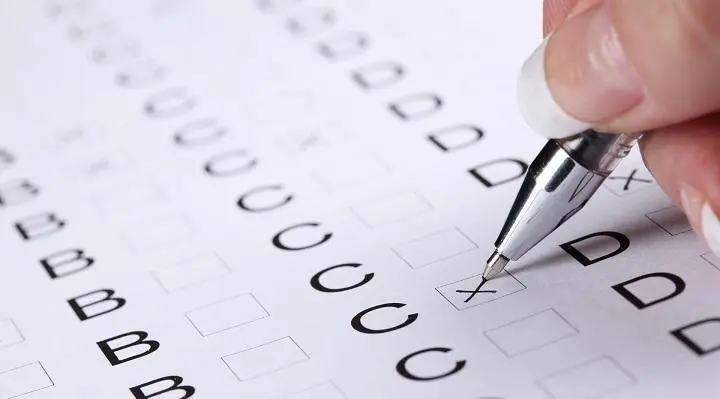
Most "free" IQ tests hand you an inflated number from an unknown norm group. ACIS lets you start free and complete real ACIS subtests at no cost, then unlock your Full Scale IQ, six-domain profile, and detailed report when you choose a paid assessment. The subtests you finish in the trial carry over, so nothing you complete is wasted.
0 Quick Answer
You can start the ACIS IQ test for free. Begin a free trial and complete a selection of real ACIS subtests, no payment required to try it. Be clear on one thing up front: the trial does not display a score. It lets you experience the actual assessment, and your Full Scale IQ, six-domain profile, and complete report are revealed only when you choose a paid assessment (from $15, backed by a 5-day quality guarantee). The subtests you finish in the trial carry over to the assessment you buy, so none of that effort is wasted. This is deliberately different from the typical free quiz: instead of a flattering number from an unknown source, you try a genuine, properly built assessment and judge its quality firsthand before you pay.
Honest answer: a genuinely useful IQ score takes a broad, normed battery, and that part is paid because it is real psychometric work, not a five-minute quiz. The free trial exists so you can see that quality for yourself first. If you only want a throwaway number to share, any free quiz will give you one; if you want a score you can actually trust and learn from, start here. This guide explains what "free" really means in IQ testing, why most free tests mislead, exactly what ACIS measures, how accurate it is, and how to read your result responsibly.
"Free IQ test" can mean two very different things, and the difference matters more than almost anything else about the result.
Free as in disposable. The most common kind costs nothing because it is worth nothing: a short quiz with no real norms, a handful of pattern questions, and a number generated to flatter you (often followed by a paywall for a "certificate"). It is entertainment dressed as measurement. That paywall is one of four ways a paid test can bill you, and which charging structure a given test is running is the part the checkout screen never shows. The score does not tell you where you stand among adults, because it never compared you to a defined group in the first place.
Free as in "try the real thing." The other kind, what ACIS offers, is a free trial of a serious, properly built assessment. You complete a selection of real subtests and experience the actual test firsthand; you only pay if you decide you want the scored result, your Full Scale IQ, profile, and detailed report. The trial itself shows no score, but the subtests you complete carry over to the assessment you choose. Nothing about the trial is fake or padded; it is a genuine sample of the same instrument that produces the paid result.
Why isn't the full validated score simply free? Because building and maintaining a real test is expensive in a way a quiz is not. It requires a large normative sample, item calibration, reliability analysis, and ongoing validation, the work that turns "you got 18 right" into "you scored at the 84th percentile of adults, with this confidence interval." The honest trade is simple: trying the test is free, and the validated result that took that work to produce is paid. The free trial is how you verify the quality is worth it before you spend a cent. A third kind of free proves how expensive that work is: the public domain ICAR item pool was built by academic psychometricians, has been openly documented since 2014 and is genuinely rigorous, and it still cannot tell you where you stand, because nobody has ever published the table that turns an ICAR raw score into a percentile.
2 Why most free IQ tests are misleading
The reason free IQ quizzes are everywhere is that they cost nothing to make, and it shows in the result. Before you trust any free score, know the three failures that make most of them meaningless:
No real norms. Your IQ is not a count of correct answers; it is your position relative to a reference group. Free quizzes rarely have a defined, representative norm group, so the "IQ" they print is a guess dressed up as a measurement. See How IQ Scores Are Normed.
Inflated scores. Many free tests are tuned to flatter, they hand out high numbers because a happy user is more likely to buy a certificate or share the result. A test that almost never tells anyone they are average is not measuring; it is marketing.
One narrow skill. A single pattern or matrix quiz taps one ability. General cognitive ability shows up across several distinct domains, so a one-trick quiz cannot estimate it. See Free vs. Validated IQ Tests.
There is also the certificate trap: take a "free" test, get a flattering number, then pay to "unlock your certificate." You have paid for a meaningless score with no norms behind it, the worst of both worlds. ACIS inverts that model: the trial is genuinely free and the thing you pay for is the real, normed, interpretable result. For more myths worth clearing up, read Common Myths About IQ Tests, Debunked. The clock gives you a fourth tell before you answer a single item, since the administration times publishers actually print are 45 minutes for the seven subtest Full Scale on the WAIS-5 and 50 minutes for the ten subtest Stanford-Binet 5, which makes a three minute quiz not a shorter version of a real test but a different object.
3 What's free vs what's paid
No hidden surprises. Here is exactly where the free trial ends and the paid assessment begins, so you know precisely what you are trying before you decide:
What you get
Free trial
Paid assessment
Take real ACIS subtests
Selected subtests
All subtests in your tier
Experience the real test & items
Yes
Yes
Trial subtests carry over on purchase
Yes
Yes
Full Scale IQ (FSIQ)
No
Yes
Six domain index scores & profile
No
Yes
Percentiles & confidence interval
No
Yes
Detailed score report
No
Yes
5-day quality guarantee
No
Yes
In other words, the free trial answers "is this test any good?" and the paid assessment answers "what is my actual cognitive profile?" You never pay to find out whether the instrument is serious, you only pay for the validated result once you have seen the quality for yourself.
A trustworthy IQ test samples broadly, because general cognitive ability (the g factor) expresses itself across distinct but correlated abilities. ACIS is organized around the Cattell–Horn–Carroll (CHC) model, the dominant scientific framework for the structure of intelligence, and measures six broad domains. Each produces its own index score, and together they combine into your Full Scale IQ, which is exactly what a single free quiz cannot do. Sampling that broadly through a browser is possible, and it is the difference between a novelty page and a real online IQ test with published norms and reported reliability.
Verbal Comprehension (VCI), crystallized intelligence (Gc). Accumulated knowledge, vocabulary depth, and verbal reasoning. It reflects education and reading and tends to keep growing well into later adulthood. Subtests: Vocabulary, Information, Similarities, Antonyms, and Synonyms.
Fluid Reasoning (FRI), fluid intelligence (Gf). Solving novel problems and detecting patterns without relying on learned facts. Gf is the most heavily g-loaded domain, the "purest" reasoning measure. Subtests: Matrix Reasoning, Figure Weights, Visual Number Series, Logic Grid, and Complex Relations.
Visual-Spatial Processing (VSI), visual processing (Gv). Perceiving and mentally manipulating visual patterns and spatial relationships, including mental rotation. Subtests: Visual Puzzles, Layer Rotation, and Spatial Comprehension.
Working Memory (WMI), working memory (Gwm). Holding information in awareness and manipulating it in real time; it underpins reading comprehension and mental arithmetic. Subtests: Digit Span, Alphanumeric Sequencing, and Visual Sequence.
Processing Speed (PSI), processing speed (Gs). How quickly and accurately you execute simple cognitive operations under time pressure. Subtests: Coding and Symbol Search.
Quantitative Reasoning (QRI), quantitative knowledge (Gq). Mathematical knowledge and reasoning with numbers and quantities. Subtests: Mathematical Achievement and Arithmetic.
Why measure six domains instead of one? Because general cognitive ability is best estimated by sampling widely and then examining what the scores share in common. Each domain contributes to your overall Full Scale IQ, but the domains also stand on their own, revealing whether your strength is verbal, spatial, quantitative, speed-based, or in working memory. A single-skill quiz collapses all of that into one narrow measurement and calls it your IQ; a six-domain battery gives you both the summary and the shape behind it. That distinction, one number versus a number plus a profile, is the clearest practical reason a real, normed test is worth more than a free quiz, and it is exactly the kind of structure that cannot be improvised cheaply.
Breadth is the single biggest difference between a free quiz and a real test. ACIS draws on 20 subtests so that no single strength or weakness dominates your Full Scale IQ. Here is how they map onto the six domains:
The free trial lets you experience real ACIS subtests firsthand, the actual interface and item types, so "is it any good?" stops being a guess and becomes something you have seen for yourself. The trial draws on the working-memory and processing-speed subtests and does not display a score; the full battery and your result come with a paid assessment.
6 How accurate can a free-to-try online IQ test be?
Accuracy is not all-or-nothing; it depends on norms, breadth, reliability, and transparency. No online test matches a supervised clinical evaluation, but a serious online battery can give a genuinely useful estimate, and ACIS publishes its psychometric work rather than asking you to trust a claim:
Confirmatory factor analysis (CFA). The six-domain structure and the underlying g factor are supported by CFA, with g-loading estimates reported, based on N = 2,750 complete records.
Reliability and standard error of measurement. Each score is reported with its precision, so you see the confidence interval around your number instead of a false point estimate.
Transparent norms. Results are interpreted within a defined adult reference frame of 3,243 eligible records, ages 16 to 90.
Breadth. Twenty subtests across six domains mean the Full Scale IQ reflects general ability, not one narrow skill.
This is the dividing line between a free quiz and a free-to-try real test. The quiz has none of the above; ACIS has all of it. What an online test still cannot do is replace a professionally administered, supervised assessment for diagnosis, accommodations, or legal use, and ACIS is transparent about that ceiling. The full methodology is in the Technical Manual and Reliability & Validity; for the honest limits, read Are Online IQ Tests Accurate?
7 What your IQ score predicts, and what it doesn't
An IQ score is one of the most studied measures in psychology, and it is genuinely informative, but it is a probability, not a verdict, and that is worth understanding before you put weight on any number, free or paid.
What it relates to. Across large bodies of research, general cognitive ability shows meaningful average relationships with academic achievement, job performance (especially in complex roles), learning speed, and income. ACIS covers the evidence and its limits in IQ and Academic Achievement, IQ and Job Performance, IQ and Income, and IQ and Success.
What it does not do. IQ is a population-level correlation, not individual destiny. It does not measure creativity, conscientiousness, emotional intelligence, motivation, or character, traits that powerfully shape real outcomes. Many high scorers underachieve and many average scorers thrive, because outcomes are multiply determined. This is exactly why chasing a flattering free-quiz number is pointless: even a real, accurate score is one informative data point about one set of abilities, not a label that fixes your future. The value is in understanding your profile, not in collecting a high digit.
8 Common myths about free IQ tests
"A free online number is my real IQ." No single score from any instrument is an exact point value, and a quiz with no norms is not your IQ at all. A real result comes with a confidence interval and a defined comparison group.
"Free and paid tests are basically the same, paid ones just charge." The difference is norms, breadth, reliability, and difficulty calibration, the costly work that turns answers into a meaningful score. See Free vs. Validated IQ Tests.
"You can train your IQ up with brain games before testing." Practicing item types inflates a specific score without raising real ability, which defeats the purpose of measuring yourself honestly.
"A high score guarantees success." Ability correlates with outcomes but does not determine them; motivation, personality, and circumstance matter enormously.
The practical takeaway: don't treat a free quiz number as real, don't cram, and don't chase the highest possible digit. The point of testing is an honest snapshot of where you stand, which is why the free trial leads into a real measurement rather than a flattering one. Where the measurement happens matters too, because among the routes covered in where to take an IQ test only the in person ones produce a report that schools, clinics or courts will accept.
9 How to get an accurate result
Because an online test depends on you to create good conditions, a little care meaningfully improves how representative your score is, whether you stop at the free trial or continue to the full assessment:
Test when rested and alert. Fatigue, alcohol, illness, and stress depress performance, especially on timed and working-memory subtests.
Remove distractions. Silence notifications and find a quiet space; interruptions hurt working-memory and processing-speed scores most.
Use a suitable device. A laptop or desktop with a keyboard and a larger screen is best for spatial and timed subtests, so the result reflects your ability rather than your phone.
Don't pre-study item types. Practicing matrix or figure-weight puzzles beforehand inflates the score and lowers its accuracy.
Take it in good faith, once. Your first careful attempt under good conditions is the most informative; repeated retakes introduce practice effects.
None of this is about gaming a higher number; it is the opposite. The goal is to give the test a fair chance to measure you accurately, so the profile you get back is one you can actually trust.
10 How the free trial works, and what's next
Start the free trial and complete the selected subtests at your own pace. The trial does not display a score, when you're ready for your actual results, choose the tier that fits your goal and your time, and your completed trial subtests carry over to it:
Tier
Best for
Subtests
Time
Price
Quick
A fast, reliable baseline
6
~45 min
$15
Optimized
Most people, best breadth-to-time balance
13
~110 min
$30
Full Scale
The complete six-domain profile
20
Full battery
$50
Every tier is self-paced, so you can take breaks and resume within 30 days. Every paid tier includes the detailed score report and is backed by a 5-day quality guarantee: if the report doesn't deliver what's described, or a technical issue blocks access to your results, you can request a full refund within 5 days (see Terms). See full pricing on the ACIS home page, or compare options in Best Online IQ Tests and the selection guide Best IQ Test.
You want a baseline to understand how you learn and where strategy helps most.
Research-minded
You value transparent methodology, published reliability, and honest uncertainty.
Who should not rely on it: if you need a score for clinical diagnosis, school or workplace accommodations, disability claims, or legal purposes, no online test, free or paid, is the right tool. Those require a professionally administered, supervised assessment interpreted by a qualified psychologist. See Professional vs Online IQ Test.
12 How to read your result
If you continue past the free trial, your report is built so you can read it responsibly:
Full Scale IQ (FSIQ). Your overall standardized score (mean 100, SD 15), the best single summary, but still a summary. See Full Scale IQ.
One habit separates people who get value from a score from those who don't: resist collapsing a rich result into a single bragging-rights figure. The midpoint of your Full Scale IQ is the least interesting part of the report. The confidence interval tells you how precise it is, the percentile tells you where you stand among adults, and the six-domain profile tells you the part that actually guides decisions, which abilities to lean on, and where a little structure or extra time helps more than effort. Read in that order, even an average overall score can be genuinely useful, because the profile underneath it is rarely flat. That is the difference between a number you glance at once and a measurement you return to.
Costly, requires appointment, often long waitlists
If you want insight, start free with a serious test and pay only for the result if it earns it. If you want an official decision, choose a professional evaluation. The detailed comparisons are in Professional vs Online IQ Test and Free vs. Validated IQ Tests.
If you continue to your full result, here is what the bands mean. IQ uses a standardized scale with a mean of 100 and a standard deviation of 15, so every 15 points is one standard deviation from average:
IQ range
Classification
Approx. percentile
Roughly how rare
130 and above
Gifted / very superior
~98th+
~1 in 44 (top 2%)
120–129
Superior
~91st–97th
~1 in 11
110–119
High average
~75th–90th
~1 in 4
90–109
Average
~25th–73rd
~1 in 2 (the bulk)
80–89
Low average
~9th–23rd
~1 in 6
Below 80
Below average
under 9th
~1 in 11
Notice that the average band is wide, about half of adults score between 90 and 109, and that rarity climbs steeply at the top: 130 is roughly 1 in 44, while 145 is around 1 in 740. This is one more reason a flattering free-quiz number is misleading: real tests place most people near the middle, because that is where most people actually are. To translate any score, use the IQ Percentile Calculator and IQ Rarity Calculator, and for context read What Is a Good IQ? and Gifted IQ Range.
15 What makes an IQ test worth paying for
If the trial is free, the fair question is what exactly you are paying for when you unlock the full result. The honest answer is that you are paying for the parts a free quiz cannot fake, the infrastructure that turns answers into a meaningful score:
A real normative sample. Your score only has meaning relative to a defined group. ACIS interprets results within an adult reference frame of 3,243 eligible records ages 16 to 90. Building and maintaining that sample is the single most expensive and most important thing a serious test does, and it is precisely what free quizzes skip.
Breadth across six domains. Twenty subtests covering Verbal Comprehension, Fluid Reasoning, Visual-Spatial Processing, Working Memory, Processing Speed, and Quantitative Reasoning mean the Full Scale IQ reflects general ability, not one lucky skill. A profile across domains is something a single-quiz score literally cannot produce.
Reliability and a confidence interval. A paid result tells you how precise it is, reporting a band rather than pretending a single number is exact. That honesty is a feature, not a hedge.
A report you can interpret. Rather than a bare number, you get percentiles, classification bands, and a domain profile you can actually act on, the difference between "you got a 128" and "here is where you stand and why."
Transparency and a guarantee. The methodology is published in the Technical Manual, and every paid tier is backed by a 5-day quality guarantee, so the risk of paying is genuinely low.
Put simply, a free quiz sells you a number; a serious test sells you a measurement. The trial exists so you do not have to take that on faith, you sample the real thing first, then decide whether the validated result is worth $15 to $50 to you. For a structured way to weigh that decision, see Best IQ Test and the head-to-head in Best Online IQ Tests.
16 The hidden cost of a meaningless free score
It is tempting to think a free IQ number is harmless even if it is inaccurate, that the worst case is simply learning nothing. In practice, a meaningless score can cost you more than nothing, because people act on numbers even when they shouldn't. Avoiding that cost means checking the instrument before the result, which is the practical use of a checklist for judging whether an IQ test is accurate.
An inflated score can mislead real decisions. Someone who is told they scored 138 on a flattering quiz may make choices, about study, career, or how they see themselves, anchored to a number that was engineered to please, not to measure. A deflated or noisy score can do the opposite, quietly discouraging someone whose actual ability is fine. Either way, a fake number is not neutral; it nudges real beliefs and behavior.
It crowds out a useful answer. The whole reason to test is to learn something true about how you think. A quiz that hands everyone a high number answers the wrong question ("did this make me feel good?") instead of the right one ("where do I actually stand, and what is my cognitive shape?"). You walk away thinking you have an answer when you have only a flattering placeholder.
The certificate trap adds insult. Many free tests are funnels: a flattering score, then a paywall for a "certificate" of a number that has no norms behind it. You end up paying for the least valuable thing, a printable version of a meaningless result.
This is exactly why ACIS is structured the other way around. Trying the real assessment is free, so you never pay to discover whether it is serious; and the thing you can pay for is the validated, normed, interpretable result, not a decorative number. If your goal is genuine self-knowledge, an honest measurement, even one that places you squarely in the average band, is worth far more than an inflated free score. For the broader case, read Free vs. Validated IQ Tests and Are Online IQ Tests Accurate?
17 After your result: what to do with your score
If you continue past the trial, a score is a starting point, not an endpoint. Here is how to get real value from your ACIS report rather than reducing it to a single number to memorize:
Read the number with its interval. Your Full Scale IQ comes with a confidence band. Internalize the band, not just the midpoint, your true ability most likely lies within it, and a difference of a couple of points is not meaningful.
Study your profile, not just your peak. Look at all six domain scores together. A relative strength in fluid or quantitative reasoning suggests where you learn fastest; a relative dip in processing speed points to where tools or extra time, rather than more effort, help most.
Translate it into percentiles and context. Convert your score with the IQ Percentile Calculator, see where it sits on the IQ Score Chart, and check rarity with the IQ Rarity Calculator. Percentiles usually communicate "where you stand" more clearly than the raw point.
Don't immediately retest. Practice effects inflate quick retakes; if you ever retest, wait, and expect a result within the same confidence band rather than a dramatic jump.
Used this way, your result becomes a piece of self-knowledge you can act on, a map of your strengths and the areas where strategy helps, rather than a label. That is the entire point of paying for a real score instead of collecting a free one: a number you can actually learn from. The full interpretation workflow is in What IQ Scores Mean.
A detail that separates a real test from a free quiz is whether it accounts for age, because cognition is not static across adulthood. Different abilities follow different trajectories, and a serious test compares you to people your own age rather than to a single fixed standard. This is one more thing a no-norms quiz cannot do, and it is part of what you are paying for in a validated result.
Fluid reasoning peaks early. Novel problem solving and processing-heavy reasoning tend to peak in the mid-20s and decline gradually thereafter. Without age norms, a raw comparison between a 22-year-old and a 60-year-old on fluid tasks would be misleading, because the younger adult has a developmental advantage on exactly those tasks regardless of their standing among peers.
Crystallized ability keeps growing. Vocabulary, knowledge, and verbal reasoning often continue improving well into later life, partially offsetting fluid decline. An experienced adult frequently compensates for slower raw processing with deeper knowledge, better strategy, and pattern recognition built over decades, the cognitive basis of expertise. A free quiz that ignores this paints an incomplete and often unfair picture of older test-takers.
Processing speed is the most age-sensitive. The speed of simple cognitive operations typically shows the earliest and clearest age-related change, which is why a good test measures it as its own domain rather than burying it in the overall score. Separating it means a capable older adult is not penalized across the whole assessment for a slower reaction time on timed tasks; the comparison is against same-age peers, where that change is shared.
Because these trajectories differ, your Full Scale IQ is most useful when read alongside your domain profile and an appropriate age reference. ACIS interprets results within an adult reference frame covering ages 16 to 90, so the question it answers is "how do I compare to people like me?" rather than "how do I compare to an arbitrary benchmark?" That is true whether you start with the free trial or continue to the full result, the scoring is built to be age-aware either way. For population context, see Average IQ by Age, and for why average scores have appeared to drift across generations before re-norming, see The Flynn Effect Explained. If you specifically want an adult-focused entry point, the IQ Test for Adults guide covers it in depth.
19 Frequently asked questions
Is the ACIS test free?
You can start free, take selected subtests with no payment. The full Full Scale IQ and report are a paid tier.
What do I get for free?
A selection of real subtests to try the actual test and judge its quality. No score is shown; the result comes with a paid tier (trial work carries over).
Are free IQ tests accurate?
Most aren't, no norms, single skill, inflated. A broad normed battery like ACIS is far more meaningful.
Why isn't the full test free?
A real normed score is genuine psychometric work; the free trial lets you verify quality first.
How much does it cost?
Quick $15, Optimized $30, Full Scale $50, each with the report and a 5-day guarantee.
Can I get my IQ free?
No. You can take real subtests free, but the IQ score, profile, and report need a paid assessment.
How long does it take?
~45 minutes (Quick) up to the full battery, self-paced with breaks within 30 days.
How many subtests?
20 across six domains: 6 in Quick, 13 in Optimized, all 20 in Full Scale.
What does it measure?
Verbal, Fluid, Visual-Spatial, Working Memory, Processing Speed, and Quantitative Reasoning.
Will I get a real score?
With a paid tier: a Full Scale IQ plus six domain scores, percentiles, and a confidence interval.
Choosing a test is easier with the primary documentation in hand. These sources cover the standards a legitimate test meets and what real score reports contain.
Federal Trade Commission (2022). Bringing Dark Patterns to Light. The FTC staff report on design practices that obscure subscriptions and charges, worth checking any paid online test against.
American Psychological Association. Understanding psychological testing and assessment. What professionally administered testing involves and how it differs from informal quizzes.
Buros Center for Testing. The independent center whose Mental Measurements Yearbook has reviewed commercial tests since 1938. The reference point for claims about test quality.
American Psychological Association. The Standards for Educational and Psychological Testing, the joint AERA, APA and NCME framework that legitimate tests are built and evaluated against.
Pearson (2024). WAIS-5, Wechsler Adult Intelligence Scale, Fifth Edition. The current adult battery, covering ages 16:0 to 90:11 across five cognitive domains.
Riverside Insights. Stanford-Binet Intelligence Scales, Fifth Edition. A second current publisher with a different structure and a different age span, from 2 to 85 and above.
Pearson (2008). WAIS-IV Score Report sample. What a real report contains: every composite paired with a percentile rank, a 95% confidence interval and a qualitative description, never a bare number.
Pearson Clinical Assessment Scientific Council (2023). Standardized Clinical Assessment for Practitioners: A Primer. How standard scores, percentile ranks and the standard error of measurement are meant to be read together.
Voncken, L., Albers, C.J. & Timmerman, M.E. (2019). Improving confidence intervals for normed test scores. Behavior Research Methods. Open access. Documents the mean 100, SD 15 metric and the uncertainty that norming from samples adds to any score.
Crawford, J.R., Garthwaite, P.H. & Slick, D.J. (2009). On percentile norms in neuropsychology. The Clinical Neuropsychologist, 23(7), 1173-1195. Three definitions of a percentile coexist in practice and can return different results for the same score.
Take the assessment
You get a profile, not a number
ACIS measures six CHC domains across 20 subtests and reports each one with its own normed score and confidence interval, so you can see where you are strong and where you are not.