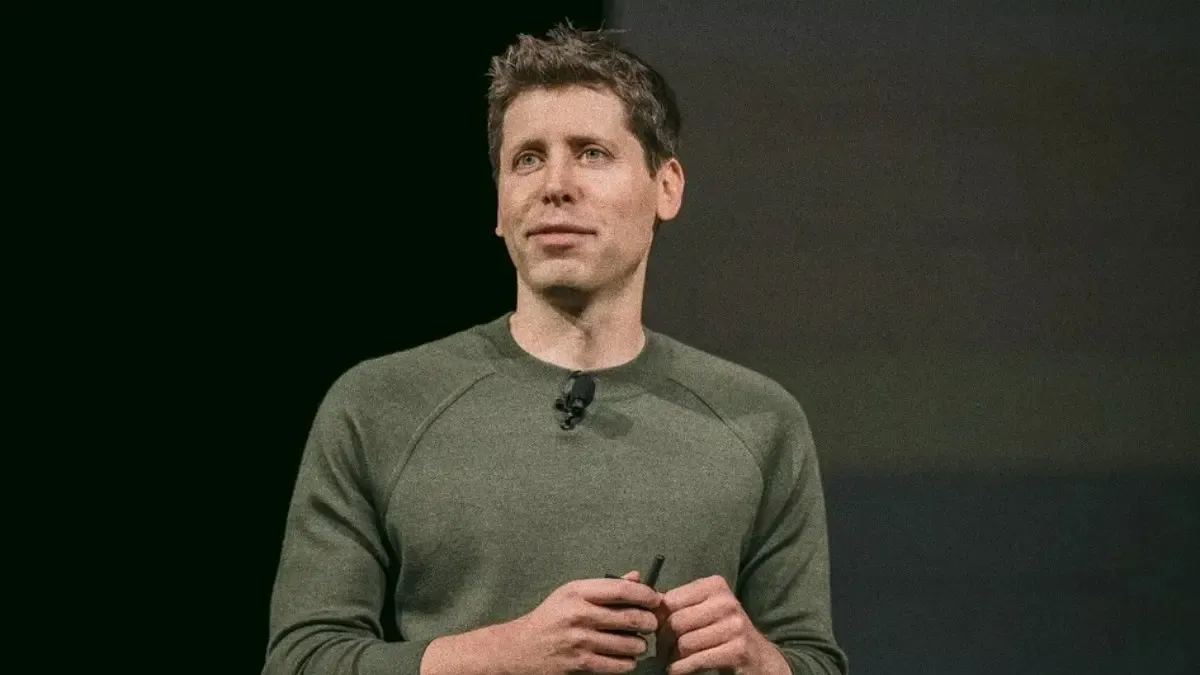
No verified IQ report, admission score, named instrument, examiner record, or authorized test result for Sam Altman is public. The 170 figure circulates through celebrity estimate sites that cite one another. His Stanford, startup, investing, organizational, and AI leadership record supports high ability, but it cannot support an exact extreme score.
Leadership in advanced technology is strong evidence of domain achievement. It is not a substitute for a standardized cognitive score report.
1 The Short Answer
Sam Altman's IQ is not publicly known. The viral 170 figure is an online estimate repeated through citation loops, not a released test result. No public source identifies a standardized instrument, edition, examiner, administration date, SAT score, Full Scale composite, or authorized report. His record supports a high ability inference, but the gap between high ability and 170 is enormous and cannot be crossed with job titles.
No verified score
Official OpenAI and Stanford sources document education and roles, not psychometric test results.
125 to 140
This central estimate reflects selective education, entrepreneurship, investment judgment, and complex leadership.
115 to 145
The broad 90 percent uncertainty interval discounts team achievement and the absence of direct anchors.
The key correctionLeading people who build advanced AI is not the same as personally scoring at the ceiling of a human intelligence test.
Pages assigning Altman 170 usually call it an estimate, then surround the number with Stanford, startup, and OpenAI achievements. Later pages remove the estimate label and cite the first page as a source. A third page cites both, creating apparent agreement. The evidence remains one inference repeated through a network.
No original score report sits at the bottom of the chain. There is no named test, testing age, date, scale, confidence interval, examiner, or authorized disclosure. Some pages cite other celebrity IQ databases whose own methods convert success and reputation into numbers. The citation proves that another website made an estimate, not that Altman took a test.
The value 170 is attractive because it matches the story of artificial intelligence as an extreme intellectual frontier. A company associated with powerful AI seems to require a leader with a superhuman score. That narrative transfers the perceived intelligence of the technology and scientific team to the executive. It is a category error with strong marketing appeal.
Extremity also improves clicks. A headline saying likely high ability with wide uncertainty competes poorly with genius at 170. Search repetition rewards the dramatic number, and the repeated result later appears to validate the original clickbait. Evidence based content has to resist that feedback loop rather than imitate it.
Fictional characters get the same treatment. The 211 attached to Light Yagami appears on a content page whose own structured data lists November 11, 2023 as its publication date, states the figure as a base IQ, and gives no scene, test or databook page for it. A page written to answer the search has a reason to print a number, as the source trail for the Light Yagami 211 shows.
Privacy remains legitimate. Altman has no obligation to disclose test or admission records. The absence of a public score does not prove a lower result. It means the public answer is unknown, and any estimate must be labeled, ranged, and justified.
A fact check should also distinguish a page's confidence from its method. Some estimate sites present biographies in a scientific tone, calculate percentiles, and compare the result with other founders. Those calculations begin after the unsupported number has already been chosen. Mathematical formatting can explain what 170 would mean, but it cannot establish why 170 belongs to Altman.
The citation loop becomes harder to see when pages use phrases such as experts estimate without naming the experts, data, or model. An estimate can be legitimate if assumptions and uncertainty are visible. An anonymous exact value has no greater authority because a writer calls it expert. The source must be evaluated before the conclusion.
3 What Stanford Actually Establishes
Stanford eCorner describes Altman studying computer science as an undergraduate for two years before leaving after his sophomore year to build Loopt. That record supports admission to a highly selective technical environment and engagement with computer science. It does not disclose SAT scores, grades, class rank, or an IQ test.
Leaving without a degree is sometimes presented as proof of genius because famous founders followed similar paths. The more accurate interpretation is contextual. Altman left to pursue a startup opportunity. The decision may reflect risk tolerance, ambition, timing, network access, or confidence as well as ability. A dropout label alone supports neither a high nor low score.
Estimate sites often compare a chosen number with other founders, but the research on founders uses different tools. One study of Swedish male founders reported that higher founder cognitive ability went with higher venture sales, and another found hired non-family CEOs scored above founder CEOs. The page on what founder studies measured and what they did not separates those results.
Stanford admission raises the prior probability of strong academic performance, but selected institutions contain wide ranges and use holistic admissions. Grades, course rigor, essays, recommendations, activities, opportunity, and institutional goals matter. Without an authenticated admission score, converting admission to 170 is impossible.
Computer science study provides a relevant but incomplete cognitive signal. Programming and theory can draw on fluid reasoning, quantitative reasoning, working memory, and acquired knowledge. Two years of study do not reveal standardized performance across those constructs. Nor does an executive career prove continued technical depth in every research area.
The academic evidence therefore supports the direction of a high estimate without determining its upper tail. It is stronger than a fan impression but weaker than a released standardized result. This proportional weighting is the core of the method.
Range restriction matters at Stanford. Students have already passed a demanding selection process, so differences within the group cannot be mapped simply to population IQ. A founder who leaves may be among the strongest students, an ordinary admitted student pursuing an opportunity, or somewhere between. The institution provides a useful prior while concealing the exact standing needed for a narrow estimate.
Technical education and executive technology work should also be separated. Understanding enough computer science to found and lead companies is not the same as producing frontier mathematical or engineering research. Both can demand intelligence, but the evidence is different. This page credits the verified educational exposure and avoids assigning every technical achievement of employees to the executive.
4 Loopt, Y Combinator, and Pattern Judgment
Founding Loopt required product building, fundraising, hiring, market adaptation, and persistence through an early mobile technology environment. A company acquisition provides evidence that the effort created value for a buyer. It does not reveal which outcomes came from Altman's individual reasoning, cofounders, investors, market timing, platform shifts, or negotiation.
Y Combinator leadership provides a different signal. Evaluating founders and companies across markets can develop pattern recognition about teams, products, timing, and growth. Advising many startups exposes a person to rapid feedback and diverse business models. That learning environment can sharpen domain judgment beyond what a general reasoning task measures.
Selection success is noisy. Venture returns are concentrated, markets change, and a few outliers can dominate a portfolio. Access to a strong applicant pool makes it easier to observe future winners while creating a difficult credit assignment problem. Partners, networks, capital, brand, and cohort effects contribute to outcomes.
General ability can support fast learning and comparison of unfamiliar companies. Crystallized entrepreneurial knowledge grows with experience. Social judgment, persuasion, risk preference, and tolerance for ambiguity also matter. An IQ battery measures only part of that combination, which is why investment success cannot be converted directly into a score.
The estimate gives this record substantial positive weight because it spans founding and selection roles. It refuses to treat every successful company connected to Y Combinator as an item Altman personally answered correctly. Organizations distribute both cognition and credit.
Feedback quality can make entrepreneurial judgment look faster over time. Evaluating thousands of pitches creates a library of patterns about markets, teams, and failure modes. What begins as novel fluid reasoning can become crystallized domain expertise. That accumulated skill is real and valuable, but it should not be treated as repeated evidence of raw novelty at each decision.
Survivorship bias works in the other direction. Public narratives focus on companies and investments that succeeded while unsuccessful choices disappear or receive less attention. A psychometric task counts the full standardized response set. A biographical estimate rarely observes every decision, so it must discount curated outcomes and avoid treating a highlight portfolio as perfect judgment.
5 What OpenAI Leadership Can Show
OpenAI's official forum identifies Altman as cofounder and chief executive and describes his earlier Y Combinator leadership. The executive role involves strategy, capital, partnerships, product decisions, public communication, recruiting, governance, and managing tension between research, deployment, safety, and commercial demands. These are complex tasks consistent with strong cognitive ability.
The role does not make the executive the sole source of scientific work. Models, algorithms, infrastructure, evaluations, safety research, policy, and products are built by researchers, engineers, operators, and external collaborators. Leadership can select priorities and people without personally deriving every technical result.
Assigning the company's technological capability to one person's IQ would be like assigning a university's total scholarship to its president. Organizations are collective cognitive systems. Their performance depends on structure, incentives, capital, tools, culture, and many specialized minds. A leader's judgment matters inside that system, not outside it.
Public executive communication is also strategic. Concise forecasts, product presentations, testimony, and interviews are prepared for audiences and institutional goals. They can show verbal organization and conceptual framing while remaining poor standardized samples. Familiarity with recurring AI questions can make retrieval efficient without isolating fluid reasoning.
The record strongly rejects the idea that Altman's role is cognitively trivial. It equally rejects the shortcut from cognitively demanding leadership to 170. The missing distance requires direct performance data, not admiration for the field.
Decision time differs from test time. Executives may receive days of analysis, return to a question, consult experts, or run experiments. IQ subtests often require individual responses within minutes or seconds. The ability to build a process for good decisions can be more important in leadership than unaided speed. That process is an organizational achievement, not a standardized processing speed score.
Public controversy can distort estimates. Supporters may interpret successful product launches as proof of genius. Critics may interpret governance disputes or incorrect predictions as proof of low intelligence. Neither outcome isolates cognitive ability. A smart person can make poor decisions under incentives and incomplete information, and an ordinary ability person can make sound decisions with good systems and advice.
6 Executive Intelligence Is Distributed
A chief executive rarely makes decisions from raw information. Teams prepare metrics, memos, forecasts, legal analysis, safety assessments, technical summaries, and recommendations. The executive integrates selected inputs under time and incentive constraints. This can demand judgment while depending on the quality of the surrounding system.
Hiring and delegation are central. Choosing strong specialists, setting priorities, and deciding when to revise a plan can be more important than personally solving a technical problem. Those abilities combine cognitive skill with social perception, experience, values, authority, and organizational design. No single IQ subtest captures the whole role.
Company outcomes therefore create an attribution problem. Success can reflect a good decision, favorable market conditions, execution by teams, capital advantages, or network effects. Failure can follow a reasonable decision under uncertainty. Retrospective storytelling often assigns too much to the visible leader.
Leadership selection also creates a public visibility bias. Many highly capable researchers are less famous because their roles do not require constant media attention. Celebrity pages then estimate the executive while ignoring the people whose technical work provides stronger direct evidence of specialized reasoning. Fame is not a measurement channel.
Collective intelligence can exceed any member's individual capacity. Teams divide problems, critique proposals, store institutional memory, use software, and combine specialties. The executive can create conditions for that system to work well, which is a legitimate leadership accomplishment. Converting the system's output to the leader's individual IQ would erase the mechanism that produced the output.
Authority can also hide individual error. Subordinates may correct a flawed idea before implementation, or defer to it because of hierarchy. Public outcomes therefore do not provide a clean response record. A standardized test limits assistance and gives each examinee the same scoring rule, precisely what an executive environment cannot do.
7 The Evidence Hierarchy for the Estimate
A verified individual IQ report would receive the most weight. None is available. Authenticated admission test scores could provide a weaker quantitative anchor, but none is public. Stanford admission and computer science study provide selective academic evidence without a score. Loopt, Y Combinator, and OpenAI provide longitudinal occupational evidence with substantial confounding. Only the first item on that hierarchy is a measurement, and where a verified IQ report actually comes from has an ordinary answer: a licensed psychologist or neuropsychologist conducting an individually administered evaluation. Cases where that top tier does exist are rare and usually accidental, since the WAIS-R Full Scale of 136 filed in Ted Kaczynski's court record is public only because litigation put a competency evaluation on the docket.
The convergence across technical education, entrepreneurship, investment judgment, and executive leadership makes a central estimate below about 115 difficult to defend. The roles demand learning and abstraction across changing environments. The possibility remains because achievement can be amplified by motivation, networks, teams, opportunity, and risk tolerance.
A center between 125 and 140 balances those signals. It is high enough to reflect the unusual consistency and complexity of the record. It remains below the extreme rumor because no public evidence demonstrates performance four or more standard deviations above the mean.
The upper tail is limited by score ceilings and base rates. An IQ of 170 would be extraordinarily rare and beyond the precision of most ordinary validated batteries. A career can be rare for many reasons without requiring an equally rare IQ. Exceptional outcomes should not be assumed to share the same rarity as one psychological variable.
The 115 to 145 uncertainty interval allows alternative explanations. At the lower side, domain knowledge, drive, social judgment, networks, and teams explain more. At the upper side, the public record understates broad individual reasoning. The interval is an editorial judgment, not a test based confidence interval.
Base rates constrain the viral value. High ability is common enough among selective technical founders to make a central estimate above average plausible. A score of 170 is so rare that occupation and school alone cannot carry the evidence burden. Rare careers arise from combinations of traits and circumstances, not necessarily from one equally rare variable.
The method avoids using wealth or company valuation as cognitive points. Financial values change with markets, capital structures, investor expectations, and ownership. They can rise or fall without any change in the executive's ability. A psychological estimate should not fluctuate with a funding round.
8 Why 170 Is Psychometrically Implausible as a Precise Claim
On a mean 100 and standard deviation 15 scale, 170 lies more than four and a half standard deviations above the mean. Normal curve calculations suggest extraordinary rarity, but tail estimates become sensitive to assumptions. More importantly, most validated instruments have insufficient high difficulty items and norm cases for precise distinctions at that level. Score range and precision are worth checking before trusting any figure that far out, and how the leading online tests compare rates each option on exactly those properties alongside norms and security controls.
A test ceiling is not only the highest number printed in a report. It is the region where item information and norms support discrimination. Extrapolating beyond observed data can produce impressive values without corresponding precision. A score near or above 160 should always be interpreted with the instrument, norms, confidence interval, and ceiling in view.
Celebrity lists ignore those constraints. They assign 170, 180, or 200 to match a story of genius, then rank people separated by a handful of imaginary points. The ranking implies precision no modern battery could deliver, even if every person had been tested comparably.
A verified 145 would already represent exceptional performance. The public record does not authenticate that either, but the interval allows it as a less likely upper possibility. Moving from possibly very high to definitely 170 is not a small adjustment. It changes the evidence burden by orders of rarity.
The number 170 can also exceed the reporting policy of an instrument even when the examinee performs exceptionally. Some tests cap scores, report greater than a threshold, or use extended norms with additional uncertainty. Without the original manual and report, readers cannot know whether a claimed extreme value came from standard norms, an extension, a childhood ratio, or a website scale.
Founders of technology companies attract the same pattern of unsourced numbers. Nvidia's Jensen Huang carries 180 and 185 on celebrity lists, pages that tried to trace them found no test, examiner or date behind either, and a September 2026 headline attached a low IQ era to a remark about basic math. The Jensen Huang IQ audit follows that trail.
Precision should shrink as evidence weakens. Viral pages do the opposite: the more extraordinary and less documented the person, the more exact the number becomes. A defensible analysis makes the interval wider when the source is biography and narrower only when direct reliable testing is available.
9 The Defensible 90 Percent Range
Range
How it fits the public evidence
Judgment
Below 115
Possible only if noncognitive and organizational factors explain most of the record
Outside the main interval
115 to 124
Compatible with strong ability plus exceptional drive, networks and team leverage
Plausible lower tail
125 to 140
Best balance of selective education, repeated entrepreneurial judgment and complex leadership
Most plausible
141 to 145
Possible if the biography understates broad individual ability
Plausible upper tail
146 to 159
Requires direct evidence stronger than the public record
Weakly supported
170
No verified test and beyond ordinary precision
Unsupported viral claim
The central estimate should not be treated as a hidden test result. A value of 132 is no more verified than 170. The difference is that the range is explicitly an inference and its uncertainty is visible. Its purpose is to constrain exaggeration, not replace one rumor with another.
The lower and upper limits are not equally likely to the center. They remain because public career evidence cannot sample every domain or control conditions. Quoting only 145 would overstate the tail, while quoting only 115 would ignore the strongest evidence. The interval must be read as a distribution.
Comparing the central point with another founder's central point would also misuse the method. Their evidence quality, roles, and uncertainty differ. Broad overlapping intervals do not support a precise leaderboard. The more useful comparison is whether each page labels direct, self reported, converted, and estimated evidence correctly.
The interval can be updated if evidence changes. A released authenticated score would dominate the current biography, though the instrument and date would still matter. A verified SAT score could modestly sharpen the academic anchor. Another successful product would add little because it samples the same organizational domain. Evidence quality matters more than adding more achievements of the same type.
The point estimate should never be quoted without its label. Saying this page estimates a likely range is accurate. Saying Sam Altman's IQ is 132 would reproduce the error criticized here. Search snippets favor short answers, but the uncertainty is part of the answer rather than optional context.
10 What a Real Profile Would Measure
A broad adult battery would directly sample fluid reasoning with novel problems, crystallized intelligence or verbal comprehension with learned concepts, quantitative reasoning with standardized relations, visual spatial processing with mental transformation, working memory with controlled maintenance and manipulation, and processing speed with simple timed tasks. That is what a broad battery does in practice, and a broad IQ test normed on adults covers all six domains before combining them into a Full Scale score reported with a margin of error.
Altman's biography provides possible evidence for Gf and Gc through conceptual strategy and communication. Technical education suggests quantitative and formal exposure. Organizational roles can demand working memory but also provide notes, teams, tools, and time. Public activity offers little controlled evidence about visual spatial processing or psychometric processing speed.
AI knowledge is crystallized domain expertise, not proof of fluid reasoning at an extreme. Evaluating unfamiliar company or technology situations can involve Gf, but repeated experience builds patterns that reduce novelty. A standardized battery deliberately mixes tasks and controls exposure to estimate constructs beyond one career.
A real report would include confidence intervals and potentially evaluate whether a Full Scale composite adequately represents an uneven profile. Public observers cannot infer the shape. Concise speaking does not establish a speed peak, and strategic leadership does not establish a quantitative peak.
Age appropriate norms and current conditions would matter. Altman was born in 1985. A present test would compare him with adults of the same age on that instrument, not with founders or AI researchers. Biography instead aggregates performance across years and changing roles.
Profile interpretation would also examine whether differences exceed measurement noise and how common similar patterns are in the norm group. A relative strength in verbal comprehension could remain only average in absolute terms, while a relative weakness could still be high. Public narratives flatten that nuance into technical genius or business genius without measurements for either label.
Test security would matter if an extreme claim were being evaluated. Familiar internet puzzles, repeated forms, assistance, and unlimited retakes can inflate results. A credible high range assessment needs difficult calibrated content and a controlled attempt. Fame does not exempt an examinee from the same validity requirements applied to everyone else.
The word intelligence appears in both IQ and artificial intelligence, encouraging false comparison. Human intelligence tests are standardized behavioral measures interpreted relative to human reference groups. AI benchmarks evaluate models on tasks under prompts, training exposure, tools, and scoring rules. They do not share one validated scale.
A model's benchmark result belongs to the system and evaluation, not to the executive. Many researchers, engineers, data processes, infrastructure decisions, and external contributions shape performance. Leadership can affect priorities and resources without becoming the measured subject.
Authorship lists do not solve the problem. Large technical reports can include contributors with different roles. Being named on an organizational publication is evidence of involvement, not a personal cognitive test. The relevant question for IQ remains how the person performs on standardized tasks, not how the organization performs on benchmarks.
Claims that building smart machines requires a smarter creator also fail historically. Tools can exceed their designers on selected dimensions through computation, data, and collective work. A calculator's speed does not reveal an engineer's arithmetic speed. A model's benchmark does not reveal Altman's IQ.
This distinction protects credit as well as measurement. It recognizes the scientific and engineering teams whose work would disappear inside a founder genius narrative. It also allows executive skill to be evaluated on its real tasks rather than an imaginary transfer of model capability.
AI systems can be trained on enormous corpora and run with computational resources no individual human possesses. Their performance profile is uneven and task dependent. A model can outperform a person on one benchmark and fail unexpectedly elsewhere. Calling both results IQ without a validated linking model creates a rhetorical comparison, not a scientific one. The headlines announcing that a model has reached a given IQ inherit exactly this flaw, and none of the studies behind those figures administered a normed intelligence test at all, to a person or to a system.
The CEO may be unusually skilled at recognizing which model capabilities matter to users, explaining a technical trajectory, or aligning capital with infrastructure. Those are real forms of judgment embedded in an industry. They strengthen the career inference while remaining different from the model's benchmark and from human standardized testing.
12 Common Myths About Sam Altman's IQ
Myth: Altman's IQ is confirmed at 170. No named test, report, date, or authorized release supports the figure.
Myth: Stanford dropout means either genius or failure. He left to build a company. The decision reflects context and cannot identify a score.
Myth: OpenAI's intelligence belongs to its CEO. The organization distributes cognition across large technical and operational teams.
Myth: startup valuation converts to IQ. Valuation reflects markets, capital, expectations, structure, competition, and negotiation, not standardized cognitive performance.
Myth: concise forecasts prove extreme fluid reasoning. Public communication is prepared, domain specific, and shaped by strategy. Accuracy must be evaluated separately.
Myth: a high IQ would make every decision correct. Ability does not guarantee values, information, humility, ethics, governance, or successful outcomes.
Myth: 170 is just a slightly higher version of 140. At extreme tails, rarity and measurement precision change dramatically. Most validated tests cannot support that exact distinction.
These institutional sources verify Altman's education and organizational roles. Neither reports an IQ, SAT, or other cognitive score. Their value is to anchor the biography while keeping the psychometric claim separate.
Encyclopaedia Britannica. The reference biography of Sam Altman, the documented record that any circulating IQ figure has to be checked against.
Cox, C.M. (1926). The Early Mental Traits of Three Hundred Geniuses, full text at the Internet Archive. The historiometric study behind most IQ figures still attached to historical figures.
Frey, M.C. & Detterman, D.K. (2004). Scholastic Assessment or g? Psychological Science, 15(6). The study linking SAT scores to measured cognitive ability, and the reason SAT conversions are estimates rather than measurements.
Lubinski, D. & Benbow, C.P. (2006). Study of Mathematically Precocious Youth after 35 years. Perspectives on Psychological Science. What long term follow up of verified high scorers actually shows.
Voncken, L., Albers, C.J. & Timmerman, M.E. (2019). Improving confidence intervals for normed test scores. Behavior Research Methods. Open access. Documents the mean 100, SD 15 metric and the uncertainty that norming from samples adds to any score.
Pearson (2008). WAIS-IV Score Report sample. What a real report contains: every composite paired with a percentile rank, a 95% confidence interval and a qualitative description, never a bare number.
The responsible conclusion is that Sam Altman's record makes high cognitive ability plausible and 170 unverified. The central estimate is a disciplined summary of indirect evidence, not a discovered score. His real achievements do not need an invented extreme number, and criticism of his decisions does not need an invented low one.
ACIS samples the user's own performance across 20 subtests and six broad CHC domains: fluid reasoning, crystallized intelligence or verbal comprehension, quantitative reasoning, visual spatial processing, working memory, and processing speed. The report provides Full Scale context, domains, subtests, percentiles, rarity, and confidence intervals.
ACIS is an independent online adult cognitive self assessment using an English speaking reference frame. It is not a clinical evaluation, employment selection test, legal credential, AI benchmark, founder ranking, or measure of entrepreneurial success, ethics, personality, creativity, emotional intelligence, or leadership.
A later ACIS result for Altman would not verify the origin of 170. It would be a new score from another instrument and date. The original claim can be authenticated only by original evidence. Readers can use direct assessment for their own self knowledge without treating the result as a prediction of startup success or comparison with a CEO.
The strongest takeaway is methodological: separate the intelligence of an organization, the expertise of a career, and the standardized cognitive performance of a person. They interact, but they are not the same measurement. Clear boundaries make both the achievement and the score more meaningful.
A user with a higher ACIS score would not thereby be a better founder, AI leader, investor, or communicator. Outcomes require motivation, expertise, networks, judgment, opportunity, risk preferences, and collaboration. A user with a lower score can still build exceptional domain skill. The report is a cognitive profile, not a career forecast or status certificate.
The page therefore leaves the most marketable claim unresolved on purpose. Evidence supports likely high ability, but it does not reveal whether the true score is 127, 138, or another value. That restraint is the difference between measurement literacy and founder mythology.
ACIS publishes technical evidence so that users can judge the measurement rather than infer quality from the subject matter. A test about reasoning is not valid merely because it looks difficult, just as a company working on AI does not give its leader a validated score. Norms, reliability, factor structure, security, and honest limitations create the evidential chain.
The practical outcome is a cleaner question. Instead of asking whether a public executive deserves 170, ask what a specific score means, how it was produced, and what decisions it supports. That shift turns intelligence from celebrity mythology into measurable performance with known uncertainty.
This approach also avoids reverse engineering a score from wealth or institutional power. Capital access, timing, team quality, market position, reputation, and governance structure can magnify a leader's decisions. Failure can arise from the same organizational variables without proving low ability. Cognitive testing deliberately narrows the question by presenting standardized tasks and comparing performance with a defined reference group. Even then, the report should preserve confidence intervals and construct boundaries. Biography can support a broad hypothesis about Altman's capabilities, but only direct, documented measurement could replace that hypothesis with a defensible test result.
No verified score is public. A cautious estimate is about 125 to 140, with a wide 90 percent uncertainty interval of roughly 115 to 145.
Does Sam Altman have an IQ of 170?
No public test evidence supports 170. The number appears to come from online estimation pages rather than a released score document.
Has Sam Altman released an IQ test?
No authenticated public score report was identified. Official OpenAI and Stanford biographies document his roles and education, not an IQ result.
Did Sam Altman take the SAT?
No verified SAT score is public in the reviewed sources. Guessing an admission score and converting it to IQ would compound unsupported assumptions.
Did Sam Altman graduate from Stanford?
No. Stanford records describe him studying computer science for about two years before leaving to build Loopt. Leaving for a startup is not academic failure evidence.
Does Stanford admission prove a high IQ?
It raises the probability of strong academic ability but does not establish 170 or any exact score. Admission uses many factors and a selected applicant pool.
Does running OpenAI prove a genius IQ?
No. Leadership at OpenAI supports strong strategic and organizational ability but depends on teams, capital, timing, governance, communication and specialized experts.
Is Sam Altman an AI researcher?
His primary public role is executive and entrepreneurial leadership. OpenAI research is produced by large specialist teams, and authorship or leadership should not be collapsed.
Does startup success measure IQ?
No. Startup outcomes combine ability with market timing, capital, teams, risk, networks, persistence, product fit and luck.
Does Y Combinator leadership indicate intelligence?
It supports evidence of pattern recognition, judgment and organizational skill, but investment outcomes and founder selection remain noisy, team based and market dependent.
Why is the estimate 125 to 140?
The range credits selective education, entrepreneurship and complex leadership while discounting the absence of direct scores and the team based nature of achievement.
What does the 90 percent interval mean?
It is a calibrated editorial uncertainty band, not a confidence interval calculated from a test. The wide range reflects missing direct evidence.
How rare would an IQ of 170 be?
It would be far beyond the ordinary validated range and extraordinarily rare. Most tests cannot support precise distinctions at that level.
Can business judgment reveal fluid reasoning?
It can involve novel problem solving, but outcomes also depend on knowledge, incentives, teams and uncertain markets. It is not a standardized Gf task.
Does concise speaking indicate high IQ?
Concise communication may reflect organization, practice and editorial preference. It is qualitative evidence, not a standardized verbal or processing speed score.
Is a CEO's intelligence the company's intelligence?
No. Organizations distribute cognition across researchers, engineers, operators, boards, advisers and tools. Leadership outcomes are collective.
Can AI benchmark scores reveal Altman's IQ?
No. Model benchmarks measure systems under defined prompts and scoring. They do not measure the executive who leads the organization.
Are historical ratio IQ values comparable?
No. Childhood mental age ratios and modern age normed deviation IQ are different scoring systems, especially at extreme values.
What was Cox's historiometric method?
Cox estimated ability from biographical achievement for historical figures. Those values were not standardized tests and do not verify modern celebrity claims.
Can an online test verify 170?
A valid current test could produce a new estimate for Altman if he took it. It would not authenticate the origin of the earlier 170 rumor.
How does ACIS differ from the 170 estimate?
ACIS measures the user's own performance across 20 subtests and six CHC domains. The 170 rumor is an indirect online estimate without a test record.
Take the assessment
You get a profile, not a number
ACIS measures six CHC domains across 20 subtests and reports each one with its own normed score and confidence interval, so you can see where you are strong and where you are not.