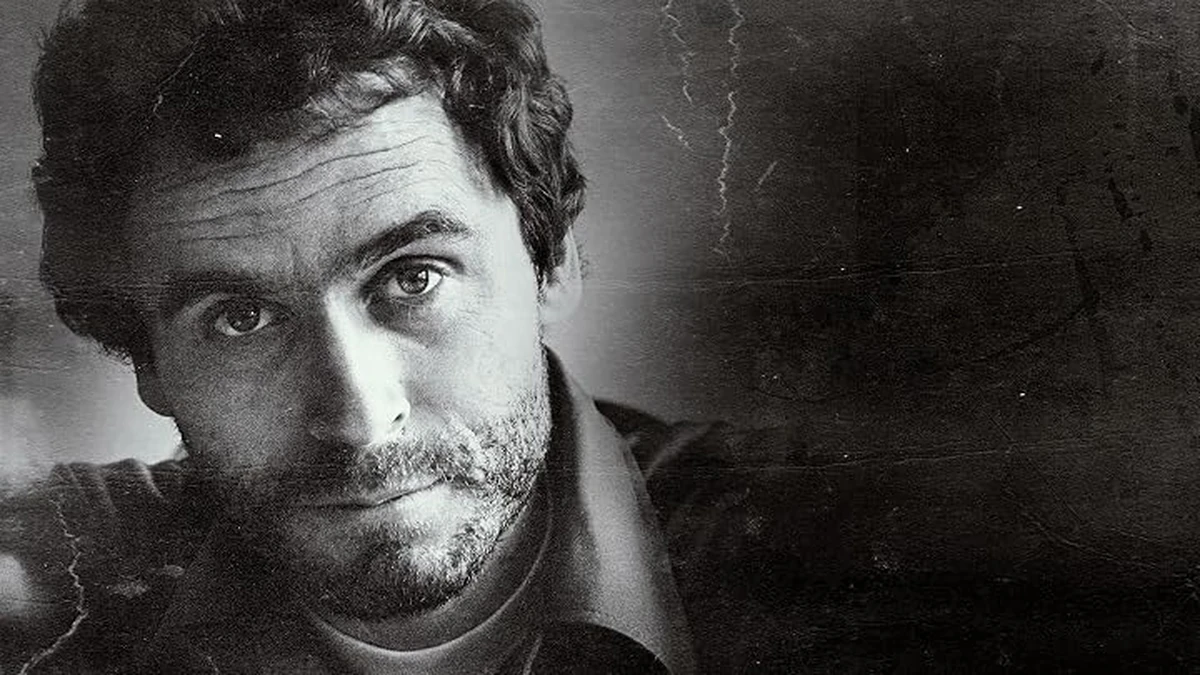
Ted Bundy's IQ: the 136 and the 124 that circulate
ACIS has never assessed Ted Bundy, holds no record belonging to him, and no retrospective assessment of anyone is possible. Two IQ figures circulate for him, 136 and 124, and neither comes with a test, date or examiner that this review could trace. This page follows each figure to its source, sets them beside what federal court opinions wrote about his intelligence, and states narrowly what research on intelligence and offending supports.
The two federal court opinions read for this page that comment on his intelligence, dated December 22, 1987 and July 7, 1988, describe it in words and report no test score.
0 The short answer
No test record for Ted Bundy's IQ has been found: the 136 and the 124 that circulate carry no test, date or examiner that this review could trace, and ACIS has never assessed him. The federal court opinions read for this page describe his intelligence in words, such as above normal intelligence and superior verbal skills, and neither reports a score. Research on intelligence and offending describes associations across large groups, and it cannot explain or predict what any one person does.
136
The figure printed on the most pages read for this review, none of which names a test, date or examiner.
2
Federal court opinions read for this page that describe his intelligence in words, with no test score in either.
15
Longitudinal studies in the 2016 meta-analysis of intelligence as a protective factor against offending.
1 Where does the IQ of 136 for Ted Bundy come from?
The 136 attached to Ted Bundy leads, on every page this review could open, to another page or to nothing, and no page names a test, a date, an examiner or a norm group. On October 13, 2026, this review opened the pages that rank for the question and read what each says about the basis of the number. The table sets each claim beside the evidence the page offers for it.
check-iq.org attributes a 136 to it, which this review could not confirm
Three chains run through the table, and none reaches a test. The Crime and Investigation page cites nothing. The Oxygen page cites another page of its own. check-iq.org cites a journal without naming an article, and its 139 for Crime and Investigation does not match the 136 on the Crime and Investigation page this review opened. A chain of pages that repeat one another is a single claim appearing many times, not many independent findings.
The Radford sheet deserves a closer look because it looks the most like a record. It is a summary compiled by students in the Department of Psychology at Radford University, and it sits on the website of the psychologist Mike Aamodt. It lists the 136 beside a college degree and a note on grades, and gives no test name, date or examiner. Its reference list holds books, among them works by Michaud and Aynesworth and by Ann Rule, and several web pages, none tied to the figure.
The faculty page on the same site is a different kind of document. Aamodt's Serial Killer IQ page, last updated September 16, 2012, reports summary figures for 202 killers (mean 95.1, median 89.0, range 57 to 165) and names no individual score other than the two extremes. It does not itemize cases, so it neither confirms nor contradicts any figure for Bundy. It also warns that extreme scores are more likely to be publicized and that there is certainly motivation to score low, especially below 70.
The earliest appearance of the 136 is not established here, and earlier ones may exist. What this review can say is that the number has no document under it. The reasons are the same ones that apply to any famous figure, which the page on the highest IQ claims sets out, and the page on celebrity IQ claims with every number sourced applies the same questions to many names.
ACIS has not tested Ted BundyACIS has never assessed Ted Bundy, holds no record belonging to him, and no retrospective assessment of anyone is possible. Nothing on this page is an estimate of his IQ, and no figure here should be read as one. Numbers on the page come from named sources or are labeled as our own arithmetic.
2 Where does the 124 come from, and what does it actually say?
The 124 is attributed in one place to a passage in a true crime book, and the copy of that passage this review could read names no examiner, no date and no age. A reader saved a highlight from a Kindle edition of Ann Rule's The Stranger Beside Me on Goodreads, and the highlight reproduces text attributed to the book. It asks what his IQ was and answers that it was 124 on the Standard Wechsler-Bellevue, then adds that he never tested at the genius level. The highlight is dated nowhere on the page, and this review could not open the book itself, so the edition, the page and the surrounding paragraphs are unchecked.
Read as it stands, the sentence is a second-hand statement of a result. It tells the reader which family of tests produced the number, a Wechsler scale, and it leaves everything else out. It does not say who gave the test, when, at what age, in what setting, or whether the author saw a report or heard a figure from someone else. Without those details the 124 cannot be placed on any norm group, and no confidence interval can be attached to it. The page on how IQ scores are normed explains why the norm group and date decide what a score means.
The 124 is better sourced than the 136 in one respect: it names a book with an author, which means it can be checked by anyone who holds the right edition. It is worse in another respect, because a sentence in a book is a claim by an author and not a test record. A published sentence is only as good as the document behind it, and the passage names none. This review therefore treats the 124 as an attributed figure, not a verified one.
The 124 on check-iq.org does not rest on Rule's book at all, since that page names a journal and a different book as its basis. The one check available here is therefore narrow: the only text of the Rule passage that this review found says a Wechsler test and 124, and says nothing more.
3 How far apart are 124 and 136, and what would each mean?
The two figures are 12 points apart, which on the usual scale is the difference between roughly the 94th and the 99th percentile, so they cannot both describe the same performance on the same test. The table converts each figure that circulates on a scale with a mean of 100 and a standard deviation of 15, assuming a normal curve. These are our arithmetic, and each holds only if the figure was reported on that scale, which none of the sources says.
Figure
Where it circulates
Distance above the mean
Percentile on the usual scale
Rarity on the usual scale
124
check-iq.org, and a book passage as read through a reader's highlight
1.60 standard deviations
About the 94.5th
About 1 in 18
130
brght.org quiz profile
2.00 standard deviations
About the 97.7th
About 1 in 44
136
Crime and Investigation, Oxygen, the Radford student sheet
2.40 standard deviations
About the 99.2nd
About 1 in 122
139
Reported by check-iq.org for a Crime and Investigation page
2.60 standard deviations
About the 99.5th
About 1 in 215
Several explanations could separate two real scores by 12 points. Two different tests give different results for the same person, because their norms, tasks and dates differ. A single test also carries measurement error, which is why a modern report prints an interval around a score, as the page on reliability and validity explains. A score from adolescence and a score from adulthood can differ again. Each of these explanations is possible, and none can be tested here, because neither figure comes with the details that would let a reader compare them.
There is also the scale itself. The page on why a standard deviation of 15 matters describes the scale that Wechsler tests use, and the same numeral on a ratio scale, where a mental age is divided by a chronological age, means something different. The page on mental age explains that older scale. A reader can look up where a given score falls with the IQ percentile calculator or the IQ rarity calculator, but the answer applies only when the scale is known.
The honest summary is that a number between 124 and 136 is in circulation, and no document says which, if either, was measured. For comparison, Aamodt's summary page reports a mean of 95.1 and a median of 89.0 across 202 killers, with a range from 57 to 165, and it does not say how the scores were obtained. Both the 124 and the 136 would sit above that mean. Because the page itself warns that extreme scores are more likely to be publicized, the mean is also not a clean benchmark.
4 What do the federal court opinions say about Ted Bundy's intelligence?
The federal courts that reviewed Bundy's competence to stand trial in 1987 and 1988 describe his intelligence in words, through the impressions of psychiatrists, a judge and a juror, and the text read for this review contains no IQ figure and no test score. Bundy was convicted of murders in Florida, sentenced to death and executed there on January 24, 1989, according to a United Press International report of that day. The opinions discussed here arose from his petition arguing that he had not been competent to stand trial, so the question before the courts was competence, not the size of anyone's intellectual ability. This page uses them only because they are the place in the public record where his intelligence is described by people who observed him, and it gives no detail of the crimes.
The sequence is short. On April 2, 1987, the Eleventh Circuit in Bundy v. Dugger, 816 F.2d 564, remanded the case for an evidentiary hearing on competence and stated that it did not suggest he was incompetent. The district court under Judge George Kendall Sharp held a five-day hearing that began on October 22, 1987, and ruled in Bundy v. Dugger, 675 F. Supp. 622, dated December 22, 1987. On July 7, 1988, the Eleventh Circuit concluded in Bundy v. Dugger, 850 F.2d 1402 that he was competent to stand trial. This review searched the text of the district court opinion and of the 1988 appellate opinion on October 13, 2026 for the terms IQ, I.Q., Wechsler, MMPI, intelligence and testing. The April 1987 opinion was read only in a partial summary.
The table lists every statement about his intelligence that those searches found, with the speaker and the setting.
Statement, as the court reports or paraphrases it
Speaker
Where
A score?
Rather intelligent and well informed
Dr. Emanuel Tanay, a psychiatrist, as summarized by the court
675 F. Supp. 622, page 625
No
Able to converse on a wide variety of subjects in an intelligent manner
Dr. Emanuel Tanay, as listed by the court among inconsistencies in his opinion
675 F. Supp. 622, page 626
No
His grades reflect a person with above normal intelligence
The district court
675 F. Supp. 622, page 633
No
His tape recorded messages mirror a person with an exceptional memory, superior verbal skills and a high intelligence level
The district court
675 F. Supp. 622, page 634
No
His ability to receive and process information was superior
Dr. Mutter, a psychiatrist, as summarized by the court
675 F. Supp. 622, page 627
No
One of the most intelligent defendants who had appeared before him
Judge Wallace Jopling, as summarized by the court
675 F. Supp. 622, page 631
No
Highly intelligent and had some law background or something somewhere along the line
A juror, recalling what he knew of Bundy at jury selection
850 F.2d 1402, 1426
No
The pattern in the last column is the point. Every line is a judgment made for a purpose, and none is a result on a standardized instrument. The Eleventh Circuit describes Drs. Lewis and Tanay, who testified for the petitioner, and Drs. Mutter and Mhatre (spelled Mhapre in the district opinion), who testified for the State, as psychiatrists (850 F.2d at 1409). Their opinions rested on interviews, review of records and observation, and the text read for this review does not describe any psychological test being administered. A psychiatric opinion about competence asks whether a defendant understands the proceedings and can assist counsel. It is the wrong instrument for placing him on a distribution of cognitive ability, and none of the opinions tries to.
The record also contains a disagreement about diagnosis. Experts for the petitioner diagnosed a mood disorder and a personality disorder and judged him incompetent; experts for the State found him competent, and the courts agreed. This page takes no position on any diagnosis and assigns none. It mentions the disagreement only so that the reader knows the opinions are legal documents about one question.
A wire report of January 24, 1989 attributes to the district judge an epithet containing the word genius, in a passage about refusing an appeal. This review does not reproduce it and did not trace when or where it was said. The judge's written opinion of December 22, 1987 uses above normal intelligence, a high intelligence level and superior verbal skills. An epithet and a measured score are different kinds of statement, and the second does not exist in these records.
5 What do his degree and grades show, and what can they not show?
The documented academic record shows a student who graduated with distinction and whose course history was uneven, and a transcript can suggest ability without standing in for a test score. According to the district court in 675 F. Supp. 622, he graduated with distinction from the University of Washington with a bachelor of science in psychology (at 625). The same opinion says the court reviewed his college transcripts, that he often withdrew from courses or left coursework unfinished, and that his grades nonetheless reflect above normal intelligence. It adds that his performance in his first semester of law school was poor and that his grades did improve somewhat by the end of his second semester. The opinion does not name the law school or give a grade average, and it does not mention an admissions test.
Those lines are consistent with many cognitive profiles. Grades record how a student handled particular courses, with particular teachers, in particular years, and they depend on effort, attendance, choices of course and decisions to withdraw. A pattern of distinction in some courses and unfinished work in others can come from a high score, an average one or a profile that differs across areas. The wording that the court chose, above normal, does not choose among them either. It is satisfied by 105 as well as by 136, and nothing in the opinion says which, if either, is closer.
The relationship between measured ability and school results is real, and it is also less than one to one. The page on IQ and academic achievement reviews that relationship, and the page on what IQ measures explains why a test samples defined abilities under standard conditions while a transcript samples behavior in courses. Alan Turing's school reports pointed in different directions in a similar way, and the page on his IQ shows how a record of marks and prizes cannot be converted into a score. The lesson transfers: a degree and grades are documented facts about a person's education, and they are separate from the number.
The degree matters to the court record in one more way. The district court weighed his psychology degree when it assessed expert testimony about his mental state, and that use concerns competence and not intelligence. It is a reminder that the opinion's purpose was never to rank his ability.
6 Why does the genius label persist, and why does this page not use it?
The label genius entered the public story through remarks and headlines, not through a measurement, and this page does not use it for Ted Bundy because no document supports a score that would justify it. The record read for this review contains several informal statements of high intelligence: a juror's recollection, a judge's impression, a federal judge's reported remark. Popular pages then convert those impressions into a figure, and the figure goes back into headlines. The phrase "inside the mind of a serial killer" appears in the title of the Crime and Investigation page that prints the 136, and the page gives no test behind the figure.
There is also a selection effect that any reader of such lists should know. Aamodt's Radford page, which reports summary figures for 202 killers, warns that extreme scores are more likely to be publicized. A high figure attached to a notorious name is shared widely, and a modest or absent one is not, so a list of high-scoring killers shows what gets repeated and not what is typical. The page does not say how its scores were obtained, which limits what its averages can show.
The popular picture that high intelligence makes a person a more skilled and more dangerous offender has been tested against data in one study that names the myth in its title. DeLisi, Vaughn, Beaver and Wright, in The Hannibal Lecter Myth, describe a film portrayal in which superior intelligence enhanced a character's ability to manipulate and victimize others, and they examine verbal intelligence and psychopathy in 840 cases from the MacArthur Violence Risk Assessment Study. The section on psychopathy below gives their result and its limits. The relevant point here is that the study treats the portrayal as a popular belief to be tested, not as a finding.
A deeper reason to avoid the label is respect for what a number can say. A measured IQ describes how someone performed on defined tasks relative to other people of the same age. It does not describe what a person chose, and it does not explain a decision to cause harm. Describing a person who caused serious harm as a genius invites readers to admire a puzzle, and the record does not support that framing. The page on where the genius threshold of 140 came from explains how the word is defined by thresholds that vary from source to source, and neither 124 nor 136 reaches 140, which is our reading of the figures and not a claim about him.
The same source-first method applies on the page on Ted Kaczynski's IQ, which separates a documented figure from an unverified one, and on the page on Joseph Stalin's IQ. The method is the same for each person. State what is documented, state what circulates, and do not let the second pass for the first.
No responsible estimate is possible: a defensible figure needs a document that names the instrument, date, examiner and reference group, and professional standards treat retrospective opinions as needing several sources and, where norms are missing, as hypotheses. The Standards for Educational and Psychological Testing (AERA, APA and NCME, 2014) acknowledge that in some cases, such as death penalty evaluations, retrospective analysis is required. In the same passage they say that multiple sources of information help provide the most comprehensive assessment possible. That describes a professional assembling records in a legal proceeding for a defined purpose, with access to what was collected. It does not describe a web page converting a biography into a number.
The Standards are more cautious where norms are lacking. The comment to Standard 10.5 says that when no normative or validity studies are available for a relevant population, test interpretations should be qualified and presented as hypotheses rather than conclusions. A record review of a man who died in 1989 has no norm group at all, because no instrument was given to him under conditions that this review could document. The best a record review could offer is a hypothesis, and a hypothesis about a single number is not what the circulating pages present.
A related ethical idea comes from the American Psychiatric Association. Its Goldwater Rule, Section 7.3 of its annotations to the Principles of Medical Ethics, adopted in 1973, holds as a 2016 summary in Psychiatric News puts it that a psychiatrist should not offer a professional opinion about a public figure without an examination and proper authorization. The rule is aimed at psychiatrists, and this page applies its central idea by analogy: an opinion about a person's psychology needs an examination, and none exists for a person who was never part of an ACIS record.
What would a defensible number require? A checkable document would name the test and edition, the date and age at testing, the examiner, the reference group, the score and its confidence interval. A court-ordered evaluation, a school file or a clinical record could carry those details, and a legal proceeding might have produced one. If such a document were found, it would settle which instrument was used and when, and it would still need to be read against the norms of its day. None was found in the sources opened for this review, and silence in those sources does not prove that no test was ever given. It means that no document a reader can check was available, and a number without such a document is a claim.
Other things would not suffice. A repeated figure is not independent evidence, because the pages that repeat it trace to one another or to nothing. A remark by a judge or a juror is an impression, and a degree and a transcript are facts about education. The five questions work for any famous number: which test and edition, when and at what age, who administered it, which norms were used, and what interval surrounds the score. If a page cannot answer them, the number is circulating and has not been measured. The page on the history of IQ testing traces how scores acquired the forms that these questions assume.
8 What do meta-analyses say about intelligence and offending?
The best evidence is a modest association across large groups in which lower measured intelligence goes with more recorded offending, and the 2016 meta-analysis frames intelligence as a protective factor in risk groups, not as a cause or a predictor for any one person. The table lists the designs this page relies on, each with the sample, the measure and the result as the authors state it in their abstracts. They differ in design and cannot be added together, and the sections that follow take them in turn.
Study
Design
Sample
Measure
Result
Ttofi and colleagues, 2016
Meta-analysis of prospective longitudinal studies, searched across 18 databases
15 longitudinal studies
Above-average intelligence as a protective factor against offending
Higher intelligence predicted lower offending in high-risk groups (odds ratio 2.32, 95 percent confidence interval 1.49 to 3.63) and in low-risk groups at a smaller, not significant size (1.33, 0.88 to 2.01)
Frisell and colleagues, 2012
National register cohort with brother comparisons
700,514 Swedish men born 1961 to 1975
General cognitive ability at age 18 from the conscript battery, and violent convictions 1973 to 2009
Negative association in the whole population and smaller within full brothers, with most of it remaining
Sánchez de Ribera and colleagues, 2019
Meta-analysis of correlations
Study count not given in the abstract read
Intelligence with psychopathy, antisocial personality disorder and conduct disorder
Small negative correlations, from r = -.07 to r = -.13
DeLisi and colleagues, 2010
Exploratory analysis of an existing study
840 cases from the MacArthur Violence Risk Assessment Study
Verbal intelligence and 12 psychopathy items
Inverse relationships on 8 of the 12 items
Oleson and Chappell, 2012
Self-report survey
465 high-IQ subjects and 756 controls with average IQ
Eight self-reported violent acts
Higher self-reported prevalence, incidence and arrest, and lower conviction, in the high-IQ group
Start with the meta-analysis. Ttofi, Farrington, Piquero, Lösel, DeLisi and Murray, in Intelligence as a protective factor against offending, searched 18 databases and included studies whose results rested on longitudinal data. Fifteen examined whether above-average intelligence acts as a protective factor. In the analyses that tested a protective effect, higher intelligence predicted lower offending among high-risk participants, with an odds ratio of 2.32 and a confidence interval from 1.49 to 3.63. Among low-risk participants the odds ratio was 1.33, with an interval from 0.88 to 2.01 that includes 1, so that estimate was not statistically significant. A meta-regression found the two effects significantly different. The authors also report wide variation in how the studies define intelligence, which theories they use and which methods they apply, and they conclude that intelligence can function as a protective factor against offending.
Each part of that description limits what it can say. A prospective design measures intelligence first and follows participants afterward, which avoids the explanation that offending or imprisonment lowered the score. It does not turn an association into a cause, because other conditions, such as family circumstances and schooling, can influence both. The finding is about offending in general, and the authors' stated aim covers offending and violence. The abstract reports no result specific to rare forms of violence. The size of the protective effect also depends on risk, which means the pattern is not a single slope that applies to everyone. A reader should not take this as a ranking of people.
Offending in these studies is usually recorded offending, which depends on detection, charging and conviction as well as on conduct. The page on IQ and crime explains that gap and reviews a Finnish birth cohort study, and it is the place to read the full discussion of what a population correlation does and does not show. This page does not repeat it.
9 What do large registers and high-IQ surveys add?
Large registers show that the negative association survives comparisons between brothers in a smaller form, and the one survey of high-IQ adults shows how little the evidence says about the upper end of the scale. Frisell, Pawitan and Långström, in Is the association between general cognitive ability and violent crime caused by family-level confounders?, used Swedish registers covering 700,514 men born from 1961 to 1975. General cognitive ability was measured at age 18 with the conscript battery, and violent convictions came from the Crime Register for 1973 to 2009. The authors report probit regression coefficients. In the whole population the coefficient was -0.19 (95 percent confidence interval -0.19 to -0.18), and -0.18 after adjusting for childhood socioeconomic factors. Between half-brothers raised apart it was -0.16, between half-brothers raised together -0.13, and between full brothers -0.10 (interval -0.11 to -0.09).
The brother comparison is the useful part of the design. Full brothers share more of their family environment and genes than half-brothers or unrelated men, so a smaller coefficient between them means that part of the population association reflects factors the brothers share. The authors say the association is confounded partly by those shared factors, and that most of it remains even after adjusting for them. The study covers men, uses conviction as the outcome and measures ability at one age, so its limits are the limits of a register.
The survey by Oleson and Chappell, Self-reported violent offending among subjects with genius-level IQ scores, looks at the other end. Its abstract notes that earlier research links offending with IQ scores about 8 points below the population average of 100, and that little is known about offending among people with above-average IQ. It compared 465 high-IQ subjects with 756 controls whose IQ was average, on eight self-reported violent acts. The high-IQ group reported higher prevalence, incidence and arrest, and lower conviction. Among those who reported offending, IQ correlated positively with the lifetime incidence of three of the eight acts. The abstract this review read does not describe how the groups were recruited, so it cannot say how far either group represents anyone.
The two studies do not contradict each other, because they ask different questions of different samples. One compares hundreds of thousands of conscripts using official convictions, and the other compares self-reports from two groups of unequal selection. Neither shows that a high score leads to violence, and neither shows that a low score does. They show that the shape of the relationship at the extremes is not well established, which is also what the Finnish study discussed on the page on IQ and crime found when it reported some departure from a straight line at both ends. For Bundy, the practical consequence is modest: even if a figure of 124 or 136 were documented, the research would not use it to explain anything about what he did.
10 What does research say about intelligence and psychopathy?
The pooled correlation between intelligence and psychopathy is small and negative, the facets of psychopathy relate to intelligence differently, and no study read for this page shows a superior intellect driving harm in an individual. Sánchez de Ribera, Kavish, Katz and Boutwell, in Untangling intelligence, psychopathy, antisocial personality disorder, and conduct problems, report that intelligence was negatively associated with total psychopathy (r = -.07), with antisocial personality disorder (r = -.13) and with conduct disorder (r = -.13), and positively with oppositional defiant disorder (r = .06). Their analysis of factors and facets found both significant positive associations, for example the interpersonal facet, and significant negative ones, for example the affective facet. They found significant heterogeneity across studies, which means the correlations varied from study to study.
A correlation of -.07 is close to nothing. In plain terms, knowing a person's intelligence tells almost nothing about where that person stands on a psychopathy measure. The correlations for antisocial personality disorder and conduct disorder are somewhat larger and still small. The page on psychopathy, narcissism and IQ reviews this literature in full, including other meta-analyses, and it concludes that the evil genius idea is not supported.
The study named for the myth, DeLisi, Vaughn, Beaver and Wright's The Hannibal Lecter Myth, asks the question directly with data from the MacArthur Violence Risk Assessment Study. The authors report that, in 840 cases, verbal intelligence showed inverse relationships with 8 of the 12 items of psychopathy. They describe the analysis as exploratory and warn that the MacArthur sample is unique, so the results may not generalize. That caution matters, and it works in both directions: the study does not prove that offenders are less intelligent, and it gives no basis for the film portrayal.
This page makes no statement about whether Bundy had any psychological disorder. The court record read here concerns competence, and the courts found him competent. Psychopathy is a clinical construct measured by trained raters using structured information, and applying a label to a named person from a distance is the kind of conclusion that professional standards warn against. The research above describes groups, and its relevance to an individual is the subject of the next section.
11 Why do group findings not describe any one person?
A difference in rates between groups describes the groups and not the individuals inside them, and the research on intelligence and offending cannot explain, predict or excuse what any one person did. An odds ratio of 2.32 compares the rate of offending in two groups of people. It says nothing about which member of either group offended, and it does not say that intelligence caused the difference. The Standards for Educational and Psychological Testing make the same point in a comment on Standard 10.6: differences between group means and their statistical significance provide inadequate information about validity for individual diagnostic purposes. A pattern across thousands of lives cannot be handed back to one life as a verdict.
The studies also differ from the case this page is about. None of the abstracts read for this review reports results for serial or sexual homicide, which is a very rare outcome that general studies of offending are not designed to analyze. Applying a coefficient from a register of conscripts or a meta-analysis of general offending to a notorious individual extends the finding beyond what it measured. The correct statement is the narrow one, which is that the research describes how measured intelligence is distributed among groups that differ in recorded offending.
The records on the shelf make the same point from the other side. Aamodt's page reports a range from 57 to 165 across 202 killers, with a mean of 95.1 and a median of 89.0, and it cautions that extreme scores are more likely to be publicized. The only safe reading is that the summary figures it reports are spread widely and come with no stated method, so they support no profile.
Two misreadings are common and should be named. The first is that a high IQ makes someone more dangerous, which the registers and meta-analyses read here do not show and the one high-IQ survey, a self-report study with unstated recruitment, cannot establish. The second is that a low IQ makes someone dangerous, which is the misuse of the same association in the other direction. The page on IQ and crime treats the second one at length, and it states that a below-average score on any cognitive test is not evidence of risk or criminality. A fair summary covers both: intelligence tests describe performance on cognitive tasks, and they cannot sort people into the categories of harm.
12 What does this mean for reading any IQ score, including yours?
A score is only as meaningful as the documentation behind it, and professional standards ask the same of every score, whether it belongs to a public figure or to you. The Standards for Educational and Psychological Testing, published by AERA, APA and NCME in 2014, ask that each intended interpretation of a score be clearly articulated, with appropriate validity evidence for it (Standard 1.0). They ask that test users receive clear explanations of what a scale score means and what its limits are (Standard 5.1). They also ask that released interpretations describe in simple language what the test covers, what scores represent and how precise they are (Standard 6.10). A figure that comes with no test, date or norm group meets none of the three, and that describes the 136 and the 124.
The guidance from the American Psychiatric Association discussed above, the Goldwater Rule, points the same way for opinions about named people: an examination comes first. Both documents place the burden on the person who states the number. A reader who meets a famous IQ can apply the five questions from earlier in the page, and a reader who receives their own result can apply the same questions to it: which test and edition, when and at what age, who administered it, which norms were used, and what interval surrounds the score.
ACIS sells a paid assessment, so treat this section as a disclosure. The report gives a Full Scale IQ and six primary indices on the standard scale with a mean of 100 and a standard deviation of 15, with percentiles and a 95 percent confidence interval, and adult norms cover ages 16 to 90. It is online and unsupervised. It is not a clinical or diagnostic instrument, and it is not for hiring, school accommodations or admission to high IQ societies. It is available in English only. The technical manual holds the documentation, and no ACIS statistic is quoted on this page.
The forms are a one time payment with no subscription, breaks are allowed, and there is a free trial with no card. Prices below were read on October 13, 2026 and can change. The Quick form costs 15 dollars, with 6 subtests in 3 domains and about 45 minutes. The Optimized form costs 30 dollars, with 13 subtests in 5 domains and about 110 minutes. The Full Scale form costs 50 dollars, with all 20 subtests in six domains and about 175 minutes. A 5 day quality guarantee applies, and you have 30 days to complete a form.
To choose among options, the guides to the best online IQ tests, where to take an IQ test and the IQ test for adults set out the routes, and the page on what your IQ is and how to read it covers interpretation. If you need a result for a formal purpose such as a diagnosis, accommodations or a hiring decision, ask the receiving body what evidence it accepts and consult a licensed professional. A number you can understand and defend is worth more than a famous one you cannot trace.
Every figure above is traceable to one of the following, and each is linked at the point where it is used. Web pages were read on October 13, 2026. Figures marked as our arithmetic are calculations on a normal distribution with a mean of 100 and a standard deviation of 15, and they are not attributed to any author.
United States District Court, Middle District of Florida. Bundy v. Dugger, 675 F. Supp. 622. Opinion of Judge George Kendall Sharp, December 22, 1987, after an evidentiary hearing that began on October 22, 1987. Text read on a case-law host.
United States Court of Appeals, Eleventh Circuit. Bundy v. Dugger, 850 F.2d 1402. Decided July 7, 1988, on the Public.Resource.Org host of the Federal Reporter.
United States Court of Appeals, Eleventh Circuit. Bundy v. Dugger, 816 F.2d 564. Decided April 2, 1987, remanding for a competence hearing. Read in a partial summary only.
American Educational Research Association, American Psychological Association and National Council on Measurement in Education. Standards for Educational and Psychological Testing. AERA, 2014. Standards 1.0, 5.1 and 6.10, the comments to 10.5 and 10.6, and the passage on retrospective analysis in the overview of the chapter on psychological testing and assessment, were read in the open-access PDF.
American Psychiatric Association. The Goldwater Rule. Psychiatric News, volume 51, number 17, August 25, 2016, by Aaron Levin, on Section 7.3 of the Principles of Medical Ethics With Annotations Especially Applicable to Psychiatry, adopted in 1973.
Rule A. The Stranger Beside Me. The passage on IQ was read only as a reader's Kindle highlight on Goodreads, with no edition or page given. The book itself was not opened.
Ted Bundy's IQ is unknown, because no test result belonging to him is on record in any source this review could open. Figures of 136 and 124 circulate on pages that name no test, date or examiner, so they are claims in circulation, not measurements.
Did Ted Bundy take an IQ test?
No source read for this review documents one. The federal court opinions on his competence describe his intelligence through the impressions of psychiatrists, a judge and a juror, and they do not describe a psychological test being given. That is an absence in the sources reviewed, not proof that none occurred.
Was Ted Bundy's IQ 136?
There is no evidence that it was. The 136 appears on several popular pages and on a student summary, and none names a test, date or examiner. Some pages lead to other pages that print the same number. Treat it as a figure in circulation until a document appears.
Was Ted Bundy's IQ 124?
Not verifiably. The 124 is attributed to a Wechsler test in a passage from a true crime book, which this review could read only as a reader's highlight. The passage names no examiner, date or age, and the book itself was not opened, so the figure remains unconfirmed.
Was Ted Bundy a genius?
The record does not support the label. Courts described above normal intelligence and superior verbal skills in words, and a wire service reported a remark by a judge. None of that is a measurement. This page does not use the word for him, because no documented score would justify it.
Are serial killers smart?
The available data are too weak to say. A Radford University page reports summary figures for 202 killers with a mean of 95.1 and a range of 57 to 165, but it gives no method and warns that extreme scores are publicized more. It supports no profile or generalization.
Why do websites give different IQs for Ted Bundy?
Because none rests on a test. Pages copy one another, cite a journal without naming an article, or generate a figure from a quiz profile. A 124 from a book passage, a 136 from popular articles and a 130 from a quiz profile cannot be reconciled, since each lacks the details needed to compare them.
What did the federal courts say about Ted Bundy's intelligence?
In opinions on his competence to stand trial, a district court wrote that his grades reflect above normal intelligence and that his recorded messages show superior verbal skills. Psychiatrists and a judge described him as intelligent. None of the opinions read reports an IQ score or a test result.
Did Ted Bundy have a college degree?
According to the district court's 1987 opinion, he graduated with distinction from the University of Washington with a bachelor of science in psychology. The same opinion says he often withdrew from courses and that his first semester of law school went poorly. A degree and grades are facts about education, not scores.
Does the Radford University database list Ted Bundy's IQ?
The Serial Killer IQ page reports summary statistics for 202 killers and does not itemize cases, so it prints no figure for Bundy. A separate student summary on the same site lists 136 without a source.
What does the Wechsler-Bellevue mention in the 124 figure tell us?
It names a family of Wechsler tests as the claimed instrument, and nothing more. The passage this review could read does not say who gave the test, when, at what age or whether the author saw a report. Without those details the number cannot be placed on any norm group.
What did the 2016 meta-analysis on intelligence and offending find?
Ttofi and colleagues pooled 15 longitudinal studies and found that higher intelligence predicted lower offending in high-risk groups, with an odds ratio of 2.32, and a smaller, nonsignificant effect in low-risk groups. They conclude that intelligence can act as a protective factor, which is a statement about groups.
Does intelligence correlate with psychopathy?
Only weakly. A 2019 meta-analysis found a small negative correlation of r = -.07 between intelligence and total psychopathy, with positive associations for some facets, such as the interpersonal one, and negative ones for others. A correlation that small says almost nothing about where an individual stands.
What is the Hannibal Lecter myth?
It is the popular picture of an offender whose superior intelligence enhances the ability to manipulate and victimize others. A 2010 study tested it with 840 cases from the MacArthur Violence Risk Assessment Study and found verbal intelligence inversely related to 8 of 12 psychopathy items, with cautions about generalizing.
Does a high IQ make someone more likely to commit violent crime?
Not in the evidence read for this page. Registers and meta-analyses link lower scores to more recorded offending, while one self-report survey of 465 high-IQ subjects and 756 controls reported higher self-reported offending in the high-IQ group, with recruitment not described. Neither can say anything about an individual.
Does a low IQ predict violent crime?
Across large groups, lower scores go with more recorded offending, as a Swedish register of 700,514 men found. Most of that association remained within families, and it describes groups. It is not a test for any person and it is often misused when applied to individuals.
Can anyone estimate Ted Bundy's IQ from his biography?
Not defensibly. A rater could weigh a degree, transcripts and courtroom impressions, but the weighting is a judgment that could not be checked against a test. The Standards treat retrospective opinions as needing multiple sources, and ACIS offers no estimate for him.
Does ACIS know or estimate Ted Bundy's IQ?
No. ACIS has never assessed Ted Bundy, holds no record belonging to him and offers no estimate, and no retrospective assessment of anyone is possible. This page reports only what named sources document, and it labels every piece of arithmetic on the page as our own.
How rare would an IQ of 136 be?
On a scale with a mean of 100 and a standard deviation of 15, 136 is 2.4 standard deviations above the mean, about the 99.2nd percentile or roughly 1 in 122 under a normal model. That is our arithmetic, and it applies only if the figure was reported on that scale.
How can I check whether a celebrity IQ figure is real?
Ask for the test and edition, the date and age at testing, the examiner, the norm group and the confidence interval. A page that cannot answer them is repeating a number. Several pages repeating one another count as one claim, not as independent confirmation.
What is the best way to get a real IQ number?
Choose a named test with a stated norm group and report format, and read the result with its confidence interval. For a diagnosis, accommodations or other formal purposes, a licensed professional is the route. Online tests describe performance on defined abilities but are unsupervised.
Take the assessment
You get a profile, not a number
ACIS measures six CHC domains across 20 subtests and reports each one with its own normed score and confidence interval, so you can see where you are strong and where you are not.