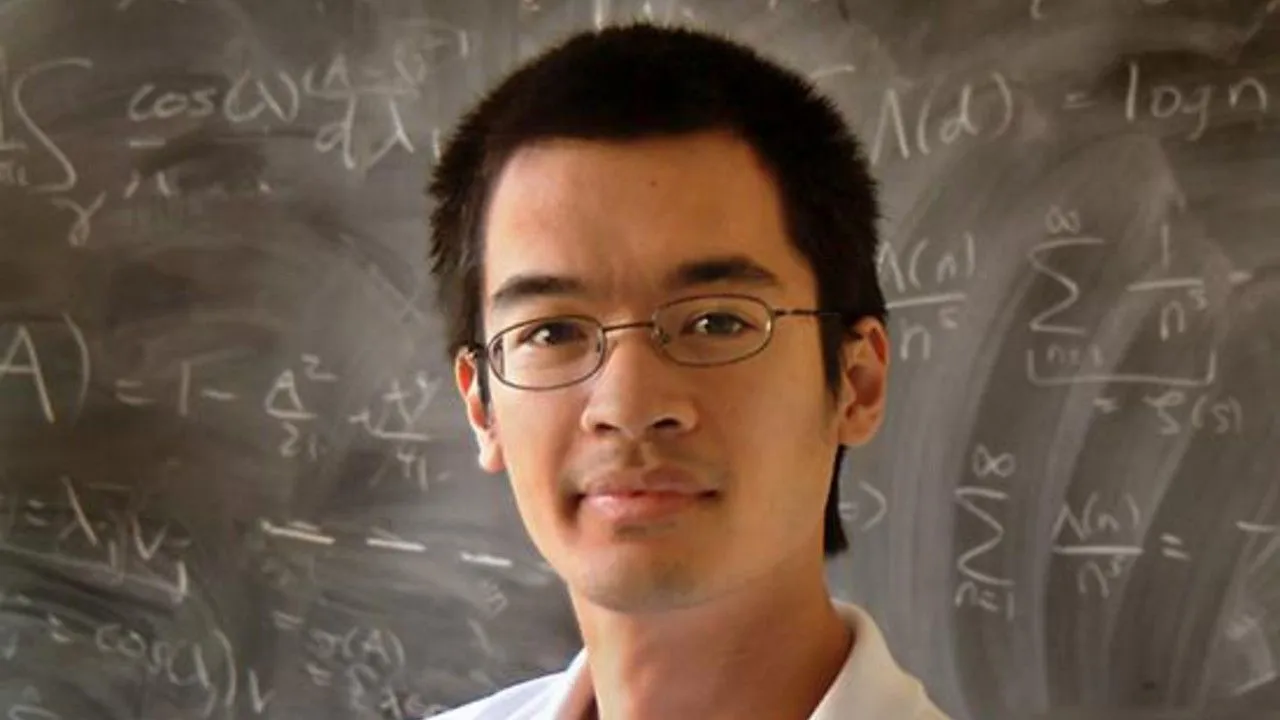
Terence Tao's IQ The 230 Claim, and What Is Actually Documented
He won an International Mathematical Olympiad gold medal at thirteen, the youngest ever. That is verifiable. The IQ figure attached to his name in a thousand articles is not, and he has spent years arguing it would not matter if it were.
0 Quick Answer
Updated August 16, 2026 by Structural. No verified IQ score for Terence Tao has ever been published. Figures in the range of 210 to 230 circulate widely, trace back to accounts of childhood assessment, and cannot be confirmed against any published test result, instrument, or date.
Direct answer: what is documented instead is one of the most extraordinary records of early mathematical achievement in the modern era, verifiable through olympiad results, university records, and a published body of work. Those facts establish far more than any number would, and they are checkable.
There is also a specific reason to treat the number sceptically that goes beyond sourcing. Scores in the range quoted sit four to nine standard deviations above the mean, in territory where standard instruments have no items and no norm data, as covered in IQ Score vs Percentile. A figure of 230 is not a measurement, it is a model output from a region no model was validated in.
The verifiable record is remarkable enough that the IQ claim adds nothing to it, and every item below can be checked against public sources.
Tao was born in Adelaide, Australia, in 1975. He competed at the International Mathematical Olympiad three years running as a child, taking bronze in 1986 at age ten, silver in 1987 at eleven, and gold in 1988 at thirteen. That gold medal made him the youngest gold medallist in the competition's history, a record that has stood since.
The olympiad results are the strongest single piece of evidence in the whole case, because they are competitive, supervised, and archived. Participation records and medal placements are published by the competition itself. No claim rests on anybody's recollection.
He completed his bachelor's and master's degrees at Flinders University in Australia as a teenager, then a doctorate at Princeton, which he finished at twenty-one. He joined the faculty at UCLA and became a full professor at twenty-four, among the youngest in the institution's history.
He was awarded the Fields Medal in 2006, the most prestigious prize in mathematics, restricted to mathematicians under forty and awarded to a handful every four years. He has also received a MacArthur Fellowship, the Breakthrough Prize in Mathematics, and numerous other honours, and has published an enormous body of work across several areas of mathematics, most famously the result with Ben Green establishing that the primes contain arbitrarily long arithmetic progressions.
That record is public, dated, and independently attested at every point. It is a far stronger evidential base than a number nobody can source. The pattern holds well outside mathematics, because an actor with an indexed 1998 chemistry paper and a 2002 neuroimaging co-authorship can be checked the same way, while the figure attached to her cannot.
2 Where the Number Comes From
Tracing the claim back is instructive, because the trail ends sooner than the confidence of its repetition suggests.
Tao was identified as a child through the Australian gifted education research community, and his development was studied by researchers working on exceptionally gifted children. Accounts from that work describe assessment results indicating ability far beyond the measurement range of the instruments used, which is a claim about the instruments as much as about the child.
He also came to the attention of Julian Stanley, the American psychologist who founded the programme that would become the Study of Mathematically Precocious Youth, which identified extraordinary mathematical talent in children through above-level testing. Tao is among the best known individuals ever identified through that route.
From those origins, specific numbers entered circulation. Different sources give 211, 220, 225, or 230, and the variation is the first thing to notice. A measured score does not have four values. What circulates is a range of estimates that hardened into quoted figures through repetition.
None of the commonly cited numbers is accompanied by the information a score requires to mean anything: which instrument, administered when, by whom, on what norms, with what standard deviation. Without those, as IQ Score vs Percentile explains, a bare number is not interpretable even when it is accurate.
It is worth being clear about what is and is not being claimed here. There is no reason to doubt that Tao was assessed as a child and that the results were extraordinary. What is unsupported is the specific figures, their precision, and the implication that a standard instrument measured them.
3 Why the Number Cannot Be Verified
Three separate obstacles stand between the claim and confirmation, and any one of them would be sufficient.
The scores are private. Psychological assessment results belong to the person assessed and, for a child, to their family. There is no public register, no obligation to disclose, and no mechanism by which anybody could confirm a figure even if it were accurate. Tao has not published his results, which is entirely his right and leaves every quoted figure unverifiable in principle.
The instruments do not reach that range. This is the decisive technical objection. A score of 220 sits eight standard deviations above the mean. Standardisation samples contain a few thousand people, so beyond about three standard deviations there is essentially no observed data, and any figure comes from extrapolating a fitted curve into a region nobody was measured in. Tests also run out of items: a battery whose hardest problem is solvable by most people at two standard deviations cannot distinguish four from eight.
Childhood ratio scores are not adult standard scores. Older instruments used a ratio of mental age to chronological age, and that method produces enormous numbers for young children who perform far above their age. A child of seven performing like a fourteen year old yields a ratio figure around 200 that does not correspond to anything on the modern deviation scale. Many extraordinary historical figures originate this way, and the numbers are not comparable to a modern score at all.
The Hirata IQ claim is another example where early academic achievement does not supply the missing test and norm details needed for a ranking.
Taken together, these mean the quoted figures cannot be checked, cannot have been produced by a standard adult instrument, and may well originate from a scoring method that was abandoned precisely because it produced uninterpretable results at the extremes.
4 The Research Programme That Found Him
The context in which Tao was identified has produced genuine findings, and they are more informative than the number.
The Study of Mathematically Precocious Youth began in the 1970s using above-level testing: giving young adolescents a test designed for older students, on the reasoning that a test appropriate to their age would show a ceiling effect and fail to distinguish among the highest performers. The approach solves the measurement problem in section 3 by using harder items rather than by extrapolating.
The programme then followed identified participants for decades, and the longitudinal results are the substantive contribution. Individuals identified in early adolescence went on to achieve doctorates, patents, publications, and senior professional positions at rates far above base rates. And within the identified group, which was already extremely selected, higher scores continued to predict higher achievement, which was not the expected result and remains one of the programme's most cited findings.
The programme also found that the shape of ability mattered as well as its level. Participants whose mathematical ability exceeded their verbal ability, and those with the reverse pattern, tended toward different fields and different kinds of accomplishment. The profile carried information that a single composite would have discarded, which is the same argument made throughout Cognitive Domains.
It is worth dwelling on why above-level testing matters as a methodological choice, because it is the correct response to the problem in section 3 and almost nobody applies it outside research settings. Faced with a child who exhausts an age-appropriate test, the tempting move is to extrapolate the scale upward and report a spectacular number. The disciplined move is to administer a harder test and observe where the person actually stops. The first produces a figure that impresses and means nothing. The second produces a lower-sounding result that is an actual measurement. Every extreme IQ claim in circulation comes from somebody taking the first option.
What this research supports is that exceptional early ability, properly measured, predicts exceptional later accomplishment at a group level. What it does not support is any specific figure for any specific individual, and the programme's own methodology avoided extreme scores precisely by using harder tests rather than extrapolated scales.
5 What Tao Himself Argues
Tao has written publicly and at length about the role of raw ability in mathematics, and his position is directly at odds with the way his name is used.
He has argued that the popular image of mathematics as a domain requiring innate genius is both inaccurate and harmful. His account emphasises that professional mathematical work consists largely of sustained effort, extensive background reading, collaboration, and the slow accumulation of understanding, rather than flashes of insight available only to the exceptionally gifted.
He has been explicit that talent alone is insufficient and that many students with extraordinary early ability do not go on to productive mathematical careers, while many strong mathematicians were not identified as prodigies. The gap between early promise and eventual contribution is filled by work, mentorship, and the willingness to spend years on hard problems.
He has also written about the value of learning to fail productively, noting that at every stage of a mathematical career one encounters problems beyond one's current reach, and that the ability to keep working under those conditions matters more than the ability to solve things quickly.
There is an irony worth naming. The person most frequently cited as evidence that mathematical achievement flows from extraordinary cognitive endowment has himself argued repeatedly, in public, that this framing misrepresents how the work happens. Citing his IQ figure as an explanation of his career means disregarding his own account of it.
6 What Exceptional Ability Actually Predicts
Stripping away the specific claim, the general question underneath is worth answering with what the evidence supports.
Cognitive ability predicts academic and occupational outcomes reliably at the population level, and the relationship persists into the upper range rather than flattening at some threshold, which was the surprising finding from longitudinal work on the profoundly gifted. Higher is associated with more, further up than earlier theories predicted.
The relationship is nonetheless far from deterministic. Most of the variance in what people accomplish is not accounted for by cognitive measures, and the remainder involves opportunity, education, health, persistence, social context, mentorship, and the accidents of what problems somebody happens to encounter at the right moment.
Domain-specific expertise, discussed in Average IQ by Sport, accounts for a great deal of what looks like raw ability from outside. A mathematician's apparent facility with a problem rests on years of accumulated structure that makes relevant patterns recognisable, and no cognitive test measures that structure.
The honest summary for a case like this is that extraordinary ability was almost certainly present, that it was necessary rather than sufficient, and that the specific magnitude is both unmeasurable and less explanatory than the biography. A person who worked at mathematics from early childhood, was identified and supported by people who knew what to do with such a child, and then spent decades on hard problems, has an explanation for their career that does not require a number.
7 The Environment Around the Ability
Accounts that reduce this case to a number omit the part that is actually unusual, which is not the child but what happened around him.
Extraordinary early ability is not self-executing. A child who can do university mathematics at nine needs somebody to notice, somebody willing to break the rules that would otherwise place them with age peers, an institution prepared to enrol them, and mathematicians willing to teach them. Each of those is a contingency, and each fails routinely.
In Tao's case, all of them held. He was identified early, his family sought out appropriate provision rather than accepting standard placement, and Australian institutions accommodated an arrangement in which he attended university classes as a young child while remaining connected to school for other purposes. He had access to mathematicians who took him seriously as a student rather than as a curiosity.
The alternative outcomes are worth stating because they are the common ones. A child of comparable ability placed in an ordinary classroom for a decade, told to wait, and given no access to material at their level, does not arrive at graduate study prepared. The ability does not evaporate, and the accumulated years of appropriate work do not happen, and the second of those is what a research career is built on.
Acceleration and appropriate provision for exceptionally able children have a substantial research literature, and the general finding is that well-managed acceleration produces better academic and social outcomes than keeping such children with age peers. That finding is frequently resisted, which is why the contingencies above fail as often as they do.
None of this diminishes what Tao did. It locates it. A biography consisting of extraordinary ability plus two decades of appropriate work plus institutional flexibility explains the career. A number explains nothing, and it happens to be the only component that cannot be verified or replicated.
8 Why Most Prodigies Do Not Become Tao
The uncomfortable fact behind every prodigy story is that early exceptional performance is a much weaker predictor of eventual eminent contribution than the stories suggest.
Longitudinal work following exceptionally identified children shows outcomes far above base rates as a group, and enormous variation within the group. Some become leading researchers. Many have successful conventional careers. Some do not complete advanced study at all. The distribution of outcomes is wide even among children whose early performance was indistinguishable.
Several things account for the spread. Early ability is measured on tasks that are structurally different from the open-ended work of research, where problems are not posed, methods are not given, and no answer key exists. The transition from solving hard problems set by others to identifying which problems are worth attempting is the point where many extremely able people find the work is not what they were good at.
Motivation and interest diverge from ability. A child can be exceptional at mathematics and uninterested in spending forty years on it, and that is not a failure of anything. Some of the highest-performing children in these programmes chose other fields entirely and did well there.
There is also the effect of the label. Children identified as prodigies frequently report pressure, isolation, and a fragile identity built on being fastest, which collapses on first contact with genuine difficulty. Learning to work productively while failing, which Tao has written about explicitly, is a specific skill that early ease actively prevents developing.
The implication is that early ability is a starting condition rather than a trajectory. It opens a door that many people walk through and many do not, and what happens after the door is where the variation lives.
9 Why Olympiad Results Are Better Evidence Than a Score
It is worth being explicit about why the competitive record carries more weight than any cognitive test result would, even a verified one. Part of the reason is the ceiling: the reliability, validity and norms behind an accurate score all weaken at the extreme tail, where a norm sample contains almost nobody to rank against, whereas an olympiad medal is scored against the field that actually competed.
Olympiad problems are hard in the way real mathematics is hard. They require constructing an argument rather than selecting an answer, they cannot be solved by pattern recognition, and they are novel by design, since a problem that had appeared before would be useless. That is a much closer match to mathematical work than a matrix reasoning item.
The administration is supervised and standardised across an international field, with fixed time limits, no external assistance, and marking by expert juries against published criteria. It satisfies every requirement that section 5 of High IQ Society Requirements identifies as making a result verifiable.
The results are archived publicly and permanently, with names, countries, years, and scores. Anybody can check them, which is precisely what cannot be done with a private assessment result.
And the discrimination at the top is genuine. Olympiad problems are set to be difficult for the strongest secondary school mathematicians in the world, so there is no ceiling effect in the range that matters. A test whose hardest item most capable adults can solve cannot distinguish among exceptional performers, which is the structural problem that makes extreme IQ figures unmeasurable.
The general principle applies well beyond this case. Where a demanding, supervised, well-documented performance record exists, it is stronger evidence about a person's capability in that domain than any general instrument, and reaching past it for an unsourced number is a downgrade in evidence quality dressed up as precision.
10 The Others in This Category
Tao's name appears on lists alongside a recurring set of historical figures, and the same analysis applies to all of them for the same reasons.
Figures attributed to mathematicians and physicists of previous centuries were in every case produced long after the person died, by researchers estimating from biographical material such as the age at which someone learned to read or published their first work. These are historiometric estimates, not measurements, and the people concerned never took a test because no test existed during their lifetimes.
Twentieth century figures fare little better. Where a score is claimed, it typically originates in a childhood assessment using the ratio method described in section 3, in a self-report, or in an anecdote from a colleague. The instrument, date, and norms are almost never available.
A recurring pattern is that the most spectacular figures attach to people about whom least is verifiable. Where a detailed documentary record exists, the claims tend to be modest and traceable. Where the record is thin, the numbers balloon, because nothing constrains them.
The reasonable position for the entire category is that verified extreme IQ scores essentially do not exist in public. What exists is a documented record of accomplishment, which for the people on these lists is generally extraordinary and entirely sufficient without embellishment. The full treatment of the historical claims is in Highest IQ Ever.
11 Why These Numbers Circulate
The mechanism by which celebrity IQ figures propagate is worth understanding, because it applies identically across every entry in this category.
A number is easy to publish and impossible to check. It requires no expertise to write, fits a headline, and invites comparison in a way that biographical achievement does not. A reader can compare 230 to their own score in a way they cannot compare a Fields Medal to anything in their life.
Repetition then substitutes for sourcing. The second article citing a figure cites the first, the tenth cites the ninth, and by the hundredth the number has an apparent pedigree consisting entirely of other articles. Nobody in the chain has seen a test result, and the original claim may have been an estimate, a range, or a misremembering.
Absence of correction completes it. The person concerned has no reason to engage, correcting a figure would require disclosing a real one, and there is no authority that adjudicates such claims. The number therefore persists indefinitely.
The pattern is consistent enough to be a reliable heuristic. Any IQ figure attributed to a public figure, absent a named instrument, date, administrator, and standard deviation, should be treated as unsourced regardless of how many places repeat it. This applies to the figures discussed in Highest IQ Ever and to every other case in this section. Applied to a named case the heuristic is unambiguous: the 178 attached to Rowan Atkinson arrives with no instrument, no date and no examiner, while the documented half of his record is a BSc from Newcastle and an MSc that his Oxford college lists in its own directory.
12 What Can Be Said Honestly
Pulling the threads together, here is the defensible version.
Terence Tao displayed mathematical ability in early childhood so far outside normal range that the instruments available could not adequately measure it, and this is attested by researchers who worked with him and consistent with his competitive record.
He won three consecutive IMO medals culminating in gold at thirteen, the youngest ever, completed a doctorate at twenty-one, became a full professor at twenty-four, and was awarded the Fields Medal at thirty-one. All of this is documented and dated.
He has produced a large and influential body of mathematical work over three decades, which requires sustained effort of a kind no early assessment predicts and no cognitive measure captures.
No verified IQ score exists. The circulating figures vary between sources, lack any of the accompanying detail a score requires, and fall in a range where standard instruments cannot measure and extrapolated values are model outputs rather than observations.
And he has argued publicly that the emphasis on innate genius misrepresents mathematics and discourages people who would otherwise contribute to it. That argument deserves more weight than a number he has never confirmed, particularly from anybody citing him.
Every one of those statements is stronger than the claim it replaces. A verified competitive record, an institutional timeline, and a published body of work are all checkable by anybody who wants to check them, which is the property a number attributed by repetition conspicuously lacks. Preferring the unverifiable version because it is more quotable is a choice about what kind of evidence to value, and it is the wrong one.
13 The Question Behind the Search
People looking up a figure like this are usually asking something about themselves, and it is worth addressing directly. For an adult the answerable version of that question is a measured one, and taking an IQ test as an adult means being compared with an adult reference group across ages 16 to 90 rather than with a childhood assessment that was never published.
Comparison against an unsourced number attributed to a Fields Medallist is not a useful reference point, and not only because the number is unsourced. Even a real figure from the extreme tail tells you nothing actionable, since the comparison is against somebody whose circumstances, training, and decades of accumulated expertise are the actual explanation for what they did.
A more useful reference is your own profile against a stated population, with the uncertainty attached. That tells you where your abilities sit relative to each other, which is the information that bears on what kind of work will feel effortful, and it is exactly what a single number obscures.
ACIS reports six domains with percentiles and confidence intervals against a stated reference group. It does not report figures above the range its items and norms can support, which means it will not produce an impressive number it cannot justify, for the reasons in section 3.
The standard limitations apply and are stated in the report: administration is unsupervised, conditions cannot be verified, and no institution is obliged to accept the result. It answers a question about you rather than inviting a comparison against a figure nobody can source.
If the search that brought you here came from wondering whether you could do work of this kind, the honest answer is that no test settles it. The people who go furthest in demanding fields are not identifiable in advance from a score, which is what the wide spread of outcomes among identified prodigies in section 8 demonstrates. What determines it is closer to what Tao himself describes: sustained work on problems beyond your current reach, over years, with people who can teach you.
14 FAQ: Terence Tao and Extreme IQ Claims
What is Terence Tao's IQ?
No verified score has been published. Figures between 210 and 230 circulate without any accompanying instrument, date, administrator, or standard deviation.
Why do sources give different numbers?
Because none of them is reporting a measurement. A measured score does not have four values, and the variation reveals that estimates hardened into quoted figures through repetition.
Was he tested as a child?
Accounts from researchers who worked with him describe assessment showing ability beyond the measurement range of the instruments available, which is a statement about the instruments as much as about him.
Why can a test not measure 220?
Standardisation samples contain a few thousand people, so beyond three standard deviations there is essentially no data, and tests run out of items hard enough to discriminate at that level.
What is a ratio IQ and why does it matter?
Older instruments used mental age divided by chronological age, which produces enormous numbers for young children performing far above their age. Those figures are not comparable to modern deviation scores.
What is actually verified about him?
Three consecutive IMO medals with gold at thirteen as the youngest ever, degrees completed as a teenager, a Princeton doctorate at twenty-one, a UCLA professorship at twenty-four, and the Fields Medal in 2006.
What is the Fields Medal?
The most prestigious award in mathematics, restricted to mathematicians under forty and awarded to a small number every four years.
What is SMPY?
A longitudinal research programme identifying exceptional mathematical talent through above-level testing, then following participants for decades. Tao is among the best known individuals identified through it.
What is above-level testing?
Giving young adolescents a test designed for older students, so that the highest performers are not compressed against a ceiling. It solves the measurement problem with harder items rather than extrapolation.
What did that research find?
Identified individuals achieved doctorates, patents, and senior positions far above base rates, and higher scores continued to predict more achievement even within an already extremely selected group.
Does ability alone explain a career like this?
No. Most variance in accomplishment is not accounted for by cognitive measures, and opportunity, mentorship, persistence, and decades of accumulated expertise fill the remainder.
What does Tao himself say about genius?
He has argued publicly that the image of mathematics as requiring innate genius is inaccurate and harmful, emphasising sustained effort, collaboration, and learning to work on problems beyond current reach.
Is it fair to cite his IQ as an explanation?
It disregards his own published account of how mathematical work happens, from the person best placed to describe it.
Why do celebrity IQ numbers spread so easily?
A number is cheap to publish, impossible to check, and invites comparison. Repetition then substitutes for sourcing until the figure has a pedigree made entirely of other articles.
Why are they never corrected?
The person has no reason to engage, correcting a figure would mean disclosing a real one, and no authority adjudicates such claims.
What should I check before believing one?
Which instrument, administered when, by whom, on what norms, with what standard deviation. Absent all five, the figure is unsourced no matter how widely repeated.
Are IQ scores public records?
No. Assessment results belong to the person assessed, there is no register, and nobody could confirm a figure even if it were accurate.
Does higher ability keep predicting more at the top?
Longitudinal work on the profoundly gifted found that it does, further up than earlier threshold theories predicted, though the relationship remains far from deterministic.
Does the shape of ability matter as well as the level?
Yes. Participants whose mathematical ability exceeded their verbal ability, and the reverse, tended toward different fields, which is information a single composite discards.
Is comparing myself to a figure like this useful?
No, and not only because the number is unsourced. Even an accurate extreme figure tells you nothing actionable about your own circumstances or training.
What is worth measuring instead?
Your own profile across domains against a stated reference group, with confidence intervals, which bears on what kind of work will feel effortful.
15 Best Next Step
The documented record is extraordinary and checkable. The number is neither, and the person it belongs to has spent years arguing that the framing behind it misrepresents his field. For a reader whose real question concerns their own ability, the productive next step is an instrument that is broad, normed, transparent and honest about its limits, which is the standard applied in choosing an IQ test worth taking.
For why scores in that range cannot be measured, read Highest IQ Ever and IQ Score vs Percentile. For a case where the extreme claim came from unsupervised high-range instruments, read Christopher Langan. For your own profile with the uncertainty attached, take the assessment.
Biographical claims are sourced to competition archives, institutional records, and Tao's own published writing. Psychometric claims come from the measurement literature.
International Mathematical Olympiad. Official participant record for Terence Tao, listing his 1986 bronze, 1987 silver, and 1988 gold medals with ages.
International Mathematical Union. Fields Medal. The award, its eligibility restriction to mathematicians under forty, and the 2006 laureates.
Tao, T. Does one have to be a genius to do maths? Tao's own argument that the genius framing of mathematics is inaccurate and discouraging.
MacArthur Foundation. Terence Tao, 2006 Fellow. Biographical record including academic timeline.
Lubinski, D. & Benbow, C.P. (2006). Study of Mathematically Precocious Youth after 35 years: uncovering antecedents for the development of math-science expertise. Perspectives on Psychological Science, 1(4), 316-345. The longitudinal programme through which exceptional early talent was identified and followed.
Kell, H.J., Lubinski, D. & Benbow, C.P. (2013). Who rises to the top? Early indicators. Psychological Science, 24(5), 648-659. Finds ability differences continuing to predict achievement within an already highly selected group.
Voncken, L., Albers, C.J. & Timmerman, M.E. (2019). Improving confidence intervals for normed test scores. Behavior Research Methods. Open access. Why norm-sample size collapses the precision of any score in the extreme tail.
Crawford, J.R., Garthwaite, P.H. & Slick, D.J. (2009). On percentile norms in neuropsychology: proposed reporting standards. The Clinical Neuropsychologist, 23(7), 1173-1195. Why a bare number without instrument and norms is uninterpretable.
Pearson (2024). WAIS-5, Wechsler Adult Intelligence Scale, Fifth Edition. The reported score range a current clinical battery supports, which does not extend to the figures quoted for Tao.
McGrew, K.S. (2009). CHC theory and the human cognitive abilities project. Intelligence, 37(1), 1-10. Why the shape of an ability profile carries information a single composite discards.
Macnamara, B.N., Hambrick, D.Z. & Oswald, F.L. (2014). Deliberate practice and performance in music, games, sports, education, and professions: a meta-analysis. Psychological Science, 25(8), 1608-1618. The contribution of accumulated practice to expert performance across domains.
Take the assessment
You get a profile, not a number
ACIS measures six CHC domains across 20 subtests and reports each one with its own normed score and confidence interval, so you can see where you are strong and where you are not.