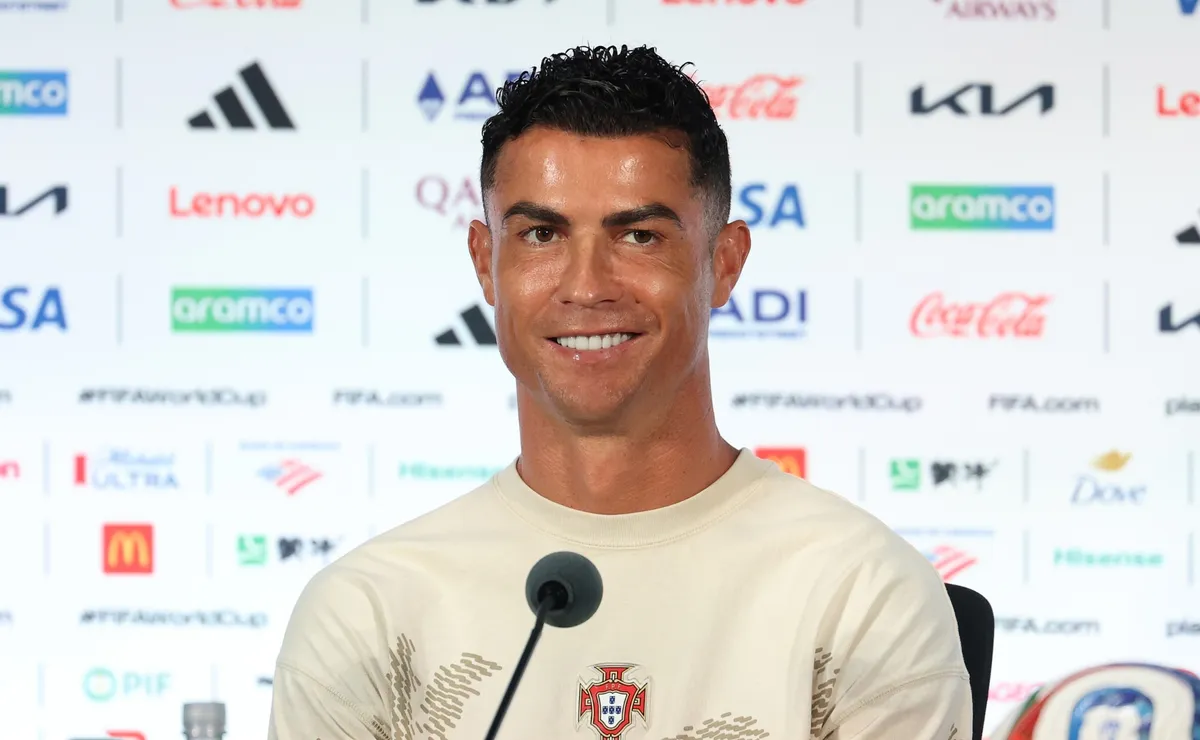
Cristiano Ronaldo IQ Football Genius Is Not a Number
No authenticated IQ report for Cristiano Ronaldo is public. Conflicting values such as 102 and 130 circulate without a named instrument or source document. His extraordinary football career demonstrates learning, anticipation, adaptation, and discipline, but sport expertise cannot be converted into a Full Scale IQ. The honest estimate stays broad.
Elite football reveals exceptional domain expertise. It does not reproduce the conditions or construct coverage of a standardized IQ battery.
1 The Short Answer
Cristiano Ronaldo has no verified public IQ score. Values such as 102 and 130 appear online without a named instrument, original report, testing date, examiner, or authorized release. The disagreement between those exact numbers is itself evidence of weak sourcing. Ronaldo's football record demonstrates extraordinary expertise, learning, anticipation, adaptation, and discipline. It does not recreate the construct coverage or conditions of an intelligence battery.
No authenticated result
No public source establishes that Ronaldo completed a standardized IQ test or obtained one of the circulating numbers.
100 to 115
This cautious central estimate credits elite cognitive demands without converting sport achievement into a genius score.
90 to 125
The 90 percent uncertainty interval is wide because most broad cognitive domains remain unobserved.
What the estimate is notIt is not a judgment of Ronaldo's worth, career, discipline, or football greatness. It is a limited inference about an unmeasured construct.
Some celebrity pages list Ronaldo near the population average, often around 102. Others assign him 120, 130, or another flattering value. The pages rarely identify where the number came from. A result page created by an unrelated user, a fan estimate, and a copied table can all be indexed beside one another as though Ronaldo personally completed several tests. Result pages of that kind typically come from short quizzes with no stated norms, which is a different thing from a normed IQ test taken from home, where the comparison group, breadth and reliability are published before the number is.
A real score claim would identify the test and edition, date, age norms, administration, scale, composite, and source document. Those details matter because a nonverbal screener, a Full Scale professional battery, a childhood school test, and an online quiz do not produce interchangeable evidence. A bare number makes it impossible to know what was measured.
The conflicting values often reflect fan narratives. Admirers use unprecedented sporting achievement to infer genius. Critics use educational stereotypes, accent, interview mistakes, or football rivalry to infer low ability. Both approaches decide the conclusion before evaluating the construct. They treat IQ as praise or insult rather than a standardized comparison. Film runs the same loop in reverse, because an actor read as physical and documented as literary was handed a 160 by writers who simply found the contrast worth printing.
Search repetition then amplifies the strongest emotional claim. Pages copy the value that attracts attention, and later writers cite the search results as consensus. Multiple appearances do not create independent measurement. They often trace back to the same unsourced assertion or to no identifiable source at all.
Ronaldo has no obligation to disclose private educational or psychological records. Missing documentation does not prove a low score. It limits what a public article can claim. The proper answer is unknown, followed by a transparent estimate if one is offered, not a precise value presented as fact.
Identity is a major verification problem for online result pages. Anyone can enter the name of a celebrity into a public quiz, take the items, and publish the resulting page. The presence of Cristiano Ronaldo's name in a result title does not show that he was the examinee. A serious claim would need identity assurance and authorization, not only a page that a search engine can index.
The origin of an ordinary looking value deserves the same scrutiny as an extraordinary one. Readers sometimes accept 102 because it feels modest and reject 130 because it feels promotional. Plausibility is not provenance. A fabricated score can sit near the mean just as easily as near the ceiling. Evidence standards should not change with the emotional comfort of the number.
3 The Verified Football Record
UEFA documents an exceptional collection of records across club competition and the European Championship, while FIFA documents Ronaldo as the first male player to score at five World Cups. The value of those sources for this page is not celebrity decoration. They establish sustained performance across teams, coaches, leagues, opponents, tactical systems, and more than two decades.
Longevity at that level requires continuous learning. Physical preparation changes with age. Roles shift from wide attacker to central scorer. Teammates provide different movement and service patterns. Opponents study familiar habits. A player who remains effective must update routines, positioning, recovery, and decision priorities rather than repeat one youthful solution forever.
Goal records also reflect anticipation. Elite forwards arrive where the ball will be, not only where it is. They read defenders, goalkeeper position, teammate cues, space, and the probability of a delivery. Much of that knowledge becomes rapid pattern recognition through enormous practice. It is cognitively rich while remaining specific to football.
The record cannot separate Ronaldo's cognition from exceptional athleticism, technique, coaching, team quality, health, motivation, and opportunity. Those factors do not diminish the achievement. They explain why the achievement cannot be used as a standardized IQ conversion. A match contains a different task, scoring system, and comparison group.
The central estimate gives the verified career positive weight because it rules out simplistic claims that elite sport contains no intelligence. It does not assign rare Full Scale points because the career gives little direct evidence about vocabulary, quantitative reasoning, working memory spans, or standardized processing speed.
Competition across eras also requires caution. Rules, teammates, medical support, training science, and tactical trends change. Ronaldo's longevity across those changes supports adaptation, but career statistics are not a fixed cognitive difficulty scale. The intelligence inference comes from maintaining expertise in a changing environment, not from treating every goal as another correct test item.
Selection at the elite level is extreme in dimensions that an IQ test barely samples. Speed, strength, coordination, recovery, injury resistance, and technical execution restrict the pool long before general cognitive differences can be interpreted. This range restriction means one cannot compare elite players and assume differences in output are mainly differences in IQ. The sport has already selected a highly specialized group.
4 Football Intelligence as Domain Expertise
Football intelligence is useful shorthand for tactical awareness, spatial positioning, anticipation, decision selection, game state understanding, and adaptation. Coaches and players can recognize meaningful differences in these abilities. The phrase becomes misleading only when it is treated as a separate broad intelligence or converted directly to Full Scale IQ.
Expertise reorganizes perception. A novice sees many moving players. An expert notices formations, pressure, passing lanes, body orientation, defensive balance, and likely next actions. Stored patterns allow faster and more accurate decisions without consciously calculating every possibility. This is learned efficiency, not merely raw reaction.
General cognitive ability can support the acquisition and flexible use of expertise. Fluid reasoning may help when a familiar pattern breaks. Working memory may support tracking relevant information. Visual spatial processing may contribute to representing positions and trajectories. Yet each process is embedded in years of football knowledge and trained movement.
The CHC framework does not contain a broad factor called football IQ. It contains abilities such as Gf, Gv, Gwm, Gs, Gc, and Gq that can contribute across activities. Domain specific knowledge and skills sit alongside them. The distinction protects the reality of sport cognition without pretending a match is a psychometric battery.
Ronaldo's movement, finishing choices, and adaptation provide strong evidence of football expertise. They provide only indirect evidence of general ability. The same principle applies to musical, chess, business, and legal expertise throughout Famous People and IQ. Even the rare athlete with a real score settles less than it appears, since the result Muhammad Ali produced on the 1964 Armed Forces Qualification Test is a percentile on a military screening instrument and explains nothing about what he did in a ring.
Game intelligence can also be distributed across a team. Teammates communicate, coaches design patterns, analysts prepare opponent tendencies, and repeated drills coordinate decisions. Ronaldo's individual choices matter enormously, but they occur inside a collective information system. Crediting every successful attack to one player's cognition would ignore the interaction that made the opportunity possible.
Role specialization shapes what observers see. A forward's intelligent positioning differs from a midfielder's control of tempo or a defender's organization. Comparing players through one intuitive football IQ label can obscure the task. The same issue appears in psychometrics when different subtests are collapsed without considering which broad ability each was designed to measure.
5 Anticipation Is More Than Reaction Time
Television makes elite action look like instantaneous reaction. Often the player began deciding earlier. Posture, gaze, ball speed, teammate shape, and an opponent's balance provide advance cues. Anticipation moves part of the response before the obvious event, making expert behavior appear faster than a simple laboratory reaction.
Psychometric processing speed, or Gs, is usually measured with relatively simple, standardized tasks requiring rapid accurate visual or symbolic work. It aims to compare people under common conditions. A sprint toward a cross includes prediction, motor preparation, technique, physical speed, and tactical knowledge. The two kinds of speed may relate but are not equivalent.
Ronaldo's career supplies abundant evidence of timing. Headers, runs behind defenses, rebounds, and penalties all reward attention to narrow windows. Practice turns recurring cues into efficient action. This is a cognitive accomplishment intertwined with physical execution, not evidence that one can infer his score on Coding or Symbol Search.
Aging makes the distinction more visible. Physical speed can decline while positioning and anticipation compensate. An experienced player may reach the right place through earlier recognition rather than a faster raw response. Longevity therefore demonstrates adaptation and expertise, but not a timeless processing speed score.
Public clips select successful moments. Missed runs, incorrect predictions, and ordinary decisions receive less attention unless critics compile them. A standardized estimate would need the whole response distribution under controlled conditions, not a highlight reel or failure montage.
Penalty taking illustrates the mixture. The player can study goalkeeper tendencies, control attention, choose placement, and execute a practiced movement under enormous pressure. Success reflects memory, decision, emotion regulation, technique, and chance. Calling the outcome IQ would erase most of the task. Calling it purely physical would erase the cognitive preparation. Domain expertise is the more accurate middle description.
Laboratory reaction tests also distinguish simple and choice reaction. Football rarely presents a single light followed by one button. Players choose among actions while the environment changes. Anticipation can make expert choice faster despite ordinary simple reaction time. Without a standardized protocol, the public cannot infer either construct from a match.
6 Discipline, Learning, and Adaptation
Ronaldo's public career is strongly associated with intensive preparation, physical training, recovery, and deliberate skill maintenance. Discipline is not IQ. It is an important set of behavioral traits that can multiply what cognitive and physical abilities produce. Explaining the career with a genius score would erase the contribution of sustained work.
Learning across clubs provides evidence of adaptability. Tactical expectations at Sporting, Manchester United, Real Madrid, Juventus, Al Nassr, and the Portugal national team were not identical. Language environments, teammates, coaches, and competitive demands changed. Remaining productive required updating knowledge and behavior.
Motivation creates a major confound in biographical estimates. A person with ordinary cognitive ability and extraordinary persistence can achieve more in a domain than a more able person who does not train. High achievement raises the probability of useful ability, but it cannot reveal how the outcome was divided among ability, effort, talent, environment, and chance.
The same confound exists during testing. Motivation and effort affect observed scores, though a well designed battery tries to standardize conditions and detect invalid engagement. A biography provides no such control. Ronaldo's exceptional motivation strengthens his career while widening uncertainty about the cognitive component behind it.
This is why an estimate near the population mean is not inconsistent with one of football's greatest careers. IQ distributions overlap across achievement levels, and the sport selects on many qualities an IQ test does not measure. The range respects both the cognitive demands and the larger performance system.
Practice changes the brain and behavior in task specific ways. Thousands of repetitions build perceptual chunks, motor programs, and expectations that reduce the information an expert must process consciously. Observers may interpret effortless execution as raw intelligence when it is partly the result of extraordinary accumulated learning. That does not make the cognition less real. It changes the source of the efficiency.
Recovery and self monitoring add another form of expertise. An aging athlete must interpret physical feedback, adjust training load, and coordinate with medical and coaching teams. These decisions can be intelligent while relying on external measurement and advice. They support adaptation but remain far removed from a normed Full Scale composite.
7 Education and Language Do Not Set the Score
Ronaldo entered a specialized football pathway early. Formal schooling and conventional academic credentials were not the central route through which his abilities developed or became visible. Using limited educational attainment as proof of low IQ would confuse opportunity and life choice with capacity.
The reverse inference is also invalid. Success outside school does not prove that he would have excelled in every academic domain. A public biography cannot tell us how he would perform on quantitative reasoning, vocabulary, memory, or visual puzzles under standardized conditions. It shows where he invested time and achieved mastery.
Working across Portuguese, English, Spanish, Italian, and other international contexts demonstrates practical language learning and adaptation. Public proficiency differs by language and task, and interviews may use interpreters or familiar questions. Multilingual experience is evidence of learning, not a direct Gc or Full Scale score.
Accent and grammar are particularly poor IQ indicators. Second language production reflects age of acquisition, exposure, education, confidence, and the demands of the setting. A fluent speaker can have ordinary reasoning, and a hesitant second language speaker can have exceptional reasoning. The test language must fit the examinee before verbal scores are interpreted.
A professional assessment would select appropriate language and norms. An English online self assessment should state its English speaking reference frame. Those details matter more than judging a footballer from how polished an interview sounds in a nonnative language.
Public communication is shaped by media incentives. Short answers are easier to translate and less likely to create headlines or tactical disclosures. Repetition can be strategic. A narrow public vocabulary may say more about the interview setting than about acquired verbal knowledge. Conversely, fluency in a familiar promotional script can overstate broader verbal comprehension. Neither direction supports a point score.
Literacy and academic achievement are important human skills, but an IQ assessment does not simply count years of school. Modern tests attempt to sample reasoning and knowledge relative to norms. Educational opportunity still affects performance, especially verbal and quantitative content. A fair estimate recognizes Ronaldo's unusual educational path without romanticizing or stigmatizing it.
8 How the Estimate Was Built
The evidence hierarchy begins with direct standardized testing, but none is public. Confirmed school or admission scores could provide an indirect anchor, but none is available. The estimate therefore relies on verified longitudinal achievement and the cognitive demands of expert football, while discounting outcomes that physical talent and training can explain. An estimate assembled from achievement has none of the reliability, validity and norms behind an accurate score, and that is why it is reported as a range rather than as a number.
The strongest positive signals are sustained learning, tactical adaptation, anticipation, multi environment career success, communication across languages, and longevity. Together they make very low estimates less plausible. They do not require an above 130 score because each signal is embedded in sport expertise and extraordinary motivation.
The central range of 100 to 115 recognizes at least ordinary to moderately above average general ability as most consistent with the record. A person can achieve historically exceptional athletic outcomes anywhere in that region when physical talent, practice, discipline, coaching, and opportunity are extraordinary. The estimate does not treat average as a negative category.
The 90 to 125 interval remains wide because the public evidence says little about several broad domains. The lower side allows for domain expertise and discipline to explain most visible cognition. The upper side allows for the possibility that broad reasoning ability is stronger than the biography can show. Values outside remain possible but receive less weight.
The interval is an editorial uncertainty judgment, not a psychometric confidence interval. It cannot be narrowed by watching more highlights because additional footage samples the same specialized system. Only valid standardized performance could change the evidence type.
Alternative explanations were tested. One model assigns Ronaldo moderately high general ability that supported rapid tactical learning. Another assigns ordinary general ability with extraordinary physical talent, discipline, training quality, and domain knowledge. A third allows a higher unobserved profile that was never documented academically. All can produce the visible career. Their overlap creates the broad range.
Base rates constrain the upper tail. Scores above 130 are uncommon, while elite athletes are selected from millions through a different set of abilities and opportunities. Some undoubtedly have very high IQs, but elite status alone cannot make that the default. An extreme estimate needs evidence that distinguishes general ability from the specialized traits already known to be exceptional.
9 The 90 Percent Range in Context
Range
How it fits the public record
Evidence judgment
Below 90
Hard to reconcile with sustained learning and adaptation at the highest level
Outside the main interval
90 to 99
Possible if expertise, physical talent and discipline explain most achievement
Plausible lower tail
100 to 115
Consistent with elite domain learning without assuming unobserved exceptional general ability
Most plausible
116 to 125
Possible if tactical and adaptive performance reflects broader strong reasoning
Plausible upper tail
126 to 139
Requires stronger standardized or academic evidence
Weakly identified
140 and above
No public evidence justifies an extreme claim
Unsupported
The estimate should not be used to rank Ronaldo against Lionel Messi, another player, or a public figure from a different domain. The uncertainty bands would be broad and the evidence types unequal. Football performance can be compared with football evidence. Unmeasured IQ cannot.
An IQ of 100 is the population mean. An IQ of 115 is around the upper sixth of the population on the standard scale. Both ranges include people with widely varied achievements. The idea that a global icon must receive a rare score reflects status bias, not the score distribution.
Use IQ Score Chart and IQ Percentile Calculator to understand hypothetical values. The tools translate a score supplied by the user. They do not identify Ronaldo's value.
The central estimate is deliberately less dramatic than a fan page. Accuracy sometimes means refusing a flattering narrative. It also means refusing the critic's temptation to use an ordinary estimate as ridicule. Measurement and respect are compatible.
The interval should not be read as a betting market whose upper value is the page's secret opinion. Most weight sits in the central range. The tails remain because absence of direct testing prevents sharper exclusion. Quoting 125 alone would overstate the upper possibility just as quoting 90 alone would overstate the lower one. The whole distribution is the answer.
Confidence about football greatness comes from direct performance records. Confidence about IQ would require direct cognitive performance. Maintaining those separate confidence levels is not inconsistency. It is what evidence proportionality looks like.
10 What a Real Cognitive Profile Would Include
Fluid reasoning would be measured with novel relational problems rather than tactical situations already learned. Crystallized intelligence or verbal comprehension would examine acquired word and concept knowledge in an appropriate language. Quantitative reasoning would use controlled numerical relations. Visual spatial processing would involve standardized mental transformation rather than movement on a pitch. Each of those measures would be scored against a defined adult reference group, which is what an IQ test designed for adults provides and what no amount of match footage can.
Working memory tasks would require maintaining and manipulating information under consistent rules. Processing speed tasks would measure fast accurate cognitive throughput on simpler material. A Full Scale composite would combine evidence across selected domains using a validated scoring model and age appropriate norms.
Football may provide indirect clues about Gf, Gv, Gwm, and Gs, but it cannot separate them. A good run can reflect spatial anticipation, learned pattern recognition, coach instructions, teammate behavior, physical speed, or all of those. Standardization is designed to reduce that ambiguity.
A profile might reveal strengths and ordinary domains, but predicting its shape from biography would be speculative. Public careers are built around strengths. A standardized battery asks the person to perform outside the practiced domain and compares each task with a reference group.
Score intervals and validity conditions would remain necessary. Sleep, injury, language, motivation, device, prior exposure, and testing environment can affect a real result. Direct testing reduces uncertainty relative to biography. It does not eliminate measurement limits.
Age norms would answer a different question from career comparison. They would compare Ronaldo's present performance with other adults of the same age, not with footballers at their peak or with his younger self. A lower raw speed than years earlier could still translate into strong age normed standing. Biography mixes developmental periods that a current score keeps separate.
Subtest differences would need base rate context. A relative weakness can still be above average, and a visible gap does not automatically indicate a disorder. Public speculation often turns any unevenness into a brain type or learning style. A serious report describes the pattern, its uncertainty, and its permitted interpretation without diagnosing from shape alone.
Ronaldo's career is better explained through a combination of physical talent, technique, practice, competitive motivation, recovery, tactical learning, confidence, opportunity, teams, and cognitive skill than through one hypothetical IQ. A single score would omit the qualities most specific to his achievement.
General cognitive ability can help people learn, solve problems, and adapt. Its effect on real outcomes is probabilistic, not deterministic. Very high IQ does not produce elite football without the body, training, interest, and environment. Elite football does not require a genius score if the relevant domain skills are exceptional.
Personality traits matter but should not be diagnosed from public behavior. Competitiveness, persistence, self belief, and response to pressure are common explanations offered for Ronaldo's career. Public narratives simplify them, and an IQ article should not convert those impressions into clinical labels.
Commercial brand success is also distinct. Sponsorships, audience scale, image, management, and market timing contribute. Business activity can require judgment, yet its outcomes cannot retroactively test working memory or fluid reasoning. Wealth and follower counts are not psychometric instruments.
The most respectful interpretation does not need an inflated number. Extraordinary athletic achievement has its own evidence. Treating IQ as the only prestigious form of ability would undervalue the perception, coordination, discipline, tactical knowledge, and sustained work the career actually demonstrates.
Creativity in sport is another omitted quality. Inventive movement and finishing can emerge from broad ability, technical repertoire, confidence, and thousands of learned situations. Standard IQ tasks reward finding intended solutions under controlled rules. Match creativity solves an open problem against active opponents. The constructs may share resources, but one cannot be substituted for the other.
Emotional control under pressure is also distinct. Penalties, finals, injuries, criticism, and public attention create demands that cognitive batteries do not attempt to score. A person can be excellent or poor at those demands regardless of Full Scale level. Explaining achievement responsibly means allowing multiple abilities to matter without forcing them into one hierarchy.
12 Common Myths About Ronaldo's IQ
Myth: Ronaldo has a confirmed IQ of 102. No authenticated report supports that number. Its ordinary appearance does not make it more credible than an inflated claim.
Myth: Ronaldo scored 130 because a test result page says so. A result created under his name by an unknown user does not establish identity or administration.
Myth: football intelligence equals general intelligence. Sport expertise includes cognition, but it is organized around trained patterns, physical action, and tactical knowledge.
Myth: limited formal education means low ability. Early professional specialization changes schooling. Educational path and cognitive capacity are related imperfectly.
Myth: records prove genius IQ. Records prove extraordinary football performance. They do not directly sample every CHC domain.
Myth: an average estimate is disrespectful. Average is the center of the normed scale. It says nothing about dignity or the rarity of athletic achievement.
Myth: fan preference can settle Ronaldo versus Messi intellectually. Rivalry selects favorable clips and unfavorable mistakes. Comparable test results do not exist.
These official sport sources establish the scale, longevity, and adaptability of Ronaldo's verified football achievement. Neither reports an IQ score. The absence of a score in sport records does not prove none exists privately. It means the career evidence must remain separate from psychometric verification.
Encyclopaedia Britannica. The reference biography of Cristiano Ronaldo, the documented record that any circulating IQ figure has to be checked against.
Cox, C.M. (1926). The Early Mental Traits of Three Hundred Geniuses, full text at the Internet Archive. The historiometric study behind most IQ figures still attached to historical figures.
Frey, M.C. & Detterman, D.K. (2004). Scholastic Assessment or g? Psychological Science, 15(6). The study linking SAT scores to measured cognitive ability, and the reason SAT conversions are estimates rather than measurements.
Lubinski, D. & Benbow, C.P. (2006). Study of Mathematically Precocious Youth after 35 years. Perspectives on Psychological Science. What long term follow up of verified high scorers actually shows.
Voncken, L., Albers, C.J. & Timmerman, M.E. (2019). Improving confidence intervals for normed test scores. Behavior Research Methods. Open access. Documents the mean 100, SD 15 metric and the uncertainty that norming from samples adds to any score.
Pearson (2008). WAIS-IV Score Report sample. What a real report contains: every composite paired with a percentile rank, a 95% confidence interval and a qualitative description, never a bare number.
The honest conclusion is that Cristiano Ronaldo's football intelligence is directly supported by performance, while his Full Scale IQ is not publicly measured. One can admire his anticipation and adaptation without manufacturing a score. One can criticize a match or interview without manufacturing a low score. The domains of evidence remain different.
ACIS measures a user's own performance across 20 subtests and six broad CHC domains: fluid reasoning, crystallized intelligence or verbal comprehension, quantitative reasoning, visual spatial processing, working memory, and processing speed. The report provides Full Scale context, domains, subtests, percentiles, rarity, and confidence intervals.
ACIS is an independent online cognitive self assessment for adults using an English speaking reference frame. It is not a football aptitude test, clinical diagnosis, medical evaluation, legal document, employment selection instrument, or measure of personality, motivation, discipline, creativity, emotional intelligence, or athletic skill.
Even a direct ACIS result for Ronaldo would be a new measurement on a particular date and instrument. It would not authenticate 102, 130, or another historical rumor. The only responsible public answer today is unknown, followed by the wide estimate and reasons given here.
For readers, the useful alternative is not to rank themselves against an elite athlete. It is to see their own cognitive profile, understand uncertainty, and keep the score in proportion to the many abilities and circumstances that shape a life. A report should create insight, not a hierarchy of human value.
ACIS cannot compare a user's football expertise with Ronaldo's, and a higher cognitive score would not imply better tactical or athletic performance. It can show how the user's reasoning, knowledge, memory, spatial processing, quantitative reasoning, and speed compare with its adult reference frame. That narrower promise is more useful than pretending one number ranks every human capability.
The Ronaldo question ultimately demonstrates why construct clarity matters. We have excellent evidence for one kind of extraordinary performance and almost no direct evidence for the requested score. The correct response is to respect the strong evidence, label the missing evidence, and refuse to convert status into psychometric precision.
The distinction also protects the analysis from language and nationality stereotypes. Public interviews are edited, translated, shaped by media training, and delivered in contexts that reward brevity rather than psychometric performance. Accent, vocabulary choice, or comfort in a second language cannot be converted into Full Scale IQ. A valid assessment would use standardized instructions, suitable norms, controlled conditions, and multiple tasks. It would also document whether language proficiency affected interpretation. Until such evidence is public, the strongest conclusion remains domain specific: Ronaldo has repeatedly demonstrated exceptional learning and decision making in elite football, while his standing on a general cognitive scale remains unknown.
No verified score is public. A cautious estimate is roughly 100 to 115, with a wide 90 percent uncertainty interval of about 90 to 125.
Did Cristiano Ronaldo score 102 on an IQ test?
No public test record supports 102. The number appears online without the instrument, date, examiner, norms, or original report needed for verification.
Did Ronaldo score 130 on an IQ test?
A 130 claim also circulates without reliable provenance. Conflicting exact values are a warning that celebrity lists are copying estimates rather than records.
Has Ronaldo ever taken a public IQ test?
No authenticated public administration or result was identified. A private test may exist, but it cannot support a public fact claim without evidence.
What is football intelligence?
It describes sport specific anticipation, positioning, pattern recognition, decision making and adaptation. It is useful language, not a standardized Full Scale IQ score.
Does elite football require high intelligence?
It requires substantial learning and decision skill, but elite performance also depends on physical talent, training, coaching, motivation, health and opportunity.
Does scoring many goals prove a high IQ?
No. Goal scoring demonstrates extraordinary football expertise and execution. It cannot isolate general cognitive ability from movement, technique, teammates, tactics and opportunity.
Does learning tactics measure fluid reasoning?
Tactical adaptation can involve novel reasoning, but it is intertwined with learned patterns and coaching. A standardized Gf task controls those influences more tightly.
Are reaction time and processing speed the same?
No. Athletic reaction includes perception, anticipation, movement and practiced choices. Psychometric processing speed uses standardized simple cognitive tasks.
Does Ronaldo's multilingual communication prove high IQ?
Using several languages demonstrates learning and experience, but proficiency levels, immersion, practice and support matter. It does not yield a Full Scale score.
Why is the central estimate 100 to 115?
It credits extraordinary learning and adaptation while recognizing that sport performance provides little direct evidence about verbal, quantitative, memory and speed composites.
What does the 90 percent interval mean?
It is an editorial uncertainty range, not a confidence interval calculated from a test. The width reflects the weak link between public sport achievement and Full Scale IQ.
Is an average IQ an insult?
No. Around 100 is the population mean, not a failure. Human worth and elite achievement cannot be ranked by IQ alone.
Is Ronaldo smarter than Messi?
No verified comparable IQ results exist for a defensible ranking. Football debates and cognitive measurement are different questions.
Can education level reveal Ronaldo's IQ?
No. Early specialization in football changes educational opportunity. Limited formal schooling is not evidence of limited cognitive ability.
Can discipline raise an IQ score?
Preparation, sleep, effort and familiarity can affect performance, but discipline and IQ are different traits and no simple point conversion exists.
Does age affect Ronaldo's possible score?
Yes. A current adult test would use age appropriate norms. Sport longevity and age related performance are not direct cognitive scores.
Are historical ratio IQ scores comparable?
No. Childhood mental age ratios and modern age normed deviation IQ use different scoring models, particularly at extreme values.
What is the ceiling of validated IQ tests?
Most validated instruments have limited precision near roughly 160. Websites publishing far higher exact values require strong evidence.
Can an online test verify Ronaldo's IQ?
Only Ronaldo's own valid current performance could produce a new result. It would not authenticate any earlier rumor or celebrity list.
How does ACIS differ from football IQ?
ACIS samples 20 cognitive subtests across six domains. Football intelligence describes domain expertise, tactics and perception inside the sport.
Take the assessment
You get a profile, not a number
ACIS measures six CHC domains across 20 subtests and reports each one with its own normed score and confidence interval, so you can see where you are strong and where you are not.