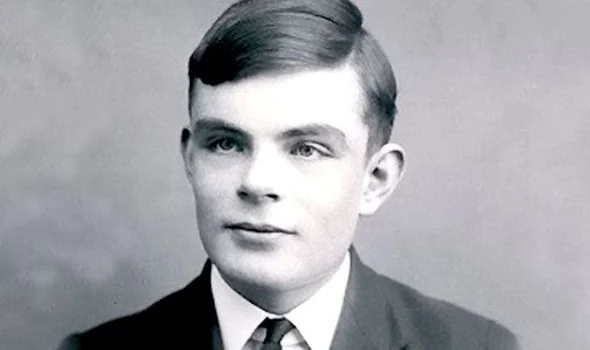
Alan Turing's IQ: the 185 that circulates and the record that exists
ACIS has never assessed Alan Turing, holds no record belonging to him, and no retrospective assessment of anyone is possible. The IQ of 185 attached to his name appears with no test, date, examiner or norm group. This page separates that number from what the record documents: fifteen Sherborne school reports, a Cambridge fellowship, the 1936 paper on computable numbers, Bletchley Park, and Turing's own 1948 and 1950 writing about what intelligence means.
The Sherborne School archive catalogue lists fifteen school reports for Alan Turing, written between Michaelmas term 1926 and Summer term 1931, and none of them is an intelligence test.
0 The short answer
Alan Turing has no documented IQ: the figure of 185 that circulates carries no test, date, examiner or norm group, and ACIS has never assessed him. The Sherborne School archive catalogue lists 15 school reports from 1926 to 1931 and his examination certificates, and none of them is an intelligence test. What the record does document is a mathematics scholarship, a Cambridge fellowship, the 1936 paper on computable numbers and wartime codebreaking, which show achievement rather than a score. Read the 185 as a number in circulation, not as a measurement.
185
The figure that circulates for Turing, found on pages that name no test, date, examiner or norm group.
15
Sherborne School reports listed in the school's archive catalogue, from Michaelmas term 1926 to Summer term 1931.
5.67
Standard deviations above the mean that 185 would sit on a scale with mean 100 and standard deviation 15, our arithmetic.
The 185 attached to Alan Turing has no traceable origin in a test, a document or a named estimator, and the pages this review opened that present it as a figure for him either cite nothing or cite another page that prints it. On October 6, 2026, this review opened the pages that rank for the question and read what each says about the basis of the number. The table sets each claim beside the evidence the page offers for it.
Says such figures are published estimates, not measured scores
By its own description, not a test result
Two chains run through the table, and neither reaches a test. One page says it used Study.com, which this review could not read. Another says it took the figure from SocioSite, and SocioSite offers a remark with no citation. A chain of pages that repeat one another is a single claim appearing many times, not many independent findings.
The remark deserves a closer look because it is the only place where the number is tied to a person and a moment. It is attributed to a headmistress in 1918, when the page says he was six years old, and it contains the figure 185 inside it. The page gives no document, no archive reference and no date beyond the year. The Turing Digital Archive places his early life with a family at St Leonards-on-Sea near Hastings, and the Sherborne School catalogue lists Hazelhurst Preparatory School in East Sussex from 1922 to 1926. Neither source mentions the remark.
One page, iqmetrics.org, says the number was attached to a real remark recorded in his mother's 1959 memoir, in a version that carried no number. This review could not open that book and treats the explanation as unverified. The earliest dated appearance this review found is a post on X by the account Bugged Space, which X's own embed service dates July 22, 2020, checked October 6, 2026. It says Alan Turing's IQ score is 185 and places him in the top 0.1 percent of the population, with hashtags and no source, and iqtesta.com carries almost the same sentence, differing by one word. Earlier appearances may exist.
The percentiles printed beside the number do not match it either. On a scale with mean 100 and standard deviation 15, the top 0.1 percent begins at about 146, and the 99.999th percentile sits at about 164. Both are our arithmetic. A score of 185 would lie far beyond both, a point the section on whether any test could report it examines.
ACIS has not tested Alan TuringACIS has never assessed Alan Turing, holds no record belonging to him, and no retrospective assessment of anyone is possible. Nothing on this page is an estimate of his IQ, and no figure here should be read as one. Numbers on the page come from named sources or are labeled as our own arithmetic.
2 What does the documented record hold, year by year?
The documented record is a sequence of dated events, certificates, letters, published papers and institutional pages, and none of it is an intelligence test. The table lists what the sources opened for this review establish, with the source for each line. Where sources give different dates, the table gives the less specific one or says so.
Enters Sherborne School and stays until Summer term 1931
Sherborne School archive catalogue
July 1928
School Certificate, passed with credit in seven subjects
Sherborne School archive catalogue
1930 or 1931
Wins an Open Scholarship in Mathematics to King's College, Cambridge, and enters in 1931. Sources date the award to 1930 (archive item AMT/A/26, MacTutor) or to 1931 (Sherborne catalogue)
Turing Digital Archive, item AMT/A/26 and About page, MacTutor and Sherborne School archive catalogue
1934
Graduates with distinction
Turing Digital Archive, About page
1935
Elected a Fellow of King's College at age 22
Sherborne School archive catalogue
1936
Wins the Smith's Prize. The paper on computable numbers is received on May 28 and read on November 12
Turing Digital Archive, item AMT/A/27, and the paper
A public apology by the Prime Minister, then a posthumous royal pardon, which the Trust says was later extended to all those convicted under long-repealed legislation outlawing homosexual acts
Bletchley Park Trust
Read down the third column and the pattern is plain. The sources are archives, school and college catalogues, a trust, the author of the standard biography and the journals that printed his papers. They record where he studied, what he was awarded, what he wrote and what he was part of. They are the same kinds of source that anchor a documented biography of anyone, and they answer different questions from an intelligence test.
The 1952 and 1954 lines in the table are included only as chronology. The page records the conviction and the death and draws no inference from either. The sources cited state the facts, and the page leaves them there.
The table also leaves out items where sources disagree on details that do not matter here, such as the day of his death, June 7 in the Sherborne catalogue and MacTutor and June 8 on the archive's About page. Leaving a disputed detail out is more honest than choosing one. The same discipline applies to the 185: when a claim cannot be traced, the page reports that it cannot be traced instead of picking a version.
3 What do Alan Turing's Sherborne school reports say?
The Sherborne reports are the nearest thing to a contemporary assessment of the young Turing, and they record places in sets, comments by subject and prizes, not an intelligence score. The Old Shirburnian Society publishes transcripts of 15 reports, from Michaelmas term 1926 to Summer term 1931, and the school's archive catalogue lists the same 15 with his form. Each report gathers comments from the masters of each subject, a note from his housemaster and a line from the headmaster.
What the comments say is mixed, and the mix is the point. In mathematics and science the masters were warm. One wrote in Lent term 1928 that he was easily the best mathematician in the set. In Summer term 1928 another wrote that it was hard to believe a boy so promising at mathematics could be so feeble at English and Latin. The Michaelmas term 1927 report says his intelligence is always good, in the same sentence as a complaint about his practical methods. Complaints about untidy work and weak writing run through most terms.
The headmaster's report for Summer term 1927 says that if he were to be solely a scientific specialist he would be "wasting time at a Public School." That remark judges the fit between a pupil and a curriculum, not the size of an ability. The housemaster's note on the back of the Lent term 1928 report says he had as good brains as any boy who had been at the school, and then urges him to attend to his writing. It is the broadest comparison of ability in all 15 reports, and it is an opinion. It carries no scale, no comparison group and no way to check which boys the comparison covered.
The last report, for Summer term 1931, calls him a gifted and distinguished boy, and his mathematics master expects him to gain a distinction in the Higher Certificate with ease. The catalogue records the 1931 Higher School Certificate with distinction in mathematics, and a School Certificate in July 1928 with credit in seven subjects. Its list of prizes runs from the Kirby Mathematic Prize for the Lower School in 1926 to a Sherborne Exhibition Prize in 1931 and includes the Digby Prize and the Christopher Morcom Prize for Natural Science in 1930 and 1931.
Taken together, the documents show a pupil far ahead in mathematics and science, behind in literary subjects and persistently marked down for presentation. School marks measure how a pupil meets a curriculum, taught by particular masters, in a particular year. A place in a set compares a boy with the other boys in that set, not with a norm sample. The Sherborne School catalogue lists reports, certificates, prizes, letters and library books, and it describes no intelligence test among them.
Intelligence testing already existed when he arrived at Sherborne, as the 1926 volume discussed later on this page shows, and the page on the history of IQ testing traces how it developed. None of the sources read for this review reports that he sat such a test. MacTutor says he completed the Common Entrance Examination in 1926 before going to Sherborne. The Independent Schools Examinations Board, which sets it today, describes Common Entrance as assessments of what pupils know, understand and can achieve, with papers in English, mathematics and science, in use since 1903. That is a description of the current examination, and this review did not see the 1926 papers. No score from his sitting appears in any source read.
4 What does the Cambridge record show?
The Cambridge record shows a mathematician moving from a scholarship to a fellowship in about five years, and each step rests on an examination or a dissertation that exists, not on a score. The Turing Digital Archive lists a 1930 award of a scholarship to King's College, with a letter from his Sherborne housemaster on his leaving school. MacTutor adds that he sat the scholarship examinations in 1929 and won an exhibition but not a scholarship, then sat them again in 1930 and won a scholarship. He entered King's in 1931, and the Sherborne catalogue dates the award itself to 1931.
The archive's About page says he graduated in 1934 with distinction and was awarded a fellowship in 1935, and the Sherborne catalogue puts his age at election at 22. The archive holds a typescript copy of the fellowship dissertation, titled "On the Gaussian Error Function" and dated 1935. MacTutor reports that the dissertation proved fundamental results on probability theory, namely the central limit theorem. It adds that Turing was not aware the theorem had recently been discovered, so he found it independently.
That detail is worth a pause. Independent rediscovery shows strong mathematical ability. It also shows that a result is not a rank order: the theorem already existed, and Turing's route to it was his own. The same pattern returns in 1936, when parallel work by Alonzo Church became known.
In 1936 he won the Smith's Prize, which Hodges ties to his work on probability theory. The archive's item AMT/A/27 holds congratulations from teachers at Sherborne School and from friends, and a telegram from his mother. Those papers record how the people around him responded. They are evidence of regard, and a biographer can weigh them. They are not evidence of a score.
Every Cambridge step was a judgment by examiners and colleagues, usually made by comparing candidates, and the sources read give no statistics about those pools, so no step can be converted into a position on a population scale. A fellowship in 1935 is a fact about 1935. It is not a percentile. An intelligence test is built differently: it samples defined abilities with standardized tasks and compares the result with a reference group, as the page on what IQ measures explains. A degree, a fellowship and a prize are excellent evidence of mathematical accomplishment, and nobody designed them to yield a number on a scale with a mean of 100.
5 What did the 1936 paper on computable numbers establish?
The 1936 paper is the strongest single piece of evidence about Turing's work, and it is evidence about a proof, not about a score. The paper, On Computable Numbers, with an Application to the Entscheidungsproblem, appeared in the Proceedings of the London Mathematical Society, series 2, volume 42. Its header says it was received on May 28, 1936 and read on November 12, 1936. Crossref dates the issue 1937, while Hodges says it was published at the very end of 1936, which is why both years appear in citations.
The paper defines the computable numbers as the real numbers whose decimals can be calculated by finite means. Turing compares a person computing a number with a machine that has a finite set of conditions and a tape divided into squares, and he describes a universal computing machine in section 6. In section 11 he shows that the Hilbertian Entscheidungsproblem, the question of whether a general method can decide the provability of any mathematical statement, can have no solution. Hodges's short biography explains that Turing's analysis started from what a person could achieve by following a methodical process.
The paper itself records that it was not alone. Its introduction says Alonzo Church had introduced "effective calculability," an idea equivalent to computability but very differently defined, and that Church had reached similar conclusions about the Entscheidungsproblem. An appendix, added on August 28, 1936, outlines the proof that the two ideas coincide. Hodges writes that Turing showed his result to Max Newman in April 1936, at the moment Church's conclusion became known, and that the two approaches were seen to be different, with Turing's resting on operations that real people or things could perform.
What does the paper establish about Turing? It shows the ability to take a vague notion, define it exactly and build a proof on the definition, by a mathematician who was 23 when the paper was received. It shows he was working at the research frontier of mathematical logic in 1936. It also shows that more than one able mathematician reached a version of the result within the same months, which is how research normally proceeds.
What the paper does not do is place him on a scale. It is not about measuring people. It contains no tasks scored against a norm group, and it says nothing about intelligence tests. The page on John von Neumann's circulating 180 and 200 likewise sets a documented range of original work against figures for which, it says, no public report identifies the instrument, date or examiner. The proof is a fact. The 185 is a claim.
6 What did Turing do at Bletchley Park, and whose achievement was it?
The Bletchley Park record documents an outstanding contribution inside a team, and a team record cannot isolate one person's cognitive profile. The Bletchley Park Trust's brief biography says he was recruited by the Government Code and Cypher School in 1938 and reported to Bletchley Park on September 4, 1939, the day after war was declared. He was assigned to the Enigma research section under Dilly Knox, who soon reported that Turing was producing a stream of ideas.
The Trust records several contributions. Building on pre-war work by Polish codebreakers, he designed the Bombe, a machine for breaking Enigma that was in use by the autumn of 1940. By December 1939 he had worked out how the Germans chose their naval Enigma message indicators. He later headed the naval Enigma team in Hut 8, which, after receiving captured material, broke the vital U-boat key known as Dolphin on virtually every day from the summer of 1941. His Banburismus method for reducing the number of possible wheel orders rested on his development of sequential statistical analysis, which the Trust calls an original contribution to mathematics.
The same sources show how many other people stood in the picture. Hodges notes that the mathematician Gordon Welchman made an important contribution to the Bombe, and the Trust credits Polish work before the war. It also says the machinery used against the Lorenz ciphers, which includes Colossus, rested on concepts that stemmed from discussions between Turing and Max Newman, although Turing was not directly involved in building those machines.
Turing wrote about this very point in 1948. In the report discussed in the next section he argued that an isolated person does not develop intellectual power and that the search for new techniques should be regarded as carried out by the human community as a whole rather than by individuals. A wartime codebreaking record is a vivid illustration. It credits a man, a section, earlier Polish work and many colleagues at once, and no document separates what each contributed.
What can the record tell us about his cognition? It tells us he could do hard, novel work under pressure, and that colleagues and later historians recognized it. It cannot supply a profile of crystallized knowledge (Gc), fluid reasoning (Gf), working memory (Gwm) or processing speed (Gs), because the work was not a standardized task and nobody scored it against a reference group. The CHC model describes the abilities that an intelligence test separates. A codebreaking section does not separate them, so the record cannot be read as if it had.
7 What did Turing mean by intelligence in 1948 and 1950?
Turing treated intelligence as something judged from behavior and shaped by education, not as a quantity read from a scale, and he said so in print twice. His report Intelligent Machinery was written in 1948 for the National Physical Laboratory. Hodges notes that it was never published in his lifetime and first appeared in print in 1968, then in Machine Intelligence 5 in 1969, the printing read for this review. Its abstract says that the potentialities of human intelligence can only be realized if suitable education is provided, and that the investigation centers on an analogous teaching process applied to machines.
A short section near the end is titled "Intelligence as an emotional concept." Turing writes that the extent to which we regard something as behaving intelligently depends as much on "our own state of mind and training" as on the properties of the object. If we can explain and predict its behavior, or it seems to follow little underlying plan, we feel little temptation to imagine intelligence. The same object could therefore look intelligent to one person and not to another who had worked out its rules. He then describes an experiment in which a player has difficulty telling whether he is playing chess against a person or against a paper machine.
In 1950, Computing Machinery and Intelligence opens by setting the question "Can machines think?" aside. Turing observes that settling the meaning of the words by a survey of how people use them would be absurd, and he replaces the question with the imitation game. Later he calls the original question too meaningless to deserve discussion. He predicts that by the end of the century the use of words and general educated opinion will have changed so much that one will be able to speak of machines thinking without being contradicted.
The same paper returns to education. Rather than programming an adult mind, he proposes to produce a program that simulates a child's and to subject it to an appropriate course of education. He lists three components of the adult mind: its initial state at birth, the education it has received and other experience. He also compares the imitation game, with one player removed, to the viva voce examination used to discover whether someone really understands something or has learned it parrot fashion. That is an oral examination, not a psychometric instrument.
Hodges, in his scrapbook page on the Turing test, reads the humor in the 1950 paper as deliberate. He writes that Turing was making clear that by intelligence he meant something that could make a joke and connect with the real language of human life. That is Hodges's interpretation, and it fits the paper's examples, which include a request for a sonnet, a sum, a chess move and an exchange about a sonnet.
Neither text offers a scale, a norm group or a number. This review searched a transcribed copy of the 1950 paper and found no use of the term IQ and no mention of intelligence tests. For 1948 it can say only that the pages read here contain none. In both texts intelligence is located in behavior, in an observer's judgment and in education. A quotient attached to his name answers a different question from the one he asked, and the two should not be mistaken for each other.
8 Is the Turing test an IQ test?
No: the Turing test, which Turing called the imitation game, asks whether a machine can be told apart from a person in conversation, and it has no scale, no norm group and no score. In the 1950 paper the game has three players: a man, a woman and an interrogator who communicates by typed messages and tries to say which of the other two is the woman. Turing then asks what happens when a machine takes the part of the man, and whether the interrogator will decide wrongly as often as when the game is played between a man and a woman.
The result he proposes to track is a probability, not a score. He states his belief that in about fifty years a computer could be programmed to play so well that an average interrogator would have no more than a 70 percent chance of making the right identification after five minutes of questioning. That is a prediction about a rate of correct identification. It is not a quotient, and it is not a position on a distribution of people.
Feature
The imitation game as described in 1950
A norm-referenced IQ test
Question asked
Can a machine's typed replies be told apart from a person's?
How does this person's performance compare with a reference group?
Who is judged
A machine, with a person as the comparison
A person
How the result is expressed
The interrogator's rate of correct identification, such as no more than 70 percent after five minutes
A standard score, usually with a mean of 100 and a standard deviation of 15, with a percentile and an interval
Reference group
None; the human players serve as the comparison
A norm sample of people, by age group
Content
Open-ended questions and answers on any subject
Standardized tasks scored by fixed rules
Purpose
To replace a question about the word think with one that can be tested
To describe relative performance on defined abilities
Hodges notes that the imitation game is now usually called the Turing test for intelligence, and he stresses that Turing designed the typed setting to separate intelligence from other human characteristics. That is the sense in which the name fits. The game does not rank people. Its human players are not scored, and nothing in the paper turns the interrogator's judgment into a scale that a person could be placed on.
Part of the confusion is the shared word. Both the test and the quotient claim to say something about intelligence, and a name that appears in both is easy to fuse. The 185 compounds the error by crediting the man who proposed a conversational test of machines with a number from the practice of placing people on a scale. Those are two separate projects, and Turing's own writing belongs to the first.
A score of 185 can be printed on some scales, but a norm sample of ordinary size cannot support it, so the number needs its scale, its instrument and its method before it means anything. Start with the oldest meaning, the ratio of mental age to chronological age, which Catharine Cox's 1926 volume uses for its ratings and defines in a footnote that cites Terman's 1916 book The Measurement of Intelligence. Cox says she used it "without the limitation which, in testing practice, impairs its usefulness in the upper mental ages," treating the IQ as a constant measure of relative standing, comparable to a sigma index. Read as a literal ratio, 185 would mean a mental age 1.85 times the chronological age, so a ten-year-old would perform at the level of an 18.5-year-old, which is our arithmetic. The page on mental age explains the formula and its modern limits.
Modern tests place a person within a distribution of people of the same age. The standard scale has a mean of 100 and a standard deviation of 15, as the page on why standard deviation 15 matters describes, and the page on how IQ scores are normed describes how raw scores are turned into scale scores. A score of 185 is 85 points above the mean, which is 5.67 standard deviations. Under a normal model, about 7 people in a billion lie above that point, or about 1 in 137 million. This is our arithmetic.
A norm sample would need to hold on the order of 137 million people to be expected to contain even one case that rare. No ordinary norm sample is anywhere near that size. Far into the tail, a stated rarity is therefore an extrapolation of the normal curve, not a count of people. The IQ rarity calculator and the IQ percentile calculator apply that curve, and the page on why scores and percentiles cannot be averaged shows what such conversions can and cannot support.
The pages that print the 185 contradict their own scale. One places it in the top 0.1 percent, which on the standard scale begins at about 146. Another places it at the 99.999th percentile, which is about 164. Both are our arithmetic on the normal curve. A reader who accepts either percentile has accepted a score far below 185, and a reader who accepts 185 has to reject both percentiles.
The same numeral also means different things on different scales. A score of 185 sits fewer standard deviations from the mean on a scale with a larger standard deviation, and more on a scale with a smaller one. Without the scale, the instrument and the date, the number cannot be placed anywhere. The page on the highest IQ claims lists the usual routes by which extreme figures arise: childhood ratio scores, estimates about people long dead, non-standardized high-range tests and figures a fan attached to a name.
Our arithmetic, labeledThe figures 5.67, about 1 in 137 million, about 146 and about 164 are our calculations on a normal distribution with a mean of 100 and a standard deviation of 15. They are not measurements of any person. A norm sample of ordinary size is not expected to contain anyone at the rarity of 185, so the rarity is an extrapolation of the curve.
10 How are historical IQs estimated, and why is Turing a poor candidate?
Serious historical IQ estimates come from historiometry, a method that rates the surviving record, and Catharine Cox's 1926 volume is the standard example; it did not include Turing, and its method would not give a defensible number for him. The volume is The Early Mental Traits of Three Hundred Geniuses, the second in Lewis Terman's Genetic Studies of Genius. Its introduction says the subjects are 301 of the most eminent men and women of history, who lived between 1450 and 1850. Turing was born in 1912, so he is outside the group by definition. In 1926, the year the book appeared, he turned 14 and began at Sherborne.
Cox rated each subject on behavior and performance in childhood and early youth, which she designated the AI IQ and took to age 17, and in the first period of young manhood, the AII IQ, taken to age 26. Each rating averaged three independent estimates and was expressed in IQ terms, the ratio of mental age to chronological age, but treated as a relative standing. She attached to each a reliability coefficient for the data behind it, and she wrote that the ratings were estimated from the records as they stand. She also stated that every score depends on the experience and interpretation of the judges.
Her chapter on the IQ estimate shows how school evidence entered. A youth who does average work in an average school at the average age was rated near 100. One who does superior work in a standard high school was rated about 120. One who does extraordinary work in a superior high school was probably not less than 140. Those rules are examples of reading school standing as a sign of ability, and Cox gave them as best estimates from a single criterion, with other criteria treated in later chapters. She noted that incomplete records tend to understate a subject, which is why she also reported corrected estimates.
Turing does have school evidence, which is why he looks like a candidate. The difficulty is that his reports point in different directions. The same pages that praise his mathematics call his English and Latin feeble and mark him down for presentation. A rater applying school standing would have to decide how much each signal counts, and that decision is a judgment, not a measurement. Two raters can weigh the same fifteen reports differently, and neither figure could be checked against a test.
The page on Isaac Newton shows how Cox's 1926 figure was applied to one name, and the page on the history of IQ testing places her method in the development of intelligence testing. This page stops before that step, for three reasons. The record is mixed, the method rests on judgment, and the purpose of this page is to separate the documented from the circulating. Our position is that no estimate is offered for Turing here, and that nobody could responsibly offer one as a fact.
11 What would a defensible number for Turing require?
A defensible figure would require a document that names the instrument, the date, the examiner, the reference group and the interval, and no source opened for this review contains one. A modern report shows what such a document looks like. Pearson's WAIS-5 sample score report, dated September 16, 2024, lists the examinee's date of birth, date of testing, age at testing and examiner. It prints scaled scores with percentile ranks and a stated reference group, and each composite score carries a percentile rank, a 95 percent confidence interval and a standard error.
Set against that template, the archive record for Turing is silent. The Sherborne catalogue, the King's College archive pages, Hodges's short biography, the Bletchley Park Trust biography and the two papers describe schooling, awards, work and writing, and none describes a test report. Silence in those sources does not prove that no test was ever taken. It means that no document a reader can check exists in what was reviewed, and a number without a checkable document is a claim.
New evidence could change that, and each kind would settle something different. A named instrument and edition would settle which test was used, but not the score. A contemporary examiner's note would establish provenance, though the scale would still need identifying. An authenticated score record would support a stated result, to be read against the norms of its day. None of them would justify a ranking against Einstein, von Neumann or anyone else, because comparison needs comparable measurements, and the page on Albert Einstein examines a figure for another famous name that is not on any record.
Several things would not suffice. More achievements would not, because the record of achievement is already strong and is not a score. More pages repeating the number would not, because repetition is not independence. A remark by a teacher or a headmistress would not, because a remark is an opinion with no scale. A phrase such as "historians and psychologists estimate" would not, until the estimators are named and their method can be read.
A reader can apply five quick questions to any celebrity figure. Which test and which edition? When was it given, and at what age? Who administered it? Which norms were used? What interval surrounds the score? If a page cannot answer them, the number is circulating, not measured. The guide to celebrity IQ claims with every number sourced and the page on where the genius threshold of 140 came from apply the same questions across many names.
Other pages on this site apply the same evidence-first method to other people. The reviews of Srinivasa Ramanujan and Charles Darwin follow it for their subjects, and the method does not change from one name to the next. A strong record deserves an exact account, and an exact account has no room for an invented number.
12 What does this mean for your own score?
The lesson of the 185 is that a score is only as meaningful as the documentation behind it, and professional standards say the same about every score, including yours. The Standards for Educational and Psychological Testing, published by AERA, APA and NCME in 2014, ask that each intended interpretation of a score be clearly stated and supported by validity evidence (Standard 1.0). They ask that test users receive clear explanations of what a scale score means and what its limits are (Standard 5.1). They also ask that released results be explained in simple language covering what the test covers, what scores represent and how precise they are (Standard 6.10).
The APA Ethics Code bears on the Turing question. Standard 9.01 asks psychologists to base their opinions on information and techniques sufficient to substantiate their findings. It says that, with stated exceptions, they provide opinions about the psychological characteristics of individuals only after an examination adequate to support their conclusions. Where that is not practical, they document the efforts made, clarify the effect of limited information and limit their conclusions. For a record review where an individual examination is not warranted, they explain this and the sources their conclusions rest on. Standard 9.06 asks them to take account of the purpose of the assessment and to state the significant limitations of their interpretations. A psychologist following these standards would have to say how little a record review can support about a man who died in 1954 and for whom no documented test was found.
The practical point is to ask the same questions of your own result. ACIS sells a paid assessment, so treat this section as a disclosure. The report gives a Full Scale IQ and six primary indices on the standard scale with a mean of 100 and a standard deviation of 15, with percentiles and a 95 percent confidence interval, and adult norms cover ages 16 to 90. It is online and unsupervised. It is not a clinical or diagnostic instrument, and it is not for hiring, school accommodations or admission to high IQ societies. It is available in English only. The technical manual holds the documentation, and the page on reliability and validity explains how to read it. No ACIS statistic is quoted on this page.
The forms are a one time payment with no subscription, breaks are allowed, and there is a free trial with no card. Prices below were read on October 6, 2026 and can change. The Quick form costs 15 dollars, with 6 subtests in 3 domains and about 45 minutes. The Optimized form costs 30 dollars, with 13 subtests in 5 domains and about 110 minutes. The Full Scale form costs 50 dollars, with all 20 subtests in six domains and about 175 minutes. A 5 day quality guarantee applies, and you have 30 days to complete a form.
To choose among options, the guides to the best online IQ tests, where to take an IQ test and the IQ test for adults set out the routes, and the page on what your IQ is and how to read it covers interpretation. If you need a result for a formal purpose such as a diagnosis, accommodations or a hiring decision, ask the receiving body what evidence it accepts and consult a licensed professional. A number you can understand and defend is worth more than a famous one you cannot trace. Turing's record is strong without a number, and your result deserves the same standard: a named test, a date, a norm group and an interval.
Every figure above is traceable to one of the following, and each is linked at the point where it is used. Web pages were read on October 6, 2026. Figures marked as our arithmetic are calculations on a normal distribution and are not attributed to any author.
Turing A M. Intelligent Machinery. Report for the National Physical Laboratory, 1948, first printed in 1968 and in Machine Intelligence 5, Edinburgh University Press, 1969, pages 3 to 23. Publication details come from Hodges's bibliography, and the 1969 printing was read in a scanned copy.
Hodges A. Alan Turing: a short biography. Based on his 1995 entry for the Oxford Dictionary of Scientific Biography. Hodges is the author of Alan Turing: The Enigma, first published in 1983.
Sherborne School Archives. Alan Turing Archive catalogue, Archon code GB1949, hosted by the Old Shirburnian Society.
King's College, Cambridge. The Turing Digital Archive. The About page and catalogue items AMT/A/26, AMT/A/27, AMT/C/11 and AMT/C/28.
Bletchley Park Trust. Alan Turing: a brief biography, based on the text formerly displayed in the Hall of Fame in Bletchley Park mansion.
O'Connor J J and Robertson E F. Alan Mathison Turing. MacTutor History of Mathematics Archive, University of St Andrews.
Cox C M. The Early Mental Traits of Three Hundred Geniuses. Genetic Studies of Genius, volume 2, edited by L M Terman, Stanford University Press, 1926. The IQ definition used in the chapter on the IQ estimate is cited there to Terman L M, The Measurement of Intelligence, Houghton, 1916.
Alan Turing's IQ is unknown, because no intelligence test result belonging to him is on record. The figure of 185 that circulates appears on pages that name no test, date, examiner or norm group. His documented achievements are real, but they are not a score.
Did Alan Turing ever take an IQ test?
No source read for this review reports that he did. The Sherborne School archive catalogue lists his reports, certificates and prizes without any intelligence test, and the biographies and papers read describe none. That is an absence in the sources reviewed, not proof that no test ever occurred.
Is Alan Turing's IQ really 185?
There is no evidence that it is. The 185 appears on pages that cite no test, and some chains of pages lead only to other pages that print the number. Treat it as a figure in circulation, not a measurement, until a named test, a date and an examiner appear.
Was Alan Turing a genius?
The documented record shows exceptional mathematical and scientific work: the 1936 paper on computable numbers, the Cambridge fellowship, wartime codebreaking and the 1950 paper on machine intelligence. Whether to call that genius is a matter of definition. An IQ score is not needed to recognize the achievement, and none is on record.
Was Alan Turing's IQ higher than Einstein's?
That comparison cannot be made, because neither man has a verified test score. The figures that circulate for each are attributions without test records. Subtracting one unverified number from another produces no measurement, so the documented work of each man is the better basis for comparison.
What was Alan Turing's IQ as a child?
No childhood IQ is documented. The school archive holds a Hazelhurst report from 1924 and fifteen Sherborne reports, which record comments and places in subjects rather than a quotient. A remark about a headmistress and the number 185 circulates online with no citation, so it cannot be treated as a record.
Is the Turing test an IQ test?
No. The Turing test is an imitation game in which an interrogator, using typed questions, tries to tell a machine from a person. It has no scale, norm group or score, so it cannot place anyone on an IQ distribution. Turing proposed it in 1950 to replace the question of whether machines can think.
Where does the 185 figure come from?
No source traces it to a test. Pages that print it either cite nothing or cite other pages, such as a remark attributed to a headmistress in 1918 that has no citation. The earliest dated appearance this review found is a post on X from July 22, 2020, and earlier ones may exist.
What do Alan Turing's Sherborne school reports say?
They record mixed comments by subject. Masters praised his mathematics and science, called his English and Latin weak and criticized untidy work. The final report calls him a gifted and distinguished boy. The reports contain places in sets and comments, not an intelligence quotient.
What did Turing's 1936 paper show?
It showed that the Hilbertian Entscheidungsproblem has no solution, using a machine model of computation that Hodges describes as the foundation of the modern theory of computation. Alonzo Church reached similar conclusions by a different route in the same period. The paper is about computability, not about measuring people.
What did Turing do at Bletchley Park?
He reported there on September 4, 1939, worked in the Enigma section, designed the Bombe building on Polish work and headed the naval Enigma team in Hut 8. The Bletchley Park Trust also credits his Banburismus method. The work was done within a team, so it cannot isolate one person's abilities.
How did Turing define intelligence?
He gave no numerical definition. In 1948 he wrote that whether something seems intelligent depends as much on the observer's state of mind and training as on the thing itself. In 1950 he replaced the question of whether machines think with a test based on conversation and observed behavior.
Was Alan Turing included in Cox's study of geniuses?
No. Catharine Cox's 1926 volume rated 301 eminent people who lived between 1450 and 1850, and Turing was born in 1912. Her method rated the surviving records of childhood and youth in IQ terms, as a relative standing. It produced no figure for him.
What did Turing predict about machines in 1950?
He predicted that in about fifty years computers could play the imitation game so well that an average interrogator would have no more than a 70 percent chance of identifying correctly after five minutes. He also expected educated opinion to accept talk of thinking machines by the end of the century.
Can anyone estimate Alan Turing's IQ from his biography?
Not defensibly. A rater could weigh his school reports and achievements, but the reports point in different directions and the weighting is a judgment. Cox's method produced estimates from records for others and carried stated uncertainty. ACIS offers no estimate for Turing and treats none as a fact.
How rare would an IQ of 185 be?
On a scale with a mean of 100 and a standard deviation of 15, 185 is 5.67 standard deviations above the mean, about 1 in 137 million under a normal model. This is our arithmetic, and the figure is an extrapolation, because no ordinary norm sample contains people that rare.
Could a modern IQ test report a score of 185?
Some scales can print numbers that high, but the position they imply cannot be supported by an ordinary norm sample. A report needs a named instrument, a reference group and an interval before the number means anything. Childhood ratio scores and high-range tests are common sources of such figures.
What would prove a celebrity's IQ?
A checkable document would: the test and edition, the date and age at testing, the examiner, the reference group, the score and its confidence interval. A repeated number, a remark by a teacher or a list of achievements does not substitute for those details.
Can I compare my score with Alan Turing's?
No, because there is no verified score to compare with. Compare your result with its own norm group and read it with its confidence interval. Percentiles show where you stand among people of your age on that test, which is the question a score can answer.
Does ACIS know or estimate Alan Turing's IQ?
No. ACIS has never assessed Alan Turing, holds no record belonging to him and offers no estimate. No retrospective assessment of anyone is possible. This page documents what sources record and labels any arithmetic as our own.
What is the best way to get a real IQ number?
Choose a named test with a stated norm group and report format, and read the result with its confidence interval. For formal purposes such as a diagnosis or accommodations, a licensed professional is the route. Online tests describe your performance on defined abilities but are unsupervised.
Take the assessment
You get a profile, not a number
ACIS measures six CHC domains across 20 subtests and reports each one with its own normed score and confidence interval, so you can see where you are strong and where you are not.