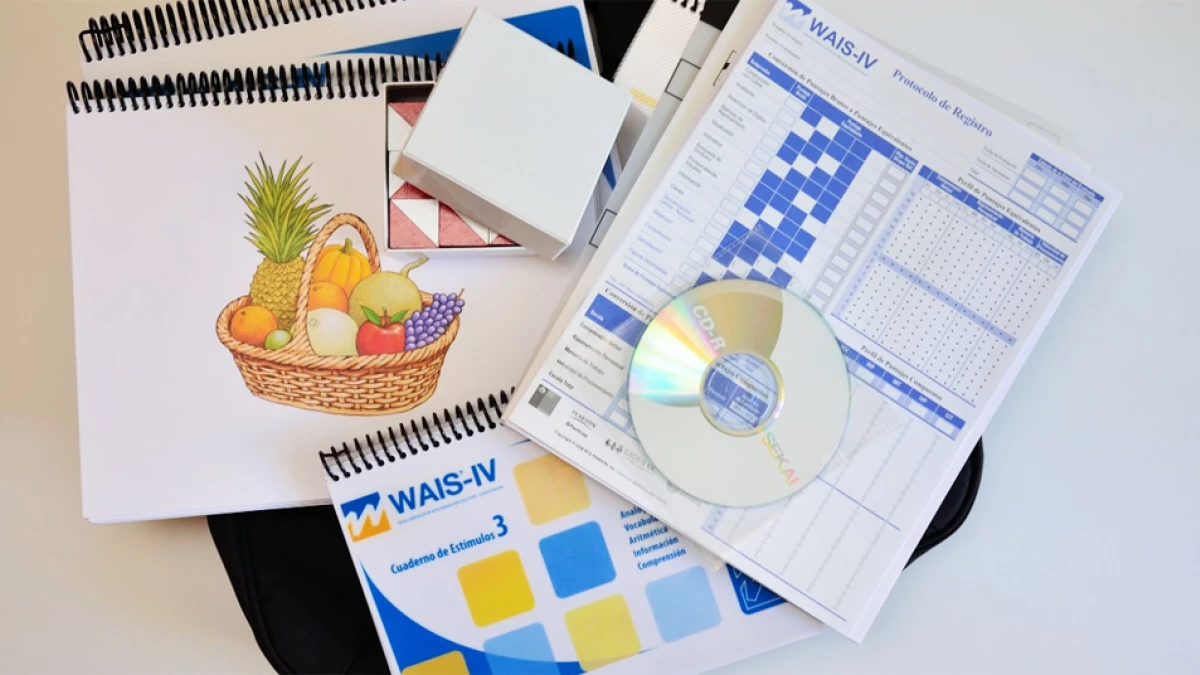
You can receive a WAIS through professional digital administration or carefully planned telepractice. You cannot take the official test as an unsupervised public website quiz. This guide separates those two meanings, shows how to book the right service, and explains when a serious online self assessment is the more sensible purchase.
Professional WAIS materials are controlled assessment content. ACIS is independent, is not affiliated with Pearson, and does not reproduce WAIS items.
1 The Short Answer
An official WAIS test online is possible only in the professional sense, not in the public self service sense. The current United States edition, WAIS 5, can be administered with professional digital tools, and Pearson publishes guidance for telepractice. In both cases, a qualified examiner controls the process, protects the materials, observes performance, follows standardized rules, and decides whether the resulting scores can be interpreted. There is no legitimate button on a public website that lets anyone take the official WAIS alone and receive an official report.
That distinction matters because the same word, online, describes three very different products. It can mean a psychologist meeting with you remotely and administering protected WAIS content. It can mean an independent online cognitive assessment with its own items and norms. It can also mean a website that borrows the WAIS name while offering a short collection of puzzles with no relationship to the official instrument. Only the first is a WAIS administration. The second may still be useful for personal insight if it is transparent. The third deserves skepticism.
16:0 to 90:11
The official age range Pearson lists for WAIS 5 in the United States.
45 to 60 minutes
Published administration estimates for the Full Scale route and ten primary index subtests.
Professional control
The feature that separates digital WAIS administration from a public online quiz.
The buying decision in one sentence
If you need diagnosis, accommodations, legal documentation, treatment planning, or a report another institution must accept, book a qualified professional and confirm the requirements first. If you want structured personal insight and understand that it is not clinical documentation, choose a transparent online assessment on its own merits, not one pretending to be the WAIS.
The search phrase looks precise, but it hides several intentions. One person wants a licensed psychologist without traveling to an office. Another wants the official WAIS at the lowest possible cost. A third wants an IQ estimate today and assumes that any serious adult intelligence test must be called WAIS. A fourth has already found a website advertising a free online WAIS and wants to know whether the claim is real. Giving all four people the same answer would be poor guidance.
Start with the name. WAIS refers to the Wechsler Adult Intelligence Scale, a proprietary family of individually administered professional instruments. WAIS 5 is the fifth United States edition. Its identity comes from more than familiar task categories. It includes protected materials, specific administration rules, scoring procedures, normative data, technical evidence, examiner judgment, and an interpretive context. A website does not become the WAIS because it displays matrices, vocabulary prompts, memory tasks, or processing speed exercises.
The WAIS-IV guide distinguishes the instrument's content and scoring from the delivery platform or professional supervision used in an administration.
The word online is equally slippery. A test can be digital while the examiner and examinee sit in the same room. A test can be remote while an examiner watches and directs the session by secure video. A scoring platform can be web based even though the actual administration used paper materials. Finally, a public browser test can run without any examiner at all. These are different delivery systems, and they do not provide the same control over identity, environment, instructions, timing, materials, behavior, or test security.
This is why the honest answer should begin with purpose rather than brand. If the purpose is a formal evaluation, the question is not merely whether the WAIS can appear on a screen. The question is whether a properly qualified examiner can conduct an appropriate, secure, standardized assessment and produce documentation that meets the recipient's rules. If the purpose is private curiosity, an official clinical instrument may add cost and scheduling without adding value you actually need. Our broader guide to where to take an IQ test maps those routes by purpose.
There is also a commercial reason to keep the categories clear. Some sites benefit when visitors confuse resemblance with identity. Calling a short quiz WAIS style creates borrowed authority without doing the hard work that makes the official scale professional. A responsible independent assessment should use its own name, explain its own evidence, and state its limitations. It should never imply that familiar looking task formats make it a Wechsler product.
3 Can the Official WAIS 5 Be Taken Online?
Yes, but only after defining online correctly. Pearson lists paper or Q interactive as WAIS 5 administration options, with paper, Q global, or Q interactive scoring options. Q interactive is a professional testing system, not a consumer testing website. The examiner uses the platform to present supported content, record responses, apply rules, and manage the session. The examinee participates under professional direction. The presence of tablets or software changes the medium, not the status of the test.
Pearson also publishes specific telepractice guidance for WAIS 5. This allows the possibility that examiner and examinee are in different locations. It does not create an automatic right answer for every case. The guidance asks the examiner to determine whether telepractice is appropriate for the examinee and the assessment purpose. The professional must consider preparedness, technology, audio and video quality, response methods, the testing environment, possible assistance, security, and any effect that altered procedures could have on results.
That qualification is not bureaucratic decoration. Cognitive tests are sensitive to conditions. A poor connection can distort a timed task. A narrow camera view can hide how a person approaches materials. Household interruptions can affect working memory and processing speed. Screen size, input method, audio delay, lighting, motor demands, and the presence of another person can change the task. When standard conditions are modified, the examiner has to decide whether the scores remain meaningful and disclose relevant limits.
Remote administration also exists within professional, legal, ethical, and licensing boundaries. The examiner's authority may depend on where both parties are located, the service being provided, local regulations, institutional rules, and the professional's competence with teleassessment. A person searching globally for the cheapest remote appointment should not assume that any provider can lawfully or appropriately assess anyone anywhere. Verify jurisdiction before paying.
So the useful answer is conditional. A real remote WAIS may be available through a qualified professional who uses approved procedures and decides that telepractice fits your situation. A real WAIS is not available as a public unsupervised checkout product. If a site promises an official WAIS score immediately after an anonymous browser quiz, the promise conflicts with what the official instrument is.
4 Three Products Commonly Sold Under the Same Search
People lose money when they compare labels instead of services. The table below separates the three products you are most likely to run into while looking for a WAIS test online. The important columns are who controls the administration, what evidence supports the score, and what the result can be used for. For the independent online assessments among them, how the leading online tests compare applies those same columns as scoring criteria, weighing public technical evidence, report utility, score range and anti-cheat controls across five products.
Product
What it really is
Best use
Main limitation
Professional digital or remote WAIS
Official protected instrument administered by an appropriately qualified examiner
Clinical or formal questions when the chosen format is appropriate
Cost, access, scheduling, jurisdiction, and suitability requirements
Independent online cognitive assessment
A separate instrument with its own items, reference frame, scoring, and report
Personal exploration and structured self understanding
Not an official WAIS, diagnosis, or accommodations document
Public WAIS imitation
A quiz borrowing the name, labels, or visual language of the WAIS
At most, entertainment or informal practice
May misrepresent identity, norms, precision, or professional status
The first category is the only one that can truthfully call the service a WAIS administration. Even then, buyers should ask which edition, language, region, format, and professional credentials are involved. A remote session that uses improvised screenshots or copied materials is not made legitimate merely because a person on video calls themselves an examiner. The service should have a coherent professional process and preserve test security.
The second category can be a rational purchase. Independent online testing is not automatically fake. Its quality depends on documented norms, reliability, breadth, scoring transparency, measurement uncertainty, administration controls, and honest claims. A useful online assessment does not need to imitate the WAIS. It needs to tell you what it measures, whom the result is compared with, how stable the score is, and what conclusions the result cannot support. See our guide to reliability and validity for the standards behind those questions.
The third category exploits brand recognition. Warning signs include an official sounding WAIS title with no named publisher relationship, protected looking item screenshots, a tiny number of questions, an unexplained score, universal claims of clinical accuracy, and pressure to pay before limitations are visible. A polished result screen cannot repair weak measurement. Neither can a confidence interval generated from an undocumented model. The free versus validated IQ tests comparison shows how to inspect those claims before a paywall. The Stanford-Binet name attracts the same treatment, and the audit of the sites selling it online found none of them stating a relationship with Riverside Insights.
There is a simple language test. Ask the seller to complete this sentence: this result is based on our own instrument, normed against this defined reference group, with this published evidence, and it is not suitable for these uses. A serious independent provider can answer. A misleading imitation usually returns to the borrowed brand name.
5 What the Current WAIS 5 Actually Involves
Understanding the official service makes deceptive substitutes easier to spot. Pearson describes WAIS 5 as an individually administered clinical instrument for assessing cognitive ability. The United States edition was published in 2024 and covers ages 16 years 0 months through 90 years 11 months. Pearson lists about 45 minutes for the seven subtest Full Scale IQ route and about 60 minutes for the ten primary index subtests. Those numbers describe administration routes, not the entire evaluation appointment. The distance between a route and an appointment is the general case rather than a WAIS quirk, and the comparison of real administration times instrument by instrument is also the shortest argument against the browser quizzes that claim a Full Scale score after three minutes of matrices.
Pearson publishes telepractice guidance for the WASI-II as well. Its tables say Block Design calls for a professional facilitator, Vocabulary and Similarities need high quality audio, and more research is needed on whether remote and in person delivery are equivalent for every subtest. None of that creates a public self service version. The WASI-II administration guide summarizes the guidance.
Materials limit remote delivery. Pearson's telepractice guidance says that without a professional facilitator Block Design and Spatial Addition are not feasible, and that if the paper response booklet is also unavailable, so that Coding and Symbol Search are lost as well, two of the seven Full Scale IQ subtests, Block Design and Coding, are missing and no Full Scale IQ can be obtained. The page describing each WAIS-5 subtest shows which tasks need which materials.
A professional evaluation can include intake, record review, consent, explanation of telepractice limits, additional subtests, other psychological or achievement measures, breaks, scoring, interpretation, report writing, and a feedback session. If your referral question concerns attention, learning, memory, neuropsychological change, disability, or diagnostic clarification, the WAIS may be only one component. Buying an isolated intelligence score may not answer the question that led you to testing.
WAIS 5 broadened coverage in areas that include working memory, fluid reasoning, and processing speed, and introduced new subtests. That does not mean every administration uses every available measure. Professionals select routes and additional scores based on the referral question and interpretive needs. Full Scale IQ is important, but a competent interpretation does not reduce a person to one number. It considers whether the composite is interpretable, how index scores relate, what happened during testing, and how uncertainty affects conclusions.
The WAIS-5 added a naming task, Naming Speed Quantity, to its speed domain, and rapid naming has a cousin in executive control research. The Stroop test's first two conditions, reading color words printed in black and naming color patches, set a similar speed baseline, and the third adds a conflict that no Wechsler speed subtest contains, a contrast examined in the evidence on Stroop interference and processing speed.
Terminology also deserves care. Fluid reasoning, or Gf in the Cattell Horn Carroll framework, concerns reasoning with novel problems. Matrix, quantitative, inductive, and logical tasks can sample facets of that broad ability, but they are not independent magical intelligences. Crystallized intelligence and verbal comprehension reflect acquired knowledge and language based reasoning. Working memory, processing speed, and visual spatial processing contribute additional information. Our cognitive domains guide explains these constructs without turning popular task labels into separate scientific abilities.
Matrix tasks also anchor the briefest Wechsler products. Pearson's brochure for the Wechsler Abbreviated Scale of Intelligence, Second Edition, describes a two subtest form that pairs Vocabulary with Matrix Reasoning and takes about 15 minutes, so even the shortest estimate does not rest on a matrix task alone. A single matrix task versus a full IQ is compared at greater length elsewhere on this site.
The official test also depends on norms. A raw total is not an IQ. Performance is converted through age appropriate normative procedures so that the result expresses relative standing within the relevant reference population. Our guide to how IQ scores are normed explains that conversion. The average is commonly centered at 100 with a standard deviation of 15, but that familiar scale does not make scores from different instruments interchangeable. Two tests can use the same numerical scale while sampling different content, using different norms, and carrying different uncertainty.
Finally, the WAIS name carries controlled intellectual property and test security. Public reproduction of real items is not a benefit to consumers. It damages future assessment by making exposure uneven and can make later results harder to interpret. A credible guide can discuss constructs, formats, and decision criteria without publishing protected questions.
6 Remote WAIS Versus an In Person WAIS
Remote administration can reduce travel, expand geographic access, and make scheduling easier for some examinees. It may be particularly attractive to people who live far from a provider, have mobility constraints, or need a specialist who is not nearby. Those are real benefits. The honest comparison is not that remote testing is inherently inferior, but that its quality depends on whether the professional can preserve the conditions needed for the particular examinee and referral question.
In person testing gives the examiner direct control over the room, materials, seating, devices, interruptions, and many behavioral observations. It also makes it easier to manage tasks that depend on physical materials or finely controlled interaction. Remote testing replaces some of that control with camera placement, connection quality, preparation instructions, possible facilitators, and professional judgment. For a well prepared adult with suitable equipment and a compatible purpose, the tradeoff may be acceptable. For another person, it may not be.
Several factors can push the decision toward in person assessment. These include unstable internet, limited privacy, hearing or vision problems that are not well accommodated remotely, motor difficulties, unfamiliarity with the required technology, concern about unauthorized assistance, complex clinical presentation, need for close behavioral observation, or a high stakes receiving institution that imposes particular documentation rules. None of these automatically forbids telepractice, but each deserves deliberate review.
The examiner should also distinguish digital equivalence from remote equivalence. Evidence that a tablet based administration in controlled conditions produces comparable scores does not prove that every home teleconference reproduces those conditions. The platform, physical separation, room, hardware, response method, and supervision are separate variables. Buyers should be wary when a provider cites digital research as if it settles every question about remote delivery.
If remote administration is proposed, ask what happens when technology fails or the environment becomes unsuitable. A responsible provider should have a plan for interruptions, invalidated tasks, rescheduling, documentation of nonstandard conditions, and decisions about which scores can still be reported. The answer should focus on validity, not on finishing the appointment at any cost.
There is no prize for choosing the most modern format. Choose the format that produces an interpretable result for your purpose. A convenient score that the receiving institution rejects, or that the examiner cannot confidently interpret, is more expensive than a less convenient assessment that answers the actual question.
7 How to Book a Legitimate Remote WAIS
A legitimate path usually begins with a psychologist, clinic, hospital service, university clinic, or another appropriately qualified assessment provider. It does not begin by purchasing a score from a generic quiz page. Search for adult psychological assessment or cognitive assessment services in the jurisdiction where you will physically be located during testing. If remote service is essential, include teleassessment or telepsychology in the search, then verify credentials independently.
Before scheduling, write down the decision the result must support. Personal curiosity, diagnostic clarification, academic accommodations, workplace documentation, disability claims, treatment planning, capacity questions, and high IQ society admission are different purposes. A provider needs that information to decide whether the WAIS is appropriate, whether other measures are necessary, and whether remote administration is defensible. Asking only for an IQ test can lead to a service that produces a number but not the evidence you need.
If another organization will receive the report, contact it first. Ask which professional credentials it accepts, which tests and editions are acceptable, how recent results must be, whether remote administration is allowed, what diagnostic documentation is required, and which report elements must appear. Get the response in writing when the stakes are high. Providers cannot guarantee acceptance by an institution whose rules they do not control.
During the consultation, ask direct questions:
Which instrument and edition will you use? The answer should specify WAIS 5 or another clearly named battery, not merely a Wechsler type test.
Are you authorized to assess me where I will be located? Remote practice can involve more than one jurisdiction.
Why is telepractice appropriate for my referral question? The answer should address your situation, not only the provider's convenience.
What is included in the quoted fee? Clarify intake, administration, scoring, report, feedback, records, forms, and any follow up.
What happens if conditions compromise a task? Look for a validity focused contingency plan.
Will the report meet my recipient's stated rules? Share those requirements before testing.
Also ask how your data and the session will be protected. Professional teleassessment can involve sensitive history, scores, video, and records. Confirm the communication platform, privacy practices, identity verification, storage, recording policy, and who receives the report. Pearson's telepractice policy emphasizes test security and prohibits casual reproduction or recording of protected materials.
Red flags include guaranteed diagnoses, a promise that every institution will accept the report, no intake, no discussion of location or credentials, no concern about the testing environment, requests to record protected items, and an implausibly short session advertised as a complete WAIS. Price alone is not proof of quality, but a professional service should be able to explain exactly what the fee buys.
8 What to Expect Before, During, and After
Before testing, a professional commonly clarifies the referral question, relevant history, language background, education, health factors, prior testing, medications, sensory or motor needs, and intended use of the report. For telepractice, the provider may also review your room, device, camera, audio, internet connection, materials, seating, and whether another person must be present in a limited facilitator role. This preparation is part of measurement quality, not wasted time.
You should receive practical instructions about sleep, glasses or hearing devices, breaks, food, distractions, phones, and prohibited recording. Follow them. Deliberately practicing leaked WAIS items or arranging off camera help does not reveal your ability more accurately. It creates a contaminated result that can mislead both you and the examiner. If you have already seen real content, disclose it. The provider can decide whether another instrument or altered interpretation is needed.
During the session, expect varied tasks rather than a long sequence of one puzzle type. The examiner gives standardized instructions, applies start and stop rules, records responses, manages timing where required, and observes the process. The interaction can feel more formal than a browser test because consistency matters. Do not interpret every moment in real time. A task that feels easy or difficult does not tell you its normative meaning.
After administration, raw performance must be scored and interpreted. A strong service does more than send an unexplained number. It explains Full Scale IQ and relevant index scores, confidence intervals or other uncertainty, meaningful strengths and weaknesses, behavioral observations, limits, and how the findings answer the referral question. If the profile is uneven, the report should resist overgeneralizing from a single composite.
Feedback is an opportunity to ask what conclusions are supported and which are not. Useful questions include whether the overall score is a good summary, how measurement error affects small differences, whether language or motor demands influenced performance, how prior conditions were handled, and what additional information would be needed for diagnosis or planning. The purpose is comprehension, not negotiation for a preferred score.
Keep the report secure. Intelligence results are sensitive personal information. Before forwarding it, check whether the recipient needs the full report or only a specific letter. Also ask how long the provider retains protocols and how you can request records later. A professional report can be valuable, but broader distribution is not automatically better.
9 Cost, Access, and the Price Question
There is no single price for taking the WAIS online or in person because consumers rarely buy only a fixed block of test questions. They buy professional time and a scope of evaluation. The total can include intake, record review, test selection, administration, scoring, interpretation, report writing, feedback, coordination with another institution, and additional measures. Location, provider experience, clinic type, urgency, and referral complexity also matter.
A lower quote may be appropriate for a narrow cognitive assessment with a brief report. A higher quote may cover a comprehensive evaluation involving attention, achievement, memory, personality, symptoms, collateral information, and extensive documentation. Comparing only the total price can therefore reverse the apparent value. Ask for the deliverables. Our dedicated guide to IQ test cost explains how scope changes the bill.
Insurance is similarly purpose dependent. Testing requested solely to learn an IQ score may not meet medical necessity criteria. Testing connected to diagnostic evaluation or treatment planning may be considered, but authorization, network status, deductibles, exclusions, and billing rules differ. A provider's willingness to submit a claim is not a promise that the insurer will pay. Confirm benefits before the appointment and ask what you owe if coverage is denied.
Lower cost paths can include university training clinics, hospital programs, community mental health services, research participation, public education systems for eligible students, or providers offering sliding fees. Each has tradeoffs involving wait time, eligibility, supervision, report scope, and instrument choice. If documentation is the goal, confirm that the lower cost route produces the exact report your recipient requires.
For personal curiosity, the economics change. Paying clinical prices may be unnecessary if you do not need clinical interpretation or third party acceptance. A serious online assessment can offer a broader and more informative experience than a casual quiz at a much lower price, provided its limitations are prominent. The rational comparison is not cheap online test versus expensive official test in the abstract. It is the least costly option that validly answers your real question.
Do not pay for borrowed authority
An independent online test should charge for its own assessment and report, not imply that you are buying the WAIS. Look for transparent pricing, no subscription surprises, a visible refund or quality policy, secure payment, and clear access to the result.
10 Choose by Outcome, Not by Test Name
The easiest decision framework starts with what will happen after you receive the result. If the answer is that you will read it privately, compare domains, and reflect on your strengths, the stakes are personal. If the answer is that a school, clinician, employer, court, insurer, or disability office will act on it, the stakes are formal. The second group requires professional coordination before testing begins. That split is the whole of which IQ test fits the decision you are making: formal stakes call for a professionally administered assessment, and personal stakes are served by a serious online battery that is broad, normed, transparent and honest about its limits. The test name is the least informative part of that decision, which is why an inventory of the major instruments with their publisher, current edition, age range and administration mode settles more questions than a brand does.
Personal self understanding
Choose a transparent online assessment with broad coverage, adult norms, uncertainty, and a detailed report. Do not pay extra for a site that only borrows the WAIS name.
Diagnosis or treatment
Choose a qualified professional who can design a broader evaluation. An IQ score alone cannot diagnose ADHD, autism, learning disorders, dementia, or brain injury.
Accommodations or legal use
Obtain written requirements from the receiving institution, then choose a provider whose credentials, methods, format, and report meet them.
For high IQ society admission, check the organization's current rules. Some accept scores from specified supervised instruments or their own testing programs. A public online self assessment usually does not become acceptable because it reports a high percentile. Do not assume acceptance based on a seller's generic claim. Verify directly with the society before buying, and use the Mensa IQ test guide, which covers admission requirements specifically.
For employment, distinguish personal assessment from a selection test. Employers use instruments designed and validated for employment contexts, with legal and fairness obligations that differ from personal IQ testing. ACIS is not a Wonderlic or CCAT clone and should not be represented as a hiring instrument. Our pre employment cognitive test guide explains why purpose specific validation matters.
For giftedness in adults, decide whether you need an official determination or personal clarification. An online result can help you understand whether further professional assessment seems worthwhile, but it does not force an institution to recognize a label. The gifted test for adults guide separates those goals and explains the ceiling issue at high scores.
If you are simply curious because a prior score felt incomplete, consider whether you want a single global estimate or a profile. Many adults learn more from variation across fluid reasoning, crystallized knowledge, quantitative reasoning, visual spatial processing, working memory, and processing speed than from another isolated number. A broader online battery may fit that purpose better than an expensive appointment requested without a referral question.
The final rule is modest but powerful: buy the evidence needed for the next decision. Do not buy a clinical service merely for prestige, and do not buy a consumer score when the next decision requires clinical evidence. Matching the service to the outcome protects both your money and the meaning of the result.
11 How to Judge an Online WAIS Alternative
Once you accept that an independent online assessment is not the WAIS, you can evaluate it fairly. The first question is norms. The provider should identify the population used to interpret scores, the age range, relevant language or geographic limits, sample size, exclusions, and whether the data represent completed assessments or a broader eligible frame. A percentile without a defined comparison group is decoration. Run that first question against a real product and it bites quickly: the public evidence behind BrainManager names consulted neuroscientists and psychologists but, as of the July 25, 2026 review, no reference population, sample size, age adjustment method or reliability coefficient a buyer could inspect.
The second question is reliability. A test should show evidence that its composite scores are sufficiently consistent for their intended use. Reliability is not the same as accuracy, and a high coefficient does not prove every interpretation, but the absence of any documentation is a warning. Look for standard error of measurement or confidence intervals so that the report does not pretend one observed score is perfectly exact.
The third question is construct breadth. A test made entirely of matrices can provide information about a facet of fluid reasoning, but it should not market that narrow sample as a complete cognitive profile. A broad battery should sample multiple domains through multiple tasks. It should describe what each composite represents using current terminology, not invent pop labels such as logical brain, creative intelligence, or photographic memory as if they were validated constructs.
The fourth question is internal structure and validity evidence. Does the proposed score model fit the observed relationships among subtests? Does a general factor emerge? Are domain scores supported strongly enough to interpret? Are there relationships with external criteria or established measures? Not every consumer page can publish a full manual in the checkout flow, but the underlying technical material should be accessible. ACIS publishes its methodology in a technical manual rather than asking users to trust marketing copy.
The fifth question is administration quality. Identity verification, clear instructions, device requirements, timing, interruption handling, repeat testing policies, and anti cheating controls influence scores. An unsupervised online test cannot recreate every professional observation, so the correct response is to control what can be controlled and disclose what cannot. Claims of perfect equivalence to a clinical battery are less credible than a careful account of residual limitations, which is why online IQ test accuracy must be judged as a use specific question.
The sixth question is report value. A useful IQ test with detailed results connects overall performance, domain scores, percentiles, uncertainty, and limitations. It does not use flattering labels to trigger sharing. It should help you understand the pattern without implying diagnosis, destiny, or superiority. If payment unlocks only a decorative certificate or a single unexplained number, the value proposition is weak.
Finally, inspect commercial trust. Pricing should be visible, subscriptions should not be hidden, payment should be secure, privacy and terms should be accessible, and the quality policy should be specific. The site's limitations should appear before purchase, not buried after the score. These criteria are also the backbone of our accurate IQ test buyer guide.
12 Where ACIS Fits, and Where It Does Not
ACIS fits the personal insight side of this decision. It is an independent online cognitive self assessment for adults, not a digital copy of the WAIS and not a remote clinical service. The complete form contains 20 subtests organized across six broad cognitive domains. Score interpretation uses an adult English speaking reference frame covering ages 16 to 90, and the public technical material reports reliability, standard error, general factor, and confirmatory factor analysis evidence. That adult reference frame, not the delivery medium, is what the guide to adult-normed IQ testing treats as the defining feature, together with breadth across domains and a plain statement of how much uncertainty surrounds the result.
Which edition a psychologist uses can depend on the country. Pearson Clinical Canada lists a Canadian WAIS-IV for ages 16 to 90, and its WAIS-5 U.S. version page says that version is available in Canada when the examiner decides U.S. norms are clinically appropriate. A guide to Canadian and American norms for IQ tests explains why that choice matters.
The domains include fluid reasoning, crystallized intelligence and verbal comprehension, quantitative reasoning, visual spatial processing, working memory, and processing speed. ACIS uses its own items, administration, scoring, norms, and report. It does not reproduce protected WAIS content. Similar broad constructs can appear across many intelligence batteries because they belong to the science of cognitive abilities, not because one instrument is a clone of another.
The Optimized tier is the natural starting point for many buyers arriving from this page. It offers a multi domain profile and detailed interpretation without requiring the full 20 subtest commitment. The trial lets you experience actual ACIS subtests before payment, and completed trial work carries forward. Checkout is a one time payment through PayPal, not a subscription, and the site states a five day quality guarantee for the covered report or technical access conditions described in the terms.
The Full Scale tier is for users who want the broadest ACIS coverage and the most detailed profile. More coverage can improve interpretive breadth, but it also requires much more time. ACIS should not be sold as quick or effortless. A comprehensive form asks for sustained attention and should be taken in a quiet setting when you are rested. The Full Scale IQ test page explains what broader coverage adds.
The boundaries are just as important as the features. ACIS does not provide a clinical diagnosis. It is not legal evidence, a disability evaluation, a school accommodations report, a neuropsychological assessment, an employment selection instrument, or an official WAIS score. It does not measure emotional intelligence, personality, creativity, mental health, or a brain type. A high ACIS result does not certify gifted status for another organization.
These limits do not make the product pointless. They define the honest use case. Many adults want more than a casual puzzle quiz but do not need to spend clinical evaluation prices for private curiosity. ACIS serves that middle: structured online measurement, adult based interpretation, multiple cognitive domains, and a detailed report, with public technical evidence and explicit boundaries.
If the result raises a clinical concern, conflicts sharply with daily functioning, or will influence a consequential decision, take the next step with a qualified professional. An online profile can help you formulate better questions, but it cannot replace history, observation, differential diagnosis, and purpose specific professional judgment.
Whether the result comes from an official WAIS or an independent online assessment, begin with uncertainty. An observed score is an estimate influenced by measurement error and testing conditions. Confidence intervals communicate that a nearby range is more defensible than a single perfectly precise point. Small differences between scores may not be meaningful, especially when many comparisons are made. A reported percentile can be checked with the IQ percentile calculator, but the input score still carries its original uncertainty.
Next, separate normative standing from identity. A percentile describes how performance compared with a reference group under the instrument's rules. It does not measure human worth, wisdom, motivation, kindness, creativity, practical judgment, or future accomplishment. A person can have an uneven cognitive profile, strong expertise, or excellent real world performance that a general ability battery only partly represents.
Read the composite in light of its components. Full Scale IQ can be a useful summary when subtests share a strong general signal, but a broad score does not erase meaningful variation. Working memory and processing speed can be affected by attention, anxiety, fatigue, motor demands, sensory access, and familiarity with the format. Verbal measures interact with language and educational opportunity. These influences do not make testing useless; they make interpretation contextual.
Avoid converting every score into a diagnosis. A low working memory result does not diagnose ADHD. A spiky profile does not diagnose autism. A discrepancy between verbal and visual performance does not prove a learning disorder. Cognitive scores can contribute to a professional evaluation, but the same pattern can have many explanations. Diagnosis depends on history, symptoms, impairment, observations, exclusion of alternatives, and appropriate additional evidence.
Also avoid casual score conversion across tests. Two instruments can both report a mean of 100 and standard deviation of 15 without being interchangeable. They may differ in constructs, tasks, ceilings, norms, recency, administration, and reliability. A difference between an online result and a WAIS score does not automatically prove that one is inflated or that the person changed. Use the confidence intervals, examine the sampled domains, and consider the conditions.
Retesting requires restraint. Immediate repetition can produce familiarity and practice effects. If a result feels unrepresentative because you were ill, interrupted, or used the wrong device, follow the provider's retest policy rather than repeating until a preferred number appears. Multiple attempts selected for the highest score transform measurement into score shopping.
The healthiest use of a result is specific. Identify which tasks and domains were relatively stronger or weaker, decide whether the pattern explains any practical experience, and note which questions remain unanswered. If no consequential decision depends on the score, it can remain information rather than a label. Our guide to what IQ scores mean provides a fuller interpretation framework.
14 Sources and Further Reading
This guide uses primary sources for current WAIS 5 product facts and remote administration boundaries. Product availability, professional rules, and platform details can change, so confirm them with the publisher and your provider before booking.
Pearson Assessments, WAIS 5 official product page. This is the source for the United States publication date, age range, qualification level, completion estimates, professional administration options, scoring options, and product description.
Pearson Assessments, Telepractice and the WAIS 5. This guidance describes examinee, examiner, environment, technology, facilitator, security, and validity considerations for professional remote administration.
Pearson (2024). WAIS-5, Wechsler Adult Intelligence Scale, Fifth Edition. The current adult battery, covering ages 16:0 to 90:11 across five cognitive domains.
Pearson (2008). WAIS-IV Score Report sample. What a real report contains: every composite paired with a percentile rank, a 95% confidence interval and a qualitative description, never a bare number.
Pearson Clinical Assessment Scientific Council (2023). Standardized Clinical Assessment for Practitioners: A Primer. How standard scores, percentile ranks and the standard error of measurement are meant to be read together.
American Psychological Association. Understanding psychological testing and assessment. What professionally administered testing involves and how it differs from informal quizzes.
Riverside Insights. Stanford-Binet Intelligence Scales, Fifth Edition. A second current publisher with a different structure and a different age span, from 2 to 85 and above.
Binet, A. & Simon, T. (1905). New methods for the diagnosis of the intellectual level, full text at Classics in the History of Psychology. The starting point of practical intelligence testing.
American Psychological Association. The Standards for Educational and Psychological Testing, the joint AERA, APA and NCME framework that legitimate tests are built and evaluated against.
Buros Center for Testing. The independent center whose Mental Measurements Yearbook has reviewed commercial tests since 1938. The reference point for claims about test quality.
For ACIS specific methods, norms, reliability, factor structure, and limitations, read the local ACIS Technical Manual. For the informational overview of the professional instrument itself, including its current age range and score structure, use What Is the WAIS 5?. Keeping those pages separate is deliberate: this page is about how to get tested and what it will cost you, while the overview explains the instrument itself.
15 WAIS Test Online: FAQ
Can I take a real WAIS test online?
Not as a public self service quiz. A qualified professional may administer WAIS 5 digitally or through appropriate telepractice, with controlled materials, observation, standardized procedures, and professional interpretation.
Is there a free official WAIS online?
No. The official WAIS is proprietary and professionally restricted. A free site using WAIS language is an independent test, practice page, or imitation, not the official battery.
Is WAIS 5 available online?
It has professional digital and telepractice options. That means examiner controlled delivery through approved procedures, not direct consumer access to an unsupervised browser test.
Is Q interactive a public test?
No. Q interactive is a professional administration platform. The examiner manages the assessment, while the examinee participates under direction. It is not a public quiz website.
Can a psychologist give WAIS remotely?
Potentially. The examiner must decide that remote administration fits the person and purpose, while addressing technology, privacy, environment, security, local rules, and score validity.
Who can administer the WAIS?
Pearson lists WAIS 5 as Qualification Level C in the United States. Actual authority depends on credentials, training, jurisdiction, scope of practice, and the evaluation purpose.
What ages can take WAIS 5?
The published United States age range is 16:0 through 90:11. The examiner must still decide whether the format and procedures are suitable for the individual.
How long does WAIS 5 take?
Pearson lists about 45 minutes for the seven subtest Full Scale IQ route and 60 minutes for ten primary index subtests. A full evaluation can take longer.
Does an online WAIS give FSIQ?
An official professional administration can produce Full Scale IQ when requirements are met. An independent website cannot create a WAIS FSIQ merely by copying labels or task styles.
What does WAIS measure?
It assesses adult cognitive ability across multiple tasks and scores. Professional interpretation considers the total pattern, uncertainty, observations, background, and the referral question.
Can an online alternative diagnose ADHD?
No. It should not diagnose ADHD, autism, learning disorders, dementia, or brain injury. Those questions require a qualified professional and broader evidence.
Will an online score get accommodations?
A public online score generally does not replace formal documentation. Ask the receiving institution which professional credentials, instruments, format, recency, diagnosis, and report details it accepts.
Is a WAIS practice test official?
No. Practice puzzles are not an official administration. Exposure to copied protected items can also create practice effects and weaken a later professional result.
Does Pearson sell WAIS to consumers?
Pearson provides materials and platforms for qualified professional use. Consumers usually obtain a WAIS through a psychologist, clinic, hospital, university service, or another qualified provider.
Is WAIS 5 the same as WAIS IV?
No. WAIS 5 is the newer United States edition, published in 2024. Edition and language availability differ by country, so ask the provider what is current locally.
How much does a WAIS cost?
There is no universal price. Cost depends on provider time, location, referral question, number of measures, report depth, feedback, and whether a broader evaluation is required.
Will insurance cover WAIS testing?
Sometimes, when testing is medically necessary and authorized. Curiosity alone may not qualify. Confirm network status, authorization, deductibles, exclusions, codes, and your responsibility in advance.
Can practice change a later score?
General familiarity can reduce surprise, while repeated exposure to copied items can contaminate results. Tell the examiner if you have seen real or leaked content.
What if I only want personal insight?
A transparent online cognitive assessment can fit. Look for adult norms, broad coverage, reliability, uncertainty, a useful report, security, and visible limits before paying.
How is ACIS different from WAIS?
ACIS is an independent online self assessment with its own items, adult reference frame, 20 subtests, six domains, and report. It is not WAIS or a clinical evaluation.
When should I choose a psychologist?
Choose professional assessment for diagnosis, treatment, accommodations, disability, legal, educational, capacity, or other high stakes decisions, and when interpretation is clinically complex.
ACIS measures six CHC domains across 20 subtests and reports each one with its own normed score and confidence interval, so you can see where you are strong and where you are not.