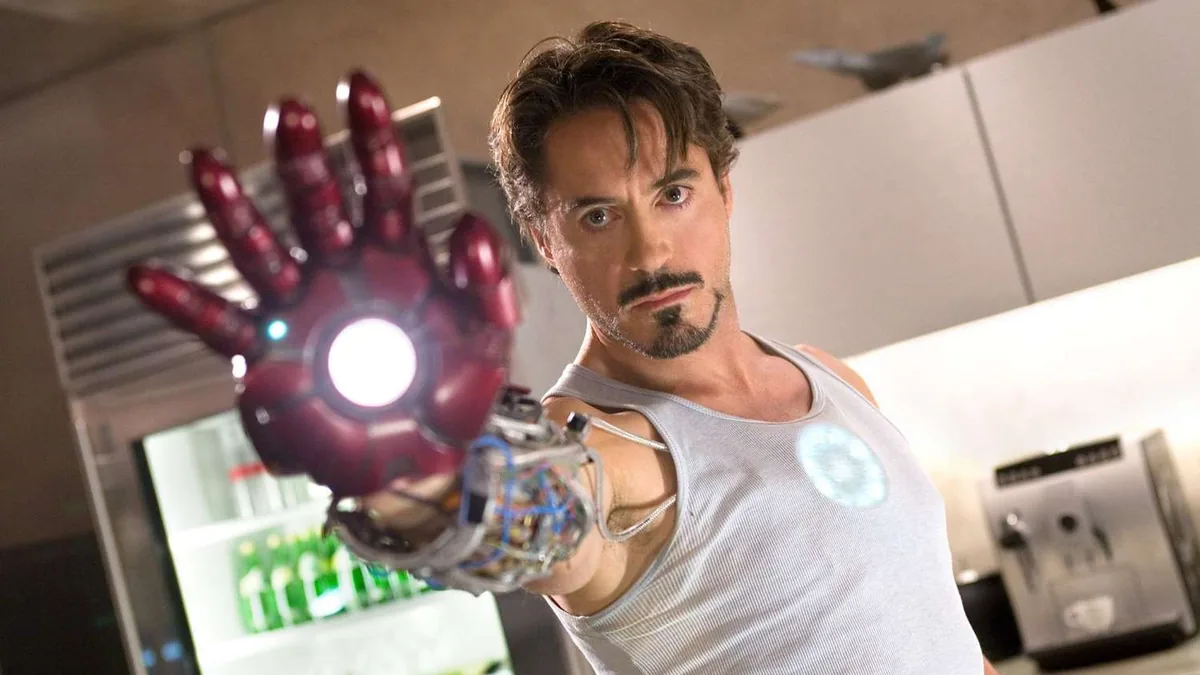
Tony Stark's IQ: the 270 credited to a society and what Marvel prints
ACIS has never assessed Tony Stark, holds no record belonging to him, and a fictional character cannot sit any test. The IQ of 270 attached to his name appears in articles that cite no comic and no test. This page traces where the number turns up, separates it from what Marvel's own pages publish, and shows why 270 could not be a measured score.
Marvel's own listing gives March 1, 1963 as the publication date of Tales of Suspense #39, the issue it calls the first appearance of Iron Man.
0 The short answer
Tony Stark has no documented IQ: Marvel's own character pages describe him in words as a genius and an inventor and print no number, and the 270 that circulates was credited by one article to an IQ society database whose page no longer loads. A fictional character cannot take a test, so no score can exist for him, and an author's description of a "genius" is not a measurement. A score of 270 would also sit 11.33 standard deviations above the mean on the standard scale, which is our arithmetic, about 1 in 220 octillion. Read the 270, the 186 and the 195 as numbers in circulation, not as measurements.
270
The figure that circulates, credited by Looper on August 21, 2019 to a database kept by the Alpha High IQ Society.
11.33
Standard deviations above the mean that 270 would sit on a scale with mean 100 and standard deviation 15, our arithmetic.
160
The top of the composite score axis on a Pearson WAIS-5 sample score report with a testing date of September 16, 2024.
Marvel's own character pages describe Tony Stark as a genius and an inventor and print no IQ, no score and no scale value, so any number attached to him comes from outside the company. On October 20, 2026 this review requested three pages on marvel.com directly: the overview, the In Comics report and the On Screen report for Iron Man (Tony Stark). The overview leads with three words, "Genius. Billionaire. Philanthropist.", and says he applies his genius to high-tech problems as the armored Avenger. The In Comics report says he "grew up a genius with a brilliant mind for technology and inventions" and inherited Stark Industries. The On Screen report calls him a "genius inventor" who continued his father's weapons business. None of the three pages contains the letters IQ, and none names a university.
The On Screen profile also has a short list of powers and abilities with four entries: flight, artificial intelligence, an armored suit, and super strength with durability. No entry rates his own mind. That matches the line in a Looper article of August 21, 2019, which says outright that Marvel does not assign IQ scores to its characters, and it matches a review that RIOT IQ dated August 16, 2026, which found that the official biographies stay qualitative.
Two limits keep this claim honest. First, this review read three official pages, not six decades of Marvel publishing, so the narrow finding is that the official profiles print no number and that the articles circulating one cite no issue. A reader who knows of an issue that prints an IQ for Stark should be able to name it, and none of the articles examined below does. Second, "genius" is the company's word, and it is a description of achievement and talent in a story. The page on where the 140 threshold for genius came from shows that even for real people the word has no single official cutoff, and for a character there is no test it could refer to.
ACIS has not tested Tony StarkACIS has never assessed Tony Stark, holds no record belonging to him, and a fictional character cannot sit any test. Nothing on this page is an estimate of his IQ, and no figure here should be read as one. Numbers on the page come from named sources or are labeled as our own arithmetic.
2 What does the record actually document about Tony Stark?
The record documents a fictional inventor, industrialist and armored hero, with a first appearance in 1963, a film debut in 2008, a backstory of captivity and engineering, and an education described in words, never in test results. Marvel's listing for Tales of Suspense #39 gives its publication date as March 1, 1963, credits Stan Lee and Larry Lieber as writers, and labels it "The First Appearance of Iron Man". Marvel's page for the 2008 film Iron Man lists Jon Favreau as director, May 2, 2008 as the release date and a run time of 126 minutes, and describes Stark as a billionaire industrialist and genius inventor who is kidnapped and forced to build a weapon, and who builds a high-tech suit of armor to escape instead.
The biography is consistent across the two profiles, and it is a story about building things under pressure. In the comics report, Stark is the son of the industrialist Howard Stark, designs weapons for Stark Industries, is wounded by an explosion overseas, and is kept alive by a fellow prisoner, the engineer Yinsen, who is credited as his partner in building the first suit of armor in a cave. In the On Screen report, the captors are the Ten Rings, the first suit again involves Yinsen, and a miniature arc reactor, a smaller version of a device his father designed, powers a chest piece. The comics report adds that over the years he built dozens of suits, "50-plus" models in all.
An education is part of the fictional record too, but it does not come from Marvel's profiles, which name no university. MIT Technology Review reported on October 24, 2023 that Stark graduated from MIT at 17 with a double major in physics and engineering, that he meets his friend James Rhodes there, and that both wear MIT's brass rat rings in the 2008 film. The same article calls his valedictorian and summa cum laude status "pure fiction," because the real MIT does not confer those honors. So even the most specific educational claim about the character is a detail from fiction, summarized by a magazine, and a young graduation age is an achievement claim, not a score. Academic records and IQ are related in real people, but the relationship is statistical and moderate, not an equation.
Question
What the record documents
What it does not contain
Who is he
A weapons-industry heir and inventor who becomes the armored hero Iron Man, first published March 1, 1963
A date of birth, a test date or an examiner
What does he do
Designs weapons, builds a first suit in captivity with Yinsen, and keeps improving the armor
A task that was standardized or scored against a norm group
How is his mind described
"Genius", a "brilliant mind for technology and inventions", a "genius inventor"
A number, a scale value or a percentile
Where he studied
In the film and comics lore, MIT, as summarized by MIT Technology Review
Any claim on Marvel's own profiles
3 Where does the 270 come from?
The earliest printed 270 this review found is a one-line comparison in a CBR article of March 27, 2019 that names no source, and the first source named for it is an "Alpha High IQ Society" database that Looper cited on August 21, 2019 and whose page no longer loads. The CBR piece, Ben Sherlock's 9 Questions About Lex Luthor, Answered, answers "What is Lex Luthor's IQ?" by calling Luthor's score an estimate of 225, giving Batman 192 and Albert Einstein "between 160 and 180," and then comparing Luthor with "Tony Stark's, which is 270." It adds that 270 makes Stark a "certifiably" super genius who sits in the smartest 0.1 percent of the world's population. It cites no issue, no test, no date and no examiner.
Looper's How High Is Tony Stark's IQ? by Mike Floorwalker followed on August 21, 2019, and it is the one article that names where its number came from. It states that Marvel does not assign IQ scores to its characters, then says it "consulted the Alpha High IQ Society," which it describes as keeping a database of estimated IQ scores for famous people and characters. The society's "assessment," in the article's words, was an IQ "in the neighborhood of 270," which Looper calls "pretty much off the scale." The article then lines Stark up with William James Sidis, whom it gives as 250 to 300, and lists other numbers, among them 190 for John von Neumann and 160 for Albert Einstein. The word "estimated" is Looper's own. By Looper's description, the source is a society's list of estimates, not a test result. The page on William James Sidis and the 250 to 300 claim looks at what stands behind the figure Looper used as the yardstick.
The same publisher did not keep the number steady. CBR's Sid Natividad, in Iron Man vs Reed Richards: Who Really Is The Smarter Hero? of August 8, 2019, wrote that Marvel never really set Tony Stark's or Reed Richards' IQ levels in stone and that "his IQ still remains a big mystery." That is five months after the same site printed 270 as a fact. The independent reviews that followed agree on the pattern. RIOT IQ, in an article dated August 16, 2026, says the 270 is attributed to unnamed listicle sites that cite nothing, and IQ Metrics, in a page last reviewed in August 2026, says it found no figure for Stark in any comic, film or Marvel-published source it could check.
Source
Date
What it prints for Stark
What it names as the basis
CBR, Ben Sherlock
March 27, 2019
270
Nothing
CBR, Sid Natividad
August 8, 2019
No number; "a big mystery"
Notes that Marvel set no level
Looper, Mike Floorwalker
August 21, 2019
"In the neighborhood of 270"
An Alpha High IQ Society database of estimates; the linked page now returns an error
RIOT IQ
August 16, 2026
Reports 270 as circulating
Reports that listicles cite nothing
IQ Metrics
August 2026
Reports 270 as circulating
Reports no Marvel-published source for any number
4 Where do the 186, the 195 and the other Tony Stark numbers come from?
Four other figures circulate, 186, 195, a range of 210 to 235 and a range of 175 to 195, and each traces to a fan wiki entry for a different universe, an unverified issue citation, an uncited range or a website's own estimate, never to a test. Take them one at a time, because they are the figures a searcher is likely to meet right after the 270.
The 186 comes from a fan wiki, according to RIOT IQ's article of August 16, 2026. RIOT reports that the wiki entry attaches it to the Ultimate universe version of Stark, a separate continuity labeled Earth-1610, not to the comics most readers know or to the films, and RIOT concludes that even at face value it belongs to an alternate Stark. IQ Metrics adds that no comic attaches 186 to any issue. This review could not open the wiki itself, because the site refused automated requests, so the wiki's own text is reported here as RIOT and IQ Metrics describe it.
The 195 is the hardest to pin down. A search summary this review saw attributed it to a 1997 issue of Marvel Super Special. The page behind that summary returned a not-found error when this review requested it, so the attribution is unverified. Marvel's own listing for Marvel Comics Super Special, the series that carries that title, labels the series 1977 to 1986. A 1997 issue of that series does not appear in Marvel's listing, although this review did not examine every Marvel publication of 1997 and cannot rule out a different title. Until someone names the issue and the page, the 195 should be treated as a rumor with a citation attached.
The range of 210 to 235 is reported by IQ Metrics as a Comic Basics figure that gives no sources, and the range of 175 to 195 is IQ Metrics' own estimate, which the site says it built from character analysis. A website estimating a number from a character's behavior does not turn the number into a measurement, and the site presents it as its own estimate, not as a record.
Figure
Where it appears
Basis reported by the source
What it can support
270
CBR 2019, Looper 2019, many copies
A society database of estimates; no test
A number in circulation
186
A Marvel fan wiki, as RIOT IQ reports
Ultimate universe version, Earth-1610; no issue named
A claim about a different continuity
195
A search summary citing a 1997 issue
Page did not load; the series listing runs 1977 to 1986
Nothing yet
210 to 235
Comic Basics, as IQ Metrics reports
No sources given
Nothing
175 to 195
IQ Metrics
The site's own estimate from character analysis
An opinion, labeled as one
One more figure shows how fiction handles numbers. CBR's August 2019 article says that the Ultimate version of Reed Richards, on Earth-1610, had an IQ "measured in at 267" when he was 16. Inside a story, a writer can state that a character was measured, and that is a plot fact. It tells the reader what the writer wants the character to be, and it does not make 267 a result on any real instrument. The same logic applies to every number on the table: a figure attached to a character is a statement by whoever wrote or repeated it.
5 Is Marvel's Power Grid rating the same thing as an IQ?
The closest thing to a Marvel number for Tony Stark is a rating of 6 on a seven level intelligence scale that Looper calls the Power Grid, and a 6 labeled "super-genius" is an ordered category, not an IQ. Looper's ranking of the smartest Marvel characters, by Jonathan H. Kantor and dated August 8, 2025, describes the scale in its introduction: a five is a "genius," a six is a "super-genius," and a seven is "omniscient." It then says Stark is often presented as one of the smartest people in the world, with a 6 on the Power Grid. This review did not open any Marvel publication that prints the grid, so the scale is described here as Looper reports it.
The difference between a grid level and an IQ is the difference between a label and a measurement. A level on a seven step scale has a name and a position in an order, and nothing else. The scale defines no unit, so the distance from a 5 to a 6 is not a number of points. It has no mean, no standard deviation and no norm group, so there is no way to say what share of anyone sits at a 6. A 6 cannot be converted into an IQ, in the same way that a four star review cannot be converted into a price. The page on how IQ scores are normed shows the steps that give an IQ its meaning, and every one of them requires people who answered the same tasks.
The same Looper article shows how quickly the two kinds of number blur. In the entry for Reed Richards, it says he has multiple doctoral degrees and an IQ of 267, in the same article that explains the grid. A reader who meets a seven level scale and an IQ above 260 in one piece could be forgiven for treating them as one family of measurement. They are not, and neither comes from a test. The 2019 Looper piece makes the same move on a smaller scale when it says Stark is generally considered one of the top five brains in Marvel lore: a rank order, and again not a score.
There is a useful consequence for the question this page started with. If the only quantified statement tied to the character is an ordinal rating, then the evidence that anyone quantifies his intelligence at all is a category, and the most defensible summary is that the grid, as Looper reports it, places him in its second highest tier. That is a statement about a story world, and it is worth no more or less than the word "genius" on the company's overview page.
6 What would an IQ of 270 mean on a real scale?
On the standard scale with a mean of 100 and a standard deviation of 15, an IQ of 270 would lie 11.33 standard deviations above the mean, a rarity of about 1 in 220 octillion, which no human population could ever supply. The conversion is what a reader who accepts the number has to accept. The United Nations page on the day of 8 billion, read on October 20, 2026, says the world's population was projected to reach 8 billion people on November 15, 2022, and that figure supplies the population used below.
The arithmetic is short. The score is 170 points above the mean of 100. Dividing by the standard deviation of 15 gives 11.33. Under a normal curve, the share of people beyond that point is about 4.5 in 10 to the 30th power, so about 1 in 2.2 times 10 to the 29th power, which is about 220 octillion. Multiplied by 8 billion people, that leaves about 4 in 100 quintillion of a person. The table gives the same conversion for the other figures that circulate for Stark and for a few anchors, so each can be placed.
IQ on a scale with mean 100 and standard deviation 15
Standard deviations above the mean
Rarity under a normal model
People among about 8 billion
130
2.00
about 1 in 44
about 182 million
145
3.00
about 1 in 741
about 10.8 million
160
4.00
about 1 in 31,574
about 253,000
175
5.00
about 1 in 3.5 million
about 2,300
186
5.73
about 1 in 203 million
about 39
195
6.33
about 1 in 8.3 billion
about 1
235
9.00
about 1 in 8.9 quintillion
far fewer than one
270
11.33
about 1 in 220 octillion
far fewer than one
Our arithmetic, labeledEvery figure in the table, including 11.33 and about 1 in 220 octillion, is our calculation on a normal distribution with a mean of 100 and a standard deviation of 15, with a population of about 8 billion. These are not measurements of any person. Far into the tail, a stated rarity is an extrapolation of the curve, not a count of people.
Two observations follow. First, the rarity quoted in the original CBR sentence does not match its own number. CBR placed the 270 in the smartest 0.1 percent of the population. On the standard scale, the top 0.1 percent begins at an IQ of about 146, which is our arithmetic, so the sentence attaches the rarity of a 146 to a 270. That mismatch is typical of a number that was never converted. The page on why scores and percentiles cannot be swapped freely explains why the two have to be kept apart, and the IQ rarity calculator applies the same normal curve. Second, the numeral depends on the scale. The same 270 would be 10.63 standard deviations up on a scale with a standard deviation of 16, and 7.08 on one with a standard deviation of 24, which is our arithmetic and a hypothetical illustration of the dependence. Without the scale, the instrument and the date, a number cannot be placed anywhere. The page on the standard deviation of 15 covers why that convention exists.
7 Could any real test have reported a 270?
No current adult battery prints a score anywhere near 270: a published WAIS-5 sample report plots composite scores on an axis that ends at 160, the old ratio IQ that could print large numbers measured something different in children, and the evidence about real distributions does not reach so far into the tail. Start with the instrument. Pearson's WAIS-5 sample score report, which this review downloaded and read on October 20, 2026, shows a sample examinee with a testing date of September 16, 2024, an examiner name and an age at testing of 70 years 5 months. Its composite score profile is plotted on an axis labeled from 40 to 160, and the vertical bars on the plot are confidence intervals. The summary table lists, for each composite, a percentile rank, a 95 percent confidence interval and a standard error of measurement. Its scaled scores are tied to a reference group aged 20 years 0 months to 34 years 11 months. A real report, in other words, has an examinee, an examiner, a date, a reference group and an interval, and its printed axis stops at 160.
Then consider the older route to large numbers. The oldest meaning of IQ is a ratio of mental age to chronological age, multiplied by 100, which the page on mental age and its modern limits explains. Read as a literal ratio, 270 would mean a mental age 2.7 times the chronological age, so a ten-year-old would perform like a 27-year-old, which is our arithmetic. That reading belongs to a child with a measured performance and says nothing about an adult. The history of IQ testing traces how the ratio gave way to deviation scores, and the page on the highest IQ claims shows how very large numbers keep reappearing for real people anyway.
What the data say about the extreme tail is also limited. Warne, Godwin and Smith, in a 2013 paper in the Journal of Advanced Academics, searched for large representative datasets to test the belief that there are more gifted people than a normal curve predicts. They found 10 datasets in 6 sources and reported that the belief was mostly unsupported, with most datasets holding about the same number of gifted people as a normal curve predicts or fewer. That result supports using the normal curve as a working model in the region where large datasets exist, and it says nothing about a point no dataset can reach. A point 11.33 standard deviations out is far beyond any sample ever collected, which is why this page treats the rarity as a statement about the curve and not as a finding.
The Standards for Educational and Psychological Testing bear on the question in a plain way. They ask that the procedures for constructing the scale used for reporting scores, and the rationale for them, be described clearly (Standard 5.2), and that, when possible, conditional standard errors of measurement be reported at several score levels (Standard 2.14), because precision can differ along the scale. A number far above any norm group's range would need both: a described scale and a stated precision at that level. The pages on Terence Tao's IQ and the 230 that sits past every test ceiling and on the 276 attached to YoungHoon Kim apply the same reasoning to real people whose very large numbers circulate, and for a character who never answered a single task, none of these routes applies at all. The only way a figure like 270 reaches Tony Stark is by being written, edited or repeated.
8 What does "genius" mean when Marvel uses the word?
"Genius" on Marvel's pages is a narrative label for inventive achievement, and it was never defined as a score, so it cannot be turned into the number that articles then attach to it. Marvel's overview leads with "Genius. Billionaire. Philanthropist." The three words describe a character type: an exceptional inventor, a very wealthy owner of a company, and a donor. Only the first concerns the mind, and the sentence below it explains what the genius does, which is to produce high-tech solutions to problems. The label points at output, at inventions and suits, and at the story's treatment of those as extraordinary.
A real person's intellectual achievements work in a similar way. The page on what intelligence means shows that researchers have never settled on a single definition, and the page on intelligence versus knowledge separates the ability to reason from the facts and skills a person has acquired. Stark's field, engineering and weapons design, is mostly acquired expertise. In the profiles, he follows in his father's footsteps, inherits a company and builds dozens of versions of the armor over the years. A test of reasoning samples a person on unfamiliar tasks for a few hours, which is a different thing from a career of accumulated practice.
Two more features of the character's depiction cut against reading his achievements as one person's test score. First, the work is collaborative and resourced: Marvel's comics profile says Stark and Yinsen combined their genius to build the first suit, and Stark Industries supplies the money and the workshop. A standardized test is solo, on fixed material, with no helper. Second, a large part of the armor's power comes from the technology, not the mind: the comics profile attributes split-second reactions to an enhancement called Extremis and describes suits with an artificial intelligence capable of piloting him to safety if he is unconscious. A story can make a character look brilliant by giving him extraordinary tools. A test strips the tools away and asks what the person can do.
This is the point where the word "genius" is most often confused with a number. When real organizations use a threshold, they choose it, and it varies. Marvel never chose one for Stark, and no article that supplies one cites a reason.
9 Which abilities does Tony Stark's work call on, in CHC terms?
Reading Marvel's own descriptions of what Stark does, the work leans most on fluid reasoning (Gf), visual-spatial processing (Gv), quantitative knowledge (Gq) and working memory (Gwm), plus a great deal of acquired knowledge that no short test samples. This is our reading of the story, not a claim about what any score would be. The Cattell-Horn-Carroll framework, reviewed in McGrew's 2009 paper in Intelligence on CHC theory and the human cognitive abilities project that it builds on, is the vocabulary used here, and the page on the CHC model explains each broad ability. The page on what IQ measures explains why an overall score and a profile of abilities are different things.
The table sets what the Marvel profiles describe beside the broad ability it calls on and the kind of task that samples that ability in a real battery. The right column names formats only. It is not a claim that a person who builds armor would do well on the tasks.
What Marvel's profiles describe
CHC broad ability
How a real battery samples it
Building a working suit of armor from available parts under captivity, and redesigning it for new uses
Gf, fluid reasoning: solving problems with new material under constraints
Tasks with unfamiliar rules, such as matrices, weighing puzzles, number series and grid logic
Picturing a three dimensional suit, its parts and how they fit
Gv, visual-spatial processing
Tasks of mentally assembling, rotating and comparing shapes
Sizing power sources and thrust for flight, miniaturizing a reactor
Gq, quantitative knowledge and reasoning
Arithmetic and mathematical achievement tasks
Keeping many constraints in mind while building and piloting
Gwm, working memory
Tasks that hold and reorder digits, letters or visual sequences
Years of engineering and weapons design
Acquired knowledge, a large share of it specific to one field
Vocabulary and general information tasks sample broad verbal knowledge, not engineering
Each of these abilities has a page on how it is tested. The page on fluid intelligence tests describes Gf tasks, the page on spatial intelligence describes how Gv is tested and trained, the page on the quantitative reasoning test separates two abilities that share one name, and the page on the working memory test covers the digit span family. ACIS samples these abilities in 20 subtests across six indices, VCI, FRI, QRI, VSI, WMI and PSI, and the report shows each index with a percentile and a 95 percent confidence interval.
Three limits matter when mapping a character this way. First, a test samples an ability with brief, unrelated tasks, and a skill like engineering draws on many abilities at once plus years of training. Second, Stark's most remarkable acts in the story, such as improvising armor in captivity, are single events chosen by writers for drama, while a test collects many ordinary responses and averages them. Third, much of what makes the character effective is not in a battery at all: persistence, risk-taking, a team, money and technology. The mapping says which parts of his depicted work resemble the abilities that tests sample. It does not say what he would score.
10 How do the numbers for Stark compare with those for other fictional characters?
Stark's 270 sits in the same unsourced tier as Batman's 192 and Lex Luthor's 225, because the CBR passage that prints all three names no issue and no test for any of them, so ranking one against another compares rumors. CBR's March 27, 2019 answer is a good specimen. It states Luthor's IQ as "estimated to be 225," gives Batman 192, says Einstein's is "thought to be between 160 and 180," and then sets Stark at 270 to conclude that Luthor's figure looks modest by comparison. Every number in it has the same level of support, which is none that the passage names. The page on Batman's IQ audits the 192 in the same way, and the page on fictional characters and IQ sets the stated figures for characters from many productions in one table, including a row for Stark.
Character or person
Figure
Where it appears
What the source names as the basis
Tony Stark
270
CBR, March 27, 2019; Looper, August 21, 2019
Nothing in CBR; a society database of estimates in Looper
Batman
192
CBR, March 27, 2019
Nothing
Lex Luthor
225
CBR, March 27, 2019
Called an estimate; no basis given
Albert Einstein
160 to 180
CBR, March 27, 2019
Called "thought to be"; no test named
Ultimate universe Reed Richards
267
CBR, August 8, 2019
Stated as measured at age 16 inside the story
The Einstein row is the instructive one. It is a real person, and the sentence gives him a range with no source while giving the fictional characters single numbers with no source, so the real and the invented sit side by side at the same level of evidence. The page on Albert Einstein's IQ shows what is and is not on record for the physicist. The practical result is that comparisons such as Stark against Batman or Stark against Einstein never resolve, because neither side of the comparison rests on a measurement.
The other pages in this series deal with characters whose numbers circulate in different ways. The page on Light Yagami's IQ, the page on Forrest Gump's IQ and the page on Sherlock Holmes's IQ each take up a character whose number circulates, and the page on Charles Manson's IQ turns to a real person. Read together, they show the same lesson from several directions: a figure is only as good as the document behind it.
11 How can you check any circulating IQ figure yourself?
Five checks catch most circulating IQ figures: find the earliest print, open the cited source, look for a test and a date, convert the number into standard deviations, and see whether the surrounding sentence agrees with itself. Stark's 270 fails or stalls at each one, which makes it a handy worked example, and the same routine works for celebrities, historical figures and characters.
Find the earliest print. The earliest 270 this review found is CBR's March 27, 2019 sentence, and the first named source is Looper's August 21, 2019 article. Two outlets five months apart printed the same figure, one with no source and one with a database. A figure whose earliest print cites nothing has not been located in a source, and it should not be treated as if it had been.
Open the cited source. Looper's link to the Alpha High IQ Society no longer returns a page. A dead link is not proof of error, but it removes the reader's ability to check, and a number that can no longer be checked should carry less weight than one that can.
Look for a test, a date and an examiner. A real score names an instrument, a testing date and who administered it, as the sample report from Pearson does. The Stark figures name none of them. "Estimated," in Looper's own word, signals an opinion.
Convert the number. A figure of 270 is 11.33 standard deviations above the mean, and 186 is 5.73. A deviation score is a position in a population, and a position that no population could hold is a sign that the number was not produced by measurement.
Read the surrounding sentence. CBR paired 270 with the smartest 0.1 percent of the population, a rarity that belongs to an IQ near 146. When a number and its description disagree, one of them was written without the other in mind.
A sixth habit helps when a character is involved: ask which version of the character the figure belongs to. The 186 belongs, as RIOT IQ reports, to the Ultimate universe Stark, and the films and the main comics line are different stories. The same questions apply to products and to people, not only to characters.
12 What does this mean for your own score?
The lesson of the 270 is that a score is only as meaningful as the documentation behind it, and professional standards say the same about every score, including yours. The Standards for Educational and Psychological Testing, published by AERA, APA and NCME in 2014, ask that a clear articulation of each intended score interpretation be set forth and that appropriate validity evidence support each one (Standard 1.0). They ask that test users receive clear explanations of the characteristics, meaning and intended interpretation of scale scores, as well as their limitations (Standard 5.1), and that norms refer to clearly described populations (Standard 5.8). When scores are released, they ask for interpretations in simple language that describe what the test covers, what scores represent and how precise they are (Standard 6.10).
The American Psychological Association's Ethical Principles of Psychologists and Code of Conduct, in the text effective January 1, 2017, addresses the Stark question from the other side. Standard 9.01 asks psychologists to base their opinions on information and techniques sufficient to substantiate their findings, and to give opinions about the psychological characteristics of individuals only after an examination adequate to support them. Where an examination is not practical, it asks them to document their efforts and to clarify the probable impact of their limited information on the reliability and validity of their opinions. For a person who died long ago, those provisions force caution. For a character who never lived, no examination is possible at all, so no professional could properly offer a number.
The practical point is to ask the same questions of your own result. ACIS sells a paid assessment, so treat this section as a disclosure. The report gives a Full Scale IQ and six primary indices on the standard scale with a mean of 100 and a standard deviation of 15, with percentiles and a 95 percent confidence interval, and adult norms cover ages 16 to 90. It is online and unsupervised. It is not a clinical or diagnostic instrument, and it is not for hiring, school accommodations or admission to high IQ societies. It is available in English only. The technical manual holds the documentation, and the page on reliability and validity explains how to read it. No ACIS statistic is quoted on this page.
The forms are a one time payment with no subscription, breaks are allowed, and there is a free trial with no card. Prices below were read on October 20, 2026 and can change. The Quick form costs 15 dollars, with 6 subtests in 3 domains and about 45 minutes. The Optimized form costs 30 dollars, with 13 subtests in 5 domains and about 110 minutes. The Full Scale form costs 50 dollars, with all 20 subtests in six domains and about 175 minutes. A 5 day quality guarantee applies, and you have 30 days to complete a form.
To choose among options, the guide to the best online IQ tests compares them, and if you need a result for a formal purpose such as a diagnosis, accommodations or a hiring decision, ask the receiving body what evidence it accepts and consult a licensed professional. A number you can understand and defend is worth more than a famous one you cannot trace. Tony Stark is a good story without a score, and your result deserves a better standard than a listicle: a named test, a date, a norm group and an interval.
Every figure above is traceable to one of the following, and each is linked at the point where it is used. Web pages were read on October 20, 2026. Figures marked as our arithmetic are calculations on a normal distribution and are not attributed to any author. Fan wikis and listicle sites are cited only for what their text says, never as proof of what a comic printed.
Floorwalker M. How High Is Tony Stark's IQ? Looper, August 21, 2019. Read for the figure, the society named as its source and the links in the page.
RIOT IQ. What Is Tony Stark's IQ? Article dated August 16, 2026. Cited for what a test publisher's page says about the 186 and the 270, not for any ACIS comparison.
IQ Metrics. What Is Tony Stark's IQ? Is 270 Real? Page last reviewed in August 2026. Cited for the figures it reports and for its own estimate, labeled as such.
Marvel. Iron Man (Tony Stark), with the In Comics and On Screen reports. Official character pages, marvel.com, requested directly.
Pearson. WAIS-5 sample score report. Pearson Assessments, sample testing date September 16, 2024. Text extracted from the PDF.
United Nations. The day of 8 billion. Page stating the projection for November 15, 2022.
Warne RT, Godwin LR, Smith KV. Are There More Gifted People Than Would Be Expected in a Normal Distribution? An Investigation of the Overabundance Hypothesis. Journal of Advanced Academics, 2013, 24(4), 224-241. doi:10.1177/1932202X13507969. Abstract read through Crossref.
McGrew KS. CHC theory and the human cognitive abilities project: Standing on the shoulders of the giants of psychometric intelligence research. Intelligence, 2009, 37(1), 1-10. doi:10.1016/j.intell.2008.08.004.
American Educational Research Association, American Psychological Association and National Council on Measurement in Education. Standards for Educational and Psychological Testing. AERA, 2014. Standards 1.0, 2.14, 5.1, 5.2, 5.8 and 6.10 read in the open access PDF.
Tony Stark has no documented IQ. Marvel's own character pages describe him in words as a genius and an inventor and print no number, and the 270 that circulates comes from articles that cite no issue and no test. A fictional character cannot take a test, so no real score exists.
What is Iron Man's IQ?
Iron Man is the armored identity of Tony Stark, so the answer is the same: there is no documented IQ. The numbers that circulate for him, 270 and 186, trace to an article crediting a society database and to a fan wiki entry for a different universe, not to a test.
Is Tony Stark's IQ 270?
No source supports 270 as a measured score. CBR printed it on March 27, 2019 without a source, and Looper credited it five months later to an IQ society database whose linked page no longer loads. On the standard scale a 270 would be 11.33 standard deviations above the mean.
Is Tony Stark a genius?
Marvel calls him one: its overview page opens with the word "Genius," and its comics profile says he grew up a genius. That is a description of a character's achievements in a story. "Genius" has no single official IQ cutoff even for real people, so the label is not a score.
Is Tony Stark smarter than Einstein?
There is no measurement to compare. One CBR passage sets Stark at 270 and Einstein at a range of 160 to 180, but names no test or source for either number. Comparing a fictional character's rumored figure with a real physicist's unmeasured one cannot settle who is smarter.
How does Tony Stark's IQ compare with Batman's?
The circulating numbers are 270 for Stark and 192 for Batman, and the same CBR sentence prints both without naming an issue or a test. Ranking two unsourced figures ranks rumors, so the comparison tells you nothing reliable about either character.
What is Tony Stark's IQ in the MCU?
The Marvel Cinematic Universe films do not state an IQ for him on Marvel's own film and character pages, which call him a billionaire industrialist and genius inventor. The 186 sometimes quoted belongs, according to RIOT IQ, to the Ultimate comics universe version, not to the films.
Where does the 270 come from?
The earliest 270 this review found is a one-line comparison in a CBR article published March 27, 2019. Looper then credited the figure on August 21, 2019 to a database of estimated IQ scores kept by the Alpha High IQ Society. The page Looper linked now returns a not-found error.
Did Marvel ever publish an IQ for Tony Stark?
Marvel's official character pages, overview, In Comics and On Screen, contain no IQ, and Looper's 2019 article says Marvel does not assign IQ scores to its characters. This review did not read every issue ever published, but none of the articles circulating a number names an issue.
Where does the 186 come from?
RIOT IQ traces the 186 to a Marvel fan wiki entry for the Ultimate universe version of Stark, a separate comics continuity labeled Earth-1610. By that account it is a claim about an alternate Stark, and no comic is named as its source.
Is 195 Tony Stark's canon IQ?
No verified source supports 195. A search summary attributed it to a 1997 issue of Marvel Super Special, but the page behind it did not load, and Marvel's listing for the Marvel Comics Super Special series runs from 1977 to 1986. Treat the figure as unconfirmed.
What is Marvel's Power Grid rating for Tony Stark?
Looper reports a 6 on the Power Grid, a seven level intelligence scale on which 5 is genius, 6 is super-genius and 7 is omniscient. It is an ordered category with no unit, mean or norm group, so it cannot be converted into an IQ.
How rare would an IQ of 270 be?
Under a normal curve with a mean of 100 and a standard deviation of 15, a 270 would be about 1 in 220 octillion. That is our arithmetic, and it means far fewer than one person among 8 billion. No population could contain such a case, so the number is an extrapolation of the curve.
Could a real IQ test report a score of 270?
No current adult battery reports a score near 270. A Pearson WAIS-5 sample report plots its composite scores on an axis from 40 to 160. Older ratio IQs could print large numbers for children, but they divided mental age by chronological age and meant something different.
Can a fictional character have an IQ?
No. An IQ requires a real person who answered standardized tasks, was scored against a norm group and received a result with a stated precision. A character has an author, not an examinee, so any figure attached to one is an estimate by a writer or a fan.
Which cognitive abilities does an inventor like Tony Stark use?
Reading Marvel's descriptions, his work draws on fluid reasoning (Gf), visual-spatial processing (Gv), quantitative knowledge (Gq), working memory (Gwm) and a large store of field-specific knowledge. That is a description of story events, not a prediction of any test score.
Would Tony Stark score high on an IQ test?
Nobody can say, because a character has no responses to score. The depicted work resembles abilities that tests sample, such as fluid reasoning and visual-spatial processing, but a high score would still be a result on specific tasks, not a verdict on the character.
How can I tell whether a character or celebrity IQ is real?
Look for a named test, a testing date and an examiner, then open the cited source. Find the earliest print of the figure, convert it into standard deviations, and check whether the sentence around it agrees with its own rarity. Most circulating numbers fail at the first step.
Does ACIS know or estimate Tony Stark's IQ?
No. ACIS has never assessed Tony Stark and holds no record belonging to him, and it does not estimate scores for fictional characters or for real people it has not tested. Every figure on this page comes from a named source or is labeled as our arithmetic.
Should I compare my IQ with a character's?
No. A character's figure has no norm group, test or date behind it, so it cannot be placed on the same scale as your result. A report you can read, with an index profile, a percentile and a confidence interval, tells you more than any famous number.
What is the best way to get a real IQ number?
Take a normed test with a named scale and a report that gives a percentile and a confidence interval. An individually administered test by a licensed psychologist is the standard for formal purposes. A normed online test can inform personal curiosity, within the limits its publisher states.
Take the assessment
You get a profile, not a number
ACIS measures six CHC domains across 20 subtests and reports each one with its own normed score and confidence interval, so you can see where you are strong and where you are not.