William James Sidis's IQ: an estimate from 1946, and a record from 1910
ACIS has never assessed William James Sidis, holds no record belonging to him, and no retrospective assessment of anyone is possible. The 250 to 300 that fills search results was written in 1946, two years after his death, by an author who never tested him and named no test. What the record holds is a Harvard enrollment at eleven, a lecture the newspapers covered, a book at twenty seven, and a court case that still defines privacy law.
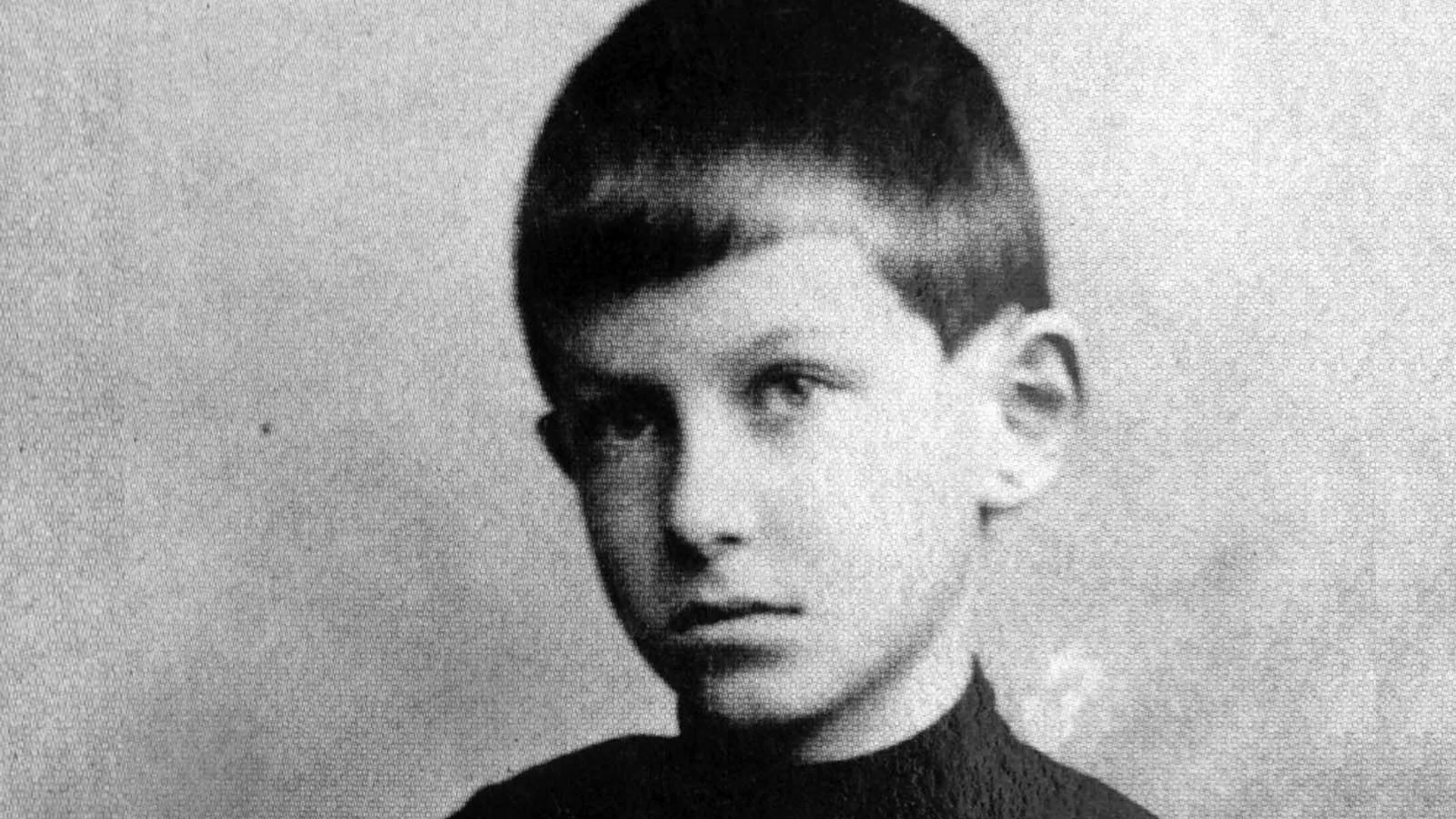
The photographs that circulate are from the 1910 press coverage, when he lectured at Harvard at eleven; no test score from any year of his life has ever been published.
0 Quick Answer
No IQ score for William James Sidis exists, because no administration of any intelligence test to him has ever been documented, and the 250 to 300 that circulates is an estimate published in 1946 by Abraham Sperling, a psychologist who wrote about him after his death. Sperling's book, Psychology for the Millions, gave the figure as a judgment about what Sidis's abilities would have measured, resting on the account of a family member that he had once been tested and had scored extraordinarily; it names no instrument, no examiner, no date and no scale, and no document of any such test has surfaced in the eight decades since. Amy Wallace's 1986 biography, The Prodigy, the fullest account of his life, repeats the estimate as an estimate. The Wikipedia article, used here as a pointer to the biography and not as a source for any figure, carries the same number with the same provenance.
What the record does hold is unusually specific for a person born in 1898. He enrolled at Harvard in 1909 at eleven, the youngest student the college had admitted, and on January 5, 1910 he lectured the Harvard Mathematical Club on four dimensional bodies, an event reported in newspapers across the country within weeks; a South Carolina paper's coverage of February 16, 1910 survives in a digitized archive. He graduated in 1914 at sixteen. He published The Animate and the Inanimate, a book on thermodynamics and the reversibility of physical law, in 1925. And in 1940 the United States Court of Appeals for the Second Circuit decided Sidis v. F-R Publishing Corporation, his suit against the New Yorker, which remains a foundational case in American privacy law.
The two categories, a posthumous estimate and a documented record, are kept apart on this page because they are different kinds of evidence. The estimate cannot be checked and could not have been placed on a modern scale even if a test had been given, for reasons the page on mental age explains. The record can be checked in an afternoon, and it documents ability of a kind no test measures.
0
Published administrations of any intelligence test to Sidis, in any year of his life.
1946
The year Sperling's estimate of 250 to 300 appeared in print, two years after Sidis died at 46.
11
His age when he enrolled at Harvard in 1909 and when he lectured its Mathematical Club on four dimensional bodies in January 1910.
1940
The year the Second Circuit decided his privacy suit against the New Yorker, reported at 113 F.2d 806.
The number has one origin, a 1946 book by a psychologist who did not test him, and every later appearance of it is a copy. Abraham Sperling directed an aptitude testing institute in New York and wrote Psychology for the Millions as a popular introduction to the field. In it he described Sidis, who had died in July 1944, as the most prodigious intellect of his generation and offered the estimate that his IQ would have been between 250 and 300. The basis Sperling gave was an account from Sidis's sister that her brother had taken an intelligence test with a psychologist a few years before his death and had obtained the highest score ever recorded. No date, no examiner, no instrument and no score document accompanied the account, and none has been found by any of the biographers who looked, including Wallace, whose 1986 book treats the figure as Sperling's estimate rather than as a result.
Three features of the origin matter for a reader. The first is that the estimate was posthumous, published when its subject could neither confirm nor dispute it. The second is that it was a range, 250 to 300, which no instrument produces; a test reports a score with an error band, and a fifty point range is a description of the author's uncertainty rather than a measurement. The third is that the only test the account describes would, in the early 1940s, have been a Stanford-Binet or an early Wechsler form, and the page on types of IQ tests explains that neither could have produced a number in that region: the 1937 Stanford-Binet reported ratio IQs that cease to be meaningful for adults, and Wechsler's 1939 scale reported deviation IQs on a distribution that does not extend to 250.
The estimate has nonetheless become the headline fact about him. It sits on lists of the highest IQs in history beside ratio scores from children's tests and posthumous estimates for historical figures, and the lists cite one another. The page on celebrities with the highest IQ sorts that genre by the kind of evidence behind each number, and the Sidis figure sorts into the class of estimates made by someone other than an examiner, which is the weakest class there is.
2 Why No Retrospective Score Is Possible
An IQ is a rank within an age group on a normed instrument administered under stated conditions, and none of those elements can be reconstructed for a person who was never tested, however well documented his life. The page on how IQ is calculated walks the chain from raw score to standard score, and every link in it requires a sitting: items answered, a norm table for the age band, a scale with a stated mean and standard deviation. Precocity, publication and a Harvard degree at sixteen are not items answered. They are evidence of ability, and the page on what an IQ test measures explains why evidence of ability and a measurement of it are different things that correlate without converting.
The tools that produce estimates for untested historical figures make the point by their own method. Catharine Cox's 1926 study, The Early Mental Traits of Three Hundred Geniuses, the second volume of Terman's Genetic Studies of Genius, assigned childhood IQ estimates to historical figures from Goethe to Newton by reading biographical records of their early achievements against the age at which a typical child would achieve them. The method produces a ratio, mental age over chronological age, from documents rather than from a test, and Cox reported her estimates with explicit reliability grades that reflected how much documentation each figure had. Her estimates are the source of most of the numbers attached to historical geniuses today, and they are estimates by construction. The Sidis figure is not even that: Sperling applied no method and reported no grade.
Cox's reliability grades deserve a sentence of their own, because they show what a careful estimator does that Sperling did not. For each of her three hundred figures she recorded how much biographical material survived from childhood, graded the estimate accordingly, and reported two figures, one for the early years and one for the later, with a correction for the thinness of the record. A reader of her volume can see for every name how much the estimate rests on. The Sidis figure carries no such apparatus. It is a range with no method, no data grade and no author's uncertainty beyond the width of the range itself, and that is why the biographers who admire him most have declined to treat it as more than a remark.
A modern reader who wants to know what Sidis would have scored is therefore asking a question with no answer, and the honest reply is not a number but a description of what the record supports. The rest of this page provides that description, in the order in which the events happened.
3 Boris Sidis, and the Education That Produced the Prodigy
The record of Sidis's childhood is also the record of an educational experiment conducted by his father, and the father wrote the experiment up, which is why it can be read today. Boris Sidis, an emigrant from the Russian Empire who took a doctorate at Harvard under William James, after whom the boy was named, was a psychologist and psychiatrist with published theories of suggestion and of the education of the young. In 1911, the year after the Harvard lecture, he published Philistine and Genius, an argument that ordinary schooling wasted the early years in which children learn fastest and that a child taught to read, reason and question from infancy would develop abilities the schools called impossible. The book presents his son as the demonstration.
The methods the biographies describe follow the book. The boy was taught letters with blocks before he could walk steadily, read newspapers before he was three, wrote in several languages before he was eight, and passed the entrance examination for the Massachusetts Institute of Technology at eight, according to the accounts in Wallace and in the 1979 American Heritage piece. The father's purpose was explicit: to show that intelligence was made by early training rather than fixed by birth, and to publish the result. The son, in the recollections gathered by the biographers, came to resent both the training and the publicity that was the point of it.
For a reader of IQ claims the father's book matters in two ways. It is a primary document of the environment that produced the documented record, which no test measures and which the estimates ignore. And it is an early statement of a position that the later research literature has examined at length: the page on whether IQ is genetic sets out what twin and adoption studies found about heritability, and the page on whether you can improve your IQ reviews what training does and does not change. Boris Sidis believed that he had made a genius by method. The record supports that he made a prodigy who did not want to be one, and it supports nothing about a number.
4 Harvard at Eleven, and the Lecture of January 1910
The best documented cognitive act in Sidis's life is a lecture on four dimensional geometry delivered to Harvard mathematicians when he was eleven, and it is documented because reporters were in the room. He had been admitted to Harvard in 1909, at eleven, after earlier applications had been refused on grounds of age; the American Heritage account of 1979 sets out the sequence and the role of his father, the psychologist Boris Sidis, in pressing for admission. On January 5, 1910, in his first year, he addressed the Harvard Mathematical Club on the subject of four dimensional bodies, presenting constructions and projections of higher dimensional figures. Professors and mathematicians from the Boston area attended, and the press reported the event nationally.
The surviving newspaper coverage is the primary record. The Abbeville Press and Banner of South Carolina, in its issue of February 16, 1910, carried the story six weeks after the lecture, and its digitized page is linked above; the fact that a small town paper a thousand miles away ran it shows how widely the wire services distributed the account. Contemporary reporting described the audience's difficulty in following the argument and quoted academics who predicted a major mathematical career. The Second Circuit's 1940 opinion, written thirty years later, summarized the same record in one sentence: that Sidis was a famous child prodigy in 1910 who at eleven lectured to distinguished mathematicians on the subject of four dimensional bodies.
What the lecture documents is precise. An eleven year old understood and could present the geometry of four dimensional objects, a subject that most mathematics undergraduates meet in their final years if at all, and could hold an audience of professionals for the length of a lecture. The page on signs of high intelligence discusses what such an act indicates about underlying ability, and the honest answer is that it indicates a great deal without measuring anything. A test would have placed him on a scale relative to other eleven year olds; the lecture placed him in a room with adults who studied the subject for a living.
5 What Four Dimensional Bodies Meant in 1910
The subject of the lecture was a live topic in the mathematics and popular science of the period, and knowing that makes the achievement more legible rather than less. The geometry of four spatial dimensions had been developed by mathematicians through the nineteenth century, and by 1910 it had a popular literature. Edwin Abbott's Flatland, first published in 1884, taught readers to imagine higher dimensions by analogy with a two dimensional world visited by a sphere. Charles Howard Hinton's A New Era of Thought of 1888 and his The Fourth Dimension of 1904 introduced the word tesseract for the four dimensional analogue of the cube and set out systems of coloured blocks for visualizing it. A boy reading in Boston in 1909 had access to all three.
The mathematics itself is exact and, once the analogy is grasped, mechanical. A cube has 8 vertices, 12 edges and 6 square faces. A tesseract has 16 vertices, 32 edges, 24 square faces and 8 cubic cells, and its projections into three dimensions produce the nested cube figure that Hinton's books drew. The regular bodies of four dimensions had been enumerated by then, and their properties could be derived by a reader who understood the method of extending each count from one dimension to the next. What the contemporary reports describe, an eleven year old presenting constructions and projections of such bodies and answering questions from professionals, is consistent with a child who had read the literature, understood it fully and could reproduce and extend its methods at the board.
That description is the right frame for the lecture and for the estimate that later attached to it. Mastering a difficult existing literature at eleven is extraordinary and is a documented act. It is not evidence of a number, because there is no scale on which reading Hinton at ten places a person, and because the ability it demonstrates, rapid acquisition of a formal system, is one of several that a test samples separately. The page on fluid intelligence tests explains how reasoning with novel material is measured, and the page on IQ and academic achievement explains how measured ability relates to the kind of learning the lecture displayed. The lecture shows both at work and quantifies neither.
6 Graduation, Rice, Law School, and the Arrest
The record after 1910 is a sequence of documented episodes that biographers read in opposite directions, and the episodes themselves support neither reading. He graduated from Harvard cum laude in 1914, at sixteen. He took a teaching post at the Rice Institute in Houston in 1915, at seventeen, and left within a year; the American Heritage account and Wallace's biography describe students older than their instructor and a press that followed him there. He enrolled at Harvard Law School in 1916 and withdrew before completing the degree. In May 1919 he was arrested in Boston after a May Day demonstration, tried and sentenced under a state law, and kept out of prison by his parents pending appeal; the episode is described in the Second Circuit's opinion and in both biographies.
Each of these episodes has been used as evidence. The graduation and the appointment at seventeen are cited for extraordinary ability. The departures from Rice and from law school and the arrest are cited for a life that did not fulfil the promise of 1910. Neither use converts to a score. The page on IQ and success reviews what measured ability does and does not predict about outcomes, and the page on IQ and mental health reviews the evidence on ability and psychological distress, which biographers have raised in Sidis's case without any clinical record to support or refute it.
The documented facts are a degree at sixteen, a faculty post at seventeen, a withdrawal from law school at twenty one and an arrest at twenty one. A reader can hold all four without drawing a conclusion about a number, and that is the reading this page recommends.
7 The Book of 1925, and the Work Under Other Names
Sidis published a serious book on physics at twenty seven, and the documented body of work after it was written under pseudonyms and on subjects he chose for their obscurity, which is a fact about his intentions rather than about his ability. The Animate and the Inanimate, published in 1925 and available in the digitized copy linked above, argued for a reversibility of physical law and for regions of the universe in which entropy runs backward, drawing on thermodynamics and on the cosmology of the period. The book was noticed by few readers in his lifetime; Wallace's biography records that the physicist and science writer Buckminster Fuller later praised it in correspondence, and the biography reproduces the claim as Fuller's.
Later work appeared under other names. A book on the collection of streetcar transfers, a hobby he pursued with a collector's thoroughness, was published in 1926 under the pseudonym Frank Folupa. Writings on the history of Native American peoples of New England, on a constructed language of his own devising, and on other subjects circulated privately or remained in manuscript, and the biographies describe them. The 1937 New Yorker profile that led to the lawsuit, discussed below, described a man working as a clerk, collecting transfers and avoiding attention, and the description was, as the court found, accurate.
The work documents specific abilities: sustained argument on a technical subject in physics, the systematic organization of a large body of trivial data, and the construction of a language. The page on types of intelligence explains why psychologists treat such abilities as facets of a general factor rather than as separate intelligences, and the page on fluid versus crystallized intelligence explains why a test samples them with items rather than with life histories. The body of work is evidence of ability. It is not a score, and the pseudonyms suggest that its author did not want it read as one.
8 The Press Made the Prodigy, and the Press Unmade Him
Everything the public knew about Sidis between 1910 and 1937 came through newspapers, and the arc of the coverage is the reason the posthumous estimate found an audience. The 1910 lecture was reported as a marvel. The wire services carried the story to papers in every state, as the South Carolina page linked above shows, and the coverage established the boy as a national figure before he was twelve. The years that followed were covered as a decline: the departure from Rice, the arrest in 1919, and, in the 1937 New Yorker profile, a middle aged clerk in a rented room who collected streetcar transfers and refused to discuss mathematics. The Second Circuit's opinion summarizes that profile and accepts its accuracy, and the biographies confirm that the portrait, though cruel in tone, was factually correct.
The two halves of the arc created the demand for the number. A public that had been told of a prodigy in 1910 and of a failure in 1937 wanted a figure that explained the first and excused the second, and a posthumous estimate of 250 to 300 from a psychologist did both. It said that the ability had been real, beyond any measure, and it implied that a mind of that size could not have been expected to fit the world. The estimate has functioned since as the moral of the story, which is one reason it has resisted correction: a correction feels like a verdict on the man rather than on a number.
The verdict on the number is separate from any verdict on the man. The page on IQ and happiness reviews what the research finds about measured ability and wellbeing, and the page on IQ and personality reviews the traits that do and do not travel with high scores; neither literature contains a case of the kind the Sidis story implies, because the story is a narrative and the literatures are measurements. The documented record supports a person of extraordinary early ability who chose privacy and obscurity as an adult and was denied both by a magazine. It does not support a score, and the score does not explain the choice.
9 The New Yorker Profile and the 1940 Case
The most cited document about Sidis after 1910 is a court opinion, and it is cited not for what it says about him but for the rule it established about everyone. On August 14, 1937 the New Yorker published a profile of him in its Where Are They Now series, under the byline Jared L. Manley, describing his life since Harvard in detail: his clerical work, his room, his collection of transfers, his avoidance of the attention that had followed him since childhood. He sued the magazine's publisher for invasion of privacy and for libel. The privacy claim reached the Second Circuit, which decided it in 1940 in an opinion reported at 113 F.2d 806 and linked above.
The court's opinion describes him in its own words. He was a famous child prodigy in 1910, lectured at eleven to distinguished mathematicians on four dimensional bodies, and since his graduation from Harvard at sixteen had sought to live as privately as possible. The court accepted that the article was accurate and that its subject had done everything he could to withdraw from public life, and it ruled against him anyway, holding that a person who had once been a public figure remained a legitimate subject of truthful reporting when the public retained an interest in what had become of him. The rule has been cited in privacy cases for eighty years, and law reviews still examine the case as the origin of the modern doctrine.
For a reader of this page the opinion is valuable for a different reason. It is a contemporaneous, adversarial, sworn record of the facts of his life, made by a court that had no interest in his intelligence and every interest in getting the facts right. It confirms the 1910 lecture and the Harvard graduation at sixteen. It does not mention any test, any score or any estimate, because in 1940 none existed. The 250 to 300 postdates the opinion by six years and the man by two.
10 What a Ratio IQ From His Era Would Have Meant
If Sidis had been tested as a child, the instrument would have been the 1916 Stanford-Binet and the result a ratio IQ, and the page on Marilyn vos Savant's 228 explains why such a number could not be placed on a modern scale. Lewis Terman published the Stanford revision of the Binet scale in 1916, in The Measurement of Intelligence, with the formula that defined IQ for the next generation: mental age divided by chronological age, multiplied by 100. Sidis was eighteen that year and beyond the age range the scale was built for, so the childhood test that Sperling's account implies could not have been a Stanford-Binet ratio at all, and the test in the 1940s that the account describes would have faced the ceiling problem that every adult instrument of the period faced.
Terman himself supplied the best evidence of what a ratio at the top of the scale means. His Genetic Studies of Genius, whose first volume appeared in 1925, selected more than a thousand California children with ratio IQs of about 140 and above and followed them for decades. The children were unusually able and their adult lives were, on average, successful and ordinary in shape; the study found a great deal about the correlates of high ratio IQ and produced no adult with a measured intelligence anywhere near the ratios assigned in childhood, because adult instruments do not produce such numbers. A ratio of 250, had one been recorded, would have described a child performing at the level the test assigned to a person two and a half times his age, and would have said nothing about rarity, because a ratio is not a rank. The page on the 15 point standard deviation explains the unit that replaced it.
The consequence for the Sidis figure is that it fails twice. No test produced it, and no test of his era could have produced a number that would mean today what a reader takes it to mean. The estimate belongs to the category of statements about him that describe the impression he made rather than a measurement anyone took.
11 Every Claim on This Page, With Its Label
A page that grades other people's numbers owes the reader a grade on its own, so the table below labels every substantive claim above by the evidence behind it. Documented means a primary or contemporaneous record exists and is linked. Reported means the claim rests on the biographies, which agree. Estimated means a number assigned by someone other than an examiner. No measurement means exactly that.
Claim
Source
Label
Enrolled at Harvard in 1909 at eleven
American Heritage, 1979; Wallace, 1986; the 1940 opinion
Documented
Lectured the Harvard Mathematical Club on four dimensional bodies on January 5, 1910
Contemporary newspaper coverage, February 1910; the 1940 opinion
Documented
Graduated cum laude in 1914 at sixteen
The 1940 opinion; the biographies
Documented
Taught at the Rice Institute in 1915 and left within a year
The biographies
Reported
Enrolled at Harvard Law School in 1916 and withdrew
The biographies
Reported
Arrested after the Boston May Day demonstration of 1919
The 1940 opinion; the biographies
Documented
Published The Animate and the Inanimate in 1925
The book, digitized
Documented
Published a book on streetcar transfers under a pseudonym in 1926
The biographies
Reported
Profiled by the New Yorker on August 14, 1937 and sued
The 1940 opinion
Documented
Died in July 1944 at 46
The biographies
Reported
IQ of 250 to 300
Sperling, 1946, on a family member's account of an undocumented test
Estimated by a non examiner, posthumously
Any IQ score on any instrument
None exists
No measurement
The last two rows are the ones that answer the search. The estimate is real in the sense that Sperling wrote it, and it is the only IQ related statement about Sidis in the record. Everything above it is documented and none of it is a score.
12 What It Would Take to Support the Estimate
The claim that Sidis had an IQ of 250 to 300 is not merely unsupported; it describes a measurement that no instrument of his time or ours could have produced. Supporting it would require, at minimum, a documented administration: an instrument named, a date, an examiner, a protocol and a scored record. None exists, and the only account of a test comes at second hand through Sperling from a relative, without any of those elements. Supporting the specific number would then require a scale on which 250 is a value, and no deviation scale extends there; the WAIS-5, per Pearson's product documentation, reports composites up to 160, and the page on high range IQ tests explains why numbers above that are extrapolations rather than ranks.
What could be supported, and is, is a description of ability from the documented record: a child who lectured on higher dimensional geometry at eleven, a sixteen year old with a Harvard degree, a twenty seven year old with a book on thermodynamics. The page on the gifted IQ range explains what the top of a normed scale can resolve, and a person of Sidis's documented ability would presumably have reached the ceiling of any instrument, at which point the instrument would have reported the ceiling and stopped. That is the only kind of number a test could have attached to him, and it is not the number that circulates.
A reader can, however, measure what they were curious about when they searched, which is usually their own standing rather than his. The ACIS technical manual states the instrument's norm frame of 3,243 adults, its ceiling and the reliability and standard error of every score, and the IQ rarity calculator converts any reported score into its frequency on the deviation scale. Neither can place an estimate from 1946, and neither pretends to.
13 Measuring Your Own Profile Instead of Estimating His
The Sidis search ends, for most readers, in a question about themselves, and that question has an answer with a date and an error band. ACIS is a normed online battery of 20 subtests across six domains, scored against an adult reference frame of 3,243 records in age bands from 16 to 90. Its technical manual, version 1.4 updated August 3, 2026, reports a Full Scale IQ composite reliability of .9886 with a standard error of 1.60 points and a reliability and standard error for every index and subtest. We sell it, which the reader should weigh against everything on this page, and it is not accepted for Mensa admission or any institutional purpose.
Its scores are deviation scores with a mean of 100 and a standard deviation of 15, its ceiling is set by the norm frame, and the manual states that rarity language above the ceiling is compressed rather than extrapolated. A person who reaches the ceiling receives the ceiling and its standard error, which is the honest report and the reason no ACIS result will ever resemble a 250. The page on IQ score versus percentile explains what each point on the scale means in rank terms, and the page on full scale IQ explains how the composite is assembled from the domains.
The forms are priced one time: 15 dollars for six subtests, 30 for thirteen, 50 for all twenty, and a per subtest price for a custom selection on the order page. Five subtests are free without a card, purchased access stays open for 30 days, and the quality guarantee is a full refund within five days if the report does not deliver the features described at checkout or a technical issue prevents access. The limits are the ones stated across this site: self administered rather than supervised, normed on English speaking adults, and a Visual Spatial Index affected by the retirement of one subtest on September 7, 2026 pending the next edition's tables.
Every figure above is traceable to one of the following, and each is linked at the point where it is used. Wikipedia is cited only as a pointer to the biography; the biographies by Wallace and the American Heritage account are secondary sources that agree with each other and with the court record on every fact used here, and the digitized books are the primary texts for the 1925 and 1946 claims.
Sperling A P. Psychology for the Millions. Frederick Fell, 1946. archive.org.
Wallace A. The Prodigy: A Biography of William James Sidis, the World's Greatest Child Prodigy. Dutton, 1986. archive.org.
Sidis W J. The Animate and the Inanimate. Richard G. Badger, 1925. archive.org.
United States Court of Appeals for the Second Circuit. Sidis v. F-R Publishing Corporation, 113 F.2d 806 (1940). Justia.
The Abbeville Press and Banner, Abbeville, South Carolina, February 16, 1910, page 3, coverage of the Harvard lecture. historicnewspapers.sc.edu.
American Heritage. William James Sidis, volume 30, issue 3, April to May 1979. americanheritage.com.
Abbott E A. Flatland: A Romance of Many Dimensions. Seeley and Company, 1884. archive.org.
Sidis B. Philistine and Genius. Moffat, Yard and Company, 1911. archive.org.
Terman L M. The Measurement of Intelligence. Houghton Mifflin, 1916. archive.org.
Terman L M. Genetic Studies of Genius, Volume I: Mental and Physical Traits of a Thousand Gifted Children. Stanford University Press, 1925. archive.org.
Cox C M. Genetic Studies of Genius, Volume II: The Early Mental Traits of Three Hundred Geniuses. Stanford University Press, 1926. archive.org.
Wechsler D. The Measurement of Adult Intelligence. Williams and Wilkins, 1939. archive.org.
No score exists. The 250 to 300 that circulates was published in 1946 by Abraham Sperling, a psychologist who never tested him, two years after Sidis died. It rests on a relative's account of an undocumented test and names no instrument, examiner, date or scale, so it is an estimate rather than a result.
Was William James Sidis the smartest person who ever lived?
The question has no measurable answer. No test score exists for him, no instrument of his era or ours reports scores in the region claimed, and no body ranks intelligence on a normed scale. What can be said is that his documented record, Harvard at eleven and a lecture on four dimensional geometry that year, is extraordinary.
Did Sidis ever take an IQ test?
No administration has ever been documented. Sperling's 1946 book relayed a family member's statement that he had been tested by a psychologist a few years before his death and had scored higher than anyone before, but no record, examiner, date or instrument has surfaced in the decades since.
Where does the 250 to 300 figure come from?
From Psychology for the Millions, a 1946 popular book by Abraham Sperling, director of an aptitude testing institute in New York. He offered the range as his judgment of what Sidis's abilities would have measured. Every later appearance of the number, including encyclopedia entries, copies Sperling.
How old was Sidis when he entered Harvard?
Eleven. He enrolled in 1909 after earlier applications were refused on grounds of age, and he was the youngest student the college had admitted. He graduated cum laude in 1914 at sixteen, a fact recorded in the 1940 court opinion as well as in the biographies.
What did Sidis lecture about at Harvard in 1910?
Four dimensional bodies, presented to the Harvard Mathematical Club on January 5, 1910, when he was eleven, before an audience that included professors and mathematicians from the Boston area. Newspapers across the country reported it within weeks, and a digitized South Carolina paper from February 1910 preserves the coverage.
What is Sidis v. F-R Publishing Corporation?
His 1940 privacy suit against the publisher of the New Yorker, which had profiled him on August 14, 1937 in its Where Are They Now series. The Second Circuit ruled that a former public figure remained a legitimate subject of truthful reporting, a decision still cited as a foundation of American privacy law.
What did Sidis publish?
The Animate and the Inanimate, a 1925 book on thermodynamics arguing for the reversibility of physical law, under his own name, and a 1926 book on collecting streetcar transfers under the pseudonym Frank Folupa. Other writings, including work on a constructed language and on Native American history, circulated privately.
What happened after Sidis graduated from Harvard?
He taught at the Rice Institute in Houston in 1915 at seventeen and left within a year, enrolled at Harvard Law School in 1916 and withdrew, and was arrested after a May Day demonstration in Boston in 1919. He then worked in clerical jobs and avoided publicity until his death in 1944.
Who was Boris Sidis?
His father, a psychologist and psychiatrist trained at Harvard who applied his own theories of education to his son from infancy and pressed for his early admission to Harvard. The biographies treat the father's methods and ambitions as central to the story, and the 1979 American Heritage account describes them in detail.
Could a Stanford-Binet have produced a score of 250 for Sidis?
Only as a ratio IQ, mental age over chronological age times 100, which the 1916 scale reported for children and which describes developmental advancement rather than rank. Sidis was eighteen in 1916, past the scale's range, and no adult instrument then or now produces a deviation score anywhere near 250.
What did Terman's gifted study show about very high childhood IQs?
Terman selected more than a thousand children with ratio IQs of about 140 and above in the 1920s and followed them for decades. Their adult lives were able and largely successful, and none produced an adult measured intelligence resembling the childhood ratios, because adult instruments do not extend there.
How does Cox's method of estimating historical IQs differ from Sperling's?
Cox's 1926 study assigned childhood IQ estimates to historical figures by reading documented early achievements against typical ages, and graded each estimate by the amount of documentation. Sperling applied no stated method to Sidis and reported no grade; his range was a judgment, not a calculation.
Who was Abraham Sperling?
A psychologist who directed an aptitude testing institute in New York and wrote popular books on psychology. His 1946 book Psychology for the Millions is the sole origin of the 250 to 300 estimate. He did not examine Sidis, and he offered the range as his own judgment of what the abilities would have measured.
What does the 1940 court opinion say about Sidis?
That he was a famous child prodigy in 1910, lectured at eleven to distinguished mathematicians on four dimensional bodies, graduated from Harvard at sixteen and had since tried to live as privately as possible. It says nothing about any test or score, because in 1940 none existed.
Why does the 250 to 300 figure persist?
Because it is the only IQ related statement about him in the record, because it appeared in print from a psychologist, and because lists of the highest IQs in history repeat one another. The number is durable precisely because it cannot be checked against any document that would correct it.
Can any test today place Sidis on a scale?
No. A score requires a sitting, and no sitting is documented. Retrospective estimates from biography produce ratios of the kind Cox computed, which are estimates by construction, and no deviation scale extends to the region claimed. The honest statement is that his IQ was never measured.
What does Sidis's record actually document about his ability?
Mastery of higher dimensional geometry at eleven, a Harvard degree at sixteen, a faculty appointment at seventeen, sustained technical argument in a physics book at twenty seven, and the systematic organization of large bodies of data. Each is evidence of ability of a kind no test measures, and none is a score.
How should a reader treat lists that rank Sidis first?
As lists of estimates and ratios from different eras and methods placed on one line as if they were commensurable. A ratio from a children's test, a posthumous estimate and a modern deviation score are three different quantities, and a ranking that mixes them has no scale.
What is the highest score a modern IQ test can report?
The WAIS-5 reports composite scores up to 160. Every normed instrument stops where its reference sample runs out of people, and everyone above the ceiling receives the ceiling with a standard error. A person of Sidis's documented ability would presumably have reached that ceiling, and the instrument would have stopped there.
What is the most useful thing to do after reading about Sidis's IQ?
Measure the question you actually had, which is usually about your own standing. A normed battery reports a profile across domains with an error band on each score, on a stated scale with a stated ceiling, which is the object an estimate from 1946 was never able to be.
Take the assessment
You get a profile, not a number
ACIS measures six CHC domains across 20 subtests and reports each one with its own normed score and confidence interval, so you can see where you are strong and where you are not.