Marilyn Monroe IQ: what the evidence says about the 168 claim
ACIS has never assessed Marilyn Monroe and holds no assessment record belonging to her. The familiar claim that her IQ was 168 is not supported by a verified test in the sources reviewed here. Her books, writings, and acting records deserve attention on their own terms. This review separates those materials from the numerical legend and explains what a defensible intelligence claim would require.
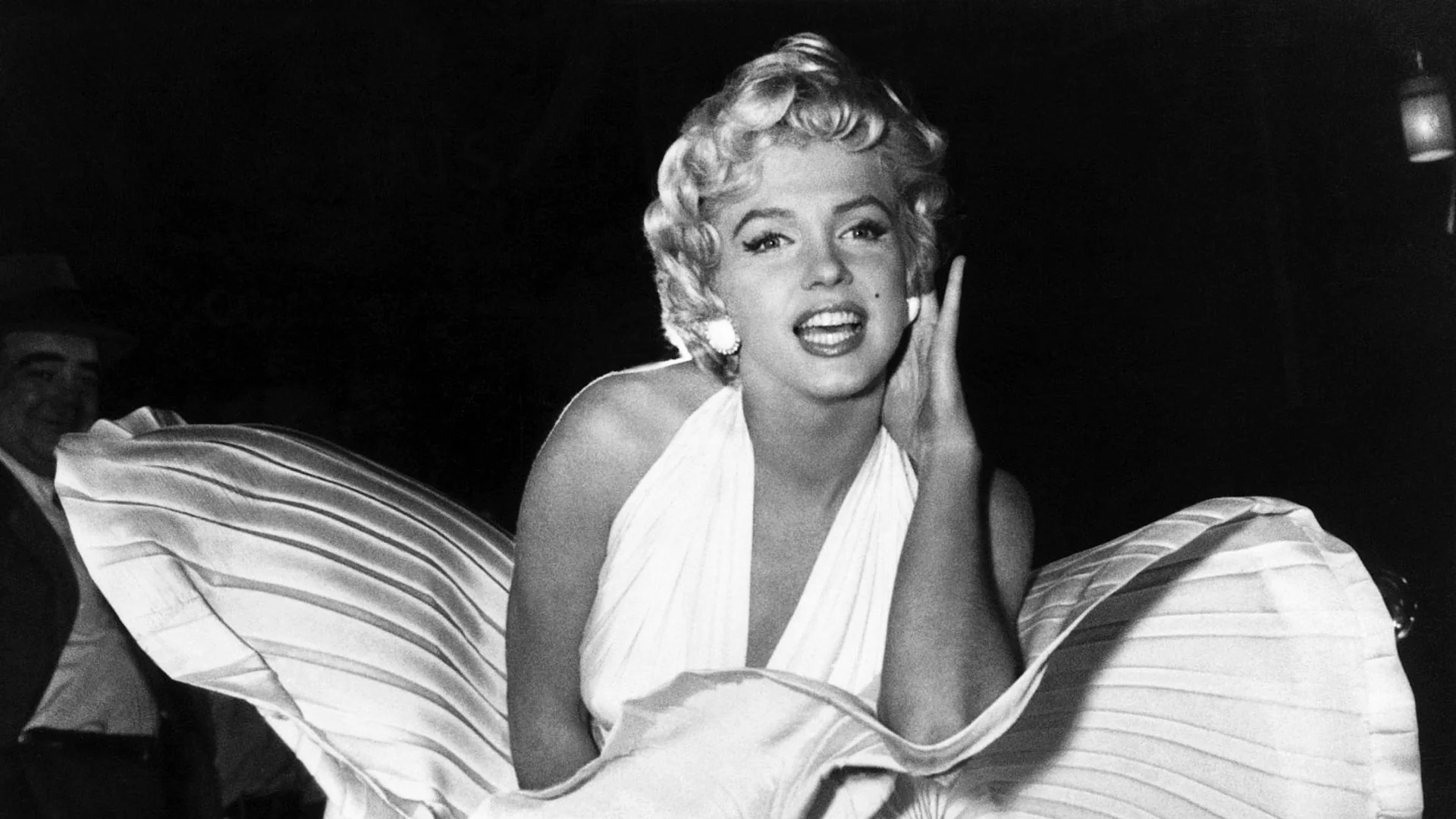
A public image records an appearance and a moment, not performance on a standardized cognitive assessment.
0 The short answer
Marilyn Monroe's IQ is unknown on the evidence reviewed here; 168 is an unsupported attribution, not a verified test result. We did not locate an authenticated report identifying a test, administration date, examiner, and score. That finding does not prove she never took any assessment. It means the specific number should not be presented as established history. Reading a book collection, studying acting, or writing thoughtfully cannot supply the missing test record.
The attributed score being investigated, not a verified result belonging to Monroe.
11 books
One Christie's lot from her library, not an inventory of everything she owned or read.
4.53 SD
The hypothetical distance of 168 above 100 on an SD 15 scale, our arithmetic.
Commercial disclosure: ACIS sells an online cognitive assessment. This article does not assess Monroe or imply her endorsement. Product information below concerns a reader's own assessment, with limitations stated separately.
The pages repeating 168 do not provide the assessment record needed to authenticate it. A number can appear consistently across websites because those websites repeat one another. Consistency of wording does not establish independent observation. For an assessment claim, the decisive question is whether the chain reaches an identifiable administration of a particular test. A biography quotation, a link to another list, or an unsourced statement that someone was brilliant does not complete that chain.
An example is IQTestA's page about Monroe, which displays 168 while also describing an inability to corroborate it. We cite that page only as evidence that the assertion circulates. It is not a source for her intelligence. Its narrative attributes an earlier online appearance to a 2013 list. We have not independently authenticated that as the first publication of the claim, so this article does not call it the origin.
The often cited Snopes fact check could not be retrieved directly during this review. We therefore do not repeat its reported interview as though we conducted it, or treat a quotation copied elsewhere as a primary archival finding. A source trail can be informative while remaining incomplete. The sensible next step is to locate the original item and inspect its evidence, rather than strengthen the conclusion every time another page repeats it.
What circulates
What is being implied
What the reviewed record supports
Earliest appearance established here
Monroe had an IQ of 168
A particular standardized score was obtained
No authenticated test report located
Not established
She was more intelligent than Einstein
Two comparable measured scores can be ranked
No comparable pair of reports established
Not established
Her library proves the score
Book ownership determines IQ
Auction records document particular books
The cited provenance identifies an October 1999 sale
Her writings reveal a precise IQ
A private text can be converted into test performance
The published collection contains personal written artifacts
The linked publisher page identifies its edition
A careful claim register also distinguishes silence from contradiction. If a catalog does not mention an IQ test, that alone does not prove no document exists elsewhere. Conversely, an unsupported number does not become credible merely because a search cannot prove it impossible. The person making a precise factual assertion needs positive evidence for that assertion. The appropriate label here is unsupported, with an explicit description of the search limits.
This is why the discussion of the highest IQ ever claimed emphasizes documentation and score comparability. The loudest number is often the least informative part of the record. Readers should be able to identify what was measured before being asked to admire its apparent rarity. Monroe's case offers no reason to relax that standard because the claim is flattering.
Scope of this reviewThis review checks identifiable public sources. It does not claim access to every private archive, medical file, or school record. A newly authenticated report would require revising the conclusion and interpreting that specific instrument.
2 What would an authentic IQ record need to contain?
A defensible score claim needs enough provenance and testing context to connect the number to the person and the instrument. An image of a typed number is not sufficient by itself. The document should identify whom it concerns, where it came from, when it was created, and how it reached the present source. A researcher also needs to know whether it is an original report, a later transcription, or someone recalling an event years afterward.
Testing context comes next. The instrument name and edition identify the tasks and scoring conventions. The administration date and the examinee's age help identify the appropriate reference group. The score type tells us whether the number is an overall composite, a narrower domain, an old ratio score, or something else. Without those distinctions, even a genuine number can be described incorrectly.
There is a difference between a reported score and a documented score. A person might tell an interviewer that they received a particular result. That is evidence of the statement, and it may be reported with attribution. An authenticated report supports a stronger claim about the assessment itself. Neither category justifies inventing details that the underlying source does not include. If the scale is unknown, keep it unknown.
For historical material, a useful audit proceeds in sequence. First, inspect the source containing the claim. Second, follow the reference to the earlier source it names. Third, determine whether each new item adds independent information. Fourth, stop when the chain becomes circular or ends without a test. Document that stopping point. A long chain of repetitions is still one unsupported claim, not a collection of independent measurements.
It is also possible to overstate what a legitimate document can show. A single assessment describes performance under specified conditions. It does not measure every useful capacity, every aspect of personality, or the total value of a life. Questions about what IQ scores mean begin after authentication, not instead of it. The authenticity of a record and the scope of its interpretation are separate checks.
The Standards for Educational and Psychological Testing, published jointly by AERA, APA, and NCME, place evidence for score interpretation and use at the center of testing. Applied here, the practical point is modest: a celebrity label needs more than an attractive narrative. This page is an editorial review of public evidence, not a psychological evaluation or a certification of any person's abilities.
3 What do Monroe's books actually document?
Her surviving library records document literary interests and possessions, without determining how much she read or how she would score. The auction evidence is stronger than a generic claim that she liked books because it identifies specific objects. That makes the record useful to historians. It does not make the books interchangeable with observations collected during a standardized cognitive task.
The Christie's lot cited above lists eleven volumes associated with Monroe's library, including works by Proust, Flaubert, Zola, Molière, and Rabelais. Its provenance traces them to a lot in the October 27 and 28, 1999 sale of her personal property. The catalog establishes the auction house's attribution and description of those volumes. It is not a reading log, comprehension assessment, or complete count of her library.
A second Christie's record describes personalized notebook paper and books associated with the same estate sale. One useful feature is the explicit reference to earlier lot and catalog page numbers. Researchers can follow those references when investigating the objects. We do not treat every descriptive detail in an auction listing as immune to error, and we do not need a grand total of books to make the narrower point about documented possessions.
Several different propositions often get compressed into one sentence about a famous reader. Owning a book, opening it, finishing it, understanding it, remembering it, and using its ideas are separate claims. Some may be supported by marginal notes, letters, or testimony. Others may remain unknown. A photograph holding a novel might document an occasion; it cannot by itself reveal comprehension of the entire work.
The same caution applies to the prestige of the authors. A difficult title can indicate an interest or aspiration. It does not attach a fixed number of IQ points to its owner. Someone may understand a demanding work slowly and deeply. Another person may quote it fluently without understanding much of it. There is no validated booklist conversion that turns either observation into Monroe's Full Scale IQ.
This distinction should not be mistaken for dismissing her intellectual life. A library is valuable precisely because it opens historical questions beyond a ranking: what subjects attracted her, what editions were available, and how books connected with her work. Those questions can lead to better research than a contest over whether an actor was secretly above a numerical threshold.
Our discussion of knowledge and the verbal domain explains why learned verbal material can matter within an assessment. The difference is that a test gathers responses under specified instructions and compares them with a defined reference. The historian studies possessions and context. Both activities can be worthwhile, but their evidence supports different conclusions.
4 What can her private writings tell us?
Monroe's writings provide direct material for understanding her interests and expression, not a retrospective IQ examination. The publisher's page for Fragments: Poems, Intimate Notes, Letters identifies Monroe as the author and Stanley Buchthal and Bernard Comment as editors. It describes handwritten artifacts, letters, and notes. The linked page is for a 2012 edition from Farrar, Straus and Giroux; it should not be mistaken for a contemporaneous test record.
An edited collection raises ordinary historical questions. What survives? What was selected? How were materials arranged, dated, and transcribed? Which editorial decisions affect the reader's impression? Those questions do not make the collection untrustworthy. They clarify the route from a private artifact to the published text a modern reader sees. Editorial mediation and authenticity need separate consideration.
Writing can reveal a chosen subject, a particular formulation, or the revision of an idea. It can also be provisional. A note intended only for its writer may omit context that a public essay would explain. An unfinished sentence is not evidence of limited comprehension. A polished paragraph is not evidence of a particular intelligence score. Treating either as a test response changes the task after it has already occurred.
Consider the difference between judging a poem and scoring a standardized verbal task. A poem may be valued for ambiguity, sound, emotional force, or an unexpected image. An assessment response is judged under a scoring framework designed for a particular inference. There is no reason to expect the qualities that make a private poem meaningful to map neatly onto that framework. Artistic interpretation should remain open to qualities a cognitive battery was never designed to measure.
There is also a selection problem. A collection may contain the most interesting surviving pages rather than a representative sample of everything a person wrote. A critic who chooses only striking passages can make almost any author's style appear more consistent than it was. Selecting only mistakes can produce the opposite distortion. An IQ estimate derived from either selection would inherit the editor's choices without acknowledging them.
The responsible alternative is to quote sparingly, preserve context, and describe what the writing actually shows. Readers can engage with the original collection and disagree about its literary qualities. They do not need to pretend that literary judgment supplies a normed score. The overview of IQ and creativity explains why a creative achievement and a cognitive test result should be discussed as related questions with distinct evidence.
For Monroe, the strongest conclusion is therefore also the most interesting: authentic written material gives readers something more substantial than a stereotype. It allows attention to her words and concerns. Assigning 168 afterward adds apparent precision while removing much of that specificity. The writing should be read as writing before it is recruited into a numerical legend.
5 What do the acting archives establish?
Institutional and archival records support Monroe's engagement with acting, while leaving her IQ unmeasured in this review. The Actors Studio's own roster includes her. The Lee Strasberg papers catalog at the Library of Congress identifies Monroe among people represented in a collection of theatrical correspondence, writings, scripts, and related materials. These are appropriate starting points for researching her professional relationships and artistic development.
The New York Public Library's David Garfield research files offer another route into the history of the Actors Studio. The finding aid describes research materials, institutional documents, interviews, and photographs, including Monroe among photographic subjects. A finding aid is a map of a collection. It does not mean this article inspected every underlying file or listened to every recording.
That distinction prevents an easy overclaim. Seeing a person's name in a catalog supports the existence of relevant material, not any quotation that a website later attributes to that person. A researcher who wants to establish a specific classroom event needs the relevant dated record or a carefully evaluated account. The catalog entry alone cannot confirm the exact words a teacher used or the comparative ranking of students.
Acting also involves multiple kinds of work that should not be reduced to one psychological label. Preparing a role may involve understanding a script, making choices about delivery, coordinating movement, taking direction, and responding to partners. These describe task demands. They do not establish which component was hardest or easiest for Monroe, nor the level of any corresponding ability in an age reference group.
An exceptional performance is evidence of an exceptional performance. That statement is useful when its standards are made explicit: timing, characterization, vocal control, or the effect of a scene. It does not become more respectful by adding an unsupported number. Critics can explain the work precisely without pretending they administered a battery. Likewise, a difficult rehearsal does not justify a negative cognitive inference about the performer.
Readers interested in comparing public reputations can examine the separate evidence reviews for Taylor Swift's attributed IQ and Natalie Portman's intelligence claims. Education, professional training, and achievement create different documentary trails. Their relevance depends on the question being asked. None is a universal substitute for a report of actual testing.
The lesson for historical research is practical: use the archive to ask questions the archive can answer. A membership roster can support membership. A letter can support what someone wrote. A rehearsal note can document a particular observer's account. Keeping those conclusions close to their sources produces a richer account of Monroe's work than using every item as an indirect argument for 168.
6 Why does reversing a stereotype not validate a score?
A flattering counterstory still needs evidence, even when the stereotype it challenges is unfair. Monroe's screen image encourages people to ask whether the public understood her. That is a legitimate historical and cultural question. A numerical claim becomes tempting because it seems to settle the argument instantly. If the number lacks a record, however, it replaces one simplified picture with another.
The reasoning can become circular. A reader believes Monroe was underestimated, so the unusually high score feels plausible. The score is then used as proof that she was underestimated. Nothing independent has entered the argument. Her books and writings can challenge a simplistic portrait without being converted into a psychometric measurement. They should be allowed to add complexity rather than certify a preferred label.
Another problem is the hidden condition placed on respect. If a person deserves serious attention only after being declared a genius, everyone without an exceptional score remains vulnerable to the original dismissal. Artistic work, agency, curiosity, and dignity do not depend on membership in an extreme statistical tail. Rejecting a demeaning stereotype does not require proving the opposite extreme.
This matters when articles discuss women in entertainment. A role is a constructed performance. Treating the character's knowledge or manner as the actor's cognitive profile ignores that construction. Yet treating every successful performance of that role as proof of extraordinary IQ is another invalid inference. The observable accomplishment is the performance itself. Any stronger claim needs its own evidence.
Public photographs create a similar trap. A glamorous image can lead one viewer to assume superficiality and another to imagine hidden genius. Both responses reveal something about the viewer's associations. Neither response is a standardized observation of the subject's reasoning. The hero image on this page is an image of Monroe, not supporting evidence for the score in the headline.
The phrase genius IQ also carries more than one meaning. In ordinary speech, genius may praise extraordinary artistic influence. In a numerical context, it may refer to a convention about test performance. Moving between those meanings without warning makes a cultural judgment look like a measured fact. A careful writer identifies which meaning is intended and avoids claiming that one automatically establishes the other.
For readers, a useful check is to ask whether the story would still matter if the number disappeared. Monroe's library, professional study, and surviving writing remain worth examining. The unverified score adds no historical necessity. That observation gives us a way to preserve what is valuable in the story while correcting the unsupported claim, without turning the correction into another judgment about her worth.
7 Would 168 have meant the same thing during her lifetime?
A historical IQ number cannot be interpreted correctly until its scoring system and reference population are known. The letters IQ have been used across instruments with different procedures. A number from one system is not automatically comparable with the same number from another. This is true even when the arithmetic looks familiar and both results are presented as measures of intelligence.
Lewis Terman's historical The Measurement of Intelligence explains the ratio approach using mental age relative to chronological age. In its familiar percentage form, the ratio is multiplied by one hundred. A hypothetical child assigned a mental age above their chronological age would therefore receive a value above one hundred. This is a description of an old scoring approach, not an assessment of Monroe.
Modern deviation scores instead locate performance relative to a relevant norm group. On a commonly used scale, the reference mean is one hundred and the standard deviation is fifteen. A result describes relative standing within that framework. It does not mean an adult has the mind of a child or adult of some different chronological age. Our guide to mental age and its limitations separates those concepts.
The difference becomes especially important when historical claims are very high. A ratio can become large under developmental scoring rules without representing the same population rarity as a modern deviation score. Replacing the old scale with a modern normal curve after the fact does not solve the problem. The instrument, norms, age rules, and ceiling all need to be understood first.
For a simple illustration, imagine two documents that each display 168. One might describe a ratio derived from developmental age assignments. Another might report a deviation score using a particular extended norm procedure. Their matching numerals would not show identical performance, identical uncertainty, or identical rarity. A responsible comparison would preserve the original score definitions before attempting any justified conversion.
Test editions also differ in content and reference data. A claim that someone scored on a named instrument decades ago needs the edition, not just the family name. Historical testing existed before today's batteries, so the absence of a modern edition in Monroe's lifetime does not prove that assessment was impossible. Equally, the existence of an older instrument does not prove she took it.
Our explanation of the standard deviation fifteen scale is useful for interpreting a known modern result. It cannot supply the missing historical context. For Monroe, there is no authenticated administration here to classify as ratio or deviation IQ. Assigning the rumor to either system would manufacture information. The correct sequence remains provenance first, scoring interpretation second, and comparison only when both are adequate.
8 What would 168 mean on a modern SD 15 scale?
Under a normal model with mean 100 and standard deviation 15, a hypothetical 168 lies about 4.53 standard deviations above the mean. This is our arithmetic on a stated model. It is not evidence that Monroe received that score. The calculation begins by subtracting the mean and dividing by the standard deviation: sixty eight divided by fifteen is approximately 4.53.
If the normal distribution is extended that far into its upper tail, the resulting rarity is roughly one in 344,000. Rounding heavily, one might describe it as about one in a few hundred thousand. Those figures are model outputs. They are not a count of observed people with a verified result, and they are not a ranking of everyone who has ever lived.
Extreme tails demand particular caution. A mathematical curve continues beyond the range where a particular instrument may have strong empirical support. A test needs tasks capable of differentiating high performances and a defensible way to interpret them. A calculator can produce many decimal places without improving that evidence. The page on the difference between a score and its percentile explains why numerical precision should not be mistaken for measurement precision.
There is also no universal rule that every adult instrument stops at exactly the same number. Standard score ranges, extended norms, composite definitions, and special procedures can differ. A claimed result above a familiar ceiling needs the specific procedure documented. It should neither be accepted automatically nor rejected using an unsupported claim that no test could ever report it.
For the same reason, an ordinary report cannot justify adding points above its reported ceiling. If an examinee reaches the maximum measurable level, the evidence may indicate that the test cannot distinguish further within that range. It does not reveal the exact value that a different instrument would have produced. An upper limit is a limitation of the measurement procedure, not an invitation to invent a larger score.
The discussion of an IQ of 160 is a separate explanation of an actual score level and its interpretation. It should not be read as proof that Monroe belonged above or below that level. Similarly, the IQ rarity calculator can illustrate a chosen statistical convention without validating any celebrity attribution entered into it.
The number 168 is therefore useful here only as an example of what an unsupported attribution asks readers to believe. It is an unusually strong claim under a specified modern model. The precision and rarity make the need for provenance greater, not smaller. The calculation answers a conditional mathematical question; it leaves the historical question unresolved.
9 Can intelligence be reconstructed from a biography?
A biography can document achievements and experiences, but it cannot recreate missing responses to a standardized intelligence battery. The missing observations matter. An assessment gives specified tasks under specified conditions and interprets performance against reference data. A biography records a selection of life events, often chosen because they are unusual or narratively important. These are different sampling processes.
A retrospective estimator might count books, school successes, clever remarks, or occupational accomplishments. That creates a scoring system for the estimator's selected evidence. It does not automatically create an IQ scale. The method would need validation against actual results in an appropriate population, with uncertainty reported and generalization justified. Without that work, attaching an IQ label simply disguises a biographical judgment.
Even a validated statistical association does not make individual reconstruction exact. People with similar achievements can differ in cognitive profiles, opportunities, persistence, and interests. People with similar cognitive scores can lead very different lives. Inferring a missing score from an outcome requires assumptions about those relationships. Those assumptions become particularly fragile when the subject is an exceptionally famous person selected because of extraordinary achievement.
The available record is also uneven. Some people leave extensive letters, educational files, and interviews. Others leave little. Better documentation can make a person appear more intellectually active even when it mainly reflects preservation and access. A method that awards points for surviving material risks measuring the archive alongside the person. Public visibility is another influence: an entertaining quotation is more likely to circulate than an ordinary conversation.
This does not make all historical inference worthless. Historians can assess whether a person pursued a subject, acquired a skill, or made a particular contribution. They can compare sources and revise interpretations. The boundary is the label placed on the conclusion. An informed account of intellectual interests is not the same object as a measured Full Scale IQ.
The distinction appears in our reviews of Napoleon's attributed IQ and JFK's reported scores. Historical reputations, school records, and retrospective estimates need separate treatment. A reader should be told which kind of evidence supports each statement. Celebrity status does not erase the differences among them.
For Monroe, a responsible biography can discuss her reading, professional study, correspondence, and creative work. This article does not attempt to assign a replacement estimate, a range, or a minimum. A broad range can still be unsupported. The honest alternative to 168 is not another number that feels more plausible; it is an account of what the evidence actually permits us to say.
10 Was Monroe more intelligent than Einstein or other celebrities?
No defensible IQ ranking follows from comparing unsupported celebrity numbers. A comparison requires at least two interpretable measurements, not just two familiar names and two numerals. The assessment procedures should also be sufficiently comparable for the intended conclusion. If one side of the comparison is an internet attribution, the numerical ranking already lacks a foundation.
It is tempting to rescue the comparison by arguing that Monroe's artistic achievement and Einstein's scientific achievement are both extraordinary. They are different kinds of achievement, evaluated using different evidence. Recognizing that difference does not require a claim that they had identical or unrelated cognitive abilities. It simply means the work itself cannot tell us the exact outcome of an unobserved common test.
The phrase more intelligent also hides the target of comparison. Does it mean a higher overall composite, stronger verbal knowledge, greater originality in one field, more effective judgment, or more valuable contributions? Those questions are not interchangeable. A person might outperform another on one defined task without outranking them in every meaningful respect. A single unsupported IQ statistic cannot resolve that conceptual ambiguity.
Celebrity comparisons often become circular sources for one another. An article says a performer exceeded a scientist because their attributed scores differ. Another page repeats the comparison as evidence for the performer's number. The ranking then appears to have independent support even though neither original measurement has emerged. Tracking each individual claim separately helps expose that loop.
Our evidence review of Shakira's reported IQ considers the relationship between accomplished work, multilingual public presentation, and a claimed score. The separate review of Michael Jackson's attributed IQ examines musical achievement and conflicting numbers. Those pages have different subjects and records, but the rule remains consistent: verify the measurement before constructing the ranking.
A more informative comparison stays at the level of documented work. One can discuss an actor's performance technique, a musician's recording process, or a scientist's published contribution using sources appropriate to each. This allows admiration without fictional precision. It also leaves room for disagreement about artistic or historical importance without pretending a psychometric scale can settle every question.
For the reader asking specifically whether Monroe was smarter than Einstein, the answer is therefore that the proposed IQ comparison is not established. That answer does not diminish either person. It declines a claim that the reviewed evidence cannot support and redirects attention to the records that can actually be examined.
11 What does a modern cognitive report contain?
A useful cognitive report connects measured performance with the instrument, reference group, score type, and uncertainty. A number alone omits too much. Readers should know what tasks contributed, whether the result is broad or narrow, and what conditions might limit interpretation. Those details make a report useful for a specific purpose rather than a decorative certificate.
Pearson's WAIS-5 sample score report illustrates how a contemporary professional report presents multiple scores, percentile information, and intervals. It is an example report, not a document about Monroe and not a template for diagnosing oneself. The accompanying explanation of what the WAIS-5 measures discusses the instrument's role and administration more directly.
An overall composite summarizes a defined combination of observations. Domain scores describe more specific areas. A difference between domains may help a reader understand a profile, but it needs context and appropriate interpretive rules. One should not search a profile for whichever isolated value makes the most impressive headline and then present that as the overall result.
An interval communicates uncertainty under a particular measurement model. It is not a promise that a person will always obtain every future score inside those bounds. Retesting can involve changed conditions, learning, alternate forms, and different norms. The method used to construct an interval also matters. Do not assume every publisher derives every interval with the same simple formula.
ACIS provides an example of a different route: an online, self-administered assessment intended for personal understanding. We sell this service, so readers should evaluate the published technical manual and the reliability and validity documentation directly. The manual describes the current scoring and reference framework. This article does not add undocumented claims about how its norm records were sampled.
ACIS is not a clinical or diagnostic instrument. Its results should not be presented as a clinician's examination, a guaranteed admission credential, or authorization for workplace or educational decisions. A reader who needs an assessment for a formal purpose should identify that purpose and the receiving organization's requirements before choosing a product. A pleasing numerical result does not substitute for the required process.
These distinctions explain why the Monroe rumor remains unresolved even after discussing psychometrics carefully. Knowing how a modern report works cannot create a missing historical report. It can, however, equip readers to recognize what is absent and to demand the same transparency when a contemporary service claims to measure them. The evidentiary standard should apply to the publisher of this article as well as to the celebrity claim.
12 What should readers do with their own curiosity about IQ?
Begin with the question you want answered, then choose evidence that can answer it. Curiosity about a famous person's score often becomes curiosity about oneself. That transition is understandable, but the celebrity comparison provides no useful baseline. A person does not need to resemble Monroe, share her reading preferences, or possess an artistic identity to justify investigating their own cognitive performance.
For personal exploration, identify what you hope to learn. You might want a broad overview of reasoning and knowledge, a clearer understanding of differences among tasks, or an explanation of how percentiles work. These goals differ from seeking a diagnosis, accommodations, or admission under a specific rule. Writing down the goal prevents a convenient test from silently redefining the question after purchase.
Next, examine the procedure. Look for the instrument's intended population, language, administration conditions, and published evidence. Check whether the score is based on performance tasks or on a self-description questionnaire. Check what the report actually includes and which limitations the provider acknowledges. A provider's willingness to discuss limits is more informative than a comparison with a famous person's alleged result.
Prepare to read the result as a description rather than an identity. A score concerns measured performance within a framework. It does not determine whether someone should read difficult books, pursue acting, write poetry, or learn a new field. Those activities can be valuable regardless of where a result falls. Assessment should make a decision clearer, not create unnecessary permission to pursue an interest.
Avoid using repeated testing only to chase a preferred label. Different tasks and conditions can produce different results, and familiarity can affect performance. Keep the dates and contexts attached to reports. If a discrepancy matters for an actual decision, seek an explanation of the instruments and procedures rather than selecting the number that best matches a hoped-for biography.
The page on whether you can estimate your own IQ addresses the limits of self-impressions. For a reader with a real report, the guide to Full Scale IQ explains what the composite summarizes. Those are more useful next steps than comparing personal habits with an unsupported celebrity profile.
Finally, preserve the distinction between assessment and respect. Monroe's surviving work does not need an IQ certificate to deserve attention. Neither does a reader's curiosity or creative ambition. The practical value of measurement comes from a question it can answer, an appropriate procedure, and an honest interpretation. This review leaves Monroe's IQ unknown while making that route to useful evidence more explicit.
The sources below support distinct historical or measurement claims; none supplies a verified IQ result for Marilyn Monroe. Public records and source pages were checked on September 24, 2026. Auction descriptions concern the objects listed, institutional catalogs concern their collections, and the publisher page concerns the identified edition. A rumor page is included only to document the assertion being audited.
American Psychological Association. Ethical Principles of Psychologists and Code of Conduct. Assessment standards 9.01 and 9.02 concern adequate evidence and appropriate methods. This editorial review follows the same evidentiary caution without claiming to be a psychological examination.
14 Frequently Asked Questions
What was Marilyn Monroe's IQ?
Her IQ is unknown on the evidence reviewed here. We did not locate an authenticated test report that establishes a score. The widely repeated 168 should therefore be described as an unsupported attribution, rather than a verified fact about her intelligence.
Did Marilyn Monroe really have an IQ of 168?
The reviewed sources do not verify 168. They do not identify an authenticated administration with the instrument, date, and score needed to support that statement. Repetition across celebrity websites does not turn the claim into independent evidence of testing.
Did Marilyn Monroe ever take an IQ test?
We cannot establish that from the public sources reviewed. Failing to locate a verified result does not prove she never took any assessment. It does mean that a writer should not present a specific IQ as documented without producing the relevant evidence.
Was Marilyn Monroe more intelligent than Einstein?
A defensible IQ comparison is not established. It would require comparable, interpretable measurements for both people, rather than familiar attributed numbers. Their artistic and scientific achievements can be discussed using their own evidence without inventing a common numerical ranking.
Was Marilyn Monroe smart?
Her books, writings, and professional study document intellectual interests and artistic engagement. The broad word smart can refer to many qualities. Those records justify discussing particular interests and accomplishments, but they do not establish a precise score or a complete cognitive profile.
Where did the Marilyn Monroe 168 claim start?
Its first appearance was not independently established in this review. Later pages attribute an early online occurrence to a 2013 list, but that attribution is not a test record. An earliest located repetition would still need a source for the underlying score.
Is the number 168 proven false?
It is unsupported by a verified result in the sources reviewed. That is a more precise conclusion than claiming to know every assessment she may have taken. The article rejects presenting the number as established, without substituting a different unsupported score.
Did Marilyn Monroe own serious literature?
Auction records identify literary works in her collection, including a lot containing books by Proust, Flaubert, Zola, Molière, and Rabelais. Those records document particular possessions and provenance. They do not show that she finished every volume or establish her comprehension level.
How many books were in Marilyn Monroe's library?
This review does not establish a complete inventory total. It cites specific auction lots with identifiable provenance. A count from one lot should not be presented as the size of her entire library, and ownership should not be confused with a record of reading.
What is Fragments by Marilyn Monroe?
Fragments is an edited collection of her poems, intimate notes, letters, and other written artifacts. The linked publisher page identifies the editors and edition. It is useful historical and literary material, but it was not collected as a standardized cognitive assessment.
Did Marilyn Monroe attend the Actors Studio?
The Actors Studio includes Monroe among its notable members, and institutional archives preserve related historical materials. These sources support her engagement with acting. They do not support assigning an IQ from membership, training, or later praise for a performance.
Does an acting performance reveal an actor's IQ?
It reveals performance on an artistic task, not an overall standardized score. Acting can require memory, interpretation, timing, and collaboration. Observing the finished work cannot tell us exactly how the actor would perform across the different tasks in an intelligence battery.
Can private letters be scored as an IQ test?
They cannot simply be converted into a standardized IQ. Letters have different purposes, conditions, editing histories, and surviving contexts. An analysis may describe features of the writing, but labeling that analysis an IQ estimate requires validation that a selected text alone does not provide.
Does rejecting the IQ claim diminish Monroe's achievements?
No. Her work, interests, and surviving writings remain available for serious discussion. An unsupported number adds no necessary evidence of their value. Correcting the claim allows readers to appreciate documented accomplishments without making respect conditional on an exceptional test score.
What would 168 mean on an SD 15 scale?
Under a normal model with mean one hundred and standard deviation fifteen, it is about 4.53 standard deviations above the mean. That is a hypothetical calculation. It does not establish that Monroe received the score or that a particular instrument measures that range precisely.
How rare would an IQ of 168 be?
Under that specified normal model, the upper tail is approximately one in 344,000. This is model arithmetic, not an observed count or a verified celebrity ranking. Estimates that far into a distribution depend strongly on the model and the instrument's measurement limits.
Is an old ratio IQ the same as a modern deviation IQ?
No. Ratio IQ used a relationship between developmental mental age and chronological age. Deviation IQ describes performance relative to a reference population. Matching numbers from those systems do not automatically imply matching rarity, measurement precision, or cognitive performance.
Can any adult IQ test report a score above 160?
Score ranges depend on the instrument, edition, composite, and any extended norm procedure. There is no justification for declaring one universal ceiling for all adult testing. A result above a familiar limit needs its actual scoring procedure documented and interpreted carefully.
Can ACIS estimate Marilyn Monroe's IQ?
No. ACIS has never assessed her and holds no assessment record belonging to her. Its current tasks cannot recover her historical responses. This article reviews public evidence and measurement principles; it does not produce a retrospective score, range, or psychological diagnosis.
Can I compare my own score with Monroe's attributed score?
That comparison would not be meaningful because her attributed score is unverified. Interpret your result using its instrument, reference group, administration conditions, and uncertainty. A celebrity rumor cannot serve as a valid benchmark for your performance or your future potential.
What assessment should I choose for myself?
Choose according to the purpose. Personal curiosity, clinical questions, accommodations, and formal eligibility may require different procedures. Review the provider's evidence and limits before testing. ACIS offers online personal exploration, while a formal clinical need calls for an appropriately qualified professional.
Take the assessment
You get a profile, not a number
ACIS measures six CHC domains across 20 subtests and reports each one with its own normed score and confidence interval, so you can see where you are strong and where you are not.