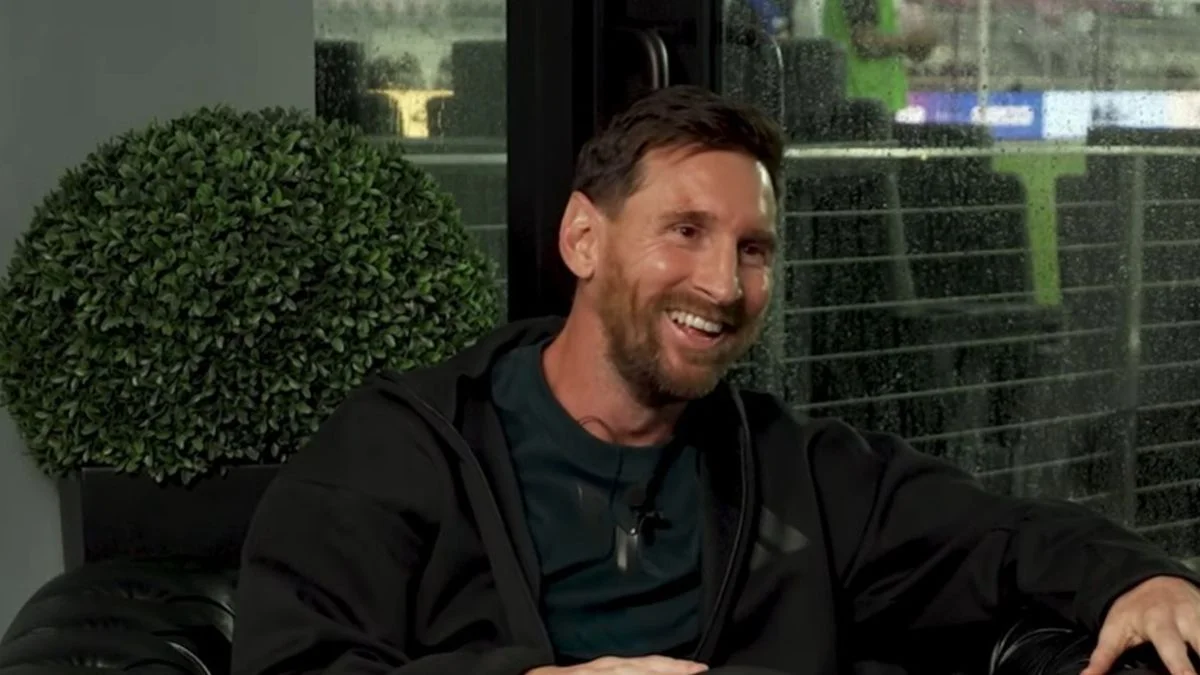
Lionel Messi's tactical perception, anticipation and technical performance are observable at the highest level of football. No verified public IQ score was located, so those abilities should be described directly rather than converted into an invented number.
Elite perception and decision making on the field do not identify a standardized Full Scale IQ.
0 The Short Answer
Lionel Messi has never taken a publicly documented IQ test, and no verified score for him exists. Figures such as 150 or 172 float around fan pages and celebrity ranking sites, but not one version of either claim names an instrument, a date, an examiner or a score report. That is the end of the factual story, and repeating those digits any further would only feed the thing this page exists to correct, so they will not appear again below.
What makes Messi a more interesting case than the usual celebrity IQ page is that there genuinely is a science of football intelligence, and it has nothing to do with the numbers being invented for him. Researchers in sport psychology have spent three decades measuring what elite players actually do with their eyes, their attention and their decision windows. They have eye tracking data, head movement sensors, occlusion experiments and longitudinal follow ups. That literature is real, specific and worth reading. It also does not produce an IQ score, and it was never designed to.
So this page does two jobs. It closes the question of Messi's psychometric IQ, which is unknown and likely to stay unknown. Then it spends most of its length on the question people are really asking when they search for it: what is game intelligence, how is it measured, what does it share with the cognitive domains a standardized battery samples, and why does being the best decision maker on a football pitch tell you almost nothing about how someone would score on a test of verbal comprehension or quantitative reasoning.
Where ACIS stands
ACIS has never tested Lionel Messi and has no connection to him or to any club or federation. Everything on this page assesses publicly available claims and published research. No figure here is an ACIS result, and an unmeasured IQ is a statement about missing evidence, never a statement about a person's ability.
1 Why No Number Exists, and Why One Was Invented Anyway
Professional footballers are among the most measured humans alive. Clubs record sprint distances, high intensity accelerations, heart rate variability, sleep, bone density and injury risk markers. What clubs do not do is administer clinical intelligence batteries and publish the results. Cognitive screening that does happen in football is usually either baseline concussion testing, which is not an IQ measure, or proprietary perceptual training assessments owned by the club. Those results are private employment data in every major league. There is no mechanism by which a verified full scale score for any active superstar would reach the public, and no evidence that one was ever produced for Messi in the first place. The rare athlete whose testing did reach the public reached it from outside the sport entirely, since Muhammad Ali's 1964 Armed Forces Qualification Test result exists only because military conscription put it in the record, and even that is a percentile rank on a screening test rather than a standard score.
The numbers circulating anyway arrive through a familiar pipeline. Someone writes a list of the smartest athletes. A number is assigned by feel, chosen to match how impressive the subject seems. A second site copies it. A third site cites the second. Within a few years the figure appears in enough places that the repetition itself starts to look like corroboration. It never was. A thousand pages carrying one unsourced attribution still amount to exactly one unsourced attribution, and the arithmetic does not improve with volume. The same pipeline runs outside sport, and the 178 attached to Rowan Atkinson is the cleanest specimen of it, repeated for years without any version naming a test, a date or an examiner.
Messi attracts this treatment for a specific reason worth naming. His game is visibly cognitive rather than visibly athletic. He is 1.70 meters tall, he is not the fastest player on the pitch, and he spends long stretches of matches walking. Yet he consistently arrives at the right place with the ball already solved. Watching that, people reach for the word genius, and celebrity IQ content converts the word into a three digit figure because a figure is more shareable than an accurate sentence. The conversion has no scale behind it and no measurement event behind it.
There is also a quieter reason these claims persist unchallenged. Nobody is harmed enough to fight them. When a listicle inflates a company's revenue the company objects. When a listicle hands an athlete a genius number, the athlete has nothing to gain by correcting it and generally ignores it. The result is an information environment where the cognitive claim about a famous person is reliably the least sourced sentence on the page it appears in, sitting next to biographical details that are checkable to the day.
2 Football Intelligence Is a Real Research Field
Coaches have used the phrase game intelligence for a century, usually to describe something they could see but not define. Since roughly the 1990s that vague admiration has turned into a research program with instruments, protocols and published effect sizes. The field is generally called perceptual cognitive expertise, and it studies how skilled performers extract usable information from a chaotic environment faster and more accurately than less skilled performers do.
The core insight organizing the field is that elite performance in an open, unpredictable sport is limited less by how fast the body moves than by how early the player knows what to do. A defender who reads a run half a second sooner does not need to be faster. A midfielder who has already checked his shoulder does not need an extra touch to see his options. Those half seconds are the currency, and they are won before the ball arrives, not after.
Researchers study this through four main methods, each measuring a different slice of the same skill. Eye tracking and head movement sensors record where players look and how often, in real matches and in simulations. Temporal occlusion experiments cut a video clip off mid action and ask the participant to predict what happens next, which isolates how much information a player extracts from early body cues before the outcome is visible. Recall and recognition tasks show a game configuration briefly and ask the participant to reproduce it, testing stored pattern knowledge. Verbal report protocols ask players to think aloud during decisions, mapping what options they generated and in what order.
None of these look anything like an intelligence test. There is no norm sample of the general population, no standard score with a mean of 100, no domain profile and no full scale composite. What they produce instead are performance measures inside one sport, benchmarked against other players. That distinction matters enormously and is the hinge of this entire page: game intelligence is measured against footballers, while IQ is measured against everybody. Two scales built on different reference populations cannot be converted into one another, in either direction, no matter how strong the temptation.
The other structural difference is what the two things are made of. A cognitive battery deliberately strips away context so that performance reflects general capacity rather than accumulated knowledge. Game intelligence is almost entirely made of accumulated knowledge. It is the residue of tens of thousands of hours inside one specific problem space, and stripping the context away is precisely what destroys it.
3 Scanning: The Most Measured Component of Game Intelligence
The best documented single component of football intelligence is visual scanning, the act of turning your head away from the ball to sample the surrounding configuration before the ball reaches you. The leading researcher in this area is Geir Jordet, a professor at the Norwegian School of Sport Sciences who has been analyzing scanning behavior since the late 1990s and has coded footage of hundreds of professional and elite youth players.
Jordet and colleagues published a season long analysis in Frontiers in Psychology in 2020 covering 27 professional male players across 9,574 individual ball possessions in 21 home matches. Players averaged 3.0 scans in the ten seconds before receiving the ball, a mean rate of 0.44 scans per second. Possessions that ended in a successful action were preceded by slightly more scanning than unsuccessful ones, 0.46 against 0.37 scans per second, and the Bayesian model supported a positive role for scanning in pass completion for around 86 percent of the players analyzed. The authors were careful about the size of that effect, noting explicitly that the advantage from extra scanning is much smaller than the differences produced by a player's technical ability.
A separate analysis by Jordet's group used broadcast camera footage to code 1,279 game situations involving 118 Premier League midfielders and forwards. Players in that sample who had won a major individual award scanned more frequently before receiving the ball than those who had not, and scanning frequency was positively related to pass completion. Individual rates from that dataset have circulated widely, with Xavi Hernández at the top around 0.83 scans per second, roughly eight head turns in the ten seconds before a reception.
3.0 scans
Average number of head turns in the ten seconds before receiving the ball among 27 professionals (Jordet et al., 2020).
0.40 seconds
Mean duration of a single scan in eye tracking of elite midfielders, with 90 percent lasting under 0.66 seconds (Aksum et al., 2021).
2.3 percent
Share of 869 recorded scans that contained a true visual fixation, indicating players extract information without settling their gaze.
That eye tracking study, published by Aksum and colleagues in PLOS ONE in 2021, is the most revealing of the set. Working with four elite central midfielders wearing mobile eye trackers during eleven a side play, the researchers logged 869 scans with a mean duration under four tenths of a second, and found that almost none of them involved a stable fixation on anything. Players were sampling the environment peripherally, in glances too brief to focus, and still coming away with enough to act on. Whatever this skill is, it is not careful looking. It is a trained perceptual system that resolves a configuration from a fragment.
Scanning is also not automatically good. McGuckian, Cole, Jordet, Chalkley and Pepping, writing in Frontiers in Psychology in 2018, strapped inertial sensors to 32 semi elite players and found that higher head movement predicted more ambitious actions, turning with the ball and passing forward into attacking areas, but did not predict pass completion at all in that sample. Information gathering and information use are separate skills. Looking more does not help if you cannot do anything with what you saw.
4 Anticipation and the Pattern Library
Scanning delivers raw input. Anticipation is what turns it into a head start. The standard laboratory method here is temporal occlusion: a player watches video of an unfolding action, the screen cuts to black at a chosen moment, and the participant predicts the outcome. By moving the cut earlier and earlier, researchers can identify exactly how much advance information a performer needs before their prediction beats chance. What the method does not measure is memory capacity, a separation the exceptional memory research insists on just as firmly: highly superior autobiographical recall arrives with no guarantee of stronger working memory, better visual reproduction or higher general ability.
The results across sports are consistent. Mann, Williams, Ward and Janelle pooled 42 studies containing 388 effect sizes in a 2007 meta-analysis in the Journal of Sport and Exercise Psychology and found that experts outperform non experts on both accuracy and speed of anticipatory judgment. Their visual behavior differs too: experts used fewer fixations of longer duration and showed prolonged quiet eye periods, the stable gaze immediately before a critical movement. Experts are not looking at more things. They are looking at fewer, better chosen things, for longer, because they already know which parts of the display carry the information.
Underneath anticipation sits stored pattern knowledge, and the classic demonstration of how that works comes from chess rather than football. Chase and Simon, publishing in Cognitive Psychology in 1973, showed chess masters and novices board positions for a few seconds and asked them to reconstruct the layout. Masters were dramatically better with realistic game positions. When the same number of pieces was scattered randomly across the board, the masters' advantage collapsed and they performed no better than weaker players. Their memory was not superior in general. It was organized into chunks of meaningful configurations built through years of exposure, and randomizing the board destroyed the meaning that the chunks depended on.
Football works the same way. A midfielder does not perceive twenty one individually tracked human beings, which would exceed anyone's working memory capacity several times over. He perceives a small number of familiar structures: a back four compressing, a full back caught narrow, a pressing trigger about to fire. Those structures are learned, and they are what compress an unmanageable scene into something a normal brain can hold. This is why the extraordinary reading of the game seen in elite midfielders coexists perfectly well with an ordinary span on a digit sequence task. The capacity is not larger. The encoding is better, and only inside football.
That last point deserves emphasis because it is the mechanism behind almost everything else on this page. Expertise does not raise the ceiling of the underlying system. It changes what gets fed into the system, so that the same limited hardware handles a specialized problem far more efficiently while remaining entirely ordinary everywhere else.
5 Decision Making Under a Half Second Clock
The third pillar of game intelligence is choosing, and choosing fast. A player receiving under pressure in a congested midfield may have three to five options and roughly half a second to commit. That is a decision environment almost nothing in ordinary life resembles, and it is where football differs most sharply from a testing room, where the whole point is to remove pressure that would contaminate the measurement. Controlled conditions are part of what a testing setting supplies, and the in-person and online options for taking a test differ mainly in how tightly that setting is managed and what the resulting score can be used for.
One research line has tried to connect this to general executive function, the family of control processes covering working memory updating, inhibition and cognitive flexibility. Vestberg and colleagues, in a 2012 PLoS ONE study, tested 57 Swedish players, 29 from the top division and 28 from the division below, on standard neuropsychological instruments including a demanding n-back working memory task and the Design Fluency test. Players from the higher division outperformed those from the lower division and both outperformed general population norms, and performance on the flexibility measure predicted goals and assists over the following two and a half seasons. A 2017 follow up in PLOS ONE with young elite players reported correlations with goals scored of roughly 0.44 for the demanding working memory task and 0.35 for design fluency, rising to about 0.55 when the two measures were combined.
Those are real correlations from real instruments, and they matter for the argument here in a specific way. They are the closest thing the literature offers to a bridge between football intelligence and the constructs a cognitive battery measures, and the bridge is narrow. It runs through working memory and processing speed, the domains most involved in holding a shifting configuration in mind and acting on it quickly. It does not run through verbal comprehension, and it does not run through quantitative reasoning. If you were building a psychometric profile from the football research, you would predict elevation on two of six domains, with the rest left completely open.
The samples are also small. Fifty seven players is a reasonable sport science sample and a very small psychometrics sample. Correlations near 0.4 in samples that size carry confidence intervals wide enough that the honest reading is directional rather than precise. Anyone quoting these studies as proof that footballers are cognitively superior is overreading them, and anyone dismissing them entirely is underreading them. They establish a modest, plausible, replicated link between executive control and football output. They do not establish anything about a full scale score.
It is also worth separating two things that get merged constantly. Deciding well under time pressure inside a familiar structure is largely a knowledge effect: the expert has seen this configuration and knows what usually works. Deciding well under time pressure inside an unfamiliar structure is much closer to what fluid reasoning tests sample. Football rewards the first far more than the second, which is exactly why a twenty year veteran can outdecide a physically superior newcomer without being faster at anything measurable in a laboratory.
6 What Game Intelligence and Psychometric IQ Actually Share
Here is the comparison laid out directly. The two things are not opposites and they are not the same thing under different names. They overlap partially, in known places, for known reasons. The most popular alternative simply promotes the athletic case: Howard Gardner's 1983 framework lists bodily kinesthetic skill as an intelligence in its own right, and the multiple intelligences model then runs aground on the finding that measured abilities correlate positively instead of standing independent.
The stimulus
Game intelligence operates on a live, adversarial configuration of 21 other bodies that never repeats. A cognitive battery presents standardized items designed to be identical for every test taker, because comparability is the whole point.
The clock
Football decisions resolve in fractions of a second under physical contact and fatigue. Battery items are timed to sample processing speed deliberately, but pressure is controlled rather than maximized, so that the score reflects capacity and not stress tolerance.
The comparison group
Scanning rates and anticipation scores are benchmarked against other footballers, usually a few dozen of them. IQ scores are benchmarked against a stratified sample of the general population, with a mean of 100 and a standard deviation of 15.
Where they overlap
Working memory and processing speed. Holding a shifting spatial configuration in mind and acting on it quickly is genuinely shared territory, and it is where the executive function studies in elite players find their effects.
Where they do not
Verbal comprehension has essentially no role in reading a defensive line, and quantitative reasoning has none at all. A battery samples all six domains precisely because strength in one predicts the others only loosely.
What each predicts
Game intelligence measures predict football outcomes: pass completion, forward passes, goals and assists. General cognitive scores predict outcomes across training, education and complex work, and predict football almost not at all.
Read the six cards together and the relationship becomes clear. Football intelligence and measured general ability are two different constructs that happen to share a couple of component processes, in the same way that sight reading music and reading a contract share visual decoding without being the same skill. Someone can be world class at one and unremarkable at the other, and the research gives no reason to expect otherwise.
If you want to see how the six domains behave separately in a real profile, the pages on what an IQ test actually measures and the difference between fluid and crystallized ability go through them one at a time. The fluid and crystallized distinction is particularly useful here, since football expertise is a textbook case of crystallized, domain bound knowledge that took a decade to build.
7 Why Elite Domain Expertise Does Not Become a General Score
The intuitive model most people carry is that intelligence is one substance, that training any demanding skill adds to the pile, and that someone brilliant in one arena must therefore be above average everywhere. Decades of transfer research say the first half of that model is roughly defensible and the second half is not. Basketball supplies the same test case: the near photographic recall of past possessions that teammates and coaches attribute to LeBron James is organized around the game itself, which is why it rules out a low estimate without fixing how far above average he actually sits.
Sala and Gobet reviewed the evidence across chess instruction, music training and working memory training in Current Directions in Psychological Science in 2017 and reached a blunt conclusion: near transfer to closely related tasks happens, far transfer to general cognitive ability is negligible when studies are analyzed properly and disappears once active control groups rule out placebo effects. Training a demanding skill makes you better at that skill and at things adjacent to it. It does not raise the general factor.
This has a direct consequence for any attempt to infer Messi's IQ from his football. Even granting every claim about his perceptual and decision making abilities, and those claims are well supported by what he has done on the pitch for twenty years, the transfer literature says that ability lives inside its domain. It was built inside football, it is organized around football structures, and it does not export.
The chess evidence makes the point most vividly because the domain looks so intellectual. Chess grandmasters are the archetype of the thinking expert, and their memory for meaningful positions is genuinely extraordinary. Scramble the pieces and the advantage evaporates, as Chase and Simon documented. If chess expertise, which is entirely composed of reasoning about a formal system, does not generalize into a broadly superior memory, then football expertise, which is composed of reading bodies and space, has even less reason to generalize into a broadly superior anything.
There is a second reason the inference fails, independent of transfer. Selection at the top of any field compresses variance in whatever the field selects on. Everyone who reaches elite football has passed through a filter that removed nearly everyone with poor spatial anticipation or poor decision speed. What is left is a group that is uniformly good at those things, which means differences among them are driven by other factors entirely, and it also means the group tells you nothing about how any individual would perform on a task the filter never tested. Reasoning backward from membership in a highly selected group to an individual's score on an untested dimension is guesswork wearing a lab coat.
8 How Strong Is the Elite Athlete Cognition Evidence, Honestly
A page arguing for careful reading owes the same care to research that supports its own framing. The literature on athlete cognition is real but uneven, and it is worth seeing where it is solid and where it is contested. Instruments deserve that scrutiny as much as findings do, since published reliability, validity and norm data are what separates an accurate IQ score from a guess.
On the encouraging side, Voss, Kramer and colleagues meta-analyzed 20 studies in Applied Cognitive Psychology in 2010 and found athletes outperforming non athletes on laboratory measures, with the clearest effects in processing speed and in varied attention paradigms, and the largest effects in interceptive sports. That is a genuine finding, and its shape fits the argument above: the advantage shows up in speed and attention, the two areas closest to what a sport actually trains, rather than across the board.
On the contested side, a 2025 study by Bonetti and colleagues in the Proceedings of the National Academy of Sciences tested 328 participants including 204 elite players from top clubs in Brazil and Sweden and reported a distinctive psychological profile combining stronger planning, memory and cognitive flexibility with a particular personality pattern. Within months, a letter in the same journal from Musculus, Araújo, Stenling, Williams and other colleagues laid out serious objections: elite players were compared against the general population rather than against lower level players, which confounds expertise with the lifestyle and selection history that comes with a professional career; the design was cross sectional, so it cannot tell whether the profile produces elite performance or results from a decade of it; and the machine learning models carried many parameters relative to the sample, raising overfitting concerns.
Those criticisms are the right ones, and they apply beyond that single paper. The whole field struggles with control group selection, small samples, and a publication climate that rewards the headline that athletes think differently. Take the field at its strongest and the defensible claim is modest: elite performers in fast, open sports show measurable advantages in perceptual anticipation and in some attention and speed measures, built substantially through practice, of uncertain causal direction.
Notice how far that is from a number. Every honest finding in this literature is a group difference on a specific task with a specific control group. Converting any of it into an individual full scale IQ estimate for a named player would require a chain of inferences that nobody in the field would sign. The researchers doing this work are consistently more cautious about it than the pages that cite them.
9 What Messi's Documented Record Does and Does Not Support
The verifiable parts of Messi's biography are unusually well established for a public figure, which makes the contrast with the invented cognitive claims sharper. He was born in Rosario, Argentina in 1987 and came through the youth system at Newell's Old Boys. As a child he was diagnosed with a growth hormone deficiency, an endocrine condition requiring daily injections that his family struggled to fund. FC Barcelona agreed to cover the treatment and bring him to Spain, an agreement famously sketched out on a paper napkin by sporting director Carles Rexach in December 2000. That napkin sold at auction in 2024. He went on to win a record eight Ballon d'Or awards and captained Argentina to the 2022 World Cup title.
The medical detail belongs in this article only to be handled correctly, and correctly means briefly. It is public because Messi and his family have discussed it, and it is a growth condition, with no established relationship to cognitive ability in either direction. Pages that gesture at it as a clue about his mind are doing something both unfounded and distasteful. Treating a childhood medical record as evidence about intelligence is exactly the reasoning failure this page is arguing against, and it does not become acceptable because the conclusion is flattering.
So what does the record support? A great deal about football, and it is worth stating precisely rather than reaching for superlatives. Two decades of sustained elite output across different leagues, coaching systems and roles is evidence of an exceptionally well developed perceptual and decision making skill set inside the sport, plus the durability and application to maintain it. The tactical literature describing his low speed movement as reconnaissance rather than rest is consistent with everything the scanning research documents about how elite players spend the seconds before possession.
What it does not support is any estimate of verbal comprehension, quantitative reasoning, visual spatial processing on a standardized figural task, or a full scale composite. Those are separate measurements with separate norms, and playing football at the highest level for twenty years produces exactly zero information about any of them. The honest summary is one sentence: the record documents extraordinary domain specific intelligence and is silent about general measured ability, and the silence is complete rather than suggestive.
10 The Messi Against Ronaldo IQ Comparison Has No Basis
One of the most searched versions of this question asks which of Messi or Cristiano Ronaldo has the higher IQ. The answer is that the question cannot be asked, and it is worth being explicit about why rather than just declining it. Invented athlete and creator numbers all share this shape; the MrBeast case shows the same machinery applied to a business career instead of a sporting one. Ronaldo's side of the argument is no better sourced: the figures circulating for him run from 102 to 130 with no instrument, date or examiner named anywhere, and the gap between two confident numbers is itself the clearest sign that neither was measured.
Comparing two scores requires two scores. Neither player has a documented result on any named instrument. Neither has publicly taken a standardized cognitive battery. Even if both had, a valid comparison would additionally require that they took the same instrument, in the same edition, under comparable conditions, scored against the same norm sample, with confidence intervals attached. Change any one of those and the comparison degrades. Remove all of them, which is the actual situation, and what remains is two invented numbers being ranked against each other, which is a comparison of the enthusiasm of whoever invented them.
The football version of the comparison is not much better, though at least it involves data. Their styles load on different capacities. Ronaldo's game has been built around physical dominance, aerial threat, positioning in the box and finishing volume. Messi's has been built around close control, pattern reading and the pass nobody else saw. Any perceptual measure would flatter one profile over the other by construction, depending on whether it sampled the ability to time a run into a cross or the ability to unpick a compact defensive block. That is a measurement artifact, not a finding about the men.
The broader lesson generalizes past these two. Ranking public figures by IQ is almost always ranking them by how impressive they seem in whatever they are famous for, then converting that impression into numbers that look like measurements. The numbers add precision without adding information, which is the worst possible trade. If someone hands you a Messi score and a Ronaldo score, the useful question is not who is higher. It is which test, administered by whom, on what date, and the correct expectation is silence.
11 A Four Question Filter for Any Athlete IQ Claim
Everything above compresses into a short procedure you can run on any celebrity cognitive claim in about ten minutes, using Messi as the worked example. Run it on a first person claim and the yield barely improves: Andrew Tate's stated 148 establishes that he has said it, not which instrument, edition, date or examiner ever produced it.
Is a specific instrument named? Not "an IQ test" but a battery with a name, an edition and a scale. Norms, ceilings and score meanings differ between instruments, so digits without an instrument are uninterpretable even in principle. No claim about Messi names one.
Is there a dated administration? Cognitive measurement happens at a moment in a life, under conditions someone controlled. A claim with no date is not describing an event. Search the athlete's name alongside terms like tested, psychologist and score report, and see whether anything but more copies of the bare number comes back.
What is the reference population? A score is a position within a distribution. Without knowing who the comparison group was, the number means nothing. This is where sport measures and IQ claims get quietly swapped: a scanning rate benchmarked against professional footballers is not a percentile against the general public.
Is a domain profile reported, or just one number? Real batteries output separate index scores across verbal comprehension, fluid reasoning, visual spatial processing, working memory, processing speed and quantitative reasoning, each with a confidence interval. A single naked figure with no profile behind it is the signature of a claim that never involved a test.
Messi's case fails all four, which puts it in the largest tier of celebrity cognitive claims, the unsourced attribution. That tier contains most of what you will ever read on the subject. The tier above it, retroactive estimates for historical figures, at least admits to being estimation. The rare top tier of documented testing events with contemporaneous coverage is very nearly empty, and that emptiness is the real finding.
The filter is also useful in the other direction, on claims about yourself. If a free online quiz returns a flattering figure without naming a norm sample, reporting a domain profile or attaching a confidence interval, it has failed the same questions the celebrity claims fail. The standard does not get lower because the subject is you. A page on what actually counts as a good score and one on how scores map onto percentiles are more useful starting points than any number that arrives without provenance.
12 Verdict: Unknown IQ, Extraordinary and Well Documented Game Intelligence
Lionel Messi's psychometric IQ is unknown, has never been measured publicly, and will almost certainly remain unknown. Every figure attached to his name is an attribution with no instrument, no date, no examiner and no norm sample, and the correct response to all of them is not skepticism about Messi but skepticism about the pages producing them. This verdict changes the day a dated professional score report surfaces, and not one day sooner.
The more interesting verdict is the second one. Football intelligence is not a metaphor and not a compliment. It is a measurable cluster of perceptual and decision skills with real instruments behind it: scanning frequency coded across thousands of possessions, scan durations logged in hundredths of a second, occlusion experiments isolating advance cue use, executive function batteries with multi season follow up. By every observable indicator, Messi sits at the extreme end of that cluster. He also, by the same body of research, gives us no basis whatsoever for a general cognitive score, because the two constructs share a couple of components and diverge on everything else, including the population they are scored against.
The takeaway worth keeping is the general one. Domain expertise is real, it is measurable, it is built over tens of thousands of hours, and it does not convert into a general score. That is not a slight against athletes. It is equally true of surgeons, translators, air traffic controllers and grandmasters, all of whom carry astonishing specialized cognition that a standardized battery would mostly fail to notice. Anyone who tells you a number for a famous person's mind is describing their own admiration, and it is worth reading what measured ability actually predicts about performance to see how much narrower and more useful the real claims are.
If the honest version of this question interests you, the part you can settle is your own. A structured battery reports separate domain scores with intervals rather than one figure, which is the only format in which the question means anything.
Unknown. He has never sat a publicly documented cognitive assessment, and every figure attached to his name online lacks a named instrument, a date and an examiner.
Has Messi ever taken an IQ test?
There is no public evidence that he has. Football clubs do not administer clinical intelligence batteries, and any cognitive screening a club does run stays private as employment data.
Has Messi ever commented on his own intelligence?
Not in any documented way that references testing. The claims circulating about him come entirely from third party sites, none of which cite an interview or a record.
Is football IQ a real thing or just a commentator's phrase?
It is a real research area, usually called perceptual cognitive expertise, with published methods including eye tracking, head movement sensors, occlusion experiments and think aloud protocols.
Who is the main researcher behind scanning studies?
Geir Jordet at the Norwegian School of Sport Sciences has led this area since the late 1990s, coding scanning behavior in hundreds of professional and elite youth players.
How often do professionals actually look around?
Roughly three head turns in the ten seconds before receiving, on average, in a 2020 analysis of nearly ten thousand possessions. The most active players reach around twice that rate.
Does scanning more actually improve performance?
Modestly. Higher rates were associated with better pass completion, though the researchers noted the effect is far smaller than differences in a player's technical skill.
Do players focus their eyes when they scan?
Usually not. In mobile eye tracking of elite midfielders, only about one scan in forty contained a true fixation, meaning information is picked up peripherally in glances too brief to focus.
What does temporal occlusion research show?
Cutting video off mid action reveals that skilled performers predict outcomes accurately from earlier body cues than novices need, which is the mechanism behind apparent anticipation.
Why is chess research relevant to football?
Because it isolated the mechanism. Masters recall real board positions far better than novices but lose that edge entirely on randomized boards, showing the advantage is learned structure rather than bigger memory.
Do elite players score higher on executive function tasks?
Studies in Swedish football found higher division players outperforming lower division players on working memory and flexibility measures, with modest correlations to later goals and assists.
How reliable is that executive function research?
Directionally useful, not precise. Sample sizes in the dozens produce wide confidence intervals, and a 2025 exchange in a major journal criticized related work for weak control groups and cross sectional design.
Which cognitive domains does football actually load on?
Mainly working memory and processing speed. Verbal comprehension plays essentially no role in reading a defensive shape, and quantitative reasoning plays none.
Could a player be brilliant on the pitch and average on a battery?
Yes, and the research predicts it. The two are scored against different populations and share only a couple of component processes, so one says little about the other.
Does practicing a demanding skill raise general intelligence?
Reviews of chess, music and working memory training find gains stay close to the trained task. Broad transfer to general ability is negligible once placebo effects are controlled.
Why do celebrity cognitive numbers spread so easily?
Because a specific figure outperforms an honest unknown in a headline, and each copy becomes a citation for the next. Nobody is harmed enough by a flattering claim to challenge it.
Who is smarter, Messi or Ronaldo?
The question has nothing to work with. Neither has a documented result on any named instrument, so ranking them compares two inventions rather than two measurements.
Is Messi's childhood medical history relevant to this topic?
No. His growth hormone deficiency is public because he has discussed it, it is an endocrine condition, and it carries no established implication for cognitive ability in either direction.
Why does he walk so much during matches?
Analysts read it as reconnaissance rather than rest, consistent with research showing that the seconds before receiving the ball are when elite players gather the information they act on.
What would a credible claim about his score look like?
A named battery and edition, a dated administration by a qualified examiner, a defined norm sample, and a domain profile with confidence intervals rather than one figure.
Does calling his score unknown imply anything negative?
Not at all. Unmeasured means unmeasured. His documented football intelligence is extraordinary by every observable indicator, and that fact simply lives on a different scale.
14 Sources Behind This Page
No figure on this page should be taken on faith, including ours. The sources below are the primary records and the research needed to audit any IQ claim attached to a public figure.
Encyclopaedia Britannica. The reference biography of Lionel Messi, the documented record that any circulating IQ figure has to be checked against.
Cox, C.M. (1926). The Early Mental Traits of Three Hundred Geniuses, full text at the Internet Archive. The historiometric study behind most IQ figures still attached to historical figures.
Frey, M.C. & Detterman, D.K. (2004). Scholastic Assessment or g? Psychological Science, 15(6). The study linking SAT scores to measured cognitive ability, and the reason SAT conversions are estimates rather than measurements.
Lubinski, D. & Benbow, C.P. (2006). Study of Mathematically Precocious Youth after 35 years. Perspectives on Psychological Science. What long term follow up of verified high scorers actually shows.
Voncken, L., Albers, C.J. & Timmerman, M.E. (2019). Improving confidence intervals for normed test scores. Behavior Research Methods. Open access. Documents the mean 100, SD 15 metric and the uncertainty that norming from samples adds to any score.
Pearson (2008). WAIS-IV Score Report sample. What a real report contains: every composite paired with a percentile rank, a 95% confidence interval and a qualitative description, never a bare number.
Pearson Clinical Assessment Scientific Council (2023). Standardized Clinical Assessment for Practitioners: A Primer. How standard scores, percentile ranks and the standard error of measurement are meant to be read together.
Pearson (2024). WAIS-5, Wechsler Adult Intelligence Scale, Fifth Edition. The current adult battery, covering ages 16:0 to 90:11 across five cognitive domains.
Take the assessment
You get a profile, not a number
ACIS measures six CHC domains across 20 subtests and reports each one with its own normed score and confidence interval, so you can see where you are strong and where you are not.