A visual memory test for adults: the four item limit, the Corsi span, and how to take a normed one
A visual memory test can mean three different things: how many items you hold in mind at once, how well you reproduce a sequence such as the Corsi task, or how much you recognize after hours. This page separates them, shows what the research says about the limits, compares clinical batteries, free games and a normed online subtest, and explains how to read the score.
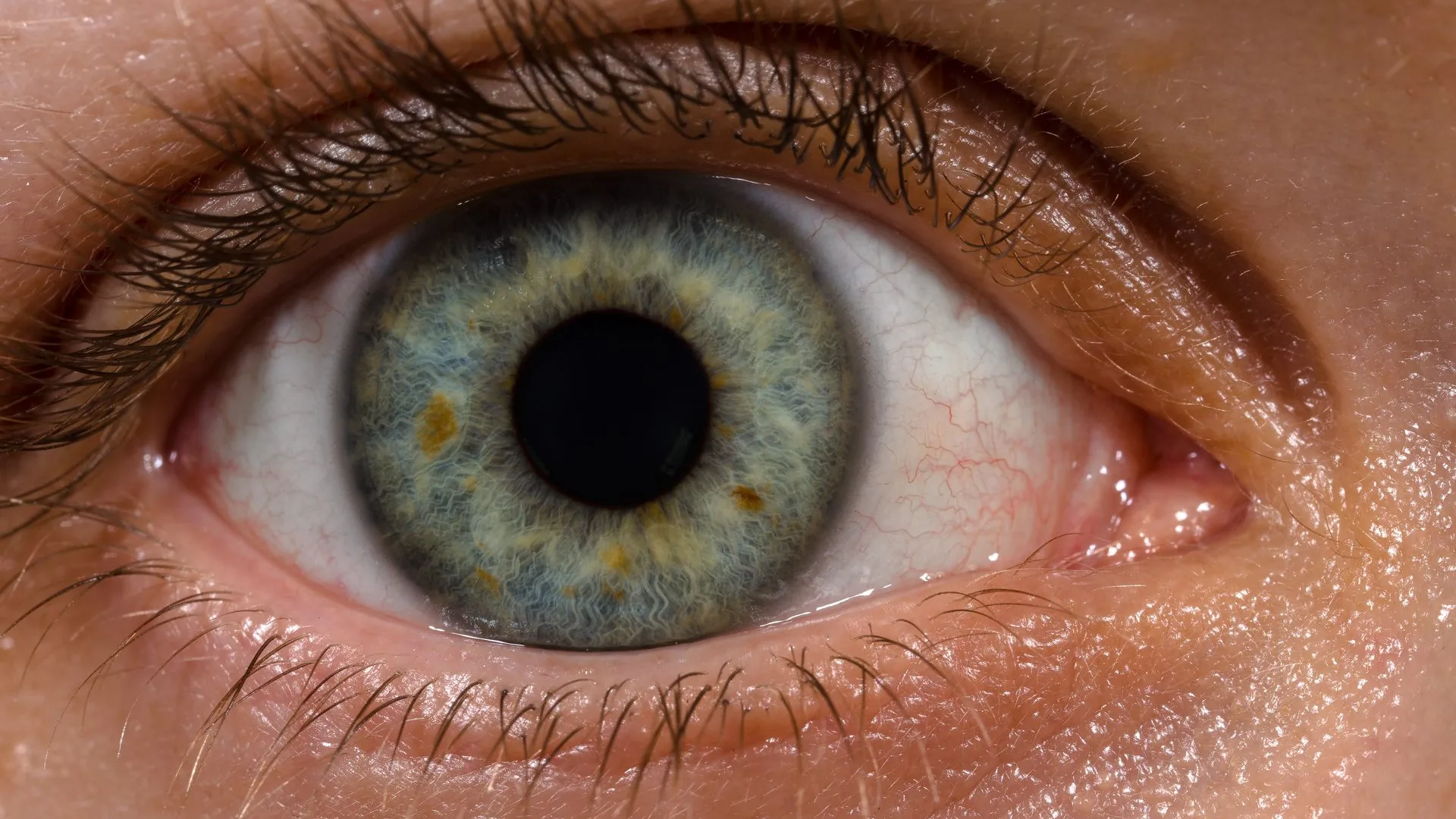
In one long term memory experiment, volunteers viewed pictures of 2,500 objects over 5.5 hours, and a span task samples a different, much smaller store. Photo via Wikimedia Commons.
0 The short answer
A visual memory test measures ability only when it is scored against norms, and the most common normed format is a spatial sequence span, not a photograph held in the mind. Experiments place visual working memory at about four items at once, so a score shows how your small capacity compares with other adults, not how much you could ever remember. ACIS offers Visual Sequence, its visual working memory subtest, inside the 50 dollar Full Scale form (20 subtests, about 175 minutes) or as a 5 dollar Custom Test subtest, with prices read on October 28, 2026. It is one option beside a psychologist's memory battery, and it is online and unsupervised, so it is not a clinical measure.
about 4
items held at once in visual working memory, in the experiments of Luck and Vogel (1997) and the review by Cowan (2001), which reports about four chunks.
0.66
the correlation Fukuda and colleagues (2010) found between the number of items held in working memory and fluid intelligence.
2,500 objects
the pictures participants studied over 5.5 hours in Brady and colleagues (2008), a different store from span memory.
A visual memory test can mean three different things, and a score makes sense only once you know which one was sampled: holding a few visual items for seconds, reproducing a sequence in order, or recognizing pictures after a long delay. The first two belong to working memory, the system that keeps information active while you use it. The third belongs to long-term memory. In the Cattell-Horn-Carroll framework, set out on the page on the CHC model of cognitive abilities, working memory is Gwm and long-term storage and retrieval is Glr. Visual processing, Gv, is a separate broad ability. It covers building, rotating and analyzing images rather than storing them. A person can be strong in one of these and ordinary in another, which is why one number rarely answers the question people type into a search box.
Ability
What the person does
Time scale
CHC broad ability
Where it appears
Visual working memory capacity
Retains a handful of colors, shapes or objects shown briefly
Seconds
Gwm
Capacity experiments such as Luck and Vogel (1997)
Visuospatial sequence span
Reproduces locations in the order shown, sometimes in reverse
Seconds
Gwm
Corsi block tapping and screen based tile tasks
Visual long term memory
Recognizes or redraws material after a delay
Minutes to hours
Glr
Clinical memory scales and recognition experiments
The search phrases on this topic sort into these rows. A short term visual memory test and a visual working memory test usually mean the first two. A sequence memory test means the second. A visual memory test for adults who want a score to compare, rather than a game, needs a norm group behind it, and that is the dividing line this page keeps returning to.
Two neighboring ideas are kept out on purpose. Claims of a camera-like memory belong to the evidence review on photographic memory and what science supports. The wider question of how memory and measured intelligence relate is covered by the overview on IQ and memory. The question here is narrower: what a visual memory test samples, how large the limits are, and how to take one that returns a defensible score. The ACIS technical documentation lists the construct this way, as visual spatial short term storage inside working memory, for the subtest described on the Visual Sequence page.
2 How many things can visual working memory hold?
Visual working memory holds about four items at once, and the best known experiments describe that limit in whole objects, not in features. Luck and Vogel reported in Nature (volume 390, issue 6657, pages 279 to 281) that people can retain information about only four colors or orientations at one time. They also found that people can retain both the color and the orientation of four objects. Objects defined by a conjunction of four features were held just as well as single feature objects, so sixteen individual features could be retained when they were distributed across four objects. The authors concluded that the capacity of visual working memory must be understood in terms of integrated objects rather than individual features.
A second line of work reached a similar number from a different direction. Cowan reviewed a wide variety of data in Behavioral and Brain Sciences (volume 24, issue 1, pages 87 to 114). The paper notes that Miller (1956) had summarized evidence for about seven chunks in short term memory tasks, and that this was meant as a rough estimate and a rhetorical device. Cowan argued instead that a central capacity limit averaging about four chunks is implicated, under conditions where rehearsal and long term memory cannot be used to combine items into larger chunks. That condition matters for testing. When test takers can group items into familiar units, an item count stops being a count of capacity.
Capacity is not the only way a visual memory can differ between people. Fukuda, Vogel, Mayr and Awh, in Psychonomic Bulletin and Review (volume 17, issue 5, pages 673 to 679), separated two factors: the number of representations that can be maintained and the resolution of those representations. Their analysis of number limited and resolution limited measures supported a two factor model. They reported that the reliable relationship between working memory capacity and fluid intelligence was supported exclusively by the number factor (r = .66), whereas the resolution factor made no reliable contribution (r of minus .05). The title of the paper, "Quantity, not quality", states the finding in two words. The result describes the measures in that study, and it should not be read as a statement about any single commercial subtest.
For a test taker, the practical meaning is plain. A span task works because the limit is small, so the score is a count of items near that limit. The auditory counterpart, a digit string heard once and repeated, is covered on the page about how a working memory test and Digit Span work, and the two formats can be set side by side for the same person.
3 What is the Corsi task, and what is a sequence memory test?
The Corsi block tapping task is the standard clinical measure of visuospatial span, and a screen based sequence test is its direct descendant, with the same logic of reproducing locations in the order shown. Kessels, van Zandvoort, Postma, Kappelle and de Haan described the task in Applied Neuropsychology (volume 7, issue 4, pages 252 to 258) as designed to assess the visual memory span. Their paper gives a standardized administration and scoring procedure and applies it to 70 healthy participants and 70 patients with cerebral lesions. It provides a percentile distribution and cutoff points based on the control data. The aim was clinical, and the percentiles come from one control group of 70 people.
The task is also less standardized than its reputation suggests. Berch, Krikorian and Huha surveyed the studies that used block tapping over 25 years in Brain and Cognition (volume 38, issue 3, pages 317 to 338). They called it arguably the single most important nonverbal task in neuropsychological research. They also documented considerable inconsistency in administration and scoring and in the physical properties of the apparatus. A reader should therefore ask of any Corsi style score which procedure and which norms stand behind it. Two tasks with the same name may not give comparable numbers.
On a screen, the physical board becomes a set of tiles. The Visual Sequence subtest works this way. The Visual Sequence page describes a part in which tiles flash in a sequence and the person clicks them in the same order, and a second part in which the person clicks them in reverse order. The technical manual states the same two parts, forward and then backward, and calls the task the visual counterpart to Digit Span, with spatial rather than verbal material. Reproducing the order shown loads storage and sequencing. Reversing it adds a manipulation step. The manual says the task uses visual material, but the defining operation is temporary storage and controlled sequence reproduction.
The phrase "sequence memory test" is also the name of a popular web game, and that format is not the same as a normed subtest even when the surface looks alike. The page on Human Benchmark and IQ takes up what each of those games samples. The difference that matters here is not the look of the task but what sits behind the number: a documented procedure, an adult norm group and a stated precision.
4 What is visual long term memory, and is it a separate test?
Visual long term memory is a different store from span memory, with a very large capacity for recognition, so a person can have a small span and a strong picture memory at the same time. Brady, Konkle, Alvarez and Oliva showed participants pictures of 2,500 objects over 5.5 hours, and afterward asked them to pick the previously viewed item from pairs. The study appeared in the Proceedings of the National Academy of Sciences (volume 105, issue 38, pages 14325 to 14329). Performance was 92 percent when the other item came from a novel category, 88 percent when it came from the same basic level category, and 87 percent when it was the same object in a different state or pose. The authors read this as evidence that observers maintain detailed representations of thousands of images.
Set that beside the span figure from the previous section. Roughly four items can be held in working memory at once, and thousands of pictures can be recognized after hours. These are not competing results. They describe two stores with different limits, and a test that samples one says little about the other. A Corsi style span says little about how many images you will recognize next week. A recognition experiment says little about how many tiles you can reproduce in order.
Clinical memory scales therefore sample both. Pearson's page for the Wechsler Memory Scale, Fourth Edition, read on October 28, 2026, lists the age range as 16:0 to 90.11 and the publication date as 2009. It lists the qualification level as C, and it names "Auditory Memory, Visual Memory, Visual Working Memory, Immediate Memory, and Delayed Memory" as the domains the scale covers. It states that the Designs subtest "was developed specifically to measure spatial and detail segments of memory functioning." The separate Visual Working Memory Index, in the publisher's words, is "derived from the sum of scaled scores for Spatial Addition and Symbol Span." A visual memory battery in a clinic thus has delayed recall built into it, and a pure span task does not.
The Continuous Visual Memory Test, sold by Stoelting, is another clinical instrument. Its product page, read October 28, 2026, describes the test as measuring visual learning and memory, lists an age range of 7 to 80 years, and gives a time of 45 to 50 minutes including a 30 minute delay. The delay is the signature of a long term memory test. The scores such a test returns answer a question about retention, which a few minutes of tile clicking cannot answer.
ACIS does not offer a delayed visual recall subtest. Its six domains are verbal comprehension, fluid reasoning, quantitative reasoning, visual spatial ability, working memory and processing speed. Its visual memory content sits in working memory, in Visual Sequence. A buyer whose concern is how well pictures or designs are retained over time should know that this lies outside what a span subtest can show, and that a psychologist's memory scale covers it. The overview on IQ and memory explains why memory is a family of processes rather than one score.
5 How does visual working memory relate to intelligence?
Visual working memory capacity is related to fluid reasoning, but the relation is a correlation between latent abilities, not proof that either one causes the other, and it does not make a visual memory score an IQ. The central datum comes from Fukuda and colleagues: the relationship between working memory capacity and fluid intelligence was reliable for the number of items held, with an r of .66, and absent for the resolution of the representations. That is a correlation between a number factor and measures of fluid intelligence. It says that people who hold more items tend to score higher on reasoning tasks. It does not say that holding more items produces better reasoning.
The study design that best separates what is general from what is specific is the latent variable study by Kane and colleagues in the Journal of Experimental Psychology: General (volume 133, issue 2, pages 189 to 217). They tested 236 participants in three span tests each of verbal working memory, visuospatial working memory, verbal short term memory and visuospatial short term memory, plus tests of verbal and spatial reasoning and general fluid intelligence. The working memory tasks largely reflected a domain general factor, whereas the short term memory tasks, based on the same stimuli, were much more domain specific. The working memory construct was a strong predictor of fluid intelligence and a weaker predictor of domain specific reasoning, and the reverse held for short term memory.
Two lessons follow for a visual memory test. First, in the data of Kane and colleagues the strong link to fluid intelligence belonged to the working memory construct, built on tasks that add processing to storage, and not to short term storage alone. A forward span stresses storage, and a backward span adds a transformation. Second, a purely visuospatial storage score carries a domain specific component, so it should be read as information about visual spatial memory in particular. The page on what IQ actually measures explains how general ability is estimated from many tasks rather than one.
That fits how ACIS places the subtest. In the technical manual's own wording, Visual Sequence belongs to the Working Memory Index and does not feed the Visual Spatial Index as a primary score. The manual lists a Visual Working Memory Index, VWMI, as a composite that covers visual sequence registration and ordered visual maintenance, and says the subtest contributes to the Working Memory Index and to cognitive proficiency style interpretation. The manual describes the Cognitive Proficiency Index, CPI, as a composite that "combines working memory and processing speed as cognitive proficiency." The page on processing speed and why it declines first covers the other half of that pairing. Visual memory contributes to a profile. It does not stand in for the whole.
The right visual memory test depends on the question: a clinical question needs a psychologist's battery, a curiosity needs a game, and a comparison with other adults needs a normed score. The table sets the realistic options side by side. Details were read from the pages named in this article on October 28, 2026 and can change, and the cost shown for clinical products is the price to a purchasing professional, not a fee to a test taker.
Option
What it measures
Normed against whom
Supervised
Time
Cost
What you receive
Psychologist with a memory battery such as the WMS-IV
Auditory, visual, visual working, immediate and delayed memory domains
Publisher norms for ages 16:0 to 90.11 (Pearson page)
Yes, an examiner with qualification level C
Varies with the battery, per the page
Set by the clinic, not stated by the publisher
A clinical report with index scores and interpretation
Clinical Continuous Visual Memory Test
Visual learning and memory, with a delay
Ages 7 to 80 years (publisher page)
Not stated on the page
45 to 50 minutes including a 30 minute delay
Kit listed at 372 dollars (publisher)
Not stated on the page
Free web games and app grids
Visual span or recall in a game format
Typically a level, a streak or a rank, with norms the publisher must document
No
Minutes
Free
A level or streak
Brain training apps and job screening practice tests
Practice on memory or speeded games
Not IQ tests, and not built to produce an adult index
No
Varies
Varies
A game score
ACIS Visual Sequence
Visual working memory, forward and reverse sequence
Adult norms covering ages 16 to 90
No, online and unsupervised
Not stated for the subtest alone; the Full Scale form takes about 175 minutes
Full Scale 50 dollars, or 5 dollars as a Custom Test subtest
A scaled score from 1 to 19, a working memory index when its domain is complete, and percentiles
Three points follow from the table. First, the clinical rows do not describe something a member of the public can buy as a score. The Pearson product is restricted by qualification level, and a clinic decides what to give. The page on where to take an IQ test, in person and online covers that route. Second, the free rows give you something to do, not something to compare. Third, the ACIS row is the only one that returns a scaled score against adult norms to a person who buys it directly. It also carries the limits of any online, unsupervised test, which later sections spell out.
If your goal is a general comparison of normed online tests, read the page that ranks the best online IQ tests. If you want a broader picture of abilities than a single memory subtest, the page on cognitive ability tests for adults describes the options, and the IQ test for adults page covers the full battery route.
7 What can free visual memory games and apps tell you?
A free visual memory game can show you your own level on a given day, but a level is not a score, because a score needs an adult norm group, a documented procedure and a stated margin of error. The most visible free formats are grids of squares that light up, tile sequences that lengthen, and picture recall tasks. They are fine for practice and for curiosity. What they usually report is a level reached, a streak or a rank, and whether any of those figures is tied to a documented adult sample is for each publisher to show. The sibling page on the Human Benchmark games goes through that site, and the free IQ test page explains what a free profile can and cannot show.
The better question about a game is what you could do with the result. A level cannot tell you whether you sit at the 50th or the 85th percentile for adults, because the percentile needs a distribution. It cannot say whether a difference from last month is real, because the error around a single play is unknown. It cannot be compared across devices, because screen size, input method and display delay differ. Standardization exists to remove those ambiguities. Standard 6.1 of the Standards for Educational and Psychological Testing (AERA, APA and NCME, 2014) says that test administrators should follow carefully the standardized procedures specified by the test developer, and its comment adds that in general the same procedures should be followed as were used when obtaining the data for scaling and norming.
Training is the other common promise. Melby-Lervåg, Redick and Hulme analyzed 87 publications with 145 experimental comparisons of working memory training in Perspectives on Psychological Science (volume 11, issue 4, pages 512 to 534). Immediately after training there were reliable improvements on intermediate transfer measures, verbal and visuospatial working memory. For far transfer, meaning nonverbal ability, verbal ability, word decoding, reading comprehension and arithmetic, there was no convincing evidence of reliable improvement when training was compared with a treated control condition. The authors concluded that training produces short term, specific effects that do not generalize to measures of real world cognitive skills.
That finding bounds what a game can do for your score. Practice may raise your result on the same kind of task. It does not show that your reasoning or your IQ has changed, and a page that says a memory game will raise IQ has gone beyond this evidence. For anyone planning to retake a memory subtest, the sensible reading is that a change within the margin of error is not a change in ability.
A visual memory score is a position in a distribution, expressed as a scaled score, an index and a percentile, and it carries a margin of error that is larger for one subtest than for a whole battery. ACIS reports scaled subtest scores from 1 to 19 with a mean of 10 and a standard deviation of 3. Indices and the Full Scale IQ use the familiar scale with a mean of 100 and a standard deviation of 15, and the report adds percentiles and a 95 percent confidence interval. The page on how IQ scores are normed explains how a raw result becomes a position against adults of the same age, and the page on why a standard deviation of 15 matters explains the scale itself.
The table below converts a few scaled scores using the normal curve. It is our arithmetic, not a figure from any study, and real percentiles for a given test come from that test's own norm tables.
Precision is the second half of the reading. The Standards for Educational and Psychological Testing (AERA, APA and NCME, 2014), Standard 2.3, says that for each total score, subscore or combination of scores that is to be interpreted, estimates of relevant indices of reliability and precision should be reported. Its comment warns that the consistency of total scores may be acceptably high while subscores have unacceptably low reliability, depending on how they are defined and used. That is the general reason a single subtest is a rougher measure than the battery it belongs to. The page on reliability and validity explains both terms with examples from IQ testing, and the technical manual is the place for ACIS documentation. This page does not quote ACIS reliability figures.
A practical rule follows. Read the confidence interval before the point score, treat a difference of a few scaled score points between two subtests as a question rather than an answer, and look for the same pattern in more than one measure before you act on it.
9 How do visual and auditory working memory compare?
Visual sequence memory and auditory digit memory are two formats of the same broad ability, so the useful comparison is between them, and a gap says more about format than about total memory. In CHC terms both are Gwm, working memory. The ACIS pages describe Digit Span as immediate auditory-verbal storage and, in more demanding versions, active manipulation of ordered material. They describe Alphanumeric Sequencing as a working memory subtest whose items are also presented as audio. Visual Sequence is the spatial counterpart, with tiles in place of spoken digits. Both belong to the ACIS working memory domain, which also includes Visual Sequence.
The technical manual spells out how the pairing is meant to be read. A high Visual Sequence score with a lower Digit Span score may suggest stronger visual than auditory working memory. A low Visual Sequence score with adequate visual spatial reasoning may suggest that the weakness is not visual processing itself but visual sequence maintenance. The manual also says that if Digit Span is adequate but Alphanumeric Sequencing is weaker, a person may maintain information but have difficulty reorganizing it under rules. These are hypotheses to check, and the manual frames them as what a pattern may suggest.
Visual working memory should not be confused with visual spatial reasoning. The Visual Puzzles page describes mental part-whole assembly, imagining how pieces could combine, rotate or fit into a target form, and places it in visual processing, Gv. That is a different operation from storing a sequence of locations. The manual's description of the Visual Spatial Index mentions visualization, speeded rotation, spatial scanning, imagery and visual memory when those operations serve visual processing, which shows how close the two sit while remaining distinct tasks. The page on the spatial IQ test covers the visual spatial index in detail.
Score gaps between indices are common, which is why a lower visual memory result does not by itself indicate a problem. The page on how often index scores differ puts a gap in context, and the broader map of abilities is on the page about cognitive domains in IQ testing. Cowan's point about chunking is a reminder that expertise can change what counts as one item, and the page on chess and IQ tests looks at a field where learned patterns matter.
An unsupervised visual memory test is only as good as its conditions, so the setup you control, a quiet room, a working screen, working sound where required and no outside aids, is part of the measurement. The Visual Sequence page states that no external aids, meaning calculators, notes, scratch paper or drawing tools, are allowed, and that the person watches tiles flash and then clicks them in the same order and, in a second part, in reverse order. The page does not state a time limit, an item count or a required screen size, so those details are not described here. Keep the same device and display for the whole session.
Sound matters for other parts of the battery. The Digit Span page says numbers play at one per second and recommends headphones or a quiet space. Digit Span, Alphanumeric Sequencing and Arithmetic present their items as audio and need working sound. Visual Sequence itself is visual, but a reader planning to take the working memory domain should check the sound before starting, because a muffled speaker affects the auditory subtests, not the visual one, and a mixed pattern could then be read as a real format difference.
ACIS allows breaks, saves progress between subtests and gives 30 days to complete. The Full Scale form takes about 175 minutes in total, so the sensible plan is to spread it over sessions when tired. The Standards say in Standard 10.12 that the interpretation of test scores should consider other factors that may influence a particular testing outcome, and the comment lists effort and testing situation among them. APA's Guidelines for Psychological Assessment and Evaluation (2020), Guideline 8, asks psychologists to be aware of the need for standardized administration and notes that adhering to standardized testing conditions will minimize confounds that could lead to misinterpretations of test results. An online test cannot enforce those conditions. You supply them.
The free trial requires no card, and the site allows one free trial per person, refusing a second trial from the same email address or the same browser. When the trial is started from the Full Scale form, it opens five subtests, Visual Sequence among them, and finished trial subtests are kept if you later unlock a form that includes them. That makes the trial a way to try the format before paying. It is not a way to return a Full Scale IQ, which needs all 20 subtests.
11 When is a visual memory problem a clinical question?
A low result on an online visual memory subtest is a reason to look closer, not a diagnosis, and persistent memory difficulty in daily life belongs with a qualified clinician. The Standards make the same distinction in Standard 10.12: where appropriate, the interpretation of a pattern of results should consider other factors and the alternative explanations for what may have contributed to it. APA Guideline 7 states the principle plainly: "Individual performance on psychological tests is only one piece of assessment." Its rationale lists clinical interview, observation of behavior, valid self-report and third-party measures, and review of records among the sources a psychologist weighs.
The clinical memory scales named earlier are examples. The WMS-IV requires qualification level C on Pearson's page, and the Corsi norms of Kessels and colleagues were published for use with patients with brain damage. An online score cannot do either job, and it is not meant to substitute for them. A person who is worried about memory loss, head injury, medication effects or a change in daily functioning should speak to a physician or a licensed psychologist, who can choose instruments, check effort, consider mood, sleep and health, and interpret a pattern in context.
Attention is one common alternative explanation for a low span. Kane and colleagues concluded that executive attention processes drive the broad predictive utility of working memory span measures, so a working memory score reflects how well attention is controlled during the task, not only how much can be stored. The page on taking an IQ test as an adult with ADHD covers what one score can and cannot say about attention. Nothing on this page can tell you whether you have ADHD or any other condition, and group results never describe one person.
12 Where ACIS sits, and what a buyer should do
ACIS offers one normed way to take a visual memory subtest online, Visual Sequence, and it is a screening of visual working memory, not a clinical memory examination. We sell the product described here, so treat this section as a disclosure and check it against the rest of the page. The facts below were read on the ACIS site on October 28, 2026, and prices can change.
Visual Sequence is the ACIS visual working memory subtest. It is part of the Full Scale form, 50 dollars for all 20 subtests in six domains and about 175 minutes, and it is not in the Quick form (15 dollars) or the Optimized form (30 dollars). It can also be taken in the Custom Test, which charges 5 dollars per subtest, returns a scaled score for every subtest and returns a full index for any domain you complete. Working memory has three subtests, Digit Span, Alphanumeric Sequencing and Visual Sequence, so a working memory index through the Custom Test would cost 15 dollars, our arithmetic on the published price. In a Full Scale report Visual Sequence enters the Working Memory Index and the manual's VWMI composite. The Quick, Optimized and Full Scale forms each report a Full Scale IQ with its 95 percent confidence interval, and the Custom Test returns a Full Scale IQ only with the Full Scale battery. The refund terms read: "Full refund within 5 days if the report does not deliver the features described at checkout or a technical issue prevents you from accessing your results."
The limits are the limits of any online test. It is unsupervised, so you control the conditions. It is not a clinical or diagnostic instrument. It is not for hiring, school accommodations or admission to high IQ societies. It is in English only, and the manual says verbal and knowledge tasks are affected by English proficiency and educational exposure, although Visual Sequence uses no words. It has no delayed visual recall, which a clinical memory scale would. The technical manual documents the construct, norms and score structure.
The Standards for Educational and Psychological Testing (AERA, APA and NCME, 2014) frame how to use that documentation. Standard 1.1 says a test developer should set forth clearly how scores are intended to be interpreted and used, and that the population and the construct should be described. Its comment states that no test permits interpretations valid for all purposes or in all situations. APA Guideline 6 asks psychologists to select tools with sufficient validity evidence, score reliability and sound psychometric properties, and Guidelines 7 and 8 add that a test result is one piece of an assessment and that standardized administration supports valid interpretation. Applied here, read Visual Sequence as a normed estimate of visual working memory, set it beside Digit Span and Alphanumeric Sequencing, and treat any gap as a lead.
What a buyer should do depends on the goal. If you want to see the format first, start the free trial from the Full Scale form. If you want only the visual working memory score plus its auditory neighbors, build a Custom Test of the three working memory subtests. If you want a full profile, the Full Scale form is the one that reports every index and the Full Scale IQ. If your concern is clinical, book an assessment with a psychologist. The earlier comparison table lays out the paths.
Every figure above is traceable to one of the following, and each is linked at the point where it is used. Percentile conversions in the score table are our own arithmetic on the normal curve, and the 15 dollar cost of a three subtest working memory index is our own arithmetic on the published Custom Test price. Product pages were read on October 28, 2026 and can change.
Berch D, Krikorian R, Huha E. The Corsi Block-Tapping Task: Methodological and Theoretical Considerations. Brain and Cognition, 1998, volume 38, issue 3, pages 317 to 338.
Brady T, Konkle T, Alvarez G, Oliva A. Visual long-term memory has a massive storage capacity for object details. Proceedings of the National Academy of Sciences, 2008, volume 105, issue 38, pages 14325 to 14329.
Cowan N. The magical number 4 in short-term memory: A reconsideration of mental storage capacity. Behavioral and Brain Sciences, 2001, volume 24, issue 1, pages 87 to 114.
Fukuda K, Vogel E, Mayr U, Awh E. Quantity, not quality: the relationship between fluid intelligence and working memory capacity. Psychonomic Bulletin and Review, 2010, volume 17, issue 5, pages 673 to 679.
Kane M, Hambrick D, Tuholski S, Wilhelm O, Payne T, Engle R. The Generality of Working Memory Capacity: A Latent-Variable Approach to Verbal and Visuospatial Memory Span and Reasoning. Journal of Experimental Psychology: General, 2004, volume 133, issue 2, pages 189 to 217.
Kessels R, van Zandvoort M, Postma A, Kappelle L, de Haan E. The Corsi Block-Tapping Task: Standardization and Normative Data. Applied Neuropsychology, 2000, volume 7, issue 4, pages 252 to 258.
Luck S, Vogel E. The capacity of visual working memory for features and conjunctions. Nature, 1997, volume 390, issue 6657, pages 279 to 281.
Melby-Lervåg M, Redick T, Hulme C. Working Memory Training Does Not Improve Performance on Measures of Intelligence or Other Measures of Far Transfer. Perspectives on Psychological Science, 2016, volume 11, issue 4, pages 512 to 534.
American Educational Research Association, American Psychological Association and National Council on Measurement in Education. Standards for Educational and Psychological Testing. American Educational Research Association, 2014, Standards 1.1, 2.3, 6.1 and 10.12.
A visual memory test measures how well a person holds or recalls things they have seen. Some versions sample visual working memory, such as reproducing a sequence of locations, while others sample recognition after a long delay. Only a test scored against adult norms returns a result you can compare with other people.
Can you take a visual memory test online?
Yes. Free games and apps measure play, and a normed online subtest returns a scaled score against adult norms. ACIS offers Visual Sequence in its Full Scale form at 50 dollars or as a 5 dollar Custom Test subtest, prices read October 28, 2026. Online tests are unsupervised and are not clinical instruments.
Is there a free visual memory test?
Yes, many web games are free, and they work well for practice. They usually report a level or rank rather than an age normed score. ACIS has a free trial with no card, and starting it from the Full Scale form opens five subtests, Visual Sequence among them.
What is a good score on a visual memory test?
It depends on the scale. On a normed subtest with a mean of 10 and a standard deviation of 3, scores from 7 to 13 cover roughly the 16th to the 84th percentile, our arithmetic. A game level has no such reference unless the publisher documents an adult norm group.
What is a sequence memory test?
A sequence memory test asks you to reproduce items or locations in the order they appeared. The Corsi block tapping task is the classic clinical version, and screen tile versions follow the same logic. Some versions add a reverse condition, which adds a manipulation step to simple storage.
What is the difference between short term visual memory and visual working memory?
Short term visual memory is storage of visual material for seconds. Visual working memory adds keeping that material active while using it, for example by reversing a sequence. Kane and colleagues found short term memory tasks more domain specific and working memory tasks more domain general, though test names often blur the terms.
Is a visual memory test an IQ test?
No. A visual memory test samples one ability, and an IQ test combines many. Visual working memory correlates with fluid intelligence, but a single subtest cannot produce a Full Scale IQ. In ACIS, Visual Sequence feeds the Working Memory Index, and a Full Scale IQ needs the full battery.
How many items can visual working memory hold?
About four. Luck and Vogel reported that people retain only four colors or orientations at a time, and Cowan's review concluded that a central limit averaging about four chunks is implicated. Grouping items into familiar units changes what counts as one item, so the figure applies when grouping is blocked.
What is the Corsi block tapping task?
It is a block tapping task designed to assess visual memory span and widely used in neuropsychology. Kessels and colleagues published a standardized procedure with percentile norms from 70 healthy participants. Berch and colleagues documented inconsistent administration, scoring and apparatus across studies, so any norms must match the procedure used.
How strongly does visual working memory relate to fluid intelligence?
In Fukuda and colleagues, the number of items held correlated .66 with fluid intelligence, while the resolution of representations made no reliable contribution. It is a correlation between measures. It does not show that capacity causes reasoning, and it does not make one subtest an IQ test.
How much can visual long term memory store?
Brady and colleagues had participants view 2,500 objects over 5.5 hours, then choose between pairs. Accuracy was 92, 88 and 87 percent across three kinds of alternative. Recognition memory for pictures can be large and detailed, and it is a different store from span memory.
What visual memory tasks does the WMS-IV include?
Pearson's page for the Wechsler Memory Scale, Fourth Edition, mentions Designs, Visual Reproduction, Spatial Addition and Symbol Span, and says its Visual Working Memory Index is derived from Spatial Addition and Symbol Span. The page lists ages 16:0 to 90.11 and qualification level C, read October 28, 2026.
How does the Visual Sequence subtest work?
Tiles flash in a sequence, and the person clicks them in the same order, then in a second part in reverse order. The ACIS pages describe it as visual spatial short term storage within working memory, using spatial rather than verbal material. External aids such as notes are not allowed.
Which ACIS forms include Visual Sequence?
Visual Sequence is in the Full Scale form, 50 dollars for 20 subtests, and in the Custom Test at 5 dollars per subtest. The Quick and Optimized forms do not include it. The free trial, started from the Full Scale form, opens it. Prices were read October 28, 2026.
Can memory games raise IQ?
The evidence does not support it. A meta-analysis of 87 publications found working memory training improved similar working memory tasks, with no convincing far transfer to nonverbal ability, verbal ability or reading when compared with treated controls. Practice raises practice scores, not demonstrated reasoning.
How should I read a low visual memory score?
As a lead, not a verdict. Check the confidence interval, compare the result with your auditory working memory subtests, and ask whether noise, sleep, attention or effort affected the session. A single subtest has less precision than a battery, so a repeated pattern matters more than one number.
Can a visual memory test diagnose ADHD or memory loss?
No. An online score cannot diagnose anything, and group research does not describe one person. APA guidance states that test performance is only one piece of an assessment. If memory difficulty affects daily life, see a physician or licensed psychologist who can weigh interviews, observation and records.
How precise is one memory subtest compared with a battery?
Less precise. The Standards note that total scores can be reliable while subscores have unacceptably low reliability, depending on how they are defined, so each score you interpret needs its own precision evidence. A battery combines more evidence, which narrows the margin around an index.
Do I need sound to take a visual memory test?
Visual Sequence itself is visual. Within ACIS, Digit Span, Alphanumeric Sequencing and Arithmetic present items as audio and need working sound, so check your audio before starting the working memory domain or the Full Scale form, and use headphones or a quiet space.
Can I use a visual memory test for hiring, school accommodations or a high IQ society?
No. ACIS is online and unsupervised, not a clinical instrument, and not intended for hiring, school accommodations or admission to high IQ societies. For those purposes, ask the institution which assessment it accepts, because it will usually name a supervised, professionally administered one.
How much does a normed visual memory test cost?
At ACIS, a Custom Test costs 5 dollars per subtest and the Full Scale form costs 50 dollars for all 20 subtests, read October 28, 2026. A clinical memory battery given by a psychologist is priced by the clinic, and Pearson's product page states no fee for test takers.
Take the assessment
You get a profile, not a number
ACIS measures six CHC domains across 20 subtests and reports each one with its own normed score and confidence interval, so you can see where you are strong and where you are not.