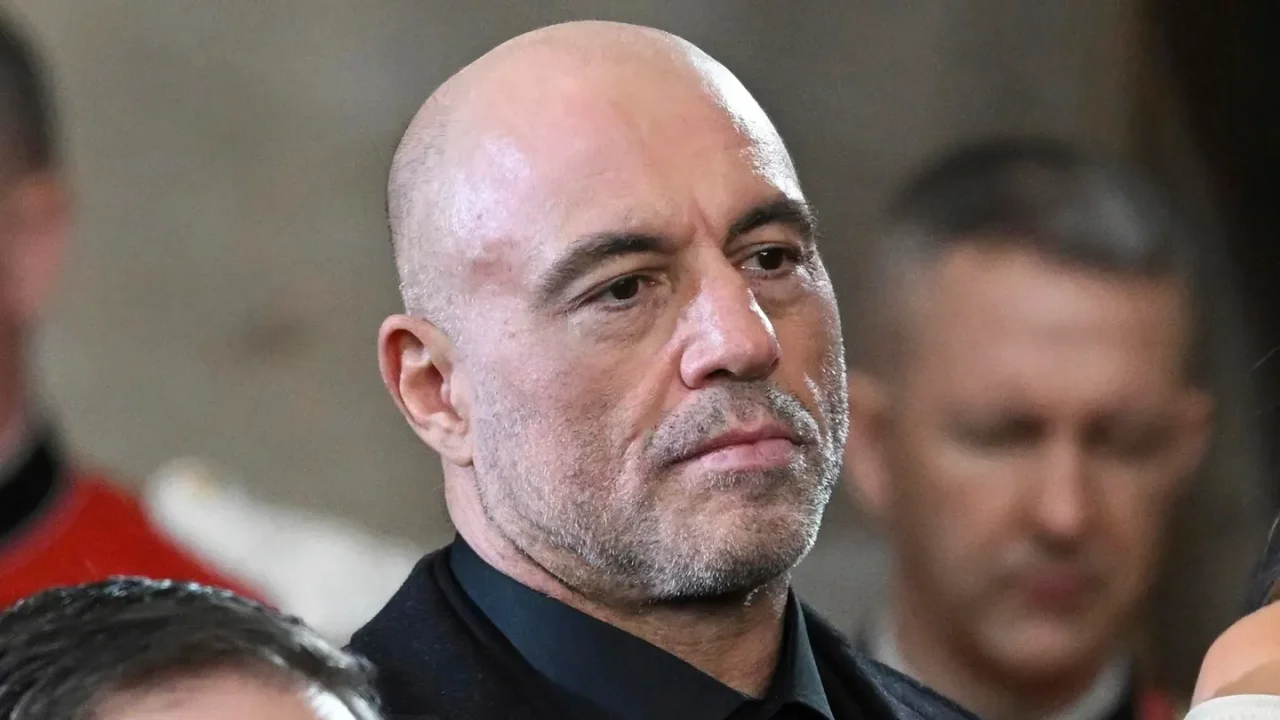
Joe Rogan reportedly shared a BMI online IQ result of 127 in 2018. That source trail is stronger than a number invented from biography, but it still describes an unsupervised consumer test whose own provider limits validity and intended use.
The reported 127 is tied to an online consumer test, not a released clinical Full Scale battery.
0 The Short Answer
Joe Rogan has no professionally administered IQ score on public record. The number people repeat, 127, comes from a paid online test he took himself and shared publicly. That makes his case different from almost every other celebrity IQ claim, because there is something real at the bottom of it. A screenshot exists. A product exists. A date exists. What does not exist is the thing everyone assumes the number represents: a Full Scale IQ produced by a standardized battery, given by a trained examiner, scored against a documented norm sample.
The distinction sounds pedantic until you look at what the seller of that test says about its own results. The terms published on test-iq.org, the site behind the BMI Certified IQ Test, state that the tests are provided with no guarantee of validity or accuracy and are not to be read as diagnostic, and that access is granted for personal use and solely for entertainment purposes. That is the vendor's own description of the product, not a critic's. A number carrying that disclaimer cannot be quoted as a measured Full Scale IQ, no matter how many articles quote it that way.
So the honest position is narrower than either camp wants. Rogan is not a victim of invented folklore in the way most celebrities on IQ lists are, since he did take a test and did share the result without much fuss about it. He is also not the owner of a documented 127. He is the owner of an online score, which is a genuinely different object, and the rest of this page is about why the gap between those two things is wide enough to swallow the entire claim.
Where ACIS stands
ACIS has never tested Joe Rogan and has no connection to him or to Brain Metrics Initiative. Everything on this page evaluates publicly available claims, published product terms and the general psychometrics of self-administered testing. No figure here is an ACIS result, and pointing out that a score is unverified says nothing about the person's actual ability.
1 Where the 127 Actually Comes From
Trace the number and it does not dissolve into forum posts the way most celebrity IQ figures do. It ends at an image. The widely circulated screenshot shows a certificate headed Brain Metrics Initiative, naming Joseph Rogan, reporting a score of 127 on what it calls the BMI Certified IQ Test, version 2.0, with a certificate serial number and a date in late January 2019. The caption attributed to the post reads that he legitimately thought he was dumber, which is a fairly disarming reaction and part of why the story traveled.
Two things follow from that. First, the provenance question that kills most celebrity claims is answered here. We know the instrument, we know roughly when, and we know the subject shared it himself rather than having it assigned to him by a listicle. Compared with the average entry on a smartest celebrities ranking, this is a mountain of evidence.
Second, answering the provenance question is not the same as passing it. Knowing which test was used is only useful if the test supports the interpretation being placed on it. Here the identification works against the claim rather than for it, because the instrument named on the certificate is a consumer product sold online, with results unlocked by payment, and with no published technical manual, norm sample description or reliability evidence that we could locate. Naming the test is supposed to be the moment a claim gets stronger. In this case it is the moment the claim gets weaker, which is unusual and worth sitting with.
The word certified is doing heavy lifting on that certificate, and it is worth asking certified by whom. In professional assessment, certification refers to the examiner's qualifications and to the publisher's documented standardization program, not to a decorative PDF issued to the test taker. A certificate generated automatically at the end of a purchase certifies that a purchase happened. Nothing else about it is a credential.
2 What Rogan Himself Has Said
Rogan's own handling of the number is more modest than the internet's. Widely circulated clips and reports attribute to him the position that he sits somewhere in the range of roughly 115 to 130, which is a range rather than a point, and which is close to how a careful psychologist would talk about a single administration. He has also discussed population level IQ statistics on the show with guests, usually in the context of how ordinary the average actually is, rather than in the context of his own standing.
That matters for how this page treats him. The failure mode with celebrity IQ pages is that they either flatter the subject with a number he never claimed or mock him for a claim he never made. Neither applies cleanly here. Rogan shared an online result with a self-deprecating caption and has generally described his own intelligence in loose bands. The overclaiming happened downstream, in the ecosystem of aggregator sites that converted a shared screenshot into the sentence "Joe Rogan's IQ is 127" and then into "confirmed 127", a phrase that appears in forum threads and headlines with no additional evidence behind the upgrade.
This is the standard laundering path for a soft fact. Stage one, a person posts a result. Stage two, a site reports that the person has a score of 127. Stage three, a later site reports it as confirmed or verified, words that imply an independent check that nobody performed. By stage four the qualifier has vanished entirely and the figure appears in ranked tables next to physicists. At no point did anyone administer anything. The only measurement event in the entire chain is the one that happened on a laptop in 2019.
3 What the BMI Test Is, According to Its Own Terms
The most useful evidence about an online test is usually the fine print the operator publishes, because that is where the marketing stops and the legal position starts. The terms and conditions on test-iq.org, the site that sells the BMI Certified IQ Test, contain three statements that decide this question.
No guarantee of validity or accuracy. The terms state that the tests are provided for public use with no guarantee of validity or accuracy of the results. Validity is the technical term for whether an instrument measures what it claims to measure. A vendor declining to guarantee it is declining to make the only claim that would let a score be quoted as an IQ.
Not diagnostic. The same passage says results are not to be interpreted as diagnostic or indicative of any illness or disability, and elsewhere the site states plainly that it is not a medical service and is not providing medical advice or treatment.
Entertainment purposes. Access is granted for personal, non-commercial use and solely for entertainment purposes, which is the vendor's own framing of what the product is for.
None of that is a scandal. Plenty of legitimate consumer products carry exactly this language, and there is nothing wrong with selling a puzzle experience that ends in a number. The problem appears only when the output crosses into a context it was never built for, which is precisely what happened when a screenshot became a citation in celebrity intelligence rankings.
Consumer reviews of the product raise further concerns that we cannot independently verify and therefore present as claims rather than facts, including reports of billing complaints and observations that the item set is entirely nonverbal. The nonverbal point, if accurate, would matter a great deal: a test built only from figural matrix items samples fluid reasoning and little else, and a single domain score is not a Full Scale IQ under any framework. What we can state without qualification is that no norm sample, standardization study or reliability coefficient for this instrument appears in any public technical document we could find. The contrast with an open academic instrument is instructive: the ICAR public domain battery publishes reliability and validity evidence for each of its item types and still prints no table converting a raw score into an IQ or a percentile, which is exactly the step a scored certificate takes without one.
4 Why Self-Administered Online Tests Run High
Ask why online scores skew upward and most people answer "people cheat". Cheating is real but it is the least interesting of the reasons. Score inflation on unproctored consumer tests is structural, and it operates even when the taker is perfectly honest. A bare self report sits one rung below even that, as the 148 attached to Andrew Tate shows: no test name, no edition, no date and no examiner ever accompanied it, so there is not even an unproctored administration whose conditions could be discounted.
Conditions are uncontrolled. A professional administration standardizes the room, the lighting, the interruptions, the instructions, the timing and the order of tasks, because the norms were collected under those conditions and a score is only comparable to the reference group if the situation is comparable. At home, a taker can pause, restart, take the test alert at 10am or exhausted at 1am, and answer with a phone buzzing. Every one of those departures moves the score away from the number the norms describe, and takers who feel the session went badly frequently just take it again, which selects the best of several attempts rather than the true one.
Nobody is watching the process. An examiner is not a guard. The examiner enforces timing precisely, notices when an instruction was misunderstood, records that the person misheard an item or lost focus, and can invalidate an administration that went wrong. Tippins and colleagues, in a 2006 expert panel published in Personnel Psychology, concluded that unproctored internet testing should not stand alone for high stakes decisions and that verification testing is required. That conclusion was written about employment screening, where the stakes are a job. Celebrity intelligence rankings are lower stakes and lower rigor at the same time.
The norms are opaque. This is the deepest problem. An IQ score is not a raw performance, it is a rank against a defined comparison group. Professional publishers spend years and considerable money recruiting stratified samples matched to census figures on age, sex, education and region, then publish who was in the sample and how the conversion tables were built. A consumer test that never collects your age, never describes its reference population and never publishes a manual is producing a number whose comparison group is unknown even in principle. When the comparison group is unstated, the vendor has complete freedom over where the scale sits.
The commercial incentive points one way. A product that people pay to unlock and then share on social media performs better when the number feels good. Nobody screenshots a disappointing certificate. That selection pressure operates on which tests survive in the market, and it means the population of surviving online tests is biased toward generous ones. If you want to understand why almost every online score you have seen a friend post sits comfortably above average, that is the mechanism, and it explains far more of the pattern than cheating does.
5 What a Professional FSIQ Administration Actually Involves
To see the size of the gap, it helps to know what the phrase Full Scale IQ refers to when it is used correctly. It is not a synonym for "score on an intelligence quiz". It is the composite output of a specific, lengthy procedure. That procedure is available in a limited number of settings, and where to take an IQ test runs from a licensed psychologist or neuropsychologist to a hospital department or university clinic, with the supervised route being the one that yields usable documentation.
A qualified examiner, typically a psychologist with supervised training on the instrument, works one to one with the person for roughly two hours. The battery covers multiple distinct domains rather than one: verbal comprehension, fluid reasoning, visual spatial processing, working memory, processing speed and, on many batteries, quantitative reasoning. Each domain is measured by several subtests, because a single task is too noisy to characterize a domain. Responses to open ended items are scored against published criteria, and ambiguous answers are queried following rules written in the manual.
The result is not one number. It is a profile of index scores, each with a confidence interval around it, typically spanning something like four to five points on either side of the estimate for a well constructed adult battery, plus subtest level detail and the examiner's behavioral observations. Reports flag whether the profile is even or scattered, because a person with a 30 point gap between verbal comprehension and processing speed is described very poorly by any single composite. Our page on what an IQ test measures walks through the domain structure in more depth.
Set that beside a 20 minute purchase on a laptop. The comparison is not close, and the honest way to put it is not that the online result is fake. It is that the two procedures produce different kinds of objects. One is an estimate with a documented error term, a named reference population and a profile. The other is a single number generated by an undisclosed formula from an undisclosed item bank. Treating the second as a value of the first is a category error, and category errors do not get fixed by the number being plausible.
6 What 127 Would Mean If It Were a Professional Score
Suppose for a moment the number came from a real battery. What would it describe? On the modern standard scale, with a mean of 100 and a standard deviation of 15, a score of 127 sits 1.8 standard deviations above average, which corresponds to roughly the 96th percentile. Here is the ladder for calibration, and note how the spacing behaves as you climb.
IQ 100
The population median by construction. Half of the reference sample scores above it and half below. See what average actually means.
IQ 115
One standard deviation up, about the top 16 percent. Common among university graduates and unremarkable in professional work.
IQ 127
About 1.8 standard deviations up, roughly the 96th percentile, near 1 person in 28. Clearly strong, and short of the usual gifted cutoff.
IQ 130
Two standard deviations, roughly the top 2 percent, about 1 in 44. The conventional threshold in gifted identification programs.
IQ 145
Three standard deviations, roughly 1 in 740. Rare enough that most people never knowingly meet a documented case.
IQ 160
Four standard deviations, roughly 1 in 31,000, at or beyond the ceiling of most professional adult batteries.
Two observations follow. The first is that 127 is a modest, believable, entirely unremarkable claim by the standards of the genre. Celebrity lists hand out 160s like party favors, and a figure at the 96th percentile is the kind of number a real test actually produces for a bright person. Its plausibility is exactly why it spread without resistance, and plausibility is not evidence.
The second is that the same digits mean different things on different scales. On the older 16 point standard deviation convention, 127 lands closer to the 95th percentile, near 1 in 22. Small scale differences move the percentile more than people expect, which is why any serious score report names its scale and metric. A certificate that reports a bare number without stating its standard deviation or its reference population has left out the information required to interpret it. If you want to convert scores yourself, the percentile chart lays out the conversions for both conventions.
7 The Practice Effect Nobody Accounts For
There is one more mechanism that separates a home score from a clinical one, and it has been quantified well enough to put numbers on. Taking a cognitive test raises your score on the next one, and the increase has nothing to do with getting smarter.
Estevis, Basso and Combs, working with the WAIS-IV and publishing in The Clinical Neuropsychologist, found that healthy adults retested after three or six months gained roughly seven points on Full Scale IQ, with processing speed rising by around nine points and other indices by four to six. The interval barely mattered, which tells you the gain is not a short lived warm up. Calamia and colleagues, pooling nearly 1,600 effect sizes across neuropsychological instruments, put the average retest gain near a quarter of a standard deviation, with identical forms producing roughly twice the gain of parallel alternate forms, in the region of six points against three. A 2018 meta-analysis by Scharfen and colleagues on retest effects in cognitive ability tests found that gains accumulate across successive administrations rather than saturating after the first.
Apply that to consumer testing. Matrix reasoning puzzles of the type sold online are highly similar across vendors, they are freely available in practice sets, and enthusiasts take several tests in a sitting. A person on their fourth online test of the month is not being measured against the same baseline as a person walking cold into a clinician's office, and the difference points in one direction only. Professional practice handles this by recording testing history and by declining to retest inside a defined window. A web form asks nothing and records nothing.
The practical implication for reading any online score, including your own, is that the first attempt is the only one carrying much information, and even that one sits above where a fresh, controlled administration would probably land. This is a general property of unproctored testing rather than a criticism of any one product, and it applies to every self-administered instrument, including ours.
8 Why This Case Is Not Ordinary Celebrity Folklore
Celebrity IQ claims sort into tiers, and it is worth placing Rogan's precisely rather than dumping it in with the rest. Compare the usual variety: Jordan Peterson's 150 traces back to his own recollection and Snoop Dogg's 147 to an unsourced social media graphic, neither with any artifact behind it.
Documented professional testing. Almost empty. A handful of public figures sat for real assessments with contemporaneous coverage, chess champion Garry Kasparov being the best known example. That tier has a named event, a named instrument and a paper trail.
Explicit refusal.Stephen Hawking answered a question about his IQ by saying he had no idea and that people who boast about theirs are losers. A refusal is informative in its own way, since it tells you the subject saw nothing worth claiming.
Retroactive estimation. Figures like Albert Einstein, dead before modern batteries were standard, carry numbers that are back projections from biography. That is storytelling with a decimal point attached.
Pure unsourced attribution. The largest tier by far, where a number appears in a listicle with no test, no date and no examiner, and gets copied until the repetition passes for evidence.
Rogan belongs to none of these. His case forms a fifth category that is becoming more common as consumer testing spreads: a self-administered online result, voluntarily shared, correctly attributed to its source, and then promoted by third parties into something it never claimed to be. This tier is more dangerous than pure folklore precisely because it survives the first round of fact checking. Ask "where did the number come from" and you get a real answer. The check only fails at the second question, which almost nobody asks: does that source support the meaning being assigned to the number?
9 What Rogan's Public Record Does and Does Not Support
Because "no verified FSIQ" reads as an insult to some people, it is worth stating what the documented record does support, with the same discipline applied in both directions.
Rogan has conducted thousands of hours of long form conversation across an unusually wide subject range, holding threads with physicists, fighters, comedians and epidemiologists without prepared scripts. Whatever you think of the conclusions reached in those conversations, the format itself demands sustained working memory, rapid verbal retrieval and the ability to build a usable model of an unfamiliar field in real time. He was also a competitive taekwondo athlete before his media career, which speaks to procedural learning and discipline rather than to reasoning, and he has built and run a large business.
What none of that yields is a score. Verbal fluency in conversation loads heavily on crystallized knowledge and retrieval speed, which is one region of the ability space, and the relationship between those and fluid reasoning is positive but far from perfect. Our page on fluid and crystallized ability explains why a person can be visibly strong in one and merely average in the other. Public performance is also selected and edited: a broadcaster's audible output is his best output, which is not the sampling condition a test creates.
So the defensible summary is that the public record shows a verbally fluent, curious generalist with unusual stamina for unstructured conversation, and that this is entirely compatible with a wide band of measured scores. It supports "clearly capable" and refuses to support any particular integer. That refusal is the whole point. Anyone converting a body of work into a three digit number is performing an act of rhetoric, and the conversion has no defined scale in either direction.
10 How to Read an Online Score You Already Took
Most people reading a page like this have a number of their own from some site, and the useful question is what to do with it. The answer is not to throw it away. It is to describe it accurately. Describing it accurately starts with naming the product and its own terms, because an online IQ test with real norms supports a sentence about your standing that an entertainment quiz cannot.
Say where it came from, always. "I scored 127 on an online test" is a true sentence. "My IQ is 127" is a claim about a measurement that did not happen. Keeping the provenance attached costs four words and prevents the entire failure mode this page describes.
Check what the operator publishes. Look for a technical document naming the norm sample, its size, when it was collected and how it was stratified, plus reliability figures for each score reported. If the site offers none of this, you are looking at a number with no defined comparison group, which is not a rank against anything in particular.
Discount for the conditions. If it was your third attempt, if you were tired, if you paused, if you had taken similar puzzles that week, adjust downward and widen your uncertainty. The research on retest gains suggests the correction is not trivial, several points at minimum on repeated exposure.
Prefer profiles to single numbers. A report that gives you separate estimates across verbal comprehension, fluid reasoning, visual spatial processing, working memory, processing speed and quantitative reasoning tells you something you can act on, such as where your relative strengths sit. A single composite tells you almost nothing about how you actually think, which is why serious reports lead with the profile and treat the composite as a summary. The link between measured ability and real world outcomes is real at the group level and considerably looser for any one person, which is another reason to hold single numbers lightly.
Applied to Rogan's certificate, this procedure yields a clean sentence with no insult in it: a bright adult took a consumer test once and got a result near the 96th percentile of an unstated reference population. That sentence is defensible. "Joe Rogan's IQ is 127" is not.
11 Six Questions That Settle Any IQ Claim
The reasoning on this page compresses into a checklist you can run in a few minutes on any famous number, including this one. The same questions work on a test you are considering paying for, where a checklist for judging whether an IQ test is accurate asks about reliability, validity and the norm sample before anything else.
Is a specific instrument named? Not "an IQ test" but a battery with a name and an edition. Rogan's claim passes this, which already puts it ahead of most.
Was it administered by a qualified examiner? Self-administered at home and delivered by a trained psychologist are different procedures with different error properties. Rogan's claim fails here.
Is there a documented norm sample? Who was the comparison group, how many, recruited when and stratified how? No published sample means no interpretable percentile. Fails.
Does the operator stand behind the result? Read the terms. When the vendor declines to guarantee validity and describes the service as entertainment, the vendor has answered for you. Fails.
Is the result reported as a profile with confidence intervals? Real batteries produce index scores with error bands. A bare integer on a certificate is a marketing artifact. Fails.
Does the subject claim it as a measured IQ? Rogan shared a screenshot with a joke and has described himself in ranges. He has not built a credential out of it, which is more restraint than the sites quoting him show.
One pass out of six, and the one it passes is the easiest. Run the same six questions against any entry on a smartest celebrities ranking and most will score zero, which tells you how low the bar in this genre actually sits.
12 Verdict: A Real Screenshot, Not a Real FSIQ
There is no professionally verified Full Scale IQ for Joe Rogan. The 127 that circulates is real in the narrow sense that he took a test and shared the certificate, and unsupported in the sense that matters, because the instrument behind it is a consumer product whose own published terms decline to guarantee the validity or accuracy of its results and describe the service as being for entertainment. A number cannot carry more weight than its source, and this source has told you in writing how much weight it will bear.
That verdict is not a judgment about Rogan, who by most reasonable readings of his public work is a capable and curious person, and who has been noticeably more careful about the number than the sites quoting it. It is a judgment about a claim. The claim would change status the day a dated report from a standardized battery, administered by a qualified examiner and scored against a documented norm sample, entered the public record. Nothing short of that changes it, and no amount of additional articles repeating the figure moves it one point closer to being measured.
The broader lesson generalizes past this one case. As consumer testing spreads, the dominant failure will stop being invented numbers and start being real numbers quoted out of their frame: results that exist, that came from somewhere identifiable, and that are then asked to mean something their source never claimed. Asking which test produced a number is now the easy half of the work. Asking what that test was built to support is the half that decides the answer.
If the interesting part of this page was the profile rather than the gossip, that is the part you can actually do something about. A structured battery across separate cognitive domains tells you where your reasoning is strong and where it is not, which is information a single number on a certificate was never going to give you.
No professionally administered score exists publicly. The figure people cite, 127, came from a paid consumer test he took himself and posted, not from a standardized battery given by an examiner.
Did Joe Rogan really score 127?
He shared a certificate reporting that score, so the screenshot is genuine. Whether the underlying instrument can support the interpretation people give it is the separate question this page answers.
Which test produced the number?
The certificate names the BMI Certified IQ Test from Brain Metrics Initiative, a paid online product whose results are unlocked after payment.
When did he take it?
The circulating certificate carries a date in late January 2019. The result spread through social media and aggregator articles from that point onward.
Is the BMI test scientifically validated?
No published norm sample, standardization study or reliability evidence for it could be located. Its own terms state that results carry no guarantee of validity or accuracy.
Do the sellers say it is for entertainment?
The terms on test-iq.org grant access for personal, non-commercial use and solely for entertainment purposes, and state that results are not to be read as diagnostic.
Does that make it a scam?
Not necessarily. Selling a puzzle experience with a score at the end is a legitimate product. The trouble begins when the output is quoted in contexts requiring measurement rather than amusement.
How much would a real assessment differ?
A clinical administration runs about two hours one to one, covers several domains through multiple subtests each, and returns index scores with error bands rather than a lone figure.
Why do online scores come out high?
Uncontrolled conditions, repeat attempts, unstated reference populations and a market that rewards flattering results all push in the same direction, and none of them requires anyone to cheat.
How big is the practice effect?
Estevis and colleagues recorded gains near seven Full Scale points on WAIS-IV retesting after three or six months, and pooled analyses put average retest gains around a quarter of a standard deviation.
Is 127 a high score?
On a mean of 100 with a standard deviation of 15 it sits near the 96th percentile, roughly 1 in 28, which is clearly strong and below the customary gifted threshold of 130.
Why does the standard deviation matter?
The same digits shift percentile depending on the scale. On a 16 point convention, 127 falls nearer the 95th percentile, so a report omitting its metric cannot be interpreted precisely.
Has Rogan claimed to be a genius?
Not in anything traceable. Reports attribute to him a loose self-placement in the 115 to 130 band and a joking reaction to his result, which is more cautious than the coverage of it.
Is he a Mensa member?
No public membership record supports that. Mentions of it trace back to the same online certificate rather than to any qualifying supervised examination.
Why call this case unusual?
Most celebrity numbers dissolve into anonymous copying. This one has a traceable origin, which means it survives the provenance check and fails only at the harder question of what the source can support.
What does the word certified mean here?
In professional testing it refers to examiner qualification and publisher standardization. On a purchased document it refers to nothing beyond the transaction that generated the file.
Can podcasting skill be converted into a score?
No. Fluent unscripted conversation draws on stored knowledge and retrieval speed, one region of ability, and no defined arithmetic turns any body of work into an index value.
What do experts say about unsupervised testing?
Tippins and colleagues, writing in Personnel Psychology in 2006, concluded that unproctored internet testing should not stand alone for consequential decisions without a verification step.
Should I discard my own online result?
Keep it and label it honestly as an online estimate. Note the conditions, count your prior attempts, widen your uncertainty, and treat domain patterns as more informative than the composite.
Is ACIS itself a clinical assessment?
No. It is an online self-assessment, not a diagnostic or clinical instrument. It reports a domain profile with intervals rather than a single figure, and it carries the limits every unsupervised test carries.
What would change this verdict?
A dated report from a recognized battery, administered by a qualified professional and scored against a documented reference sample. Further repetition of the existing figure changes nothing.
14 Sources Behind This Page
No figure on this page should be taken on faith, including ours. The sources below are the primary records and the research needed to audit any IQ claim attached to a public figure.
Encyclopaedia Britannica. The reference biography of Joe Rogan, the documented record that any circulating IQ figure has to be checked against.
Cox, C.M. (1926). The Early Mental Traits of Three Hundred Geniuses, full text at the Internet Archive. The historiometric study behind most IQ figures still attached to historical figures.
Frey, M.C. & Detterman, D.K. (2004). Scholastic Assessment or g? Psychological Science, 15(6). The study linking SAT scores to measured cognitive ability, and the reason SAT conversions are estimates rather than measurements.
Lubinski, D. & Benbow, C.P. (2006). Study of Mathematically Precocious Youth after 35 years. Perspectives on Psychological Science. What long term follow up of verified high scorers actually shows.
Voncken, L., Albers, C.J. & Timmerman, M.E. (2019). Improving confidence intervals for normed test scores. Behavior Research Methods. Open access. Documents the mean 100, SD 15 metric and the uncertainty that norming from samples adds to any score.
Pearson (2008). WAIS-IV Score Report sample. What a real report contains: every composite paired with a percentile rank, a 95% confidence interval and a qualitative description, never a bare number.
Pearson Clinical Assessment Scientific Council (2023). Standardized Clinical Assessment for Practitioners: A Primer. How standard scores, percentile ranks and the standard error of measurement are meant to be read together.
Pearson (2024). WAIS-5, Wechsler Adult Intelligence Scale, Fifth Edition. The current adult battery, covering ages 16:0 to 90:11 across five cognitive domains.
Take the assessment
You get a profile, not a number
ACIS measures six CHC domains across 20 subtests and reports each one with its own normed score and confidence interval, so you can see where you are strong and where you are not.