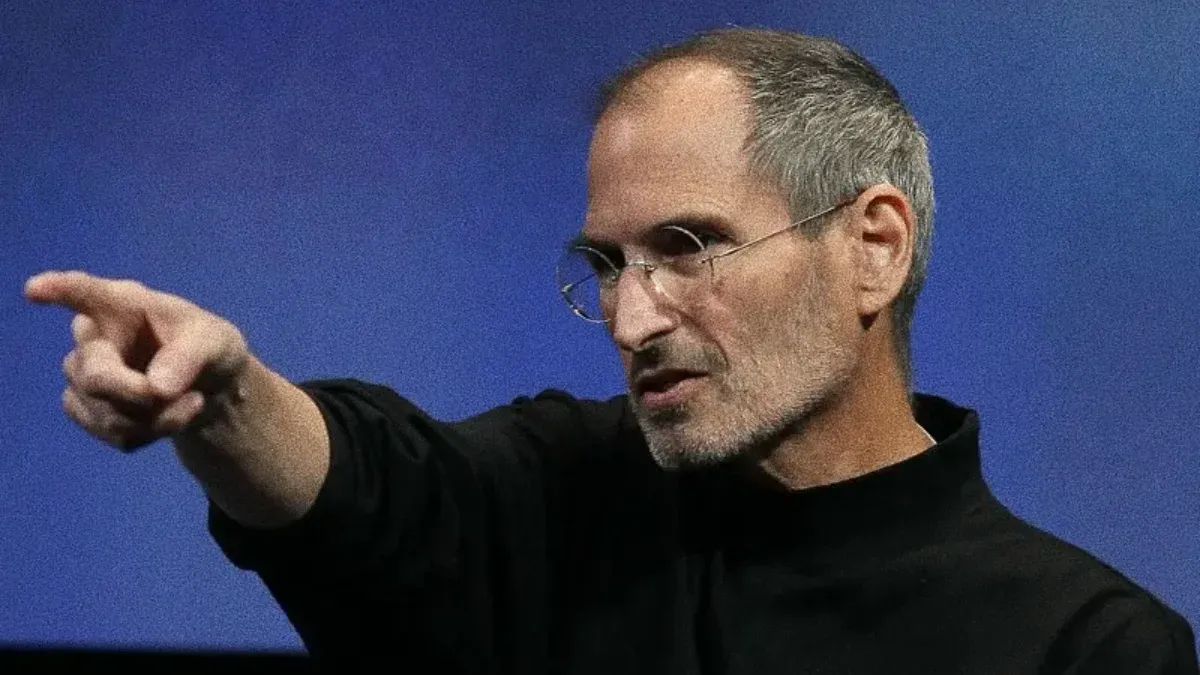
Steve Jobs's IQ The Evidence and an Honest Estimate
No verified IQ test exists for Steve Jobs, and the famous 160 is an extrapolation, not a measurement. The real evidence is thinner than people assume, and his defining gifts were ones an IQ test barely captures. Weighing it honestly, a neutral estimate is most likely 125 to 140. Here is exactly how it is derived. Measure your own real score free.
0 Quick Answer
Steve Jobs never took a publicly documented, professionally administered IQ test, so no verified score exists. The figure that circulates most often, 160, is not a test result. It is an extrapolation, drawn partly from a childhood achievement test and partly from his fame.
Direct answer, stated plainly: the honest evidence for Jobs is thinner than for someone like Bill Gates. There is no documented SAT score and no published technical work of his own. What the record does contain is one genuine data point: by Walter Isaacson's biography, Jobs was tested near the end of fourth grade and scored at roughly a high-school-sophomore level, meaning a nine or ten year old performing several grades ahead. That signals a clearly gifted child, but grade-equivalent scores inflate at the extremes and are not an IQ. Just as important, his defining talents, aesthetic judgment, product intuition, vision, and an extraordinary gift for persuasion, sit largely outside what any cognitive test measures. Weighing all of this, the most defensible estimate places his IQ most likely in the 125 to 140 range (superior to gifted), with a roughly 90 percent confidence band of about 118 to 145. The popular 160 sits well above where the evidence reaches. This guide shows exactly how the estimate is derived, and why, for Jobs more than almost anyone, an IQ number explains very little of what he actually did.
No. There is no public, professionally administered IQ score for Steve Jobs, and that single fact is the honest foundation for everything else here. He never reported sitting a standardized intelligence test, and no biographer or interviewer has produced one. Every specific IQ number attached to his name is therefore an estimate or an inference rather than a measurement scored against proper norms. Proper norms here means an adult reference group, which is what separates an IQ test built on adult norms from a grade-equivalent result: the score expresses standing among people of a stated age range, not distance ahead of a classroom.
This is the normal state of affairs. Adults are almost never formally tested for IQ, because cognitive testing is usually done in childhood, in clinical settings, or for specific accommodations. Jobs is actually a harder case than many of his peers, because the public record contains less hard cognitive data than usual: no documented SAT, no academic publication, no admissions test score that survived into the biographies. There is one childhood achievement test and a great deal of evidence about a very particular kind of genius. That lets us estimate, but with wider error bars than for a figure who left a paper trail of test scores, and with a clear sense that the test would have captured only part of him, a distinction set out in What IQ Scores Mean.
2 Where the "160 IQ" claim came from
The number you see most often is 160, and it is worth tracing because its origin is more interesting than a pure invention. Part of it leans on a real anecdote: the fourth-grade test in which Jobs reportedly performed at a high-school level. Someone took that striking gap between his age and his measured level and read it as a near-genius IQ. The rest of the 160 is simply the gravitational pull of his fame, the sense that a man who changed several industries must have an extraordinary number attached to him.
The first problem is that a grade-equivalent result is not an IQ. Saying a fourth grader scored at a sophomore level describes how far ahead he was on that test, not a standardized score against a reference population, and grade-equivalent gaps widen dramatically at the top in a way that overstates the underlying ability. The old ratio method of dividing mental age by chronological age, which would turn that gap into a number near 160, was abandoned by psychometricians precisely because it inflates wildly at the extremes.
The second problem is the fame effect. Enormous achievement makes a high IQ feel obvious, but worldly success and tested intelligence are only loosely related, and in Jobs's case much of his genius ran through channels an IQ test does not measure at all. So the 160 is best understood as a real childhood signal stretched past what it can support, then rounded up by reputation. Correcting for both does not erase that he was clearly gifted; it just moves the honest estimate out of genius-legend territory and into a defensible range, which the next sections build. The word doing the work in that phrase has no psychometric definition either: genius as a score band survives only from the classification table on page 79 of Terman's 1916 manual, and no test in professional use today prints it. The register these inflated figures borrow from is fiction, where the highest number ever stated for a character on a widely seen production is 197 and the most repeated is 187.
3 Why a low estimate would be implausible
Neutrality means applying the same scrutiny to low guesses as to high ones, and in Jobs's case a below-average or merely-average estimate does not survive the record either. A child who tests several grades ahead, who taught himself electronics as a teenager, and who later directed the strategy of multiple technology and entertainment companies through repeated reinventions was plainly operating well above the population average. The floor of any honest estimate sits comfortably in the above-average range.
So both extremes can be set aside. The case against a low number is strong. The case against the inflated 160 is that it rests on a stretched childhood anecdote and on fame rather than on measurement. The honest task that remains is to combine genuinely positive but limited evidence into a range that is clearly above average, plausibly gifted, and appropriately wide, because the data is thinner and his particular brilliance is harder to read as a single cognitive score than almost anyone's.
4 What we actually know: the fourth-grade test
The single most cited piece of evidence deserves to be read carefully rather than waved at. In Walter Isaacson's authorized biography, Jobs recalls being given achievement tests at the end of fourth grade and scoring at a high-school-sophomore level. Taken at face value, a nine or ten year old performing at the level of a fifteen year old is a striking gap, and it points clearly to a gifted child, the kind who is bored and underchallenged in an ordinary classroom, which is exactly how Jobs described himself.
But two cautions keep it honest. First, this was an achievement test, which measures learned academic skills, not an IQ test, which is designed to measure reasoning against age norms, so it is a strong but indirect signal. Second, grade-equivalent scores are notoriously inflating at the top: scoring at a sophomore level as a fourth grader usually means a child has thoroughly mastered the grade-level material and the test extrapolated upward, not that he could actually do sophomore coursework. Read with those cautions, the result establishes that Jobs was a genuinely gifted child, which raises the floor of any estimate, without justifying a specific number near 160. For where the resulting bands sit in the population, see the IQ Score Chart and Gifted IQ Range.
5 The part an IQ test would miss
This is the section that matters most for Jobs, because his defining genius lived largely in places a cognitive test does not look. He was not, by his own account, the engineer in the room; that was Steve Wozniak and later thousands of others. What Jobs had was a rare combination of aesthetic judgment, an instinct for what people would want before they knew it, narrative vision, and a famous, almost unsettling power of persuasion that colleagues called his reality distortion field.
None of those is captured by an IQ test. Verbal and fluid reasoning, working memory, and processing speed, the things a real assessment measures, are real and were surely strong in him, but taste, the ability to edit a product down to its essence, the courage to bet a company on a design, and the charisma to make others believe the impossible are different faculties. They correlate only loosely, if at all, with a number on a cognitive scale. This is why a discussion of Jobs's IQ is in danger of measuring the wrong thing entirely. An honest estimate can place his general cognitive ability, but it should say plainly that general cognitive ability is not where his greatness primarily lived, a point developed in IQ and Success.
6 How you estimate IQ without a real test
If there is no proctored score, can anything responsible be said? Yes, but only as an estimate with honest error bars. Researchers who study the intelligence of people who were never formally tested use historiometric methods, inferring a likely IQ from verifiable indicators rather than from an exam the person never sat. In Jobs's case three indicators are available, and they are weaker and more confounded than for a figure with hard test data:
Early testing. The fourth-grade achievement result, read as a signal of giftedness rather than a number.
Demonstrated reasoning. The cognitive demands of the product, strategy, and systems decisions he is documented to have driven.
Educational record. A strong-enough start to reach college, paired with a deliberate choice to leave it.
The crucial caveat is that these estimate a likely region, not a personal score, and for Jobs the uncertainty is unusually wide. The childhood test is indirect, the business reasoning is heavily entangled with taste, persuasion, and team, and the educational record is short. The principle that keeps the estimate honest is convergence: the goal is to see whether the independent signals point to a similar region and to widen the range, rather than narrow it, when the evidence is thin. They do converge on clearly above average and plausibly gifted, but they do not converge on a precise point.
7 Method 1: the childhood achievement test
The first anchor is the fourth-grade result, read with discipline. Its value is that it is an early, relatively clean signal taken before fame or narrative could distort it: a young child genuinely performing far ahead of his grade. That rules out the lower part of the distribution and places him among gifted children, who typically test well above average.
Its limit is precision. Because it is an achievement test reported as a grade equivalent, it cannot be converted into a reliable IQ figure, and the temptation to do so with the old mental-age ratio is exactly the error that produces inflated numbers like 160. Used responsibly, the test pushes the estimate up into the superior-to-gifted region and sets a high floor, while leaving real room above and below because a single childhood data point, however striking, cannot pin a precise adult score. For how steeply rarity climbs at these levels, see the IQ Rarity Calculator.
8 Method 2: demonstrated reasoning in his work
The second method looks at the cognitive demands of what Jobs actually did, which is informative but heavily confounded. Running Apple, NeXT, and Pixar, negotiating complex deals, grasping technical tradeoffs well enough to push engineers hard, and orchestrating product strategy across hardware, software, and supply chains all require real reasoning, planning, and the ability to hold a complex system in mind. None of that is the work of an average mind.
The honest caveat is heavier here than for most figures. Jobs's achievements are multiply determined to an extreme degree, drawing on taste, persuasion, an instinct for talent, relentless standards, timing, and enormous teams, far more than on raw reasoning power. He could grasp a technical argument, but his signature contribution was usually judgment and vision rather than the kind of novel analytical work that cleanly demonstrates high fluid reasoning. So his record argues firmly against a low estimate and is consistent with a high one, while isolating the purely cognitive component very poorly. It is best read as confirming that he was well above average, without sharpening the number, a relationship explored in Cognitive Domains.
9 Method 3: education, handled honestly
A third indicator is his schooling, which is short and easy to misread. Jobs graduated from Homestead High School and enrolled at Reed College, a selective liberal-arts school, in 1972, then dropped out after about one semester. A naive reading treats leaving college as a mark against him, and that reading is wrong here. He left for reasons of cost and restlessness, not capacity, and he kept auditing classes that interested him, most famously a calligraphy course whose typography later shaped the Macintosh.
That detail matters, because it shows the pattern was disengagement from required structure, not inability to do the work. Still, education provides less lift in his case than in someone who completed a demanding degree or posted a documented test score, simply because there is less of it to weigh. It confirms he was capable of selective-college admission and was an intensely curious autodidact, which is consistent with the gifted-range reading, without adding the precision that a completed academic record or an SAT would. Used this way, his education supports the estimate without anchoring it, a reminder of why credentials must be read in context, as discussed in Reliability & Validity.
10 Putting it together: a 90 percent range
Combining the methods, while respecting their limits, produces a defensible estimate rather than a single confident number. The childhood achievement test marks him as a gifted child and rules out a low score. His documented reasoning in business and product strategy is consistent with high ability but heavily confounded by taste, persuasion, and team. His education confirms capability without adding precision. No part of the evidence supports an average score, and the inflated 160 turns out to be a stretched childhood anecdote rounded up by fame rather than a measurement.
Weighing those together, the most defensible estimate places Steve Jobs's IQ most likely in the 125 to 140 range, superior to gifted. Because the inputs are thin and indirect, and because his defining gifts sit largely outside what an IQ test measures, an honest 90 percent confidence band runs from roughly 118 to 145, wider than for a figure with hard test data. Read that band the way a professional reads any score: the interval is the real answer, not a single point. It says he was clearly well above the population average and plausibly gifted, while the popular 160 sits beyond where the evidence reaches. This is an estimate built from fragments, not a measurement, which is the difference explained in Reliability & Validity.
11 Why celebrity IQ estimates are unreliable
It helps to step back and see why this whole exercise is error-prone, because the same caution applies to every celebrity IQ number you will ever read. None of these figures is a test result. They are reconstructions from fragments, and in Jobs's case the fragments are especially thin: one childhood test and a lifetime of achievement in domains a cognitive test does not measure. A number built on that is unavoidably a guess, however confident it looks on a celebrity-IQ page.
There is a recycling effect on top of that. Once a figure like 160 appears in one place, it gets quoted by the next, until the childhood anecdote behind it is buried under layers of repetition that read like confirmation. By the time most people meet the number, its speculative origin is invisible and it carries the false authority of consensus. The same skepticism is warranted for the numbers attached to Bill Gates, Elon Musk, Albert Einstein, and Stephen Hawking, none of which rest on modern verified tests either. The lesson is not that estimates are worthless, but that a number without its method and its uncertainty is a story, and Jobs's story is thinner than most.
12 What IQ does and doesn't explain about his success
For Jobs this is not a footnote but the heart of the matter, because his case is the clearest example of how little an IQ figure can explain. General cognitive ability relates, on average, to learning speed and to performance in cognitively demanding work, as covered in IQ and Success. Jobs surely had enough of it, and likely a comfortable surplus. But the things that made him Steve Jobs were almost all elsewhere.
His impact came from taste and the willingness to enforce it ruthlessly, from an instinct for products people did not yet know they wanted, from storytelling that turned launches into cultural events, from the ability to recruit extraordinary people and demand more than they thought they had, and from a persuasive force that bent rooms to his will. None of that is on an IQ test. Many people with higher measured intelligence have never created anything close, and that is the point: beyond a high-enough threshold, the variables that separate the merely smart from the world-changing are temperament, vision, taste, drive, and timing, not additional IQ points. Reading his career through a cognitive number, even a well-estimated one, would point at almost the wrong thing entirely.
13 Where a 125 to 140 estimate sits
To make the estimate concrete, here is where the 125 to 140 band falls on the standard scale (mean 100, standard deviation 15), alongside the wider 90 percent interval:
IQ range
Classification
Approx. percentile
Roughly how rare
150 and above
Profoundly gifted (the inflated 160 claim)
~99.9th+
~1 in 2,300 and rarer
140–149
Gifted / very superior (upper band, less likely)
~99.6th–99.9th
~1 in 261 and rarer
130–139
Gifted (upper part of the estimate)
~98th–99th
~1 in 44
125–129
Superior (lower part of the estimate)
~95th–97th
~1 in 22
90–109
Average
~25th–73rd
~1 in 2
The estimate puts him firmly in the superior-to-gifted region, with the popular 160 sitting well above the top of the honest band. For how these classifications work and how steeply rarity climbs near the top, see the IQ Rarity Calculator and High Average IQ.
14 The honest takeaway
The clean summary is this: nobody can hand you Steve Jobs's IQ as a fact, because the test that would produce it does not exist on the public record. What can be offered responsibly is an estimate from thin evidence, most likely 125 to 140 with a 90 percent band of about 118 to 145, built from a childhood achievement test, the cognitive demands of his work, and a short but real educational record, and explicitly not from the inflated 160 that circulates online.
That gap between a confident headline and an honest estimate is the whole problem with celebrity IQ numbers, and Jobs is the sharpest case of a second problem too: even a perfect IQ score would explain only a small part of him, because his genius lived in taste, vision, and persuasion rather than in a cognitive scale. The only way to know an actual IQ, yours or anyone's, is to sit a broad, properly normed assessment and read the result with its confidence interval. Estimating a stranger from the outside will always be a guess; measuring yourself directly is the alternative, and it is the one part of this topic you can actually control.
The contrast with a stretched anecdote makes clear what a real IQ requires. A genuine score is not a single striking childhood result or a number borrowed from a grade-equivalent; it is your standardized standing relative to a defined reference population, built from a broad sample of cognitive tasks and reported with a margin of error. That is why a real score cannot be inferred from one fourth-grade test, however memorable, or from a career, however revolutionary. For a living adult that measurement no longer requires a clinic, since a real online IQ test can deliver a normed standing from home, provided it samples ability broadly, reports its reliability and states its limits instead of printing one flattering number.
ACIS measures general cognitive ability the way serious instruments do, by sampling six broad cognitive domains across 20 subtests and combining them into a Full Scale IQ with a confidence interval. It interprets results within a defined adult reference frame and publishes its reliability and validity evidence in the Technical Manual, summarized in Reliability & Validity. The difference between that and a viral IQ chart is the difference between a measurement and a story, the same distinction drawn in Accurate IQ Test and Free vs. Validated IQ Tests.
16 The six domains a real test measures
Where a celebrity estimate collapses everything into one rumored number, a real assessment reports a profile. ACIS is organized around the Cattell-Horn-Carroll (CHC) model and measures six broad domains, which together give the Full Scale IQ its meaning:
Domain
What it captures
Verbal Comprehension
Knowledge, word meaning, and verbal reasoning
Fluid Reasoning
Novel problem solving and pattern detection
Quantitative Reasoning
Numerical reasoning and knowledge
Visual-Spatial
Mental rotation and spatial logic
Working Memory
Holding and manipulating information
Processing Speed
Fast, accurate cognitive throughput
A real test would have profiled Jobs across all six, but it still would not have measured the taste, vision, and persuasion that defined him, which is exactly why no outside number can capture a person like this. For a deeper treatment, see What an IQ Test Measures and Full Scale IQ.
17 His estimate next to other famous figures
Seeing this estimate in context underlines how shaky all such numbers are, and how differently the evidence varies from one figure to the next. Albert Einstein is routinely assigned a 160, yet he never took a modern IQ test, so that figure is itself a popular legend, as discussed in Albert Einstein's IQ. The same is true for the numbers attached to Leonardo da Vinci, Nikola Tesla, and Taylor Swift.
Jobs sits at the thin-evidence end of that field. Where Bill Gates left a near-perfect SAT and a published mathematical result, two hard signals that justify a higher and tighter estimate, Jobs left one childhood test and a body of work in domains an IQ test cannot read. That is why his band is set a little lower and noticeably wider than Gates's, not as a judgment of who was more capable, but as an honest reflection of how much less measurable evidence exists. The comparison is not about ranking invented numbers; it is about being candid that some estimates rest on more than others.
The estimate on this page is offered in the opposite spirit from a viral number: with its method shown, its thin evidence acknowledged, and its uncertainty stated. That is the only kind of celebrity IQ figure worth anything, and for Jobs it comes with an extra warning that the number matters less than usual, because the things that made him extraordinary were never on the test. It is precisely why a real, comparable score is worth more than any figure a chart can assign from the outside, and why the most useful thing this page can point you toward is not his number but your own.
18 Common myths about Steve Jobs's IQ
"His IQ is 160." That number is a stretched reading of a fourth-grade achievement test, rounded up by fame, not a measured IQ. The corrected estimate lands lower, in the superior-to-gifted range.
"The fourth-grade test proves a genius IQ." A grade-equivalent score shows how far ahead he was, not a standardized IQ, and such scores inflate sharply at the top.
"He dropped out, so college tells us nothing good." He left Reed for cost and restlessness, not inability, and kept auditing classes. Disengagement from structure is not a cognitive ceiling.
"His success proves a sky-high IQ." His genius ran through taste, vision, and persuasion, faculties an IQ test does not measure, so achievement is weak evidence for a specific number.
"A confident estimate settles it." The evidence for Jobs is unusually thin, so any estimate is a wide range, not a measurement.
The Jobs case is a clear example of a general truth, including its limits. You can form a rough, range-shaped estimate of almost anyone from solid facts, chiefly their education and the cognitive demands of work they have demonstrably done. But the quality of that estimate depends entirely on how much hard evidence exists, and for Jobs there is little: one childhood test and a career built on faculties a test cannot read. When the evidence is that thin, the honest response is a wider band, not a more confident number. Replacing a band with a measurement is only possible for someone willing to sit a test, and the in-person and online options for taking a test run from a licensed psychologist's individually administered evaluation to a self-administered normed assessment at home.
His case adds a second lesson that applies broadly: a person can be extraordinary in ways an IQ test was never designed to capture, so even a perfect score would describe only part of them. That is why responsible sources give ranges and caveats, and why a single figure presented without uncertainty is a red flag regardless of whose name sits beside it. The same discipline that produces an honest estimate of a public figure is what a real test applies to you directly, only with far more data and proper norms behind it, from How IQ Scores Are Normed to What IQ Scores Mean.
20 Bottom line
Steve Jobs's IQ is unknown in the only sense that counts: there is no verified test score. The honest, evidence-based estimate is most likely 125 to 140, with a 90 percent confidence band of about 118 to 145, derived from a childhood achievement test read as a sign of giftedness, the cognitive demands of his work, and a short educational record, and explicitly not from the inflated viral 160. He was clearly well above average and plausibly gifted, and beyond that the evidence does not reach. More than for almost anyone, the number also matters less, because his genius lived in taste, vision, and persuasion that no test measures.
If a precise number is what you actually want, the only place to get one is a real test taken under proper conditions, not a chart about someone else. You cannot test a public figure from your screen, but you can measure yourself in about an hour and read a real Full Scale IQ with a genuine confidence interval. That is the one number in this entire conversation that can be more than a guess.
No figure on this page should be taken on faith, including ours. The sources below are the primary records and the research needed to audit any IQ claim attached to a public figure.
Encyclopaedia Britannica. The reference biography of Steve Jobs, the documented record that any circulating IQ figure has to be checked against.
Cox, C.M. (1926). The Early Mental Traits of Three Hundred Geniuses, full text at the Internet Archive. The historiometric study behind most IQ figures still attached to historical figures.
Frey, M.C. & Detterman, D.K. (2004). Scholastic Assessment or g? Psychological Science, 15(6). The study linking SAT scores to measured cognitive ability, and the reason SAT conversions are estimates rather than measurements.
Lubinski, D. & Benbow, C.P. (2006). Study of Mathematically Precocious Youth after 35 years. Perspectives on Psychological Science. What long term follow up of verified high scorers actually shows.
Voncken, L., Albers, C.J. & Timmerman, M.E. (2019). Improving confidence intervals for normed test scores. Behavior Research Methods. Open access. Documents the mean 100, SD 15 metric and the uncertainty that norming from samples adds to any score.
Pearson (2008). WAIS-IV Score Report sample. What a real report contains: every composite paired with a percentile rank, a 95% confidence interval and a qualitative description, never a bare number.
Pearson Clinical Assessment Scientific Council (2023). Standardized Clinical Assessment for Practitioners: A Primer. How standard scores, percentile ranks and the standard error of measurement are meant to be read together.
Pearson (2024). WAIS-5, Wechsler Adult Intelligence Scale, Fifth Edition. The current adult battery, covering ages 16:0 to 90:11 across five cognitive domains.
Take the assessment
You get a profile, not a number
ACIS measures six CHC domains across 20 subtests and reports each one with its own normed score and confidence interval, so you can see where you are strong and where you are not.