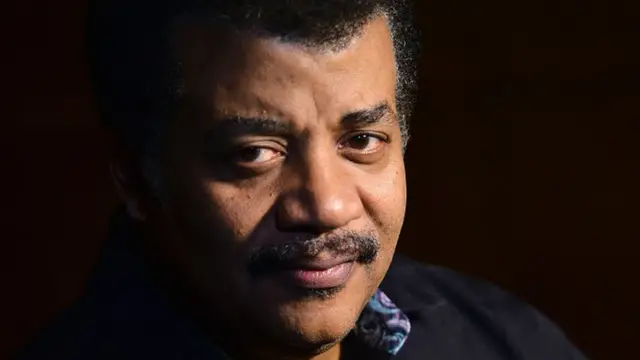
Neil deGrasse Tyson's astrophysics, institutional leadership and science communication are documented in detail. His exact IQ is not. The numbers circulating online have no authenticated test report, so the evidence based answer remains unknown.
Tyson's education and career are public. A score report supporting online IQ numbers is not.
0 The Short Answer
There is no verified public record of Neil deGrasse Tyson's IQ, and the more interesting fact is that he has never wanted there to be one. Celebrity pages hand out 123, 132, 145 and occasionally larger figures for him, none of which arrives with a named instrument, an administration date, an examiner or a score report. That alone would put this page in the same category as most famous IQ articles: a rumor with no floor under it.
So the absence of a Tyson score is not a hole in the record waiting to be filled. It is closer to a declined invitation. That reframing is what this page is built around, because it opens onto something a reader can actually use: the working scientific view of IQ, which is that the measure earns its keep in population research and earns almost nothing as a personal badge. Those two roles get confused constantly, and celebrity IQ lists exist entirely inside the confusion.
The rest of this page separates what Tyson's biography documents (a great deal), from what it can measure (nothing numerical), from what the "smartest scientists" lists are actually made of (mostly a 1926 methodology applied to people who died before modern testing existed). Tyson is a living science communicator with a documented career, not a data point in a ranking, and the page treats him that way throughout.
Where ACIS stands
ACIS has never tested Neil deGrasse Tyson and has no connection to him or to any organization he works with. Everything here evaluates public claims and public records. No figure on this page is an ACIS result, and an unmeasured IQ is a statement about missing evidence, never a statement about a person's ability or worth.
1 What Tyson Has Actually Said, and What He Has Not
Precision matters here, because a page arguing that unsourced quotes spread easily should not spread any. Two statements from Tyson's own account can be checked directly.
The first is the 2015 line quoted above, which reduces IQ to a circular claim: your IQ predicts your IQ test score. Read charitably, it is not a denial that the test measures anything. It is a complaint about how the number gets used, as though a score were a fact about a person's mind rather than a rank on one instrument, on one day, against one reference sample.
The second, posted in 2015 and again in January 2020, aims at the surrounding vocabulary: "To be a Genius is to be misunderstood. But to be misunderstood is not to be a Genius." That one targets the folk logic that props up celebrity intelligence claims, the assumption that eccentricity, contrarianism or public visibility can substitute for evidence.
Now the part most pages skip. Several widely copied Tyson quotations about IQ have no locatable primary source. One that circulates often, some version of "no one worth their salt in astrophysics knows or cares what my IQ is," appears repeatedly in aggregator articles and never with a citation to an interview, a transcript, a broadcast or a dated post. The same applies to the frequent secondary claim that he has said he never took an IQ test and does not know his score. It may well be accurate, it fits everything else he has said, and we could not confirm it from a primary source, so this page treats it as an attributed paraphrase and nothing stronger.
That distinction is not pedantry for its own sake. The mechanism that invents a celebrity's IQ is the same mechanism that invents the celebrity's quote about IQ. If you are going to apply the standard, apply it in both directions, including to statements that support your own argument.
2 What the Documented Record Contains
Tyson's biography is unusually well documented, which makes it a good test case for the difference between a paper trail and a measurement. Born in New York on October 5, 1958, he graduated from the Bronx High School of Science in 1976, took a BA in physics at Harvard in 1980, then a master's in astronomy at the University of Texas at Austin in 1983, and finally an MPhil in 1989 and a PhD in astrophysics from Columbia University in 1991.
His institutional record continues from there. He joined the Hayden Planetarium as a staff scientist in 1994, became acting director in June 1995 and director in 1996, and oversaw a reconstruction of the facility costing roughly 210 million dollars, completed in 2000. He was appointed to the Commission on the Future of the United States Aerospace Industry in 2001 and to the President's Commission on Implementation of United States Space Exploration Policy in 2004. He received the NASA Distinguished Public Service Medal in 2004, the Klopsteg Memorial Award in 2007 and the National Academy of Sciences Public Welfare Medal in 2015. Asteroid 13123 Tyson was named for him in 2001. StarTalk began as a radio program in 2009 and ran as a National Geographic television series from 2015 to 2019.
Every item above shares one property: an institution created a dated record of it, and that record can be inspected by someone who doubts it. Enrollment files, conferred degrees, federal appointment announcements, minor planet citations, award lists. This is what a checkable claim looks like, and the contrast with a floating three digit number is the entire argument of this page. The same property shows up in careers where nobody expects it, because a journal article carrying a digital object identifier and a degree conferred by Harvard in 2003 are institutional records of exactly that kind, and neither of them is a score.
Notice also what the list does not contain, in nearly forty years of dense public documentation: any cognitive test result, from any instrument, at any age. Not because it was suppressed, but because that is normal. Almost nobody's is public, including almost every scientist whose name appears on an IQ ranking.
3 The Credentialism Trap: A Columbia Doctorate Is Not a Score
The most common reasoning error on this topic runs like this: astrophysics is difficult, Tyson has a doctorate in it from Columbia, therefore his IQ must be at least some impressive figure. Every step of that chain is either true or reasonable except the conclusion, and the conclusion is the only part anyone actually cares about. Expertise in the instruments does not close the gap either: the figure in excess of 150 attributed everywhere to Jordan Peterson, a psychologist whose own published research administered standardized cognitive measures, has never been traced to a primary source.
A doctorate certifies that a candidate completed coursework, passed examinations, produced original research and satisfied a committee. It is a record of accumulated work under supervision, spread across years. An IQ score is the output of a single standardized measurement event, timed, scripted, scored against a defined reference sample and reported with a margin of error. The two documents answer different questions and were never designed to convert into each other. There is no exchange rate, which is why no psychometrician publishes one. Any number produced by that conversion tells you about the enthusiasm of the person converting, not about the person converted.
Tyson's own path illustrates the point more sharply than any argument could. His doctoral work at the University of Texas at Austin did not survive: his dissertation committee was dissolved, and he left without the degree. In a 2012 profile by Rose Cahalan in the alumni magazine The Alcalde, his professor Craig Wheeler recalled the department's read at the time, "Research was not his strength. He was never going to solve any major scientific problems. But I knew he was going to do something big, because he had charisma." Tyson's own comment in that piece is characteristically direct: "I still don't talk about it much, because it was a failed experiment, and I've moved on from that chapter of my life." He went to Columbia, finished the doctorate there, and built a career that has probably done more for public science literacy than most research programs.
Read that sequence carefully and the credentialist argument collapses from both ends. The credential system nearly filtered him out, then admitted him elsewhere, then he did his most consequential work outside research entirely. If credentials were a clean readout of ability, that sequence could not happen. It happens constantly. Selection systems measure fit, timing, supervision quality and persistence along with ability, and they hand out a binary outcome rather than a graded one, which is exactly the information a score would need to carry and does not. The trap runs in the other direction too, and Rowan Atkinson's documented record of an engineering degree at Newcastle and a master's at Oxford shows how little the credential constrains the claim, since the 178 printed next to it still has no test, no date and no examiner behind it.
4 Where the 123, 132 and 145 Figures Come From
Search for Tyson's IQ and you meet a small cluster of competing numbers rather than one dominant claim, which is itself diagnostic. Real measurements produce one figure. Folklore produces a spread, because each site generates its own. A genuine administration produces one figure with a stated margin of error, and reporting that interval is part of what a good online IQ test should include before it puts a number in front of anyone.
The three numbers that recur have visibly different flavors. The figure near 123 reads like the output of someone applying an average for people with doctorates and rounding. The figure near 132 sits just past the conventional gifted threshold, which makes it feel simultaneously exceptional and plausible, a sweet spot for content that wants to sound restrained. The figure near 145 is the prestige option, chosen by pages that want a number worthy of a famous astrophysicist. None of the three has ever appeared alongside a test name.
Trace the citation chains and they end the same way every time: an entertainment page cites an older list, the list cites a quiz site, the quiz site cites nothing. Repetition is doing all the work. A thousand pages carrying one undocumented figure still amount to one undocumented figure, and averaging incompatible guesses produces a fourth guess rather than an estimate.
There is a specific reason to distrust this cluster more than most. When a claim exists in several mutually contradictory versions, at least all but one must be wrong, and the honest reading is that all of them are, since none can name a source. Compare a genuine measurement claim, which comes with a single figure attached to a single instrument on a single date, and the difference in texture is obvious once you know to look for it.
Worth stating plainly: none of these numbers is an insult, either. Someone inventing 123 is not attacking Tyson. They are guessing, publishing the guess as a fact, and adding another undocumented figure to a topic he has publicly declined to participate in.
5 Why "Scientists With the Highest IQ" Lists Are Retroactive Fiction
Tyson's number is invented in the present. The lists that surround him are built on a much older and stranger foundation, and knowing where it came from permanently changes how those rankings read. That foundation does not even cover every name it gets used on, since Marie Curie, born in 1867, arrived too late to be included in the one systematic historiometric study of geniuses, and the lists print 180 to 200 for her anyway.
In 1926, Catharine Cox published the second volume of Genetic Studies of Genius, working under Lewis Terman at Stanford, and titled it The Early Mental Traits of Three Hundred Geniuses. Cox took 301 eminent historical figures born between 1450 and 1850, gathered whatever biographical material existed about their childhoods, and estimated a childhood IQ for each from the age at which they reached documented intellectual milestones: early writing, early publication, breadth of early mastery. Newton, Goethe, Leibniz and the rest received numbers this way. Cox was candid about the limits of the exercise, describing her correction procedure as a crude approximation and warning that the resulting figures were probably too low in most cases.
Nearly every retroactive genius IQ still circulating today descends from that project or imitates its logic. The estimates were never measurements of anyone. They were biographical scores, computed from how much surviving paperwork a childhood generated, which means they partly measure how carefully a family archived letters. The method later moved into politics with the same properties intact, and Simonton's historiometric estimates for American presidents sit next to only two documented school scores in the whole set, Kennedy at 119 and Nixon at 143, which are the two figures the lists never quote.
Apply this to the modern list and it dissolves. Albert Einstein died in 1955 and was never tested with anything resembling a modern battery; the 160 attached to him everywhere has no test, no date and no examiner, and is a back projection from his reputation. Stephen Hawking was never tested either, and when Deborah Solomon asked him about his IQ in The New York Times on December 12, 2004, his answer was "I have no idea. People who boast about their IQ are losers." Two of the three most cited scientific IQs in the world belong to men who never sat a test, one of whom explicitly refused the frame.
This is the context Tyson's refusal belongs in. He is not an outlier among scientists for declining the number. He is close to the norm. What is unusual is only that he said so out loud, at a moment when a search engine would index it.
6 What the Numbers Being Thrown Around Would Actually Mean
Part of why celebrity figures should trigger suspicion is arithmetic. On the modern scale, mean 100 and standard deviation 15, rarity climbs slowly and then violently, and the numbers assigned to famous scientists routinely land in territory that should be nearly empty. If you want the full mapping, the IQ percentile chart lays it out; here are the landmarks that matter for reading a claim.
IQ 100
The population median by construction. Half of a properly normed sample scores above it, half below.
IQ 115
One standard deviation up, roughly the top 16 percent. Common among university graduates, ordinary inside a physics department.
IQ 130
About the top 2 percent, roughly 1 person in 44. The conventional gifted identification threshold in most school systems.
IQ 145
Three standard deviations up, roughly 1 in 740. The figure celebrity pages most often reach for when they want a scientist to sound exceptional.
IQ 160
Four standard deviations, roughly 1 in 31,000, and the top of the reportable Full Scale range on the WAIS-IV, which spans 40 to 160.
IQ 175
Five standard deviations, roughly 1 in 3.5 million. No mainstream clinical battery reports it without extended norms and specialist interpretation.
Hold that ladder against a typical "smartest people alive" list and the problem is immediate. Such lists hand out 150s and 160s by the dozen, figures that between them should describe a few thousand people worldwide, distributed to whichever public figures seem impressive. The arithmetic rules out the possibility that these are measurements. A number is functioning as applause.
The same ladder explains why the Tyson cluster is internally incoherent. The gap between 123 and 145 is not a rounding disagreement. It is the difference between roughly the top 6 percent and roughly 1 in 740, two claims about completely different regions of the distribution, published side by side about the same living person by sites that both present themselves as informative.
7 Why Researchers Keep Using IQ Even Though It Is a Poor Badge
A page that debunks celebrity IQ claims risks leaving the impression that cognitive testing is worthless. That is not the scientific position, and getting the distinction right is the most useful thing a reader can take from this topic.
Standardized cognitive measures are among the more durable tools in psychology at the level of groups. The 1996 American Psychological Association task force report chaired by Ulric Neisser, "Intelligence: Knowns and Unknowns," published in American Psychologist, was convened precisely to state what was solid and what was contested, and it treated the predictive relationships between test scores and outcomes such as schooling as real while treating many popular interpretations as unsupported.
The clearest demonstrations come from long cohort studies where nothing else could have produced the finding. Whalley and Deary, writing in the British Medical Journal in 2001, followed 2,792 Aberdeen children born in 1921 who took a mental ability test at school on June 1, 1932, traced 2,230 of them, and found childhood ability related to survival to age 76 in both sexes. A 15 point disadvantage at age 11 corresponded to a relative risk of 0.79 of being alive 65 years later. That is a striking result about a population, and it was only possible because an entire birth year was tested under identical conditions and followed for decades.
Even where the tool works, the size of its effect has been revised downward as methods improved. Sackett, Zhang, Berry and Lievens showed in the Journal of Applied Psychology in 2022 that decades of personnel selection meta-analyses had systematically overcorrected for range restriction; their corrected figures put cognitive ability tests at roughly .31 with job performance and structured interviews higher at roughly .42. Our page on IQ and job performance works through what that revision does and does not change.
Read those studies together and the shape of the tool becomes clear. It describes distributions well, predicts group averages usefully, and answers questions no other instrument can answer at scale. It was built to compare a person against a norm sample, not to rank two individuals against each other in a magazine.
8 Why the Same Number Is Nearly Useless as a Personal Label
Everything that makes cognitive testing valuable for research is what makes it weak as a personal trophy, and the reasons are technical rather than sentimental. Those technical reasons are the same ones that decide accuracy in the first place, since the reliability, validity and norms behind an accurate score also set the width of the confidence interval printed beside it.
Start with the case that should end the debate on its own. Lewis Terman began his study of gifted children in California in 1921 and eventually followed 1,528 of them, using a minimum score of 140 on his 1916 Stanford-Binet. Two boys screened for that study were rejected as insufficiently gifted: William Shockley and Luis Alvarez, each of whom later won a Nobel Prize in Physics. None of the 1,528 who made the cut ever did. Warne, Larsen and Clark analyzed the episode in Intelligence in 2020 and reached a conclusion more interesting than the usual moral: the misses were statistically unsurprising, because the threshold was too high and Nobel Prizes are too rare for any score cutoff to predict them, with their simulation putting Terman's chance of catching even one future laureate somewhere between 16 and 40 percent. The tool was not broken. It was being asked an individual level question it cannot answer.
Three further properties push in the same direction, and they apply to any person, famous or not.
Range restriction
Inside an already selected group such as working astrophysicists, score differences shrink and lose most of their predictive power. Within the top of a field, the number stops discriminating.
Measurement error
Every score carries a confidence interval, typically several points wide. A "132" is a band, not a point, which makes any ranking built on single digit gaps meaningless.
Profile flattening
A composite averages separate domains. Two people with identical totals can have opposite strengths, so the single figure discards the part that would actually describe someone.
That last point is where the label does the most damage. Cognitive ability has structure: verbal comprehension, fluid reasoning, visual spatial processing, working memory, processing speed and quantitative reasoning are related but separable, which is why full batteries report them separately and why what an IQ test measures is a longer answer than one number allows. Compressing all of it into a badge throws away every piece of information a person could use and keeps only the part suitable for bragging. A scientist who declines to play has not lost anything.
9 The Refusal Is a Position, Not an Information Gap
Most celebrity IQ pages treat an unknown score as an unfortunate blank, something a better researcher might have filled. When the subject has publicly rejected the premise, that reading gets the situation backwards. The opposite posture shows what the refusal is protecting against: Joe Rogan published a 127 he obtained from a paid online test, whose seller states in its own terms that the results carry no guarantee of validity and are provided for entertainment.
Tyson's 2015 post is not a shrug. It is a claim about what the measurement means, made by someone whose profession is explaining what evidence supports. Reading it alongside Hawking's answer to The New York Times in 2004 and the general silence of working scientists on the topic, a pattern emerges that is easy to miss: the people whose reputations would benefit most from a high published score are the people least interested in publishing one.
There are good reasons for that, beyond modesty. Researchers know how the number behaves in their own literature, which means they know it was built to compare a person against a norm group rather than to certify a person. They also know how the label functions socially once attached, as a conversation ending credential that substitutes for the argument being made. A physicist wants to be evaluated on whether the physics is right.
Tyson has been consistent about this even outside the IQ frame. Asked about being called a genius, he has generally redirected to work habits and time spent rather than innate endowment, and his line about being misunderstood aims at the same target. Whether or not that self assessment is complete, it is a position, held publicly and repeated, and it deserves to be reported as one.
So the honest headline for this page is not "his IQ is unknown" as though something went missing. It is closer to: a prominent scientist was invited to be ranked and declined, and the internet ranked him anyway. Respecting the declination costs a reader nothing and describes the situation accurately, which is more than can be said for any of the three competing figures.
10 What It Would Take to Verify Any of These Figures
Suppose someone wanted to settle the question properly rather than argue about it. The requirements are concrete, and walking through them shows how far short the circulating claims fall. Each requirement points to an actual testing setting rather than a rumor, and the in-person and online options for taking a test differ mainly in whether a qualified examiner signs the result.
A named instrument and edition. "An IQ test" identifies nothing. Norms, ceilings and score meanings shift between editions, so a defensible claim states which battery and which version. The same three digits mean different things on a 1940s ratio scale, a current deviation battery and an unnormed web quiz.
A dated administration under known conditions. Cognition is measured at a moment, not in the abstract. A score obtained at 14 does not describe someone at 60, and an untimed session at home is not comparable to a supervised one. Without a date and a setting, a number cannot be interpreted even if it is real.
A defined reference sample. A score is a comparison, and the comparison group is the meaning. Celebrity lists collapse completely here, because their figures were never compared against any population at all.
A full profile with intervals. Genuine batteries produce domain results with confidence bands, not one naked figure. A single number with no profile behind it is the signature of a claim that never involved testing. Any serious assessment, ACIS included, reports a dated profile across separate domains with intervals, because that is the only format in which the result carries usable information.
Measure the 123, the 132 and the 145 against those four requirements and each scores zero. Measure Tyson's degrees, appointments and awards against the equivalent standards for institutional records and they pass without difficulty. This is not skepticism aimed at a person. It is one standard applied evenly, and it happens to be the standard the person in question has publicly endorsed.
11 Running the Check Yourself in Ten Minutes
Everything done on this page is reproducible for any famous IQ claim with a search engine and a little patience. Tyson serves as the worked example.
Minutes one to three, hunt the origin. Search the exact phrase, here "Neil deGrasse Tyson IQ 145", and keep pushing toward older results. The trail thins into quiz sites and aggregator posts and never reaches an interview, a documentary or a report. When the earliest version you can find is already secondhand, you have learned the decisive fact about the claim.
Minutes four to six, hunt the instrument. Add testing vocabulary to the search: the name of a major battery, "psychologist", "score report", "administered". Real testing events surface these details immediately. Here the searches return only more copies of the bare figures, and a claim that never co-occurs with the name of a test was never a test result.
Minutes seven to nine, check the subject directly. Search the person's own account and interviews. This is where Tyson's case resolves, because what you find is not a confirmation but a rejection of the premise, posted publicly and dated. Direct testimony outranks every list ever compiled, and a documented refusal outranks a confident third party number.
Minute ten, file the claim in its tier. Documented test, explicit refusal, retroactive estimate, or unsourced attribution. Tyson lands in the refusal tier with unsourced attributions piled on top. Einstein lands in retroactive estimate. Almost nobody lands in the first tier, which is the real lesson: run this drill three times and the entire genre becomes transparent. Our page on the highest IQ ever recorded applies the same sorting to the most extreme claims in circulation.
12 Verdict: A Declined Question, Not a Missing Answer
Neil deGrasse Tyson's IQ is not publicly known, no credible figure has ever been attached to a test, a date or an examiner, and the numbers in circulation contradict each other badly enough to discredit themselves without outside help. That is the factual verdict, and it will hold until a primary, dated score report appears, which nothing suggests will ever happen or should.
The more useful verdict is about the question itself. A man who has spent thirty years explaining how evidence works has publicly indicated that this particular number does not carry the meaning people assign to it, and he is broadly in step with how his field treats the measure. Cognitive testing does serious work in cohort studies, developmental research and clinical assessment. It does close to nothing as a personal ranking, and the "smartest scientists" list is a genre whose foundations were laid in 1926 by estimating childhood scores for people who had been dead for centuries.
What the record does support about Tyson is worth saying clearly, because none of it depends on a number: a physics degree from Harvard, a doctorate in astrophysics from Columbia earned after an earlier attempt failed, three decades directing one of the most visible planetariums in the world, federal advisory service, a National Academy of Sciences medal, and a body of public science communication that has changed how millions of people relate to astronomy. That is a description with sources behind it. A three digit figure would add nothing to it.
If reading this made you curious about the thing every celebrity list skips, what a structured cognitive profile actually looks like when it is measured across separate domains rather than compressed into a badge, that part is available to you. Not as a number to display, but as a profile with intervals that tells you where your own strengths sit relative to a norm sample. See also our overview of fluid and crystallized ability for what those domains represent.
Not publicly known. No test, date or examiner has ever been named, and he has publicly questioned whether the number carries the meaning people give it.
Has he ever stated a score himself?
No. His documented remarks on the subject dismiss the framing rather than supply a figure, which is the opposite of what a claimed score would look like.
What exactly did he post about IQ?
In March 2015 he wrote that research demonstrates conclusively that your IQ predicts your score on an IQ test. The joke is the argument: the measure is circular when used as a personal fact.
Is the 145 figure credible?
There is nothing to assess. It appears without an instrument or a date, and it competes with lower figures on equally sourceless pages.
Why do different sites publish different numbers for him?
Because each one is generated locally rather than copied from a record. Genuine measurements produce a single figure; guesses produce a spread.
Does his Columbia doctorate imply a specific score?
No. Degrees certify completed work judged by a committee over years. Scores come from one timed session compared with a reference sample. Neither converts into the other.
What happened at the University of Texas?
His dissertation committee there was dissolved and he left without the doctorate, later completing it at Columbia. His former professor Craig Wheeler told The Alcalde in 2012 that research was not his strength.
Does that episode say anything about his ability?
Mainly it says selection systems are noisy. They weigh fit, supervision and timing alongside ability, and they return a pass or fail rather than a graded reading of anyone's mind.
Where did retroactive IQs for famous scientists come from?
Largely from Catharine Cox's 1926 volume under Lewis Terman, which assigned childhood scores to 301 historical figures using biographical milestones rather than any test.
Was Einstein ever tested?
No. He died in 1955 without sitting a modern battery. The 160 attached to his name is a back projection from reputation with no examiner behind it.
Did Stephen Hawking know his own score?
He said he did not. Asked by The New York Times in December 2004, he replied that he had no idea and that people who boast about their IQ are losers.
If scientists reject the measure, is it useless?
Not at all. They reject it as a personal badge. In population research it produces findings nothing else can, which is a completely different use of the same instrument.
What is a good example of the research use?
Whalley and Deary reported in the British Medical Journal in 2001 that ability measured at age 11 in a 1932 Scottish school cohort predicted survival to age 76 across 2,792 Aberdeen children.
Did Terman's gifted study find future Nobel winners?
None among the 1,528 selected. Two rejected applicants, William Shockley and Luis Alvarez, later won the Nobel Prize in Physics.
Does that prove testing failed?
Warne, Larsen and Clark concluded in 2020 that the misses were expected: the cutoff was set too high and laureates are far too rare for any threshold to select them reliably.
How strongly does cognitive ability predict work outcomes?
Less than older meta-analyses claimed. Sackett and colleagues reported in 2022 that correcting an overcorrection puts cognitive tests near .31 for job performance, below structured interviews.
Why does a composite score hide so much?
It averages separable domains. Two people can reach the same total through opposite strength patterns, so the total discards the information a person would actually find useful.
Is a score inside an elite group still informative?
Much less so. Once a population has already been selected on ability, remaining differences narrow and predict far less than they do across a general sample.
Does unknown mean ordinary?
No. Unmeasured is a statement about evidence, not about capability. His documented career stands on its own and needs no numerical endorsement.
Are quotes attributed to him about IQ reliable?
Some are not. Several widely repeated lines have no traceable source, so the same verification standard applied to the numbers should be applied to the quotations.
Could this page's conclusion change?
Only if a dated report naming an instrument, an examiner and a reference sample were published. Additional articles repeating a figure would change nothing.
14 Sources Behind This Page
No figure on this page should be taken on faith, including ours. The sources below are the primary records and the research needed to audit any IQ claim attached to a public figure.
Encyclopaedia Britannica. The reference biography of Neil deGrasse Tyson, the documented record that any circulating IQ figure has to be checked against.
Cox, C.M. (1926). The Early Mental Traits of Three Hundred Geniuses, full text at the Internet Archive. The historiometric study behind most IQ figures still attached to historical figures.
Frey, M.C. & Detterman, D.K. (2004). Scholastic Assessment or g? Psychological Science, 15(6). The study linking SAT scores to measured cognitive ability, and the reason SAT conversions are estimates rather than measurements.
Lubinski, D. & Benbow, C.P. (2006). Study of Mathematically Precocious Youth after 35 years. Perspectives on Psychological Science. What long term follow up of verified high scorers actually shows.
Voncken, L., Albers, C.J. & Timmerman, M.E. (2019). Improving confidence intervals for normed test scores. Behavior Research Methods. Open access. Documents the mean 100, SD 15 metric and the uncertainty that norming from samples adds to any score.
Pearson (2008). WAIS-IV Score Report sample. What a real report contains: every composite paired with a percentile rank, a 95% confidence interval and a qualitative description, never a bare number.
Pearson Clinical Assessment Scientific Council (2023). Standardized Clinical Assessment for Practitioners: A Primer. How standard scores, percentile ranks and the standard error of measurement are meant to be read together.
Pearson (2024). WAIS-5, Wechsler Adult Intelligence Scale, Fifth Edition. The current adult battery, covering ages 16:0 to 90:11 across five cognitive domains.
Take the assessment
You get a profile, not a number
ACIS measures six CHC domains across 20 subtests and reports each one with its own normed score and confidence interval, so you can see where you are strong and where you are not.