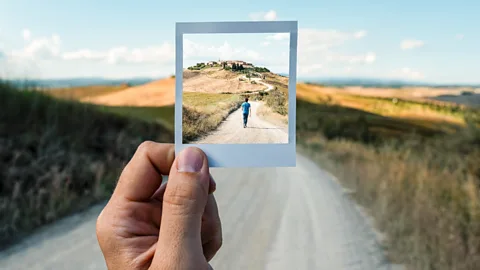
Photographic Memory Exceptional Recall Is Still Not a Camera
People can have remarkable visual, autobiographical, semantic, or trained memory. The popular idea of taking a flawless mental photograph and replaying every detail on demand is not an established general human ability. Several real phenomena are routinely compressed into that misleading label.
A vivid memory can feel photographic while still being selective, reconstructed, and vulnerable to error.
1 The Short Answer
Photographic memory, understood as effortless, permanent, camera-like recall of complex images or text, has not been established as a general human ability under controlled testing. Real exceptional memory exists, but researchers separate eidetic imagery, highly superior autobiographical memory, trained mnemonic performance, visual expertise, and domain-specific savant skills. Each has different limits. Vividness and confidence do not guarantee accuracy, and a high IQ does not create perfect storage.
No camera in the mind
Memory is selective and reconstructive, not a literal recording that can always be replayed.
Exceptional forms are specific
HSAM, eidetic imagery, expertise, and mnemonic skill should not be merged into one claim.
Controlled proof matters
Testing must measure errors, delays, unfamiliar material, cues, and repeatability.
The evidence ruleReplace the label photographic with a measurable question: what material, how much exposure, which delay, what cues, how accurate, and compared with whom?
People use photographic memory to describe many experiences. One person can visualize a page layout, another remembers faces, another recalls a childhood date, and another wins a card-memory competition. Those abilities involve different materials, time intervals, strategies, and standards. A single dramatic phrase creates the illusion of one underlying power.
A scientific construct needs an operational definition. The researcher must specify exposure time, permitted rehearsal, retention interval, response method, scoring, and comparison group. Exact reproduction after ten seconds is different from recognition among options. Remembering a meaningful scene is different from remembering random symbols. A claim that changes definition after each failed test cannot be evaluated.
The camera metaphor is misleading because cameras store all captured pixels without understanding, while human attention selects information and knowledge organizes it. People often remember meaning, relations, and central objects while losing exact color, wording, or location. That selectivity is normally useful because cognition needs abstraction rather than unlimited raw storage.
Holmes offers a rival metaphor to the camera. In A Study in Scarlet he calls a man's brain a little empty attic that a skillful workman stocks only with tools useful to his work, a character's opinion about memory and not a research finding. Watson's list fits the selectivity, rating Holmes's chemistry as profound and his astronomy as nil. The analysis of what Holmes's knowledge profile shows keeps the two apart.
This page covers the literal claim and the exceptional-memory research. IQ and Memory provides the broader system model. Savant Syndrome covers rare skills in developmental or neurological contexts. The 10 Percent Brain Myth addresses the unsupported hidden-capacity story often attached to photographic memory.
Duration is a decisive but frequently omitted variable. An image held clearly for seconds is not the same as information available after a day, month, or decade. Immediate tests can rely on active maintenance, while long delays require durable learning and retrieval. A claim that demonstrates immediate recognition cannot silently expand into lifelong recall.
Completeness also needs a denominator. Saying every detail was remembered is meaningless unless the possible details were defined before scoring. Researchers can divide a scene into objects, features, locations, and relations, then score correct and false details. This reveals whether the performance is globally exact or selectively strong for particular information.
3 Eidetic Imagery Is Not Perfect Lifelong Recall
Eidetic imagery refers to an unusually vivid visual experience that remains briefly after a stimulus is removed. Reports have been studied mainly in children. A child may describe the image as if it were still present, yet details can change, fade, or be influenced by questions. The phenomenon does not establish permanent storage or universal accuracy.
Testing methods matter greatly. Instructions can encourage ordinary imagination, afterimages, guessing, or a desire to please the examiner. Criteria differ across studies, which changes prevalence estimates. A vivid report without error scoring cannot distinguish eidetic experience from strong visual imagery.
Cox used the word eidetic about a composer in 1926, describing Mozart's repertoire as that of an auditory eidetiker. The letters of 1770 record repeated hearings of the Allegri Miserere, and his sister later recalled a revision after Good Friday. The evidence on Mozart's memory and IQ figures sets the legend of a single hearing against those documents.
Adults can have vivid mental imagery, and imagery varies from extremely weak to exceptionally strong. Subjective vividness is not the same as objective memory accuracy. Someone may experience a clear internal picture and reproduce it inaccurately, while another reports little imagery but recognizes details correctly through conceptual encoding. The weak end of that spectrum has been measured with a full scale rather than a questionnaire, and the people who report no voluntary visual imagery at all averaged 115.46 in Milton and colleagues 2021, the highest of the three imagery groups tested, which fits the reading that imagery is a route to an answer rather than the capacity being scored.
Eidetic imagery also should not be treated as a developmental marker of high IQ. It is not a standard giftedness criterion, and many highly able adults do not report it. Parents can encourage observation and art without defining a child's identity around an uncertain rare ability.
Ordinary visual afterimages are another source of confusion. Looking at a high-contrast image can temporarily produce complementary colors or shapes because sensory systems adapt. That physiological effect differs from recalling semantic detail and is not evidence of exceptional memory. A test should control viewing conditions and ask questions that distinguish an afterimage from a reconstructed mental representation.
Demand characteristics matter especially with children. If an adult repeatedly asks whether the picture is still there, a child may infer the desired answer or use imagination. Neutral instructions, independent scoring, and replication reduce that pressure. The goal is to understand experience, not reward one response.
4 Highly Superior Autobiographical Memory
Highly superior autobiographical memory, or HSAM, describes unusual access to personal dates and events. A person may rapidly identify what they did on a particular date and connect it with public events. Verification uses diaries, records, family information, and dates chosen by researchers rather than only stories selected by the participant.
HSAM is specific. It does not guarantee exceptional working memory, visual reproduction, word-list learning, or general intelligence. The person's life provides a richly rehearsed and emotionally meaningful structure that arbitrary laboratory material lacks. Calling HSAM photographic erases that domain and the role of dates, self-reference, and repeated retrieval.
Exceptional autobiographical access can also have costs. Unwanted memories may be difficult to escape, and negative events can remain highly accessible. This does not mean every person with HSAM is distressed. It shows why more memory is not automatically better and why ability should be understood in relation to control and quality of life.
Importantly, research shows that people with HSAM can still be susceptible to false-memory procedures. Their exceptional access does not create perfect source monitoring. That finding is a strong correction to the belief that quantity, vividness, or confidence makes memory immune to distortion.
Date verification is itself challenging. Diaries may have been written after an event, family members can share the same mistaken story, and public events can provide anchors that support inference. Strong studies use many randomly selected dates and objective records where possible. They report incorrect as well as correct responses rather than presenting only the most extraordinary examples.
Repeated autobiographical retrieval can strengthen access over years. A person who habitually reviews dates or mentally scans a calendar receives enormous practice that most people do not. That practice may be part of the phenotype rather than an alternative explanation. The important point is that ability, interest, habit, and memory structure can develop together.
5 Memory Champions Use Learnable Systems
Competitive memory athletes memorize cards, digits, names, or words at extraordinary speed. Most describe deliberate techniques rather than spontaneous photographic storage. The method of loci places vivid representations along a familiar route. Coding systems translate abstract digits or cards into concrete people, objects, and actions. Chunking reduces many elements into meaningful units.
Training makes the codes automatic. A beginner spends effort translating each item, while an expert rapidly produces an image and location. That speed can look effortless after years of practice. The achievement is not diminished by strategy. It demonstrates a remarkable learned skill and the power of organized retrieval cues.
Competition results have strict rules, hidden material, timing, and error scoring, which makes them more credible than an informal demonstration. They also reveal specificity. An athlete can excel on the trained formats while having ordinary memory for errands, conversations, or unattended events. Strategy must be initiated and the material must fit the system.
A consumer course can teach useful mnemonics, but it should not promise literal photographic memory or universal transfer. Ask which outcomes were measured, whether improvement persisted, and whether participants improved on untrained daily tasks. Better list recall is valuable without being marketed as a new intelligence.
Mnemonic skill carries costs. Encoding every item into a vivid scene takes effort, and old images can interfere with new ones. Competitors develop methods for clearing locations, selecting routes, and matching codes to event formats. These practical details contradict the idea of effortless total capture while making the trained achievement more impressive.
Memory athletes also illustrate deliberate forgetting. A system designed for one competition may prioritize rapid temporary recall rather than permanent storage. The ideal memory is not always maximal retention. It is reliable access to useful information for the required interval, with manageable interference and effort.
6 Memory Is Reconstructive and Vulnerable to Error
Human memory stores selected features and relationships, then reconstructs an event during retrieval. Existing knowledge helps fill gaps. Usually this makes memory efficient and meaningful, but it can also create errors. A person may remember the gist accurately while changing exact wording, color, sequence, or source.
Suggestion can alter later reports. A misleading question, repeated story, edited image, or another witness's account can become integrated with the original event. Familiarity can be misattributed to direct experience. Repetition can strengthen confidence even when the repeated information was wrong.
Confidence and accuracy are related under some carefully controlled conditions, but confidence is not a universal guarantee. Emotion and vivid imagery can make a memory feel certain. A highly intelligent person can construct a coherent explanation around an error. Independent records remain important when consequences are serious.
False-memory findings do not mean all memory is unreliable or that truth cannot be known. They mean evidence should be corroborated and questioning should avoid contamination. The appropriate lesson is calibrated trust, not total skepticism or blind confidence.
Source memory is critical in the digital environment. A true statement can be remembered with the wrong author, date, or level of authority. Screenshots strip context, repeated posts create familiarity, and AI-generated imagery can resemble experience. Saving the original source and checking it later is often more rational than trying to strengthen unaided recall.
Reconsolidation adds another layer. Retrieving a memory can make aspects of it temporarily modifiable before it is stored again. This does not imply that every recollection is rewritten completely. It does show that remembering is an active biological and cognitive process rather than opening an untouched file.
7 Visual Memory, Expertise, and Meaning
Experts remember complex material in their domain because they perceive structure. A skilled chess player encodes a meaningful position as relations among pieces, while a novice sees many separate locations. When pieces are arranged randomly, much of the expert advantage shrinks. Knowledge changes encoding rather than enlarging a general visual storage tank.
Chess shows how much of such expertise is training. A reanalysis by Burgoyne and colleagues modeled serious chess activity, formal instruction and starting age, and together they accounted for 63 percent of the variance in peak chess rating, although the model contained no cognitive variable. The evidence on practice versus IQ in expertise weighs that against studies that did measure intelligence.
Artists can develop close observation, proportional judgment, motor routines, and visual analysis. A detailed drawing from memory may reflect those skills plus practice and interest. It does not automatically demonstrate an internal photograph. Comparing unfamiliar scenes, delays, transformations, and error patterns helps identify what the artist is doing.
Faces, routes, diagrams, written pages, and objects place different demands on visual cognition. Visual-spatial processing, or Gv, concerns representing and transforming visual information. Visual memory involves retention and retrieval. The same task can draw on both, but a strong score in one should not be relabeled as the other.
The Visual Sequence guide shows how one structured visual task differs from a photographic-memory claim.
Meaning generally improves retention. A page of familiar prose offers syntax and concepts that cue reconstruction, while a page of random characters removes that structure. Someone who appears to recall every word may be using language knowledge and inference. A rigorous test includes material designed to distinguish verbatim storage from intelligent reconstruction.
Eye movements and visual attention further shape what is encoded. People do not sample every part of a scene equally. Salient objects, faces, text, expectations, and task instructions guide fixation. A viewer may later reconstruct an unattended region from scene knowledge. Tracking gaze can reveal whether a supposed memory difference began with more effective observation.
8 IQ and Exceptional Memory Are Not Interchangeable
Working memory and fluid reasoning show substantial group overlap because complex problems require active maintenance and control. Crystallized intelligence reflects knowledge accumulated through long-term learning. These relationships explain why some memory tasks contribute to intelligence batteries, but they do not make every memory system a measure of IQ. Whether a task measures general ability or one narrow specialty is exactly the validity question, and a checklist for judging whether an IQ test is accurate weighs that alongside reliability and a defined comparison group.
A high Full Scale IQ does not predict perfect autobiographical or visual recall. A person can reason rapidly while forgetting names because attention was divided. Another can remember a vast domain of facts while showing average novel reasoning. Scores describe sampled constructs, not a universal quality called brain power.
Within-person differences need psychometric context. A working-memory score below a reasoning score may be meaningful, but normal people show scatter and each score contains error. Confidence intervals, base rates, task behavior, history, and real-world function determine whether the difference deserves emphasis.
Some documented savant abilities involve extraordinary retention for music, calendars, visual scenes, or factual systems. The skill may draw on memory, perception, focused engagement, expertise, or another combination. Photographic memory is often used as a shortcut even when the mechanism was never tested.
Autistic people can show strong memory for interests or detail, but autism does not imply camera-like recall. Profiles vary widely, and broad stereotypes can make genuine support needs invisible. A fascinating memory skill does not reveal communication, adaptive function, sensory experience, or general intelligence.
Anecdotes generate hypotheses but select successes. The storyteller may not know exposure, rehearsal, errors, or prior knowledge. Failed demonstrations are rarely repeated. Family reports can be valuable developmental evidence when combined with records and controlled tasks, not when treated as conclusive by themselves.
Exceptional claims should protect the person. Verification should obtain consent, avoid publishing protected clinical material, and prevent repeated performance pressure. A person is entitled to privacy and respect whether a claim is confirmed, narrowed, or not supported.
10 How to Test a Photographic Memory Claim
Define the claim before choosing the test. Does the person claim exact visual recall, rapid learning, long retention, autobiographical access, or recognition? Specify material, exposure, delay, response format, and acceptable error. A moving target cannot be falsified and therefore cannot establish evidence. Defining the question before choosing the instrument is the same discipline behind how to choose an IQ test worth taking, where the intended use decides whether a self administered result is adequate or a professional assessment is required.
Use unfamiliar, protected material and prevent rehearsal or outside access. Include several trials and delays. Score omissions, additions, substitutions, location errors, and confidence. Compare free recall with recognition and source memory. If the claim is visual, include transformations that test whether the representation is literal or conceptual.
Control expectations. The examiner should not cue correct details through tone or leading questions. Ideally, scoring is blinded to the claim. Replication on another day reduces the chance that one favorable item set or lucky guess defines the outcome.
Comparison requires suitable norms or a clearly described control group. Perfect performance on an easy task is not rare. Performance beyond a test ceiling can be impressive but cannot receive a precise standardized rank without validated harder material. A report should separate standardized results from experimental observations.
Fraud control should remain proportionate and respectful. Hidden cameras, adversarial treatment, or public confrontation are not required to test a claim. Secure materials, controlled devices, neutral observers, and pre-registered scoring can protect validity. If compensation or publicity is involved, independent replication becomes especially important because incentives affect every participant, not only the person being tested.
A negative result should be interpreted narrowly. Failing one test may disconfirm a claim of universal perfect recall while leaving room for exceptional performance in another domain or under another valid condition. Science improves definitions. It should not turn uncertainty into ridicule or erase a person's demonstrated strengths.
11 How to Improve Memory Without a False Promise
Start with attention. Remove avoidable distraction, state the goal, and interact with the material. Passive exposure produces familiarity that can be mistaken for learning. Try to retrieve the idea without looking, then correct the error. Retrieval practice makes access stronger and exposes what is not yet understood.
Space practice across time instead of compressing it into one session. Mix related problem types so the correct strategy must be selected rather than repeated automatically. Explain concepts in your own words, compare examples, and connect new material with existing knowledge. Understanding creates useful cues.
Use mnemonic systems when exact arbitrary information matters. A memory palace, acronym, visual association, or number code can be powerful. The method should match the task and should not replace comprehension when meaning is the goal. Review it under the same conditions in which retrieval will be needed.
Sleep, health, hearing, vision, medication, stress, and mood can influence memory. Persistent or sudden change deserves qualified medical attention. An app or IQ result cannot diagnose the cause. Realistic memory improvement respects both cognitive strategy and health boundaries.
Plan for the retrieval environment. If a presentation requires fluent recall under pressure, practice producing the material aloud with the same time constraints and likely interruptions. If the goal is a medical instruction, accuracy matters more than unaided performance, so use written confirmation and reminders. The best strategy follows the cost of error rather than an ideal of never using tools.
Speaking aloud has its own laboratory evidence, which the viral claim about talking to yourself stretches. In a study of 103 young adults with a mean age of 20.21, Guo and Dobkins found better visual-spatial working memory performance on trials with more private speech, and better performance with private speech than in a quiet condition. The self-talk claim among high-IQ quirks is audited with the note that the experimenters assigned the speaking.
Feedback should be immediate enough to correct misconceptions but spaced enough to require retrieval. Marking only the final total hides patterns such as order errors, source confusion, and confident intrusions. Track which error repeats, then change encoding or cues specifically. A precise error log produces better learning than repeating the entire task without diagnosis.
Transfer requires deliberate variation. Practice the same concept in new wording, context, and order so that access is tied to meaning rather than one surface form. For visual material, reconstruct from different orientations and compare with the source. Variation makes learning harder in the moment but can improve flexible later use.
External memory is part of human cognition. Writing, maps, calendars, photographs, and databases allow societies to preserve more than any individual can recall. Using them intelligently requires judgment about what to record, where to store it, and how to retrieve it. The goal is a reliable system, not winning a contest against paper.
Privacy and security belong in that system. A perfect note is useless if it exposes sensitive information or cannot be found. Choose storage that matches the stakes, protect access, keep essential backups, and remove obsolete copies. Good memory practice includes information governance, especially for health, financial, educational, and workplace records.
Finally, test the strategy on the actual outcome. Feeling familiar with material can be pleasant while free recall remains weak. Close the source, produce the answer, apply it to a new example, and check accuracy. That simple cycle replaces the photographic-memory fantasy with observable learning.
Repeat the same objective check again after a meaningful delay, because immediate success can disappear quickly and should not be mistaken for durable, flexible mastery.
12 Common Photographic Memory Myths
Myth: some people remember every detail forever. Exceptional abilities remain selective and error-prone. Myth: vivid imagery proves accuracy. Subjective clarity and objective detail differ. Myth: HSAM is universal memory. It is mainly autobiographical.
Myth: memory champions are born with cameras. Most use practiced systems. Myth: high IQ creates perfect recall. Intelligence and memory overlap only in defined ways. Myth: autism means photographic memory. Autistic cognitive profiles are diverse.
Myth: a perfect online game proves a rare ability. Difficulty, controls, norms, and delayed testing matter. Myth: forgetting is always failure. Selection and loss can reduce interference. Myth: false-memory science means eyewitnesses always lie. Error can be sincere.
The correction is measurement. Replace awe or skepticism with a defined task, controlled exposure, delayed retrieval, complete error scoring, and replication. Real exceptional performance becomes more credible, not less, when the test is hard to fool.
The APA dictionary source defines photographic memory as a popular concept and notes its scientific uncertainty. The experimental source tested false-memory susceptibility in people with highly superior autobiographical memory, directly addressing the belief that exceptional recall guarantees accuracy.
Treffert, D.A. (2009). The savant syndrome: an extraordinary condition. Philosophical Transactions of the Royal Society B. Open access. The reference review of savant abilities.
Harada, C.N., Natelson Love, M.C. & Triebel, K. (2013). Normal cognitive aging. Clinics in Geriatric Medicine, 29(4), 737-752. Open access. Fluid abilities peak in the third decade while vocabulary and knowledge hold or improve into the seventies.
Nisbett, R.E. et al. (2012). Intelligence: new findings and theoretical developments. American Psychologist, 67(2). The broad APA review of what moves measured intelligence and what does not.
Plomin, R. & Deary, I.J. (2015). Genetics and intelligence differences: five special findings. Molecular Psychiatry. Open access. The standard modern review of what twin and DNA evidence does and does not show.
Gottfredson, L.S. (1997). Mainstream Science on Intelligence, the editorial signed by 52 researchers. Intelligence, 24(1), hosted by the University of Delaware. A consensus statement on what IQ tests measure.
Spearman, C. (1904). General intelligence, objectively determined and measured. American Journal of Psychology, full text at Classics in the History of Psychology. The paper where the g factor entered psychology.
Voncken, L., Albers, C.J. & Timmerman, M.E. (2019). Improving confidence intervals for normed test scores. Behavior Research Methods. Open access. Documents the mean 100, SD 15 metric and the uncertainty that norming from samples adds to any score.
One study does not explain every exceptional rememberer, and a dictionary entry is not a prevalence estimate. The converging lesson is narrower: extraordinary memory phenomena are real, but literal camera-like perfection requires evidence that anecdotes do not supply.
14 Memory Claims and Where ACIS Fits
ACIS is an English-language adult cognitive self-assessment that reports performance across included cognitive domains against its stated reference frame. Working-memory-related tasks can contribute to a cognitive profile and help users compare selected demands within the same assessment. The reference frame is what makes that comparison interpretable, and an IQ test built on adult norms reports standing against 3,243 eligible records covering ages 16 to 90 rather than against an unnamed group.
ACIS does not verify photographic memory, eidetic imagery, highly superior autobiographical memory, savant syndrome, autism, or a memory disorder. It is not a clinical memory battery, neurological examination, medical diagnosis, legal opinion, employment screen, educational eligibility tool, or accommodation document.
A high task score supports a narrow statement about that task under those conditions. It does not prove flawless storage or predict recall for every domain. If a memory change is sudden, progressive, or functionally disruptive, seek qualified health evaluation rather than repeating a cognitive self-assessment.
For test breadth, continue to Comprehensive IQ Test. For score limits, use How to Interpret an IQ Score. The scientifically stronger goal is not photographic memory. It is reliable encoding, accurate retrieval, effective strategy, and honest calibration.
Camera-like, perfectly detailed memory has not been established as a general human ability under controlled scientific testing.
People can have exceptional memory, vivid imagery, extensive expertise, or unusually strong autobiographical recall. Those phenomena do not demonstrate a literal internal photograph that can be inspected perfectly at will. Scientific claims need controlled tests that rule out rehearsal, inference, familiarity, mnemonic strategy, and selective reporting.
What does photographic memory mean?
It is an informal phrase for seemingly exact visual recall, but it lacks one consistent operational definition in psychology.
Photographic memory is used loosely for several different experiences: vivid mental imagery, strong visual recognition, rapid learning, detailed autobiographical recall, and impressive trained memory. Because those processes differ, researchers usually replace the phrase with a narrower construct that can be measured reliably.
Is photographic memory the same as eidetic memory?
No. Eidetic imagery is a specific, short-lived visual phenomenon and does not mean flawless lifelong storage.
Eidetic imagery refers to unusually vivid visual experience after a stimulus is removed, reported mainly in some children. It is not equivalent to permanent, error-free recall and does not establish a camera-like record. Photographic memory is a broader popular label that often combines several unrelated claims.
What is highly superior autobiographical memory?
HSAM is an unusual ability to recall many personal dates and events, not perfect memory for every kind of information.
Highly superior autobiographical memory, or HSAM, describes unusually detailed and accessible memory for personal life events and dates. It is domain-specific. People with HSAM do not necessarily excel at arbitrary word lists, visual scenes, working memory, or general intelligence, and they can still form false memories.
Can people with exceptional memory make mistakes?
Yes. Even unusually strong rememberers can misattribute details, accept misleading information, or recall events inaccurately.
Memory is reconstructive rather than a literal playback system. Controlled research has found false-memory susceptibility even among people with highly superior autobiographical memory. Exceptional quantity or accessibility of recall does not guarantee perfect source monitoring, interpretation, or resistance to suggestion.
Do memory champions have photographic memory?
Most documented memory competitors use learned mnemonic systems, extensive practice, and rapid encoding strategies.
Memory champions commonly use methods such as the method of loci, vivid associations, chunking, and prelearned code systems. Their performances are remarkable, but they demonstrate trained strategy and skill, not necessarily effortless photographic storage. Their everyday memory may be much less unusual than their competition results.
Is photographic memory related to IQ?
General intelligence and some memory abilities overlap, but a vivid or exceptional memory claim is not an IQ score.
Working memory and general reasoning are related at the group level, while other memory systems have different associations. Strong visual recall, autobiographical memory, or mnemonic expertise does not automatically imply a high Full Scale IQ. Intelligence and memory each require domain-specific measurement.
Does a high IQ cause photographic memory?
No evidence shows that a high IQ automatically produces camera-like memory, and many highly intelligent people have ordinary recall.
Higher cognitive ability can support learning, strategy selection, and organization, but it does not create literal photographic memory. Memory performance also depends on attention, knowledge, sleep, health, motivation, interference, and the type of material. A high IQ score cannot validate an anecdotal memory claim.
Can photographic memory be learned?
You can train memory strategies and domain knowledge, but no proven course gives adults a literal, flawless photographic memory.
Training can greatly improve performance on selected tasks through imagery, association, chunking, retrieval practice, and the method of loci. Gains are often strongest on practiced materials and strategies. Marketing that promises instant, universal, permanent photographic memory goes beyond the evidence.
How can I improve visual memory?
Use focused attention, meaningful grouping, spaced retrieval, drawing, comparison, and deliberate practice with the material you need.
Visual memory improves most reliably when encoding is active and retrieval is repeated over time. Compare details, label meaningful features, reconstruct the image from memory, check errors, and space later attempts. Sleep and distraction control matter. The goal should be useful accuracy, not a camera metaphor.
How is exceptional memory tested?
Researchers use controlled, repeatable tasks with hidden materials, delayed recall, error scoring, and comparison norms.
A credible test defines what must be remembered, limits exposure, prevents rehearsal or outside access, introduces appropriate delays, and scores both correct details and errors. It may compare recognition, free recall, source memory, autobiographical verification, or visual reproduction. One dramatic demonstration is not enough.
Can a child have eidetic imagery?
Some children report unusually vivid afterimages, but prevalence estimates and interpretation depend heavily on the testing method.
Eidetic-like imagery has most often been studied in children and tends not to imply perfect or permanent recall. Reports can be influenced by instructions, imagination, and scoring criteria. Parents should avoid turning vivid imagery into a fixed identity or assuming it predicts general intellectual superiority.
Is photographic memory common in autism?
Autistic people can have distinctive memory strengths, but autism does not imply photographic memory and profiles vary widely.
Some autistic individuals show strong memory for specific interests, patterns, visual details, or factual material. Others have ordinary or difficult memory experiences. Autism is heterogeneous, and the photographic label can obscure the actual process, context, and support needs that should be assessed directly.
Is photographic memory a savant skill?
Some savant performances involve extraordinary recall, but neither savant syndrome nor strong memory proves literal photographic storage.
Exceptional recall can form part of a documented savant profile, often for structured material such as music, calendars, or visual detail. The mechanism may include expertise, attention, pattern learning, or domain-specific memory. Calling it photographic without controlled evidence adds little explanatory value.
Why does memory feel more accurate than it is?
Fluency, vividness, confidence, repetition, and emotional intensity can make a recollection feel certain without ensuring accuracy.
Subjective confidence is an imperfect guide to objective accuracy. A memory can become vivid through rehearsal, suggestion, familiar narrative, or emotional salience. Source details may be lost while the central story feels stronger. Verification should use independent records rather than confidence alone.
Can stress or depression affect memory?
Yes. Attention, encoding, retrieval, sleep, and mental speed can be affected, though individual experiences and causes differ.
Stress and depressive symptoms can interfere with concentration, working memory, processing speed, and retrieval. Memory complaints also have medical, sleep, medication, sensory, and situational causes. Persistent or worsening changes deserve qualified health evaluation rather than interpretation through an IQ or photographic-memory label.
Does aging eliminate exceptional memory?
Memory systems change differently with age, and knowledge, strategy, health, and practice can preserve strong performance in selected domains.
Normal aging is not a uniform loss of all memory. Processing speed and episodic detail may change while vocabulary, expertise, and practiced strategies remain strong. Sudden or functionally significant decline should be evaluated medically. A comparison with one's own baseline is often more informative than a stereotype.
Are online photographic memory tests valid?
Many are entertainment tasks and do not establish a rare memory ability unless their reliability, norms, controls, and scoring are documented.
A brief visual quiz can measure performance on that quiz, but it cannot prove photographic memory. Users should look for transparent administration, timing, normative samples, reliability, error scoring, alternate forms, and delayed testing. Claims based only on a perfect game score are not scientifically secure.
What is the difference between recognition and recall?
Recognition identifies previously seen material, while recall produces information without the same set of answer cues.
Recognition can feel like detailed memory because the correct item is present among choices. Free recall requires generating the information with fewer cues and is usually harder. A person may recognize faces or images very well while struggling to describe them accurately from memory.
Can an IQ test measure photographic memory?
No standard IQ composite diagnoses photographic memory, although some subtests sample visual or working-memory performance.
Cognitive batteries may include immediate visual memory, working memory, processing, or construction tasks. These results help describe a profile but do not establish perfect image storage, HSAM, or a savant ability. A specialized claim needs specialized, controlled assessment.
Where does ACIS fit in understanding memory?
ACIS can profile selected cognitive tasks, including working-memory-related performance, but it cannot verify photographic memory.
ACIS is an English-language adult self-assessment referenced to its stated sample. It can show relative performance across included cognitive domains and may support structured self-understanding. It is not a clinical memory examination, neurological evaluation, diagnostic tool, or proof of photographic memory, HSAM, or savant syndrome.
Take the assessment
You get a profile, not a number
ACIS measures six CHC domains across 20 subtests and reports each one with its own normed score and confidence interval, so you can see where you are strong and where you are not.