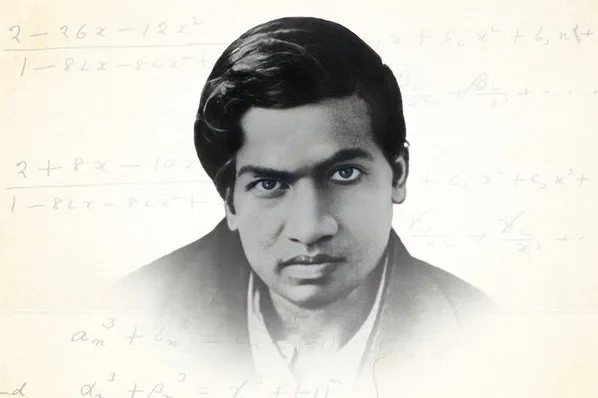
Ramanujan's IQ: the 185 that circulates and the record Hardy left
ACIS has never assessed Srinivasa Ramanujan, holds no record belonging to him, and no retrospective assessment of anyone is possible. The 185 attached to his name appears on pages that cite no test, and the 100 that Hardy is said to have given him is a talent rating, not an IQ. This page separates those numbers from what the documents hold: his 1913 letter, Hardy's own 1937 and 1940 accounts and the 1918 Royal Society and Trinity College records.
Ramanujan was born on December 22, 1887, in Erode in the Madras Presidency, according to the biography archive at the University of St Andrews.
0 The short answer
Ramanujan has no measured IQ: no intelligence test ever recorded him, and the 185 that circulates has no source behind it. The pages that print 185, 180 to 200 or 170 to 190 name no test, no date and no examiner. What the record does document is unusually strong: his letter to G. H. Hardy of January 1913, Hardy's own 1940 account of reading it, a Royal Society certificate of election in 1918 and a Fellowship of Trinity College that October. The number most often offered in place of an IQ, Hardy's 100 for Ramanujan against 25 for himself on a scale of 0 to 100 for pure talent, is a reported remark that reached print secondhand through Paul Erdős and the editor Bruce Berndt, and it is not an IQ.
185
The figure that circulates for Ramanujan, on pages that name no test, date or examiner.
100 and 25
The ratings Hardy is reported to have given Ramanujan and himself on a 0 to 100 scale of pure talent.
1918
The year of his election to the Royal Society (confirmed May 2) and to a Fellowship of Trinity College (October 10).
1 Where do the figures 185, 180 to 200 and 170 to 190 come from?
Every figure for Ramanujan traces to a web page that names no test, and the pages that look most careful say so themselves. The pages below were read on October 7, 2026. They agree on one point: none of them points to an examiner, a date, an instrument or a score report, because none exists.
Says the 185 appears across list sites and in a 2024 Reader's Digest roundup that names no source
States that no psychologist, biographer or historiometric study stands behind the figure
RIOT IQ, article by Russell T. Warne, published August 16, 2026
Discusses the 185 as an invention
Traces Hardy's ratings to Erdős and Berndt
States that Ramanujan never took an IQ test and that tests cannot be given after death
Two things follow from the table. The first is that the figures are not competing measurements. The 185 and the 180 to 200 are unsourced assertions, and the 170 to 190 is a deliberate inference that its own page labels as one. The second is that the pages that treat the topic most carefully all lean on the same piece of evidence in place of a test, Hardy's reported scale, which is why this page examines that scale in its own section below. The Reader's Digest page that geniuses.club describes returned an access error when we tried to open it, so we report its content only as geniuses.club describes it and do not quote it.
Nothing about the figures improves with repetition. A number that appears on a dozen list pages and cites no source is still one unsourced claim copied a dozen times, which is the pattern the audit of the highest IQ claims and the guide to celebrity IQ numbers document for other names. This page applies the same rule: a figure counts as evidence only when the document that produced it can be opened.
ACIS has not tested Srinivasa RamanujanACIS has never assessed Srinivasa Ramanujan, holds no record belonging to him, and no retrospective assessment of anyone is possible. Nothing on this page is an estimate of his IQ, and no figure here should be read as one. Numbers come from named sources or are labeled as our own arithmetic.
2 What did Ramanujan's 1913 letter to Hardy contain?
The letter was a clerk's unsolicited list of unproved results, and the documented reaction to it is a mathematician's judgment of the mathematics, not a measurement of the writer. Ramanujan wrote to Hardy at the beginning of 1913, as Hardy recalled in 1940, from a post as a clerk in the Port Trust office at Madras. According to the St Andrews biography, which quotes the letter, he introduced himself with the words "I have had no university education" and went on to say that he had worked at mathematics in his spare time after leaving school. Hardy's 1940 book on Ramanujan describes what the letters contained: the bare statements of about 120 theorems, mostly formal identities taken from his notebooks, with no proofs.
Hardy does not claim in that book that he recognized a genius at a glance by some general impression. He reconstructs his reaction formula by formula, and the reconstruction is the most useful primary document on the question. Some of the results he found familiar or classical: one is a formula of Laplace first proved properly by Jacobi, another occurs in a paper by Rogers of 1907. Others he could prove, though with more trouble than he expected. A group of three on a different level, which he numbers (1.10) to (1.12) in the book, defeated him completely, and he wrote that he had never seen anything like them before. His summary is that they could only have been written down by a mathematician of the highest class, because "no one would have had the imagination to invent them" if they were not true. He then reasoned that the writer must be honest, since great mathematicians are commoner than thieves or humbugs of such incredible skill.
The reconstruction also records what was wrong. Two of the fifteen results Hardy chose to print were not right: one false, one literally true but misleading. Hardy treats those as additional evidence of Ramanujan's powers and of his limits, and he notes that the false statement turned out to be one of the most fruitful Ramanujan ever made, because it led to the joint work on partitions. The rest of the printed results, he says, have all been verified since by somebody, and Rogers and Watson found the proofs of the difficult ones.
The St Andrews biography adds the next step, drawn from the edition of the correspondence by Berndt and Rankin (1995), which we did not open. Hardy and Littlewood studied the long list, and on February 8, 1913 Hardy replied that he was exceedingly interested but needed to see proofs of some results before he could judge their value. In that reply he sorted the results into three kinds: those already known, those new and interesting, and those that appeared new and important. The same biography records that Ramanujan had written to two Cambridge mathematicians, Hobson and Baker, who did not answer, and that a professor at University College London replied encouragingly but misunderstood his results on divergent series. Recognition depended on a reader able to see what was there. That is a fact about the history of mathematics. It is not a test score, and it cannot be converted into one.
3 What was Hardy's scale of 0 to 100, and who reported it?
The scale is a reported private rating that reached print through Paul Erdős and Bruce Berndt, and we could not find it in the Hardy texts we were able to read. The wording most often quoted comes from Berndt. As printed on K. Srinivasa Rao's page on Ramanujan (read October 7, 2026), it says that Erdős passed on Hardy's personal ratings of mathematicians, and that if mathematicians are rated on pure talent on a scale from 0 to 100, Hardy gave himself 25, Littlewood 30, Hilbert 80 and Ramanujan 100. The RIOT article by Russell Warne and the geniuses.club article both give the same chain, naming Erdős and Berndt.
The chain has three links, and the weakest is the first. Hardy is the rater, Erdős is the transmitter and Berndt is the editor of Ramanujan's notebooks who printed the remark. None of the pages gives a date, a place or an occasion for the conversation between Hardy and Erdős, and none says how Hardy produced the numbers. We did not open Berndt's own volume. The remark is quoted here as printed on Rao's page and as reported by the two other pages, so a reader who needs the exact page in Berndt's book should consult the book.
The natural place to look for the scale is Hardy's own writing of 1937 and 1940, so we looked there. Hardy's 1940 book, Ramanujan: Twelve Lectures on Subjects Suggested by His Life and Work, states in its preface that its first lecture is the article he published in volume 44 of the American Mathematical Monthly, reprinted without change. That article is Hardy, The Indian Mathematician Ramanujan, 1937, and we have therefore read it in its 1940 reprint rather than in the original. We searched the full text of a scan of the 1940 book on the Internet Archive for rating language, for the names of the other mathematicians and for the numbers. The scale is not there. Our search for the name Hilbert returned a single hit, in connection with a problem he proposed. Hardy's own pages describe Ramanujan in words rather than in a number, and the passages quoted below are the ones that bear on the question.
That absence matters for how to cite the scale. It is not shown to be false: three pages repeat the same chain, though they may all draw on the same printed remark, and the chain through Erdős to Berndt is a plausible one for a remark made in conversation. But it is not part of the documentary record in the way that the 1913 letter, the 1940 text and the 1918 certificate are. This page therefore calls it Hardy's reported rating throughout, and the title uses "rated" in that sense.
4 Why is a 0 to 100 talent rating not an IQ?
A rating of pure talent by one mathematician has none of the properties that make an IQ a comparable number: a defined unit, a reference population, a measured procedure and an error estimate. An IQ is a score on a test, converted through norms to a scale with a mean of 100 and a standard deviation of 15, so that the number says where a person stands among people of the same age. The guide to how IQ scores are normed and the page on standard deviation 15 describe that conversion. The reported Hardy scale shares only the appearance of a number.
Property
An IQ from a standardized test
Hardy's reported 0 to 100 scale
Who produces the number
A test given under standard conditions and scored by rule
One mathematician, as a personal judgment
What is rated
Performance on a defined set of tasks
"Pure talent", as the quotation puts it, with no definition given
Reference group
A norm sample of people of the same age
Other mathematicians in the rater's mind, never listed
Unit
Standard deviations from a mean of 100
None stated: 100 is the top of the scale, not a position in a distribution
Names rated in the reported remark
Any person who sits the test
Four: Hardy, Littlewood, Hilbert and Ramanujan
Error estimate
A confidence interval around the score
None
Can another rater repeat it
Yes, by giving the test again
No record that anyone else did
The decisive row is the unit. On a scale that stops at 100, the person at the top is at the top by construction, and the number cannot say how far above the next person he stands or how rare the position is. IQ is built the other way. A score can be turned into a percentile and a rarity because the scale is defined by a distribution, which is what the IQ rarity calculator and the explanation of IQ score versus percentile use. Nothing in Hardy's four numbers allows that step.
It would also be a mistake to read the 25 as a low score. The title page of Hardy's 1940 book names him as Sadleirian Professor of Pure Mathematics in the University of Cambridge. A man who held that chair, and who says in the same lecture that he owed more to Ramanujan than to anyone else in the world with one exception, was not describing himself as unable to do mathematics. If the remark was made as reported, it ranks a kind of gift relative to a ceiling that the rater placed at Ramanujan. It does not say that Hardy had a low IQ, and it does not say that Ramanujan had a high one on any scale that exists outside Hardy's own judgment.
What the scale does carry is something else, and it is worth stating exactly. It is the opinion of an unusually well placed observer. Hardy saw and talked with Ramanujan almost every day for several years, and in his 1940 lecture he calls himself the first authority on the subject, while warning that he knew and felt too much to be impartial. That is evidence about how a close collaborator judged a colleague. It is not evidence about a score.
5 What does the early record show, from Kumbakonam to the Port Trust?
The school and employment record shows a boy whose mathematics ran far ahead of his schooling, and it separates achievement in a curriculum from the ability he later showed on paper. Hardy gives the facts of the early life in the first lecture of the 1940 book, relying on the memoirs of Seshu Aiyar and Ramachandra Rao printed in the Collected Papers. Ramanujan was born in 1887 at Erode, near Kumbakonam in the Madras Presidency, into a Brahmin family that was, in Hardy's words, very poor. His father was a clerk in a cloth merchant's office. He went to the High School of Kumbakonam at seven, remained there nine years, and by twelve or thirteen was recognized as a quite abnormal boy.
The turning point in Hardy's account is a book. Until the age of sixteen Ramanujan had never seen a mathematical book of any higher class, and then a friend borrowed for him a copy of Carr's Synopsis of Elementary Results in Pure and Applied Mathematics from the library of the Government College of Kumbakonam. Hardy describes it as a compendium of 6,165 theorems with proofs that are often little more than cross-references, and says it marked the real starting point of his career. He adds that Ramanujan's later notebooks copied Carr's ideal of presentation, which is why they contain almost no proofs.
The same lecture records the other side. In December 1903 Ramanujan passed the Matriculation Examination of the University of Madras and in January 1904 joined the Government College at Kumbakonam, where he won a scholarship. The memoir that Hardy quotes says that he was so absorbed in mathematics that he worked on it during lectures in English, history and physiology, failed to secure promotion to the senior class and lost the scholarship. He entered Pachaiyappa's College, Madras, in 1906, fell ill and returned home, and appeared as a private student for the F.A. examination of December 1907, which he failed. He married in 1909. In 1912, after years without a regular occupation, he became a clerk in the office of the Port Trust of Madras at a salary Hardy puts at about 30 pounds a year.
Two documents from the same period point the other way. The St Andrews biography prints a reference from E. W. Middlemast, professor of mathematics at the Presidency College in Madras, supporting Ramanujan's application for the Port Trust post. It calls him a young man of quite exceptional capacity in mathematics, and says he had a natural aptitude for computation and was very quick at figure work. The same source notes that the Port Trust's chief accountant, S. N. Aiyar, was trained as a mathematician and published a paper in 1913 on Ramanujan's work.
Three lessons follow, all narrow. The first is that examination results in a general curriculum and mathematical ability are different things, and the record has both. The second is that the kind of ability Middlemast describes, facility with number, is a specific skill that a general score would blend with other abilities. The third is Hardy's own judgment of what happened. He wrote that the years between eighteen and twenty-five are critical in a mathematician's career, that the damage had been done, and that for want of 60 pounds a year for five years and occasional contact with someone who had real knowledge, the world lost the chance of another of its greatest mathematicians. None of those sentences contains an IQ, and none of them needs one.
6 What did Cambridge, the 1916 degree and the 1918 joint paper document?
The Cambridge record shows three years of intense productivity, a research degree and a long joint paper on partitions, followed by illness, and it again contains no test. Ramanujan sailed from India on March 17, 1914 and arrived in London on April 14, where he was met by E. H. Neville, according to the St Andrews biography. Trinity College Library says he arrived in Cambridge in the spring of 1914 and moved into rooms in Whewell's Court. The biography adds that he was allowed to enrol in June 1914 despite lacking the usual qualifications.
The degree is recorded slightly differently by two sources, and the difference is worth stating. The St Andrews biography says that on March 16, 1916 Ramanujan graduated from Cambridge with a Bachelor of Arts by Research, that the degree was called a Ph.D. from 1920, and that his dissertation was on highly composite numbers and consisted of seven of his papers published in England. The Trinity College Library post says he received a Bachelor of Science degree by research, now called a PhD, in 1916. Both agree on the year, on the research route and on the degree being the forerunner of the doctorate. We report the name of the degree as unresolved between the two.
Hardy's 1940 summary of the Cambridge years is short. He and Neville, after many difficulties, got Ramanujan to England in 1914, where he had three years of uninterrupted activity, the results of which could be read in the Collected Papers. Ramanujan fell ill in the summer of 1917, never really recovered and continued to work, rather spasmodically, but with no real sign of degeneration, until his death in 1920. A paper from this period is Hardy and Ramanujan, Asymptotic Formulae in Combinatory Analysis, published in the Proceedings of the London Mathematical Society in 1918, volume s2-17, issue 1, pages 75 to 115. Hardy's 1940 text names the joint work on partitions as the outgrowth of one of Ramanujan's mistaken statements, and says that in England Ramanujan learned what was meant by proof, so that his later papers, though odd and individual, read like the works of a well informed mathematician.
His health is part of the record and is stated here soberly. The St Andrews biography quotes medical correspondence in which tubercle was the provisionally accepted theory of the illness. It records that Ramanujan sailed back to India on February 27, 1919 and arrived on March 13, and that he died there on April 26, 1920. In a letter of late 1918 that the same biography quotes from the Berndt and Rankin edition, Hardy wrote that there had never been any sign of diminution in his extraordinary mathematical talents. The sentence is useful for what it shows about how Hardy judged ability: by the quality of the work, which he could read, and not by a score, which did not exist.
7 What do the Royal Society and Trinity College records show for 1918?
The 1918 records are the firmest documentary evidence of how his peers judged him, because they are dated and kept by the institutions that made them. The Royal Society holds the certificate of election to the Royal Society, catalogue reference EC/1918/18, which is displayed on Google Arts and Culture. It describes him as a research student in mathematics distinguished as a pure mathematician, particularly for his investigations in elliptic functions and the theory of numbers. It then lists his papers: sole-authored work on modular equations, on Riemann's function, on highly composite numbers and on arithmetical functions, and joint work with Hardy on asymptotic formulae and the distribution of prime factors.
The dates come from the St Andrews biography. On February 21, 1918, three days after he was elected a fellow of the Cambridge Philosophical Society, his name appeared on the list for election as a fellow of the Royal Society. He had been proposed by Hardy, MacMahon, Grace, Larmor, Bromwich, Hobson, Baker, Littlewood, Nicholson, Young, Whittaker, Forsyth and Whitehead, a list that includes two of the mathematicians who had not answered his earlier letters. The election was confirmed on May 2, 1918, and on October 10, 1918 he was elected a Fellow of Trinity College, Cambridge, for six years. Trinity College Library says that in October 1918 he was the first Indian to be appointed a Fellow of the College.
One claim in Hardy's own text needs a documentary correction. In the lecture of 1937, reprinted without change in 1940, Hardy wrote that Ramanujan was the first Indian elected to either society. The Royal Society's own account, published on Google Arts and Culture as The Royal Society and India, states that Ardaseer Cursetjee was the first Indian citizen elected to the Society, on May 27, 1841, and that Ramanujan was the second. The Trinity claim is not contradicted by anything we found. The correction is not a criticism of Hardy; it shows that even the best informed witness is checked against the register, which is the standard this page applies to every figure.
It is worth being exact about what these records establish. They establish that a body of professional mathematicians judged his published work distinguished enough to elect him, and that Trinity College then gave him a six year fellowship. They do not establish a score, and a fellowship is not an inference about intelligence. A reader who wants to compare him with other mathematicians should compare the records, and the pages on Terence Tao and John von Neumann do that for two later mathematicians without inventing a number.
8 What is the 1729 story, and what does it show?
The 1729 story is one recollection by Hardy, printed in 1940, and it documents his impression of Ramanujan's command of numbers rather than any measurement. The passage sits in the first lecture, on page 12 of the 1940 printing. Hardy first reports a remark he attributes to Littlewood, that every positive integer was one of Ramanujan's personal friends. Then he tells the story in the first person. He went to see Ramanujan once when he was lying ill at Putney, having ridden there in taxi cab number 1729, and he remarked that the number seemed to him rather a dull one and that he hoped it was not an unfavourable omen. Ramanujan answered that it was a very interesting number, the smallest expressible as a sum of two cubes in two different ways. Hardy's footnote gives the two ways: 1,729 is 12 cubed plus 1 cubed, and also 10 cubed plus 9 cubed.
Hardy then asked, as he puts it, naturally, whether Ramanujan could give the corresponding number for fourth powers. According to Hardy, Ramanujan thought for a moment, said that he knew no obvious example and supposed that the first such number must be very large. Our own arithmetic shows he was right about that. The smallest number that is a sum of two fourth powers in two different ways is 635,318,657, which equals 59 to the fourth plus 158 to the fourth, and also 133 to the fourth plus 134 to the fourth. We checked this by direct computation, and it is our arithmetic rather than a claim of Hardy's.
The story is valuable, and it also has limits that a careful reader should state. It is a single anecdote told by one person, long after the event, with no date given. It has no examiner other than Hardy, and the second question shows Hardy testing his friend informally rather than a procedure that anyone could repeat. What it does show is that Ramanujan could retrieve a property of an arbitrary number at once and could reason about the neighboring problem for higher powers. In the language of the CHC model, that touches several things a test would separate: quantitative knowledge and reasoning (Gq), long term storage and retrieval, and the fluid reasoning (Gf) needed to see why a fourth power example would be harder to find. An anecdote cannot tell those apart, and it cannot say how any of them compares with a norm group.
It is also worth saying what the story does not need. It does not need an IQ to be astonishing, and it does not become more reliable if one is attached. The page on the Dunning-Kruger effect and IQ covers a related problem, the gap between how able people feel and how able a test finds them.
9 What do the notebooks and the errors show about the kind of talent involved?
The notebooks and Hardy's assessment of them show a talent that was extraordinary and uneven: formal and pattern based work of the highest order alongside gaps in proof and some mistaken conclusions. Hardy's account is blunt. In the 1940 lecture he writes that about two thirds of Ramanujan's best work done in India was rediscovery, because he was a poor and solitary man working against the accumulated mathematics of Europe with perhaps three or four books of good quality. The notebooks contain practically no proofs, in the style of Carr's book. Hardy adds that Ramanujan probably never understood clearly what an analytic function is, and that he almost never used Cauchy's theorem, so that the most astonishing testimony to his formal genius is that he never seemed to feel the want of it.
Hardy is equally direct about the errors. In the analytic theory of numbers, he writes, even Ramanujan's imagination led him very seriously astray. He gives the example of a statement about the number of integers that are sums of two squares, in which Ramanujan was deceived by a false analogy with the distribution of primes. In the discussion of proof that follows, Hardy says that a mathematician usually discovers a theorem by an effort of intuition and then sets to work to manufacture a proof, and that imagination is a very unreliable guide. His own conclusion about Ramanujan's later work is that in England he learned what was meant by proof.
The record continues after Ramanujan's death. Trinity College Library holds his papers, including the lost notebook rediscovered in 1976, which the Library describes as about 138 sheets with over six hundred formulae and no proofs, covering the last two years of his life. Hardy says that Ramanujan's last mathematical letter, written about two months before his death, concerned mock theta functions, the subject of Professor Watson's presidential address to the London Mathematical Society. Research on mock theta functions did not end there. Bringmann and Ono's 2006 paper, The f(q) mock theta function conjecture and partition ranks, in Inventiones Mathematicae, volume 165, issue 2, pages 243 to 266, is one later paper whose title names a mock theta function conjecture.
What this means for a reader trying to picture the ability behind the record is that it was a profile and not a single height. A talent for formal manipulation, for spotting relations among series, for recalling the character of numbers, and a weaker grasp of rigor and of general theory can coexist in one person. A single score compresses such a profile into one number, and any retrospective figure would erase exactly the unevenness that Hardy considered most interesting. His own warning, in the same lecture, was against turning Ramanujan into a mystery: he wished to present a rational human being who happened to be a great mathematician, not a wonder from the East, an inspired idiot or a psychological freak. The page on savant syndrome explains why that distinction matters when extraordinary skill is described, and the guide to intelligence versus wisdom covers the separate question of judgment that Hardy's remark touches.
10 Can anyone estimate a retrospective IQ for Ramanujan?
No method can turn the surviving documents into an IQ, and the one famous historical method does not cover him. Ramanujan was born in 1887, outside the range Cox covered in her 1926 study, which concerned geniuses who lived between 1450 and 1850, and the page on Mozart's IQ describes her method and what it could and could not show. Cox's study is the best known historical estimate of childhood IQ, and it is not available for him. Her volume is the second volume of Genetic Studies of Genius, Cox, The Early Mental Traits of Three Hundred Geniuses, Stanford University Press, 1926, and we searched the scanned text for his name and found no entry.
Any estimate made now would therefore be new and unreviewed. The only one we found among the pages in the table above is iqmetrics.org's 170 to 190, which its own page describes as an inference built from Hardy's rating, his output and his election. That is the kind of reasoning this page declines to do. Whatever number results from a rating of achievement is a statement about the rater's assumptions: change how much weight the 1918 election carries and the figure moves. The page on genius IQ and where the 140 threshold came from shows what Cox's own ratings did and did not predict within a selected group, which is a caution for anyone treating achievement as a proxy for a score.
A deeper difficulty is that the field has not agreed on what it would mean to measure talent in a scientist. Simonton's 2008 review, Scientific Talent, Training, and Performance: Intellect, Personality, and Genetic Endowment, in Review of General Psychology, volume 12, issue 1, pages 28 to 46, begins from the position that despite over a century of research psychologists have still not established scientific talent as an empirically demonstrable phenomenon. His paper proposes a definition of talent and ways to estimate how much criterion heritability can be attributed to it. It is a statement about the state of the science in 2008, and it explains why a casual number for a historical figure cannot rest on the science.
Nor does a ratio calculation rescue the figure. The childhood ratio of mental age to chronological age was the original IQ, and the guide to mental age explains why that formula inflates for young children and was abandoned for adults. There is no childhood test record for Ramanujan to apply it to. The history of IQ testing is the place to see how the formula gave way to deviation scores, and the audit of Isaac Newton's IQ follows the same trail for a figure that circulates for a man who lived before any test.
11 What would a modern test measure in a profile like his, and how do other mathematicians compare?
A modern battery would sample several broad abilities that mathematical work draws on, and it would report them as a profile, not as the achievement they are sometimes mistaken for. In the CHC framework reviewed by McGrew in 2009, published in Intelligence, volume 37, issue 1, pages 1 to 10, intelligence is described by broad abilities such as fluid reasoning (Gf), crystallized knowledge (Gc), quantitative knowledge (Gq), visual processing (Gv), working memory (Gwm) and processing speed (Gs). The pages on the CHC model and on cognitive domains in IQ testing set out how they are defined. In ACIS terms these correspond to the Fluid Reasoning, Quantitative Reasoning, Visual Spatial, Working Memory, Verbal Comprehension and Processing Speed indices.
It would be a mistake to assume that mathematical achievement sits in one of them. The evidence from talented adolescents points to more than one. In Kell, Lubinski, Benbow and Steiger's 2013 study, Creativity and Technical Innovation, in Psychological Science, volume 24, issue 9, pages 1831 to 1836, 563 intellectually talented 13 year olds, identified by the SAT as in the top 0.5 percent of ability in the late 1970s, were assessed on spatial ability, and more than 30 years later the researchers examined who had patents and refereed publications. The SAT mathematical and verbal subtests jointly accounted for 10.8 percent of the variance among those outcomes, and adding spatial ability accounted for an additional 7.6 percent. The authors concluded that spatial ability has a unique role in creativity beyond the abilities traditionally measured in educational selection. For a reader the lesson is that visual spatial reasoning, covered in the page on spatial intelligence, is not the same ability as quantitative skill, and that talent in mathematics is plural.
The pages on other famous mathematicians show the same pattern from different directions. The page on Terence Tao rests on olympiad results, university records and a published body of work, and argues that those are better evidence than a score. The page on John von Neumann traces the 180 and 200 attached to his name and sets them against his documented work. In each case there is a record that can be checked, a number that circulates and no test behind it, and the comparison is made on the records, not on figures that would have to be invented. That is also why this page offers no ranking of Ramanujan against them.
The question of where he came from deserves a separate caution. The page on the average IQ in India concludes that no representative sample of Indians has reported on the IQ scale from a test normed for India, which means that even a modern comparison would face questions of norms. The page on bias and fairness in IQ tests explains how language, schooling and culture bear on whether a score means the same thing for different people. A reader should not read this as a claim about Ramanujan. It is a reminder that a score is always relative to a norm group, and we know of no norm group for his time and place.
12 How should a score, or any number attached to a name, be read?
A score is an interpretation of test performance for a stated use, and the Standards for Educational and Psychological Testing say that the interpretation needs its own evidence. The Standards for Educational and Psychological Testing, published by the American Educational Research Association, the American Psychological Association and the National Council on Measurement in Education in 2014, open their chapter on validity with a standard that applies directly to this page. Standard 1.0 says that clear articulation of each intended test score interpretation for a specified use should be set forth, and that appropriate validity evidence in support of each intended interpretation should be provided. Standard 1.4 says that if a test score is interpreted for a given use in a way that has not been validated, it is incumbent on the user to justify the new interpretation, providing a rationale and collecting new evidence if necessary.
Applied to the numbers in this article, the standards give a short answer. The 185 has no stated interpretation, no test, no validity evidence and no one responsible for it. The 0 to 100 rating is an observer's judgment that was never offered as a test score, so reading it as an IQ is a new use for which no evidence exists. Either number would fail the standard in the same way, and neither fails because Ramanujan was or was not able. They fail because nobody measured him.
The APA Guidelines for Psychological Assessment and Evaluation, approved by the APA Council of Representatives in March 2020, add three further points that bear on how a reader should treat any number. Guideline 6 asks psychologists to select assessment tools that demonstrate sufficient validity evidence for their uses, sufficient score reliability and sound psychometric properties. Guideline 7, in its rationale, states that individual performance on psychological tests is only one piece of an assessment, set in a context of background and other sources of information. Guideline 8 calls for appropriate normative comparison and standardized administration. A number derived from biography and a talent rating satisfy none of the three.
For a reader who wants an actual number, the practical consequence is to measure the person who is reading. ACIS reports a Full Scale IQ and six primary indices on the standard scale with a mean of 100 and a standard deviation of 15, with percentiles and a 95 percent confidence interval. It is online and unsupervised, and it is not a clinical or diagnostic instrument and not suitable for hiring, school accommodations or admission to high IQ societies. It is available in English only. The forms are one time payments with no subscription, read on October 6, 2026 at 15 dollars for Quick, 30 dollars for Optimized and 50 dollars for Full Scale, and a free trial requires no card. The documentation is on the technical manual page and the guide to reliability and validity explains how to read a confidence interval. Compare the options in the guide to the best online IQ tests before choosing any instrument.
Every figure above is traceable to one of the following, and each is linked at the point where it is used. Web pages were read on October 7, 2026 unless stated. Figures marked as our arithmetic are calculations on published numbers and are not attributed to any author.
Hardy G H. Ramanujan: Twelve Lectures on Subjects Suggested by His Life and Work. Cambridge University Press, 1940. Lecture I (the 1937 article, reprinted without change), including the account of the 1913 letter, the early life, the 1918 elections and the 1729 story, was read in the Internet Archive scan.
Hardy G H. The Indian Mathematician Ramanujan. The American Mathematical Monthly, volume 44, issue 3, 1937, pages 137 to 155. Read in its reprint as Lecture I of the 1940 book, as the preface states.
Hardy G H and Ramanujan S. Asymptotic Formulae in Combinatory Analysis. Proceedings of the London Mathematical Society, volume s2-17, issue 1, 1918, pages 75 to 115. Bibliographic record checked in Crossref.
Cox C M. The Early Mental Traits of Three Hundred Geniuses. Genetic Studies of Genius, volume 2, edited by L M Terman, Stanford University Press, 1926. The introduction states the period covered, 1450 to 1850, and a search of the scanned text found no entry for Ramanujan.
Kell H J, Lubinski D, Benbow C P and Steiger J H. Creativity and Technical Innovation: Spatial Ability's Unique Role. Psychological Science, volume 24, issue 9, 2013, pages 1831 to 1836. Crossref lists the title as Creativity and Technical Innovation. The abstract was read through Crossref.
O'Connor J J and Robertson E F. Srinivasan Ramanujan. MacTutor History of Mathematics archive, University of St Andrews. It quotes the 1913 correspondence and Hardy's letters from the edition of Berndt and Rankin, Ramanujan: Letters and Commentary (American Mathematical Society and London Mathematical Society, 1995), which we did not open.
American Educational Research Association, American Psychological Association and National Council on Measurement in Education. Standards for Educational and Psychological Testing. AERA, 2014. Standards 1.0 and 1.4 were read in the open access PDF.
Ramanujan has no documented IQ because he never took an intelligence test. The figure of 185 that appears online comes from pages that cite no test, date or examiner. What exists instead is a documented record of mathematical work, letters, a degree and two elections in 1918.
Did Ramanujan ever take an IQ test?
No record shows that he did. The sources read for this page, including his biography, Hardy's 1940 account and the Royal Society and Trinity College material, describe letters, papers and examinations in school, but none describes an intelligence test. Pages that give a number do not name a test.
Where does the 185 come from?
The 185 appears on list pages and quiz sites that give no source. One page describes a 2024 roundup that repeats it without citation. No psychologist, biographer or historian publishing a study is named behind it, so it is best read as a number copied between pages.
Was Ramanujan's IQ 200 or higher?
There is no basis for saying so. Some pages print ranges such as 180 to 200 or 170 to 190, but the pages themselves state that no test exists, and one calls its range an inference. A figure above any real test result would still be a guess about someone never measured.
How smart was Ramanujan compared with other geniuses?
He cannot be ranked by IQ, but his peers judged his work exceptional. Hardy called some of his formulas the work of a mathematician of the highest class, and the Royal Society elected him in 1918. Comparison with others is possible only through records of achievement, not scores.
Was Ramanujan a genius?
Mathematicians who knew his work called him one, and the records support the judgment. Hardy described profound and invincible originality, and Cambridge colleagues proposed him for the Royal Society. Genius in that sense describes documented achievement, which is a different thing from a test score.
Is there an official estimate of Ramanujan's IQ?
We found no official estimate from a university, psychological association or archive. The only calculations come from websites that infer a number from his achievements. One such page states plainly that its estimate is an inference and not a measurement, and another says tests cannot be given after death.
What was Hardy's scale of 0 to 100?
It is a reported personal rating of mathematicians on pure talent, in which G. H. Hardy gave himself 25, Littlewood 30, Hilbert 80 and Ramanujan 100. It was passed on by Paul Erdős and printed by Bruce Berndt, and it is a judgment by one person, not a test.
Did Hardy write down the 100 and 25 himself?
We found no sign that he did. The scale is credited to Erdős repeating Hardy's remarks and to Berndt printing them. A search of the 1940 book, which reprints Hardy's 1937 article without change, found no such ratings. The original source of the wording remains unlocated in the texts read.
What did Ramanujan's 1913 letter to Hardy contain?
It introduced a clerk in Madras with no university education and enclosed a long list of results, which Hardy later described as about 120 theorems, mostly formal identities, without proofs. Hardy and Littlewood studied them, and on February 8, 1913 Hardy replied asking for proofs of some.
What is the story of the number 1729?
Hardy recalled riding in taxi cab number 1729 to visit Ramanujan, who was ill, and calling the number dull. Ramanujan replied that it is the smallest number expressible as a sum of two cubes in two different ways. Hardy told the story in 1940.
When was Ramanujan elected to the Royal Society?
His name appeared on the list in February 1918, and the election was confirmed on May 2, 1918. The certificate, held by the Society under reference EC/1918/18, describes him as distinguished for investigations in elliptic functions and the theory of numbers. He was the second Indian Fellow.
Was Ramanujan a Fellow of Trinity College?
Yes. He was elected a Fellow of Trinity College, Cambridge, on October 10, 1918, for six years, according to the St Andrews biography. Trinity College Library describes him as the first Indian appointed a Fellow of the College, and it holds his papers.
Did Ramanujan have a university degree?
He graduated from Cambridge in 1916 with a degree by research, though sources differ on its name. One gives Bachelor of Arts by Research and another Bachelor of Science by research. Before Cambridge he held no degree and had failed the F.A. examination in 1907.
Is a rating of 100 out of 100 the same as an IQ of 100?
No. An IQ of 100 is the average score on a normed test, while a rating of 100 on a 0 to 100 scale marks the top of that scale. The two numbers share a digit only. A rating gives no position in any distribution of people.
Can an IQ be estimated after someone has died?
Not as a measurement. A test requires the person to perform standardized tasks, and nobody can do that after death. Historians can describe achievements and sometimes rate biographical records, but the result is an opinion about records, with unknown error, not an IQ score from a test.
Why do IQ figures for dead geniuses keep circulating?
Round, impressive numbers are easy to copy and nobody can disprove them. A list page needs a figure for every name, and a figure that looks precise gets repeated. Once several pages print the same number, readers take the repetition for confirmation, even though the original claim never had a source.
What would a modern IQ test measure about a mathematician like Ramanujan?
It would sample broad abilities such as fluid reasoning, quantitative reasoning, visual spatial processing, working memory and verbal comprehension, and report them as a profile with a confidence interval. It would not measure his originality, his notebooks or the proofs he produced, which are products of a lifetime of work.
Does a high IQ explain mathematical genius?
Not on its own. In a study of 563 talented adolescents followed for over 30 years, spatial ability added to the explanation of patents and publications beyond SAT mathematical and verbal scores. Mathematical achievement draws on several abilities, plus knowledge, training, motivation and opportunity.
Can I measure my own cognitive profile with ACIS?
Yes. ACIS reports a Full Scale IQ and six indices with percentiles and a 95 percent confidence interval. It is online and unsupervised, so it is not a clinical or diagnostic instrument and not for hiring, school accommodations or high IQ society admission. A free trial needs no card.
What should I do with a score from an online test?
Read it as an estimate with a range, not a verdict. Look at the percentile and the confidence interval, check what the test claims to measure, and keep its limits in mind: online, unsupervised and not clinical. If a decision depends on the score, seek a qualified psychologist.
Take the assessment
You get a profile, not a number
ACIS measures six CHC domains across 20 subtests and reports each one with its own normed score and confidence interval, so you can see where you are strong and where you are not.