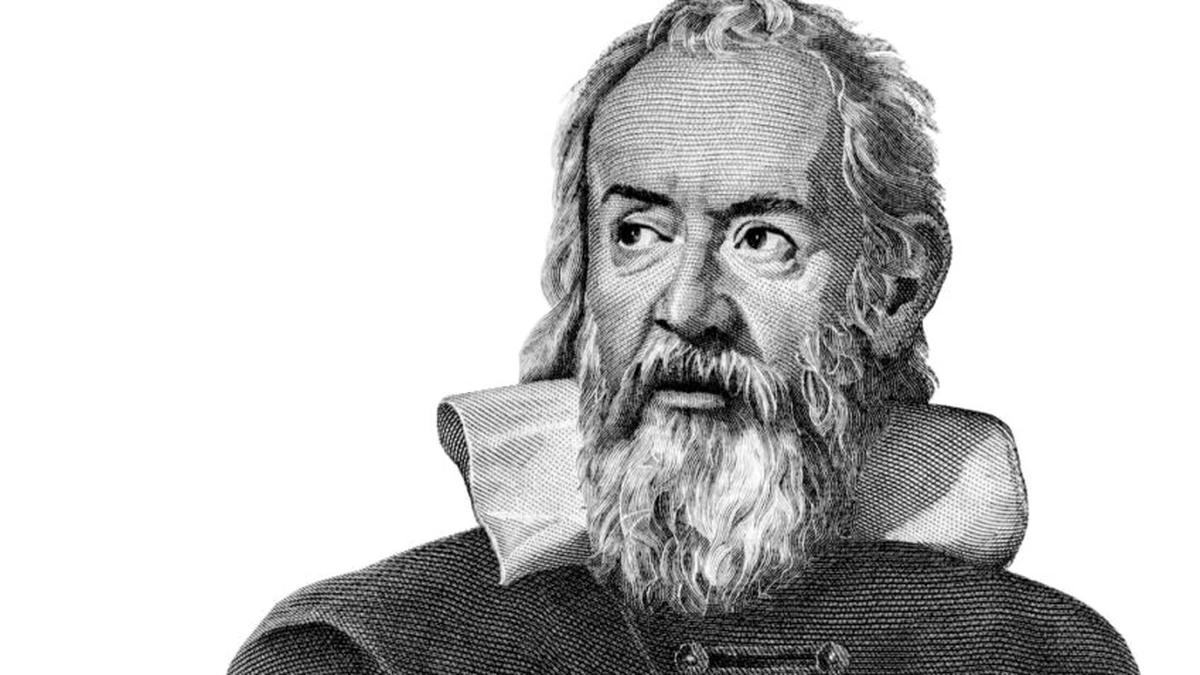
Galileo Galilei's IQ: the 145 and 165 that Cox rated, and the 185 nobody can source
ACIS has never assessed Galileo Galilei, holds no record belonging to him, and no retrospective assessment of anyone is possible. The only documented rating is Catharine Cox's 1926 pair of 145 and 165, made from one biography, while the 185 online has no test behind it. This page traces each figure and then reads what the Sidereal Messenger, The Assayer and the 1633 sentence actually record.
Cox's 1926 volume rates Galileo only for the years to age 17 and to age 26, a window that closes about two decades before his telescope book of 1610.
0 The short answer
Galileo Galilei has no documented IQ: the only published rating is Catharine Cox's 1926 pair of 145 for his first 17 years and 165 for his first 26, estimated from a single biography, and the 185 that circulates has no test, date, examiner or norm group behind it. Cox rated records, not a person who sat a test, and her window closed about two decades before the Sidereal Messenger of 1610. What the record does document is a telescope book, a 1623 treatise on method and a 1633 sentence, which show achievement rather than a score. ACIS has never assessed him.
145
Cox's 1926 rating of Galileo for the years to age 17, with a data reliability coefficient of .53.
165
Cox's rating for the years to age 26, with a data reliability coefficient of .60.
185
The figure repeated on popular pages, found with no test, date, examiner or norm group.
1 Which IQ is attributed to Galileo, and where does each figure come from?
The pages that rank for the question print figures from 145 to 200, and none of them names a test, a date, an examiner or a norm group for Galileo. On October 13, 2026, this review opened the pages below and read what each says about the basis of its number. The table sets each claim beside the evidence the page offers for it.
185 or more in its table, "exceeded 185" in its introduction, and 180 to 190 elsewhere
Credits Lewis Terman with an estimate of about 185 from mental age over chronological age, a "Marin Ferecht" with 180 to 190, and a computer linguistic analysis of trial dialog
No document for any of the three. The same page concedes that modern IQ tests did not exist in his lifetime
check-iq.org, published July 28, 2024 and updated August 22, 2024
175
Averages three sources: Genetic Studies of Genius (145), Business Insider (190) and Big Think (190)
It uses the childhood figure from Cox and ignores her 165. It says some inputs are midpoints of ranges
A book by a Stanford psychologist, named as Catherine Cox Miles
No figure for Galileo alone, and the 20 points do not match Cox's printed pairs, as a later section shows
Two things stand out. First, the figures sit in three clusters: the 145 that matches Cox, the 160 to 190 band, and the 180 to 200 band. Second, the one page that cites a method for a high number cites three methods that cannot be checked. A chain of pages that repeat one another is a single claim appearing many times, not many independent findings.
The History Tools page deserves a closer reading because it offers the most detail. It says Terman estimated about 185 by pegging mental age over chronological age. Terman did work on this kind of historical estimate, and the section on how Cox's study worked explains his role. This review found no Terman estimate for Galileo in any source it opened, and the entry Cox printed for Galileo carries 145 and 165, not 185. The same page names "Marin Ferecht," a Hungarian polymath, as a source for 180 to 190. One search for that name found no matching person or publication, so the claim stays unverified.
The third basis on that page is a "computer linguistic analysis" of the Inquisition trial. The page lists three metrics and names no software, sample, author or study. A later section reads that claim in full. For now it is enough to note that a number resting on a method nobody can name is a claim, not a result.
ACIS has not tested Galileo GalileiACIS has never assessed Galileo Galilei, holds no record belonging to him, and no retrospective assessment of anyone is possible. Nothing on this page is an estimate of his IQ, and no figure here should be read as one. Numbers come from named sources or are labeled as our own arithmetic.
2 What did Catharine Cox rate for Galileo, and what do 145 and 165 mean?
The 145 and the 165 are the only ratings of Galileo that come from a documented procedure: Catharine Cox's 1926 volume, which estimated IQ from biographical records for two life periods and attached a reliability coefficient to each. Cox's book, The Early Mental Traits of Three Hundred Geniuses, is the second volume of Lewis Terman's Genetic Studies of Genius. Simonton's 2020 article in Gifted Child Quarterly describes it as a retrospective study of 301 eminent creators and leaders, using historiometric methods to estimate their IQs. The subjects were born between 1450 and 1850, and Galileo is one of the names Simonton lists as typical of her sample.
Cox could not test anyone. Simonton notes that she could not posthumously administer standardized tests to deceased subjects, so she relied on methods for applying quantitative techniques to biographical data. Each subject received two ratings. The first, which Cox calls the AI IQ, is an average of three independent estimates of his intelligence as reported to his 17th birthday. The second, the AII IQ, is the same kind of average for the record to his 26th birthday. Cox wrote that the ratings are estimated from the records as they stand. Simonton identifies the three raters as Cox herself, her mentor Terman and Dr. Maud Merrill, who collaborated with Terman on revisions of the Stanford-Binet scale.
Galileo's entry opens with the heading "AI IQ 145, AII IQ 165." The reliability coefficient of the data is .53 for the first rating and .60 for the second. Cox defines that coefficient as a measure of how reliable, for estimating an IQ, the data behind the estimate are. It describes the surviving record, not the person. Cox also reports that about half of her main group of 282 cases had data for the first rating at .53 or above, and about 60 percent had data for the second at that level. Galileo's first rating sits at that threshold, so the evidence behind it was typical of her sample rather than thin by her own scale, and it was not strong either.
It helps to place the two numbers among her averages. Cox reports that the obtained averages for the main group were 135 for the first period and 145 for the second. Galileo's 145 is 10 points above the first average and his 165 is 20 points above the second, which is our arithmetic. Every subject in the group was already eminent, so a rating above the group average means high within a very select group, not high among people in general.
The numerals mean something specific. Cox defined the IQ as a ratio of mental age to chronological age and, in her words, used it without the limitation that testing practice places on the upper mental ages. Read as a literal ratio, 165 would mean a mental age 1.65 times the chronological age, our arithmetic. Cox did not intend it that way. She treated each figure as a relative standing, and she warned against over-reading differences between her own ratings. Her example was that a rating of 190 for one subject in youth and 145 for another should not be taken to mean that the first was 45 points brighter in truth. The page on how mental age works and where the formula fails explains the ratio, and the page on where the genius threshold of 140 came from places Cox's method in the wider story.
3 What evidence stood behind Cox's two ratings for Galileo?
Cox's entry for Galileo rests on one biography, the 1903 Fahie volume listed under the entry, and it covers only the years to 26, so the telescope book, The Assayer and the Dialogue all lie outside the window she rated. The case study in her volume sets out the record in numbered headings, and the table summarizes what it holds.
Period rated
What Cox's entry records
Rating and data reliability
To age 17
Ingenious toy machines as a favorite pastime. Skill on the lute, drawing and painting, and a wish at one point to become a painter. Poetry. Greek and Latin at home and at the Vallombrosa monastery, with little taste for logic. A novitiate at the monastery. The entry's line for precocity reads "No further record"
145, reliability .53
Age 17 to 26
Medicine at Pisa for nearly four years, left without a doctor's degree. Mathematics learned at 19 through the tutor Ricci. A hydrostatic balance at 22. An essay on centers of gravity that brought fame in Italy. Failed applications for chairs until a professorship at Pisa at 25. The cycloid. The treatise De Motu Gravium at 26
165, reliability .60
Cox summarized the first rating in the section where she explains the cases rated 145. She wrote that Galileo possessed intellectual aptitudes of various kinds, coupled with considerable mechanical inventiveness, that he was a superior draughtsman and a musician, and that his greatest interest was scientific study. That is a list of precocious accomplishments in several fields, which is what her method rewards.
Three features of the entry limit what the numbers can carry. The first is the source. The reference list printed under the entry names one book, John Joseph Fahie's Galileo, His Life and Work, published in 1903. Simonton reports that the case studies in her volume are abstracts of chronologies compiled from more than 3,000 biographical sources across the whole sample. For Galileo, the printed entry points to a single book. Whether the raters worked from other material is not stated in the entry, and this review does not claim to know.
The second feature is the quality of the evidence. Cox wrote that the more reliable the data, the higher the estimate. Her tables show a consistent relationship between height of rating and reliability of data. A rating of 145 on data at .53 is therefore a different kind of statement from a rating of 145 on data at .75. The entry itself flags weaker ground in places. It passes on the tale of the swinging lamp in the cathedral at Pisa with the words "so the story goes," and the precocity line says there is no further record.
The third feature is the window. Cox's second period ends at the 26th birthday, which for Galileo means about 1590. His book on the telescope appeared in 1610, when he was 45. The Assayer followed in 1623 and the Dialogue in 1632. None of these was in front of Cox's raters. A reader who sees "165" beside the name of the man who discovered the moons of Jupiter is reading a rating of a 26-year-old with a record of instruments, an essay and a treatise on motion. The later work is exactly what the popular pages invoke when they justify a number in the 180s, and it was not part of the rating.
4 How do 145 and 165 turn into 175, 185 and 190?
Figures in the 175 to 190 range can be produced from Cox's numbers by averaging, by correction or by rounding, and each route yields a number that Cox herself did not publish for Galileo. The table sets out the routes this review found or could reconstruct, and it labels our own arithmetic.
Route
What it does
Result
Status
Averaging inputs
check-iq.org averages Cox's 145 with two popular figures of 190
175
Published by that page. The 145 is Cox's first rating, the 190s are not traced to a test
Midpoints of ranges
Big Think prints 180 to 200, and check-iq.org says some inputs are midpoints
190
The midpoint of 180 and 200, which is our arithmetic. No range is sourced
Misattribution
History Tools credits Terman with about 185
185
No document found. Cox's printed entry says 145 and 165
Correction by regression
Cox's own formula raises a rating toward a group mean in proportion to the unreliability of the data
About 186 or 183 for the second rating
Our arithmetic, not published by Cox for Galileo
The correction route needs explaining, because it is the closest thing to a documented way of reaching the 180s. Cox recognized that her raters regressed toward 100 when the data were thin, so the obtained averages understated true levels. She proposed a correction, which she calls Formula a, that adds to an obtained score the increment it would have received had the estimate been made on the basis of a group mean instead of 100. In her table of corrected estimates for the second period, the group of scientists had an obtained mean of 152 with a reliability of .59, and the corrected group figure printed there is 175. The whole group of 282 had an obtained mean of 145 and a corrected figure of 165.
Apply the same formula to Galileo's second rating, which is our arithmetic and not a figure Cox printed. With the scientists' mean of 152, the difference from 100 is 52. The unreliability of his data is 1 minus .60, which is .40, and 52 times .40 is about 21, so 165 becomes about 186. With the whole-group mean of 145, the same steps give about 183. A number in the 180s is therefore reachable from Cox's two printed figures by her own published method. That does not show where any web page got its number. It shows that a figure near 185 does not need a mystery, and that it would be a corrected figure derived from a reliability of .60, not a measurement.
Cox was explicit about the limits. She wrote that the purpose of the corrected estimates is not to furnish exact values for the score of an individual or even of a group, but to indicate the region of the IQ scale in which the true values may be found. In the tables this review read, she printed the corrected figures for groups, in Tables 20A and 20B, and not for individual cases. The page on Isaac Newton's circulating 190 shows the same pattern for another name: a corrected figure attributed to Cox's method and repeated as if it were her rating. The page on Napoleon and Cox's 135 and 140 estimates shows what her raw ratings look like when read with care.
A final point concerns the NOVA blog's claim that Galileo sat about 20 points above Mozart. Cox's printed headings give Mozart 150 and 155 and Galileo 145 and 165. The first-period difference is minus 5 and the second is plus 10, which is our arithmetic. The blog's figure matches neither raw pair. It might reflect a corrected comparison or a loose summary. The page does not say, and the number should not be repeated as Cox's finding.
5 What does the documented record hold before 1610?
The record before 1610 is a sequence of dated appointments, enrollments and lectures, and it documents a mathematician's career, not a score. The table lists what the sources opened for this review establish. Where Cox and the biographer differ on detail, the table follows the biographer, and the text says so.
Date
What is documented
Where it is documented
February 15, 1564
Born in Pisa, the son of Vincenzo Galilei, a music teacher and fine lute player who experimented with strings to support his musical theories
Sent to the monastery at Vallombrosa, where he became a novice. His father opposed a religious life and brought him back to Florence
MacTutor
1581
Enrolls at the University of Pisa for a medical degree that he never completed
MacTutor
1582 to 1583
Attends Ostilio Ricci's course on Euclid, and Ricci encourages him to study mathematics
MacTutor
By 1585
Leaves the medical course without a degree
MacTutor
1589
Appointed to the chair of mathematics at Pisa
MacTutor
1592
Becomes professor of mathematics at Padua, with an inaugural lecture on December 7, 1592, and stays eighteen years
MacTutor
1609
Builds telescopes after hearing of a Dutch spyglass, and by August 1609 has an instrument of roughly 8 to 9 times magnification
MacTutor
The dates agree with Cox's entry on the points that overlap. Cox also has him leaving Pisa without a doctor's degree after nearly four years, and learning mathematics at 19 through a tutor named Ricci. Her entry adds the story of the swinging lamp in the cathedral, which she introduces with "so the story goes," and the biographer's account used here does not need it. The table leaves the lamp out on purpose. A tale that the principal source itself hedges should not be counted among the documents.
What does each row prove? It proves that an institution made a decision. A university chair at 25, then a second at 28, shows that people who judged mathematicians rated him highly in his twenties. It is a good fact. It is also a judgment made by a few decision makers among the candidates they knew, with no stated reference group, and nobody built it to be converted to a position on a population scale. The page on what an IQ test measures explains how a standardized test differs, and the page on the CHC model lists the abilities such a test separates. A chair at Padua does not separate them.
6 What does the Sidereal Messenger of 1610 document?
The Sidereal Messenger documents an instrument, a dated series of observations and the conclusions its author drew from them, which is evidence of achievement and method and not of any score. In the 1880 English translation by Edward Stafford Carlos, published on Project Gutenberg, the title page names the author as a Florentine and Professor of Mathematics at Padua. The book is dedicated to Cosimo II de' Medici, Fourth Grand Duke of Tuscany, and the dedication names the four new bodies the Medicean Stars in honor of the Medici family. The dedication is signed at Padua on March 12, 1610.
The text is a report with dates. It records the first observation of the companions of Jupiter on January 7, 1610, in the first hour of the night, and continues with observations through the following weeks, with the record read for this review running to March 2, 1610. It describes the surface of the Moon as rough, with mountains and hollows like the Earth's, and explains the faint glow of the new Moon as light reflected from the Earth. It reports that the Milky Way resolves into very large numbers of stars grouped in clusters, that far more stars become visible through the instrument than to the naked eye, and that some nebulous patches, such as those in Orion's head and Praesepe, resolve into clusters of small stars.
Three kinds of ability are tangled together in that list. The first is craft. MacTutor says he built his own instruments after hearing of the Dutch spyglass, so the quality of what he saw depended on what he could make. The second is patience and record keeping: the book gives times and positions that others could try to repeat. The third is interpretation, the step from an image to a claim about the heavens. A norm-referenced test separates abilities such as fluid reasoning (Gf), visual processing (Gv) and acquired knowledge (Gc) by giving everyone the same tasks under the same conditions. A telescope book cannot do that. It offers one man's work with one set of instruments in one winter.
It also helps to ask what the book did not claim. It did not rank its author against other minds, and it did not contain a figure for his own mental ability. The only numbers in it are observations. A reader who wants to say he must have scored 185 because he found the moons of Jupiter is inferring a score from a biography, and that inference has no method behind it. Cox's raters did attempt a method, but their window ended two decades earlier.
7 What does The Assayer of 1623 document?
The Assayer documents a polemic about method, published under a learned academy's name in 1623, and it records what Galileo argued about how nature should be read, not how he would rank on a scale. The Museo Galileo in Florence describes Il Saggiatore as appearing in 1623 under the sign of the Accademia dei Lincei and as a response to the Libra astronomica of 1619 by the Jesuit Orazio Grassi. Grassi, following Tycho Brahe, read recent comets as confirming the geocentric universe, and Galileo questioned those conclusions. The Museo adds that he also attacked the foundations of scholastic philosophy, and that he countered with a view of nature governed by rigorous mathematical principles that allow no exceptions.
The sources differ on the dedication. The Museo says the work was dedicated to Virginio Cesarini, the vice-prince of the Lincei, and offered as an augural gift to the newly elected Pope Urban VIII. The University of Oklahoma's Galileo exhibit says it was dedicated to the new pope, identified as Cardinal Maffeo Barberini, and it dates the book to 1623 in Rome. This page reports both and does not pick one, because nothing about intelligence turns on it.
The part of the book that readers quote most is the passage in which the universe appears as a grand book that cannot be understood without learning the language of mathematics. Robert Crease's 2006 column in Physics World dates the metaphor to 1623 and reads it in context. Crease notes that in 1616 the authorities had placed Copernicus's De Revolutionibus on the index of forbidden books, that Kepler's textbook on Copernican astronomy followed in 1619, and that Galileo came under attack. He argues that Galileo inverted an older image of two books, nature and scripture, so that nature became a self-contained text needing specialist readers. That is Crease's interpretation, and this page reports it as his.
What can a reader take from the book as evidence of his mind? The text shows a writer who argues with force, who chooses a vivid image and who builds a case against named opponents. Those are features of style and strategy. They show that a man with a settled view of method wrote it. They do not show how he would perform on a timed matrix task or a vocabulary test, and the sources do not ask the question. The page on how IQ scores are normed describes what a score needs that a treatise does not: a norm sample, a fixed procedure and a way to compare the result with people of the same age.
A caution applies to quotation. The wording of the famous passage varies between translators, and several rendered versions circulate. This page paraphrases it through the sources it opened and does not print a translation it could not verify.
8 What do the Dialogue of 1632 and the sentence of 1633 document?
The 1633 sentence documents a legal judgment about a book and an opinion, and it says nothing about intelligence; the record shows how the case ended and how the rest of his life was lived. According to MacTutor, Galileo first sought permission for the Dialogue from Rome in 1630, obtained it from Florence instead, and published the book in February 1632. The Inquisition banned its sale soon afterward and ordered him to Rome, and the Museo Galileo's timeline dates the summons to January 1633. On February 24, 1616, the Inquisition's cardinals had condemned the teachings of Copernicus and forbidden Galileo to hold Copernican views, and MacTutor says he was found guilty of breaching those conditions.
The Museo Galileo's page on the sentence says it was read to him in Rome on June 22, 1633. It declares him vehemently suspected of heresy for holding that the Sun is the center of the world and does not move, which it calls contrary to Scripture, and for holding that an opinion declared contrary to Scripture may still be defended as probable. It makes absolution depend on his first abjuring these errors in the Tribunal's presence. It bans the Dialogue by public edict as a warning against similar error, and it sentences him to the Holy Office's formal prison at the Tribunal's discretion. It orders him to recite the seven penitential Psalms once a week for three years, and it reserves to the Tribunal the right to moderate, commute or remit the penalties.
Biographical summaries describe the outcome in shorter words. MacTutor calls it lifelong imprisonment, carried out as house arrest, first with the Archbishop of Siena and then at his home in Arcetri near Florence, under watch by Inquisition officers for the rest of his life. The Museo Galileo's timeline says the Holy Office allowed him on December 1, 1633 to retire to Arcetri and forbade him to receive anyone with whom he might discuss his scientific theories. The sources differ in how they summarize the penalty, so the sentence text and the summaries are reported separately here.
The later record is notable for what he did while confined. MacTutor says his Discourses and Mathematical Demonstrations Concerning the Two New Sciences was smuggled out of Italy and published at Leiden in 1638, and that it covers the free-fall results, among them that the distance fallen from rest is proportional to the square of the time. MacTutor gives his death as January 8, 1642, at Arcetri. That is a life documented with unusual completeness, and it is the right foundation for calling his work remarkable.
9 Is there a computer analysis of the trial transcript that measures his IQ?
No analysis of that kind could be found: the only mention is a popular page that names no software, sample, author or study, and its metrics are not tied to any norm group. The History Tools page, byline March 27, 2024, says that "computer linguistic analysis of dialog transcriptions" provides clues about his verbal reasoning. It lists three metrics: a rate of consonant clusters per clause of 73 percent or more, a mean utterance length above 15 words and a ratio of one question to four responses. It does not say which transcript was used, which edition or translation, which software produced the counts, or who ran the analysis.
Consider what a real study would need before such numbers meant anything. It would need a named, accessible text and a stated language, since a record kept by officials in the language of the court and an English translation are different objects. It would need a defined unit, such as the clause, and a coding procedure that another team could repeat. It would need a reference sample of other speakers or writers in the same language and genre, so that 73 percent could be placed against something. And it would need a validity argument that a measure of this kind relates to the cognitive abilities an IQ test samples. The page supplies none of these.
Even a well-documented analysis would face a basic problem. A deposition in a legal proceeding is shaped by the questions put to the witness, by the clerk who wrote the answers down and by the setting. A rate computed on such a text describes the text. It would not describe the man, and the page does not connect its counts to any intelligence test. The page on reliability and validity explains why every intended reading of a score needs evidence, and this one has none.
10 Could any test report an IQ of 165, 175 or 185?
A score of 165 or 185 can be printed on some scales, but a norm sample of ordinary size cannot support it, so every such number needs its scale, its instrument and its method before it means anything. Start with the oldest meaning. Cox's ratings are ratios of mental age to chronological age, used, as she put it, without the limitation that testing practice imposes at the upper mental ages. Modern tests place a person within a distribution of people of the same age, on a scale with a mean of 100 and a standard deviation of 15, as the pages on why a standard deviation of 15 matters and how IQ scores are normed explain. The table converts the figures in circulation to that scale. Every entry is our arithmetic on a normal curve.
Figure
Standard deviations above the mean
About 1 in
Where it appears
145
3.00
741
Cox's rating to age 17
160
4.00
31,600
The top of the printed Full Scale range of the WAIS-IV
165
4.33
136,000
Cox's rating to age 26
175
5.00
3.5 million
The check-iq.org average
180
5.33
21 million
The geniuses.club figure and the low end of Big Think's range
185
5.67
137 million
The Famous Scientists figure
190
6.00
1 billion
Midpoint of Big Think's range, and the check-iq.org inputs
200
6.67
76 billion
The top of Big Think's range
The rarity column shows why the ceiling matters. Pearson's WAIS-IV Technical and Interpretive Manual, copyright 2008 and read in a local copy, describes an extended Full Scale IQ range of 40 to 160, compared with 45 to 155 for the previous edition, and Canivez's Buros review gives the same 40 to 160. The ceiling comes from item difficulty and from the size of the norm sample. The WAIS-5 standardization, as Winter, Trudel and Kaufman report, covered 2,020 adolescents and adults aged 16 to 90. At a rarity of about 1 in 136,000, a sample of that size is expected to contain about 0.015 people at 165, which is our arithmetic. To expect one person at 185, a sample would need on the order of 137 million. Far into the tail, a stated rarity is therefore an extrapolation of the normal curve and not a count of people. The IQ rarity calculator and the IQ percentile calculator apply that curve, and the page on why scores and percentiles cannot be averaged shows what the conversions can and cannot support.
Some of the pages that print a high number also print a percentile that contradicts it. History Tools places its 185 or more at the 99.9999th percentile. On the standard scale that percentile begins at about 171, which is our arithmetic, so a reader who accepts the percentile has accepted a score well below 185. The two statements cannot both be right.
The same numeral also changes meaning with the scale. A score of 165 sits 4.33 standard deviations from the mean on a scale with a standard deviation of 15, and a different distance on a scale with another standard deviation. Cox's 145 and 165 are ratings in IQ units that she defined for her own purpose, and a reader who wants to say what 165 would mean today has to choose a scale before choosing a rarity. The pages on IQ 145, IQ 160 and IQ 175 describe the three levels on the standard scale, and the guide to high range IQ tests explains what happens when a test is asked to measure above the ceilings of the major instruments.
Our arithmetic, labeledThe figures in the table, the 0.015 expected cases, the 171 and the 186 and 183 computed earlier from Cox's formula are our calculations on a normal distribution with a mean of 100 and a standard deviation of 15, or on published numbers. They are not measurements of any person, and no author is credited with them.
11 Can a historical rating be compared with a modern IQ?
No: Simonton argues that the historic geniuses and the gifted children of the same research program are not directly comparable, and the reasons apply to every number attached to Galileo. In the closing section of his 2020 article, Simonton writes that Terman and Cox both assumed a retrospective inquiry was a longitudinal inquiry run in reverse, so that geniuses would have scored at gifted levels on the Stanford-Binet had a time machine been available. He says that temporal equivalence may not always hold. Children selected for special testing by teacher nomination are not equivalent to deceased adults chosen for their lasting contributions, and the Stanford-Binet assesses a generic kind of intellectual development, while Cox's raters had to gauge IQ from more domain-specific growth.
His examples are concrete. Mozart's rating rests mostly on musical development and Pascal's on mathematical development, and had it been reversed, neither might have qualified as a genius. He cites a contemporary observer who reported that the young Mozart, masterful at the keyboard, still hopped around the room on a hobby horse at eight. Galileo's entry shows the same dependence on domain. Its first rating draws on toy machines, the lute, drawing and mechanical invention, and its second on mathematics and mechanics. A different mix of evidence would have produced a different number.
Simonton also notes how far the estimates have traveled. Cox's IQ estimates, he writes, have secured a place in contemporary popular culture: search a historic genius who entered her sample together with the word IQ, and one of her estimates is very likely to appear. That is the situation here. The 145 and 165 are real ratings with a documented procedure. A reader who meets them on a ranking list with the process stripped away is meeting something else.
Her ratings also differ from a test result in the way they handle uncertainty. A test report gives a score with an interval, as the page on reliability and validity describes. Cox gave a rating with a reliability coefficient for the data, which describes how much record exists, not how precise the rating is for the person. Her two raw numbers for Galileo are 145 and 165, and the gap between them is not a change in his ability, as her own caution about Mill and Milton makes clear. It shows that a longer record, and one with more recorded accomplishments, produces a higher rating.
The lesson of the 185 is that a score is only as meaningful as the documentation behind it, and professional standards say the same about every score, including yours. The Standards for Educational and Psychological Testing, published by AERA, APA and NCME in 2014, ask for a clear statement of each intended score interpretation and for validity evidence to support it (Standard 1.0). They ask that test users receive clear explanations of what scale scores mean, along with their limitations (Standard 5.1), and that released results be explained in simple language covering what the test covers, what scores represent and how precise they are (Standard 6.10). Applied to Galileo, those standards describe the missing pieces exactly: no instrument, no stated interpretation, no precision.
The APA Ethics Code, as effective January 1, 2017, speaks to the case of a person who cannot be examined. Standard 9.01(b) says psychologists provide opinions about the psychological characteristics of individuals only after an examination adequate to support their statements, and that when such an examination is not practical they document their efforts, clarify the probable effect of limited information on the reliability and validity of their opinions, and limit their conclusions. Standard 9.01(c) covers a record review where an individual examination is not warranted, and asks psychologists to explain this and the sources they used. Standard 9.06 asks them to take the purpose of the assessment into account and to indicate any significant limitations of their interpretations. A psychologist who followed these rules would have to state how little a record review can support about a man who died in 1642.
The practical step is to ask the same questions of your own result. ACIS sells a paid assessment, so treat this paragraph as a disclosure. The report gives a Full Scale IQ and six primary indices on the standard scale with a mean of 100 and a standard deviation of 15, along with percentiles and a 95 percent confidence interval, and adult norms cover ages 16 to 90. It is online and unsupervised. It is not a clinical or diagnostic instrument, and it is not for hiring, school accommodations or admission to high IQ societies. It is available in English only. The technical manual holds the documentation, and the page on reliability and validity explains how to read it. No ACIS statistic is quoted on this page.
The forms are a one time payment with no subscription, breaks are allowed and there is a free trial with no card. Prices below were read on October 13, 2026 and can change. The Quick form costs 15 dollars, with 6 subtests in 3 domains and about 45 minutes. The Optimized form costs 30 dollars, with 13 subtests in 5 domains and about 110 minutes. The Full Scale form costs 50 dollars, with all 20 subtests in six domains and about 175 minutes. A 5 day quality guarantee applies, and you have 30 days to complete a form.
To choose among options, the guides to the best online IQ tests, where to take an IQ test and the IQ test for adults set out the routes, and the page on what your IQ is and how to read it covers interpretation. If you need a result for a formal purpose such as a diagnosis, accommodations or a hiring decision, ask the receiving body what evidence it accepts and consult a licensed professional. A number you can understand and defend is worth more than a famous one you cannot trace. Galileo's record is strong without a number, and your result deserves the same standard: a named test, a date, a norm group and an interval.
Every figure above is traceable to one of the following, and each is linked at the point where it is used. Web pages were read on October 13, 2026. Figures marked as our arithmetic are calculations on a normal distribution or on published numbers, and they are not attributed to any author.
Cox C M. The Early Mental Traits of Three Hundred Geniuses. Genetic Studies of Genius, volume 2, edited by L M Terman, Stanford University Press, 1926. The Galileo entry, the tables of ratings and the chapter on the IQ estimate were read in a text copy of the scan.
NCS Pearson. WAIS-IV Technical and Interpretive Manual. Pearson, 2008. The passage on floors and ceilings was read in a local copy. The same 40 to 160 range appears in Canivez G L. Review of the Wechsler Adult Intelligence Scale, Fourth Edition. Mental Measurements Yearbook, Buros Institute, entry 151, author copy hosted by Eastern Illinois University, dated 2010 in its file name.
American Educational Research Association, American Psychological Association and National Council on Measurement in Education. Standards for Educational and Psychological Testing. AERA, 2014. Standards 1.0, 5.1 and 6.10 were read in the open access PDF.
American Psychological Association. Ethical Principles of Psychologists and Code of Conduct, text effective January 1, 2017. The wording of Standards 9.01 and 9.06 was read in a public PDF copy of the 2017 text hosted by UT Health San Antonio.
Galileo's IQ is unknown, because no intelligence test result belonging to him exists. The only documented rating is Catharine Cox's 1926 pair of 145 for his first 17 years and 165 for his first 26, estimated from records. The 185 that circulates has no test behind it.
Was Galileo's IQ 185?
There is no evidence that it was. The 185 appears on popular pages that name no test, date, examiner or norm group. A figure near 185 can be reached by applying Cox's correction formula to her 165, but she published no such figure for Galileo, so it is arithmetic and not a measurement.
What was Galileo's IQ according to Catharine Cox?
Cox's 1926 volume rated Galileo at 145 for the years to age 17 and 165 for the years to age 26. Each rating averaged three raters' independent estimates and carried a data reliability coefficient, .53 for the first and .60 for the second. They are estimates from records, not test scores.
Did Galileo ever take an IQ test?
No. Intelligence testing began centuries after his death in 1642, and no source opened for this review reports any test result for him. Every figure attached to his name is a retrospective estimate or a repeated number. The record shows his work, appointments and sentence, none of which is a standardized test.
Was Galileo a genius?
The record shows exceptional scientific work: the telescope observations of 1610, the 1623 treatise on method, the 1638 book on motion and a life of sustained inquiry. Whether to call that genius is a matter of definition. Recognizing the achievement requires no IQ score, and none exists for him.
Was Galileo smarter than Newton or Einstein?
That cannot be answered, because no verified test score exists for any of them. Cox rated Galileo and Newton from records of different completeness, and she found that better records tend to produce higher ratings. A gap between two such ratings partly reflects the records and not only the people.
Was Galileo's IQ 20 points higher than Mozart's?
A PBS NOVA blog post said so, attributing it to Cox's book. Cox's printed ratings do not show it: Galileo has 145 and 165, and Mozart has 150 and 155. The differences are minus 5 and plus 10, which is our arithmetic. The 20 points should not be repeated as her finding.
What do Cox's 145 and 165 for Galileo mean?
They are ratio style IQ ratings that Cox's three raters assigned from biographical records, one for the years to age 17 and one for the years to age 26. She used the IQ as a relative standing, not as the result of a test. They sit above her group averages of 135 and 145.
How reliable were Cox's ratings of Galileo?
Cox attached a reliability coefficient to the data behind each rating, .53 and .60 for Galileo. That coefficient describes how complete the surviving record was, not how precise the rating is. About half of her main group had data at .53 or above, so his evidence was typical for her sample.
What do Cox's raters have to do with the 185?
The three raters were Cox, her mentor Lewis Terman and Dr. Maud Merrill, according to Simonton. A popular page credits Terman with a 185 for Galileo, but this review found no such estimate. Cox's printed entry for Galileo shows 145 and 165, and no 185 appears in it.
What does the Sidereal Messenger show?
It shows dated telescope observations from January 7, 1610, including four bodies near Jupiter named the Medicean Stars, a rough lunar surface and a Milky Way made of many stars. It documents an instrument, a record and conclusions. It contains no estimate of its author's mental ability.
What is The Assayer, and does it show his intelligence?
The Assayer is Galileo's 1623 reply to the Jesuit Orazio Grassi in the dispute over comets, published in Rome under the Accademia dei Lincei. It shows his argument for reading nature through mathematics. It documents a view of method and a style of argument, not a score.
What happened at Galileo's 1633 trial?
The Inquisition read its sentence on June 22, 1633. It declared him vehemently suspected of heresy for holding that the Sun is the center of the world, banned the Dialogue, and sentenced him to formal imprisonment at its discretion. Summaries describe house arrest, first in Siena and then at Arcetri.
Is there a computer analysis of the trial transcript that gives his IQ?
None could be found. One popular page cites a computer linguistic analysis of trial dialog with three metrics but names no software, sample or author. Without a stated text, method and reference group, such counts are not a measurement of cognitive ability.
Could a modern IQ test score someone at 165 or 185?
A scale can print such numbers, but norm samples of a few thousand people cannot support them. The WAIS-IV manual describes a Full Scale range of 40 to 160. Beyond that, a reported rarity is an extrapolation of the normal curve, and the result needs its instrument and scale stated.
How rare would an IQ of 185 be?
On a scale with a mean of 100 and a standard deviation of 15, 185 is 5.67 standard deviations above the mean, about 1 in 137 million under a normal model. This is our arithmetic, and it is an extrapolation, because no ordinary norm sample contains people that rare.
Can a historical IQ estimate be compared with a modern score?
Not directly. Simonton argues that historic geniuses and gifted children are not comparable, because the groups were selected differently and the Stanford-Binet measures generic development while Cox's raters judged domain specific growth. A historical rating is a statement about a record, and a modern score is a result against a norm group.
Can I compare my IQ with Galileo's?
No, because there is no verified score to compare against. Compare your result with its own norm group and read it with its confidence interval. A percentile shows where you stand among people of your age on that test, which is the question a score can answer.
Does a high IQ explain discoveries like Galileo's?
Not by itself, and not for any one person. His record shows craft, persistence, mathematical training, patronage and opponents, all documented by historians. An IQ score summarizes performance on defined tasks. It cannot be read backward from a body of work to explain how that work came about.
Does ACIS know or estimate Galileo's IQ?
No. ACIS has never assessed Galileo Galilei, holds no record belonging to him and offers no estimate. No retrospective assessment of anyone is possible. This page documents what sources record and labels any arithmetic as our own.
What is the best way to get a real IQ number?
Choose a named test with a stated norm group and report format, and read the result with its confidence interval. For formal purposes such as a diagnosis or accommodations, a licensed professional is the route. Online tests describe performance on defined abilities but are unsupervised.
Take the assessment
You get a profile, not a number
ACIS measures six CHC domains across 20 subtests and reports each one with its own normed score and confidence interval, so you can see where you are strong and where you are not.