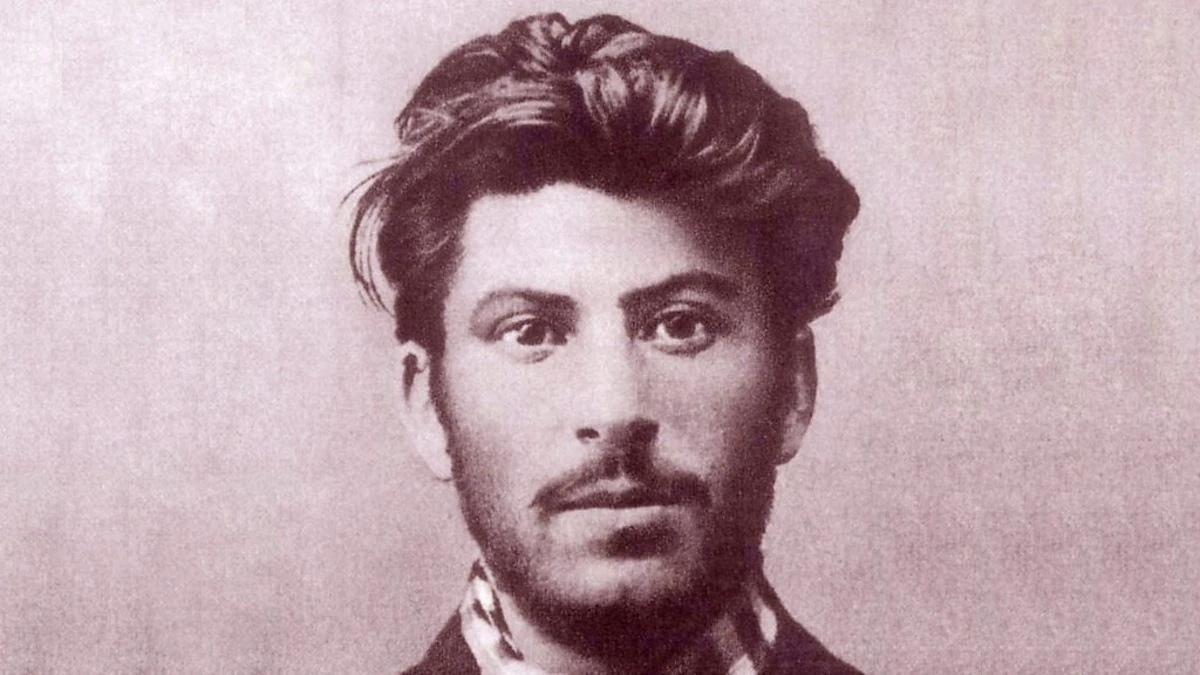
Joseph Stalin's IQ: the numbers that circulate and the 1936 test ban
ACIS has never assessed Joseph Stalin, holds no record belonging to him, and no retrospective assessment of anyone is possible. The numbers attached to his name, 120, 140 and over 250, come from an online quiz profile, an anonymous answer and a satire page. This page traces each one, then reads the July 4, 1936 Central Committee resolution that condemned intelligence tests in the Soviet Union.
The July 4, 1936 Central Committee resolution that condemned pedological testing lists eight numbered decisions, and none of them names a test.
0 The short answer
Joseph Stalin has no documented IQ: the figures of 120, 140 and over 250 that circulate come from an online quiz profile, an anonymous answer and a satire page, and ACIS has never assessed him. The key document on tests in his own state is the Central Committee resolution of July 4, 1936, which condemned pedology and the tests and surveys of mental development that it used, and scholars describe the result as a ban on testing in Soviet research and education. What the record does hold is a school and seminary education, a large annotated library and decades of political power, which show learning and achievement, not a score. Read every Stalin number as a number in circulation, not as a measurement.
120
The score on a BRGHT online quiz profile registered under the name Joseph Stalin on April 29, 2023, by an account the page lists as a student in the United Kingdom.
8
Numbered decisions in the July 4, 1936 resolution, none of which names a test, although its opening paragraphs condemn tests and surveys of mental development.
140
The figure in an anonymous Answers.com sentence, with no test, date or examiner attached.
1 Where does the number for Stalin's IQ come from?
Every Stalin figure this review could open leads to an unsourced answer, a quiz profile under his name or a page that calls itself a parody, and none leads to a test, a date, an examiner or a norm group. On October 13, 2026, this review searched for the query and read the pages that rank for it. The table sets each figure beside the basis the page gives for it.
A named institute in Yokohama and a named researcher
The site's own disclaimer says its texts are not real news. No study, dataset or method is cited
Read down the third column and no row reaches a measurement. The 120 is the most instructive, because it is a real test result for a real account, and it is not a result for Stalin. The BRGHT page records that a user registered under that name completed a short online quiz. A name typed into a form is not an identity, and the page offers no evidence that the account belongs to the person whose name it carries.
The 140 is an anonymous sentence with no history. The 115 to 125 range, as far as this review could see, appears in a search result that could not be opened, which means this page cannot say what it rests on. The figure above 250 is the plainest case of all. The page that prints it describes itself, in its own disclaimer, as a parody, which is why this review lists it as a circulating number to be traced and not as an estimate by researchers. It also says "had a test existed," which concedes the point that no test exists.
These are not four independent estimates that happen to disagree. They are four unrelated pieces of text, none of which cites a study, and the spread between 115 and above 250 is itself the evidence that nothing anchors them. A real measurement of one person on one test has one value and a stated error. A set of figures that spans from just above average to a value no scale can report is a set of guesses.
ACIS has not tested Joseph StalinACIS has never assessed Joseph Stalin, holds no record belonging to him, and no retrospective assessment of anyone is possible. Nothing on this page is an estimate of his IQ, and no figure here should be read as one. Numbers on the page come from named sources or are labeled as our own arithmetic.
2 What does the documented record of Stalin's life hold?
The documented record is a set of dated institutional facts, a school and seminary career, a very large library and a political career, and different sources give it in different versions, which is a reason for caution before anyone converts it into a number. The table lists what the sources opened for this review establish and shows where they disagree. Where two sources conflict, both are given.
Item
What the source says
Source
Birth
Born in Gori. A Soviet biography issued by the Marx-Engels-Lenin Institute gives December 21, 1879. The first volume of Stephen Kotkin's biography is titled with the years 1878 to 1928
Passed the examinations for the Tiflis Theological Seminary in 1894 and won a partial scholarship, according to the review of Kotkin
Institute biography and Fourmilab review
Leaving the seminary
The Institute biography says he was expelled on May 29, 1899, for Marxist propaganda. The review of Kotkin says he left in April 1899, before his final examinations
Both sources, which disagree
Library
A collection of more than 25,000 books, maps and documents, with his handwritten marginal notes as the main source for Geoffrey Roberts's book. Lenin is the most read author, with 243 titles
The two disagreements deserve attention because they are not trivia. One document is an official Soviet biography and gives him an expulsion for political activity. A review of a modern biography gives a departure before examinations. The same man has a birth year of 1879 in one source and 1878 in the title of a modern biography. Neither disagreement changes anything about a test score, and both show that the biography of a man about whom the Soviet state issued an official biography cannot be taken from one source and treated as settled. A page that wanted to turn that record into a number would have to choose among versions first.
The documented facts, taken together, show a boy who did well enough at school to gain a place and partial funding at a seminary, a reader who built a very large library and annotated it, and a political figure who held power for decades. They are the same kinds of facts that anchor any biography. They describe schooling, reading and office. They do not describe performance on a standardized task compared with a reference group, which is what an IQ is, as the page on what IQ measures explains.
This page is about a measurement question. It does not assess the Soviet regime or Stalin's responsibility for its crimes, which historians document at length elsewhere, and nothing about his ability would change that record.
3 Could Stalin have taken an intelligence test during his lifetime?
No test of the modern kind existed while Stalin was a student, and no source read for this review reports that he sat one at any later point. The arithmetic of dates settles the first half. Whichever birth year a source uses, he left the seminary in 1899, and the first practical scale for measuring intelligence appeared later. Alfred Binet and Théodore Simon published their new methods for diagnosing the intellectual level of abnormal children in volume 11 of L'année psychologique, a volume Crossref dates 1904 and that is usually cited as the 1905 scale. He was about 26 or 27 years old by then and long out of school. The page on the history of IQ testing traces how that scale grew into the instruments in use today, and the page on mental age explains the ratio idea that first gave the quotient its name.
The second half rests on absence, which is weaker than a date and should be stated as such. This review read the documents on his schooling, the reviews of two modern books about him, the Soviet institute biography and the scholarship on Soviet testing. None reports an intelligence test of him. A claim of that kind would be easy to document if it existed, because a test leaves a date, an examiner and a score sheet, and this page knows of none.
Soviet testing is the other place to look, and it points the same way. The scholarship read below describes testing as a tool of child science, applied to schoolchildren and used in schools, clinics and courts. It does not describe testing of political leaders. And from 1936 onward, as the sections below show, the instruments themselves were condemned in the state he governed. A reader who wants a number for Stalin is therefore asking for the result of a test that no source says was given and that his own state later declared harmful.
The same logic explains why serious historical estimates of intelligence do not cover him. The standard historical exercise, Catharine Cox's 1926 volume, states in its introduction that it describes 301 of the most eminent men and women of history who lived between 1450 and 1850. Stalin was born after that window closed, so he is not in the study, and the page on Isaac Newton shows how the same method gets applied to a name that is in it.
4 How were intelligence tests used in the Soviet Union before 1936?
Soviet child science used mental tests widely in the 1920s and early 1930s, so the 1936 condemnation reversed an established practice, and it was not the end of a practice that never existed. Andy Byford's article, The mental test as a boundary object in early-20th-century Russian child science (History of the Human Sciences, 2014, volume 27, issue 4, pages 22 to 58), traces mental testing from the 1890s to the 1930s through experimental research, school assessment, medical diagnosis and bureaucratic record keeping. He describes an attempt to use testing to manage mass education in the early Soviet state that failed, and argues that testing thrived because it could be read differently by psychologists, teachers and doctors, which let those groups cooperate despite different goals.
Irène Leopoldoff's article, A psychology for pedagogy: Intelligence testing in USSR in the 1920s (History of Psychology, 2014, volume 17, issue 3, pages 187 to 205), examines one intelligence testing project from the mid-1920s and its political and scientific context. It draws on journals and hard-to-access archives to document how enthusiastic scholars were about psychological testing and how much institutional support their surveys received, and it suggests why the situation changed completely about a decade later. The word to hold on to is support. The testing of the 1920s was not a fringe activity tolerated at the margins. It had institutions behind it.
The testing culture was broad. Evgenia Nikonova and George Rupchev, in a 2024 study of the Rorschach test in the Soviet Union (Cultural-Historical Psychology, volume 20, issue 1, pages 119 to 127), report that the Rorschach test was used in the Soviet Union from 1923, only two years after its publication in Switzerland, in paedological work and in forensic settings. The Rorschach is not an intelligence test, and this page cites the study only for the range of practice and for what happened to it. Their account of the end is direct: the investigations were interrupted after 1936 because of the prohibition of paedology, and most of them, and their authors, were forgotten.
The resolution of 1936 itself claims that the tests it condemned had been "long condemned by the party." That claim and the institutional support that Leopoldoff documents for the 1920s surveys are hard to reconcile, and this review has not tried to resolve the difference. What matters for the Stalin question is simpler. Before 1936, tests existed and were applied to children. After 1936, they were condemned. In neither period do the sources read describe a test of the head of the state.
For readers who want the general picture of how tests of this period worked and what they claimed, the page on how IQ scores are normed describes the modern procedure that replaced the ratio methods of that era, and the page on reliability and validity explains the properties that any score has to show before it can be trusted.
5 What did the July 4, 1936 resolution say about tests?
The resolution condemned pedology as a false science and named tests and surveys of mental development among its practices, but its eight operative decisions do not mention a test, and its stated grounds were about where children were sent and what doctrine of heredity pedology taught. This review read the Russian text of the Central Committee of the All-Union Communist Party (Bolsheviks) resolution, "On pedological perversions in the system of the education commissariats," dated July 4, 1936, in a copy hosted online. E. Thomas Ewing, in Restoring Teachers to Their Rights: Soviet Education and the 1936 Denunciation of Pedology (History of Education Quarterly, 2001, volume 41, issue 4, pages 471 to 493), cites a printed Russian text and an English translation of the same decree. All translations below are ours.
Passage in the opening paragraphs (our translation)
What it asserts
Pedologists conducted "countless surveys in the form of senseless and harmful questionnaires, tests and the like, long condemned by the party" among schoolchildren and their parents
Tests are named, together with questionnaires, as a practice of pedologists
An "extensive system of surveys of the mental development and giftedness of schoolchildren" had been "uncritically transplanted to Soviet soil from bourgeois class pedology"
The mental development and giftedness surveys are described as an imported practice
A child of 6 or 7 "was asked standard casuistic questions," after which a so-called pedological age and "degree of mental giftedness" were determined
The resolution describes the format as a short question set that produced an age and a rank
More and more children were enrolled in the categories of mentally backward, defective and difficult, and then sent to "special" schools
The charge is about consequences for children, who were removed from ordinary schools
The "law" of the fatalistic conditioning of a child's fate by biological and social factors, including heredity, contradicts Marxism
The ideological charge is that pedology taught that heredity and environment fix a child's fate
The resolution adds that most pupils in the special schools were "perfectly normal" children and that talented and gifted children were among those classed as difficult. These are claims by the Central Committee, in a document that is itself a political instrument, and this page reports them as the resolution's claims. They are not findings. They do show what the document was about. Its complaint was that classification by test was removing children from regular classes, and that the doctrine behind it contradicted the party's account of how people can be reshaped.
The eight decisions that follow the preamble are administrative. They restore pedagogy and teachers to full rights, abolish the pedologist unit in schools and withdraw pedological textbooks, instruct the education commissariats to review the schools for difficult children and move most pupils to ordinary schools, declare earlier commissariat orders and a March 7, 1931 decree of the Russian republic's council of commissars wrong, abolish the teaching of pedology as a separate science in teacher training institutions, order criticism in the press of the pedologists' theoretical books, allow practicing pedologists who wish to do so to become teachers, and require the commissar of education to report on carrying out the resolution within a month.
No decision names a test. The condemnation of tests lives in the preamble, and the practical effect came through the abolition of the profession that applied them. The resolution therefore reads as a verdict on a discipline and its doctrine, not as an argument about reliability or validity. Nothing in it says that the tests were inaccurate as measures. The page on whether IQ tests are biased covers the measurement questions that a psychometric critique would raise, and the resolution does not raise them.
6 Was it a ban on intelligence tests, and how long did it last?
Scholars describe the outcome of the resolution as an official ban on testing in Soviet research and education, but the ban followed from the condemnation of pedology, and this review did not find a separate decree that prohibits tests by name. Byford describes the mental test as the trademark tool of the pedologists in the campaign that followed, and the aftermath as the dismantling or renaming of institutes, research groups, laboratories and training courses, along with the banning and censoring of textbooks and monographs.
Dorena Caroli and Luciano Mecacci, in Forbidden Science: The Dismantling of Pedology and the Listing of the Works of Pedologists in the Soviet Union in 1936 to 1938 (European Yearbook of the History of Psychology, 2020, volume 6, pages 11 to 61), reconstruct the process that followed the resolution. According to the journal's summary, the article reproduces the resolution, follows the dismantling at the scientific, central and local levels, indexes works by and about pedologists and gives short biographies. The title itself speaks to the scale of the response: a listing of forbidden works.
Nikonova and Rupchev add the clearest picture of the effect on a single test. After the resolution, they write, the Rorschach test, like other tests, was considered bourgeois and ideologically wrong. They also report that Soviet psychologists began using the Rorschach test again at the end of the 1960s, that no link between the old and new studies was found, and that psychologists who had worked with the test before 1936 and escaped repression preferred to stay silent about it or publicly condemned it.
Two lessons follow for the question this page is asked. First, the ban was a decision about a profession and a doctrine, taken by a party body, and the sources read do not say who drafted it or whether any individual leader pressed for it, so this page makes no claim about that. Second, after 1936 the ordinary instruments of mental measurement were not available as such in Soviet research and education for decades. A retrospective score for the head of that state would have to be built from something other than a test, and the next sections look at what that something would be.
7 What do the books on Stalin show about him as a reader?
Modern biographers document a man who read heavily, built a very large library and could argue from memory, and that is evidence about habits and learning, which a score does not capture and which cannot be ranked against other people. The two books this review used are Stephen Kotkin's first volume, Stalin: Paradoxes of Power, 1878 to 1928 (Penguin Press, 2014), and Geoffrey Roberts's Stalin's Library: A Dictator and His Books (Yale University Press, 2022). This review did not have the books. It read a review of Kotkin on the Fourmilab site and Seamus Martin's review of Roberts in the Dublin Review of Books, dated March 7, 2022, and attributes to each book only what its review reports.
The review of Kotkin says that at the seminary Stalin joined a society that read forbidden literature, that he mastered the difficult works of Marx and could cite them from memory, and that he was fluent in spoken and written Russian and Georgian while keeping a Georgian accent in Russian. It also reports that his mother arranged Russian lessons for him, that he was the first in either side of his family to attend school and that a patron paid the fees his partial scholarship did not cover.
The review of Roberts counts a collection of more than 25,000 books, maps and documents and reports that the marginal notes, called pometki, are the book's main source. It lists the authors Stalin read most.
Author in the library, as counted in the review
Titles
Lenin
243
Zinoviev
55
Bukharin
50
Marx
50
Kamenev
37
Trotsky
28
Engels
25
The review adds that Stalin's own writings came second to Lenin's and gives no count for them, and that he also read Russian classics and some Western novels. It reports that Roberts presents him as a serious thinker and not a "dull plodder," notes his high regard for the writings of Trotsky and says Roberts rejects the claim that he read 500 pages a day, because his workload was too heavy for that. The reviewer's own caution is the most useful line for this page: the annotations give only partial access to his mind, and Roberts himself writes that we may not get to peer into his soul.
That caution carries over to the question of a number. A library is a record of what a person read, and a marginal note is a record of a reaction. Neither is a rank on a distribution. Reading volume depends on time, position, secretaries, interest and habit, and a very large library shows that a person with power and a long career could collect and annotate books. Describing a reader is not describing a virtue, and this page uses the record only to show what it is evidence of, which is learning and work, and what it is not evidence of, which is a position among all other adults.
8 How are historical IQs estimated, and why does Stalin not fit?
Serious historical IQ estimates come from historiometry, which rates the surviving record of early behavior, and the method needs a record that for Stalin is partial, contradictory and shaped by a state. The classic example is Catharine Cox's 1926 volume, The Early Mental Traits of Three Hundred Geniuses, the second volume of Lewis Terman's Genetic Studies of Genius (Stanford University Press), which this review opened on the Internet Archive. Its introduction says the subjects are 301 eminent people who lived between 1450 and 1850 and describes the group as one whose early behavior forms the basis of the study. The method is a rater's judgment of documents, and the page on Napoleon shows how its figures for one political leader are read and where they stop.
Three conditions make that method usable, and none holds for Stalin. The first is a record of early behavior that independent raters can read. For Stalin, the sources read for this review disagree on his birth year and on how he left the seminary, and the official Soviet biography comes from his own party's institute. The second is an eminent subject whose life falls inside the study's design, which his does not, since Cox's window closed before he was born. The third is a method whose uncertainty is stated and can be defended. A rater who read the biographies above would face two reviews of two modern books, an institute biography and a library, and would have to weigh them with no common scale.
Part of the problem is the origin of the record. One of the two sources on his early life is an official Soviet biography, and the other is a review of a modern book. A rater would have to decide, source by source, whether a statement about ability is a description or a tribute, and the sources read for this review do not say how to decide.
The page on genius IQ traces where the idea of a score threshold for genius came from, and the page on the IQ of US presidents shows the same split on another set of leaders, between figures that rest on a record and figures that rest on lists. Neither supplies a number for Stalin, and this page offers none.
9 What would the circulating Stalin figures mean on a standard scale?
On the standard scale, the 120 is an unremarkable one-in-eleven score, the 140 is a one-in-261 score, and the 250 lies so far beyond any scale that no population could contain it, which shows that the figures were not produced on one scale. The standard scale has a mean of 100 and a standard deviation of 15, as the page on why standard deviation 15 matters describes. The table converts each circulating figure under a normal model. Every value in it is our arithmetic, not a measurement of anyone.
Figure that circulates
Standard deviations from the mean
Percentile
About 1 in
115
1.00
84.1
6
120
1.33
90.9
11
125
1.67
95.2
21
140
2.67
99.6
261
250
10.00
Beyond any count
About 130 sextillion (1.3 times 10 to the 23rd)
The BRGHT page prints a percentile of 91 for its 120, which agrees with the table, so that page is internally consistent. It is consistent about a quiz result, and the question is whether the quiz result belongs to Stalin, which the page does not show. The 115 to 125 range spans from the 84th to the 95th percentile, which is a wide band for a claim with no stated instrument. The 140 sits in the top half of one percent of a normal distribution, a position that anyone can claim for a name and no one can document without a test.
The 250 shows the problem best. A score of 10 standard deviations above the mean would be expected in about 1 in 130 sextillion people under the normal model, and a norm sample would have to be of that size to contain one such case. Far into the tail, a stated rarity is an extrapolation of a curve, not a count of people, and the IQ rarity calculator and the IQ percentile calculator apply that curve and are explicit about it. The page on why scores and percentiles cannot be averaged explains how those conversions work and where they stop supporting an inference.
Our arithmetic, labeledThe values 1.00, 1.33, 1.67, 2.67 and 10.00 standard deviations, the percentiles 84.1, 90.9, 95.2 and 99.6, and the rarities of about 1 in 6, 11, 21 and 261 are our calculations on a normal distribution with a mean of 100 and a standard deviation of 15. They are not measurements of any person and not estimates of Stalin's ability. The 250 is reported only to show the scale of the claim.
10 Could any score for Stalin be defended?
A defensible score would need a standardized instrument, an examiner, a date and a reference group, and none exists for Stalin, so the honest answer for him is no number at all. The American Psychological Association's Ethical Principles of Psychologists and Code of Conduct, published in American Psychologist in 2002 (volume 57, issue 12, pages 1060 to 1073), states the professional rule in Standard 9.01(b): psychologists provide opinions of the psychological characteristics of individuals only after they have conducted an examination of the individuals adequate to support their statements or conclusions. It adds that when, despite reasonable efforts, such an examination is not practical, psychologists document the efforts, clarify the probable impact of their limited information on the reliability and validity of their opinions, and appropriately limit the nature and extent of their conclusions.
That rule governs psychologists, and this page is not a psychologist's opinion about Stalin. It uses the rule as a yardstick, and the yardstick is plain. A professional who could never examine a person would be expected to limit conclusions, to say what limited information does to validity and to avoid a precise figure. The pages that print 120, 140 and over 250 do none of that.
Suppose, for the sake of argument, that someone wanted to build the best number the record allows. They would need independent raters who had read the same sources, a rating scheme fixed before reading, a reference sample rated by the same scheme, and a statement of error that covers the conflicting sources. The result would be a historian's estimate, labeled as such, with an interval wide enough to include most of the adult range. Such an estimate would not be an IQ in the sense that a test produces one, and it would not identify a person's position in a population in any way a reader could use.
The page on how online and free tests relate to validated ones applies the same logic to quizzes taken today. A short online quiz can be useful for curiosity. A profile registered under a famous name is not evidence about the person, and a quiz result is not a norm referenced score unless the page shows the norm.
11 Does an IQ number say anything about what Stalin did?
An IQ number describes performance on defined tasks compared with a reference group, and it cannot say anything about intent, conduct or moral responsibility, so the question of a dictator's score and the question of his acts are separate questions. The abilities that a battery samples, such as verbal comprehension, fluid reasoning and working memory in the CHC model, are abilities to solve problems. None of those domains measures what a person chooses to do with the ability, and a high or low result would neither excuse nor explain a record that historians document from archives and testimony.
This matters because part of the demand for the query is a wish to see an extreme figure attached to an extreme historical role. The pattern is general, and the page on Adolf Hitler's IQ and the page on Ted Kaczynski's IQ follow the same logic with different records: the first separates a circulating number from the documentation, and the second reports a documented score where one exists. The page on psychopathy, narcissism and IQ reviews what the research says about the link between ability and personality traits, and it is the right place for the broader question, because group statistics from that literature say nothing about any individual and nothing about a person who was never examined.
For Stalin, the sober summary is short. The record documents schooling, reading, office and the decisions of a state, and it documents a state ruling that tests were harmful. It documents no score. A reader who wants to know why a man held power or what he did with it will learn far more from the historians cited above than from any number, and no number would change what those historians report.
12 What does this mean for your own score?
A score means something only when you know the instrument, the norm group and the conditions, and the same discipline that rules out a number for Stalin tells you how to read your own. The Standards for Educational and Psychological Testing (AERA, APA and NCME, 2014), a joint product of the three organizations published by the American Educational Research Association in July 2014, is the reference that sets out what a test user should be able to show: what the test is for, what evidence supports the interpretation and how the score was obtained. The APA code cited above asks psychologists to base opinions on information adequate to support them. Both point the same way: a score is evidence for a stated use, collected under stated conditions, and it is not a label.
The page on what a full scale IQ is explains the composite that tests report, and the page on how IQ scores are normed explains the reference group behind it. A circulating number for a historical figure lacks all of those parts. A score you obtain has them, and you can ask about each.
ACIS is one concrete option for an adult who wants a normed profile. It offers 20 subtests in six CHC domains, reported as a Full Scale IQ and six indices (VCI, FRI, QRI, VSI, WMI and PSI) on the standard scale with a mean of 100 and a standard deviation of 15, scaled subtest scores from 1 to 19, percentiles and a 95 percent confidence interval. Adult norms cover ages 16 to 90. On October 13, 2026, the one time prices read 15 dollars for Quick (6 subtests in 3 domains, about 45 minutes), 30 dollars for Optimized (13 subtests in 5 domains, about 110 minutes) and 50 dollars for Full Scale (all 20 subtests, about 175 minutes), with no subscription, a free trial with no card, a 5 day quality guarantee and 30 days to complete. Prices can change. The page on free and validated tests compares the options, and the technical manual holds the documentation.
ACIS has limits that a buyer should weigh as plainly as the strengths. It is online and unsupervised. It is not a clinical or diagnostic instrument and is not designed for hiring, school accommodations or admission to high IQ societies. It is available in English only. For those purposes, the page on professional IQ testing describes the routes that count. The page on IQ certificates explains why no institution accepts a paper from an online test.
Every figure and quotation on this page traces to one of the sources below, and the entries that this review could not read in full say so.
Central Committee of the All-Union Communist Party (Bolsheviks). "On pedological perversions in the system of the education commissariats" (Russian: "O pedologicheskikh izvrashcheniiakh v sisteme narkomprosov"), resolution of July 4, 1936. Russian text read in a copy hosted online. Translations on this page are ours.
Cox C M. The Early Mental Traits of Three Hundred Geniuses. Genetic Studies of Genius, volume 2, edited by L M Terman, Stanford University Press, 1926. Introduction read on the Internet Archive on October 13, 2026.
American Psychological Association. Ethical Principles of Psychologists and Code of Conduct. American Psychologist, 2002, volume 57, issue 12, pages 1060 to 1073. Standard 9.01 read in a copy of the 2002 text on October 13, 2026.
American Educational Research Association, American Psychological Association and National Council on Measurement in Education. Standards for Educational and Psychological Testing. American Educational Research Association, 2014. Publication details read on the Joint Committee's site on October 13, 2026.
Kotkin S. Stalin, Volume I: Paradoxes of Power, 1878 to 1928. Penguin Press, 2014. Read through a review on the Fourmilab site on October 13, 2026; the book itself was not available to this review.
Marx-Engels-Lenin Institute. Stalin (official Soviet biography). Hosted by the Marxists Internet Archive, read October 13, 2026. The page shows no publication year.
No one knows, because no test, date or examiner is on record for him. The figures that circulate, 120, 140, 115 to 125 and a satirical above 250, trace to a quiz profile, an anonymous answer and a page that calls itself a parody. Any specific number is a guess.
Did Stalin ever take an IQ test?
No source read for this review reports that he did. The first practical intelligence scale appeared after he had left the seminary, and from 1936 the Soviet state condemned pedology and its tests. A test would leave a date, an examiner and a score sheet, and none is known.
Was Stalin's IQ 120?
The 120 comes from an online quiz profile registered under the name Joseph Stalin on April 29, 2023, which the page lists as a student in the United Kingdom. A name typed into a form is not an identity, so the result says nothing about the Soviet leader.
Was Stalin's IQ 140?
The 140 appears in one anonymous sentence on a question and answer site, with no source, no date of measurement and no author. It is a claim with no trail behind it. Without an instrument, an examiner and a norm group, a figure of 140 cannot be placed anywhere.
Was Stalin intelligent?
The record documents a school and seminary education, heavy reading and a very large annotated library. Those facts show learning and work, but intelligence in the testing sense means performance on standardized tasks against a reference group, which was never measured for him. The question of his ability has no measured answer.
Was Stalin's IQ higher than Hitler's?
Neither man has a documented score from a standardized test given to him, so no comparison is possible. Any ranking would set one unsourced figure beside another. A ranking built from two guesses is a third guess, and it should not be treated as evidence.
Is the 250 figure for Stalin real?
No. The page that prints it describes itself in its own disclaimer as not real news, names an institute in Yokohama and a researcher, and cites no study, data or method. It also says the figure would apply "had a test existed," which concedes that no test exists.
What did the 1936 Soviet resolution say about tests?
The Central Committee resolution of July 4, 1936 condemned pedology and described its tests, questionnaires and surveys of mental development and giftedness as harmful and imported from bourgeois science. It said children were being placed in special schools by these methods. Its eight decisions abolished the pedologist role and withdrew its textbooks.
Why did the Soviet Union condemn IQ tests?
The resolution gave two grounds. One was practical: children were classed as backward or difficult by question sets and moved to special schools, even though many were normal or talented. The other was ideological: pedology taught that heredity and environment fix a child's fate, which the party said contradicted Marxism.
What was pedology?
Pedology was a child science that drew on psychology, pedagogy and medicine and used mental tests, surveys and measurement of children. In the Soviet Union it had its own institutes, laboratories and training courses until the Central Committee condemned it in 1936, abolished its school role and withdrew its textbooks.
Did the Soviet Union use intelligence tests before 1936?
Yes. Scholars describe mental testing in Russian child science from the 1890s and an intelligence testing project in the mid-1920s that enjoyed enthusiasm and institutional support. Testing was used in schools, clinics and courts, which is why the 1936 condemnation reversed an established practice and was not the end of an absent one.
Did the 1936 resolution ban IQ tests by name?
Its opening paragraphs condemn tests and surveys of mental development, but its eight numbered decisions do not name a test. They abolish the pedologist role, withdraw textbooks and review special schools. Scholars describe the practical result as an official ban on testing, which followed from that condemnation.
When did testing return in the Soviet Union and Russia?
The sources reviewed here do not settle a single date. One study reports that psychologists began using the Rorschach test again at the end of the 1960s, without a link to the earlier work. This review did not find a firm date for the return of intelligence testing in the sources it opened.
Was Stalin in Cox's study of geniuses?
No. Catharine Cox's 1926 volume describes 301 eminent people who lived between 1450 and 1850, and Stalin was born after that window closed. Her method rated surviving records of early behavior, and it produced no figure for him. No Cox number exists for Stalin.
Can anyone estimate Stalin's IQ from his biography?
Not defensibly. A rater could weigh his schooling, reading and career, but the sources disagree on basic facts such as how he left the seminary, and one biography is an official Soviet publication. Any estimate would need a labeled method and a very wide interval.
What would a defensible IQ for a historical figure require?
It would need a records-based method fixed in advance, independent raters, a rated reference sample and a stated error that covers conflicting sources. Even then it would be a historian's estimate, not a test score. American Psychological Association ethics standards expect limited conclusions when no examination is possible.
Does a high or low IQ say anything about a person's conduct?
No. A score describes performance on defined cognitive tasks compared with a reference group. It does not measure intent, values or moral responsibility, so it can neither explain nor excuse what a person does. Questions about conduct belong to historians and to research on personality, not to a score.
How rare would an IQ of 140 be?
Under a normal model with a mean of 100 and a standard deviation of 15, a score of 140 lies 2.67 standard deviations above the mean, near the 99.6th percentile, or about 1 in 261. That is our arithmetic, and it describes the curve, not any named person.
Can an online quiz profile under a famous name prove a score?
No. A profile shows that someone using that display name completed a quiz. It does not show who the person was, how closely the quiz matches a normed instrument or what conditions applied. Anyone can register a famous name, so the profile is not evidence about the person.
What is the best way to get a real IQ number?
Take a normed instrument under known conditions and read its report: the scale, the percentile and the confidence interval. A licensed psychologist administers the clinical route. A normed online test is a lower cost screening option with stated limits. Free quizzes with no norm group give entertainment, not a score.
Does ACIS know or estimate Joseph Stalin's IQ?
No. ACIS has never assessed Joseph Stalin, holds no record belonging to him and offers no estimate. No retrospective assessment of anyone is possible. The figures on this page come from named pages or are labeled as our own arithmetic on a normal distribution.
Take the assessment
You get a profile, not a number
ACIS measures six CHC domains across 20 subtests and reports each one with its own normed score and confidence interval, so you can see where you are strong and where you are not.