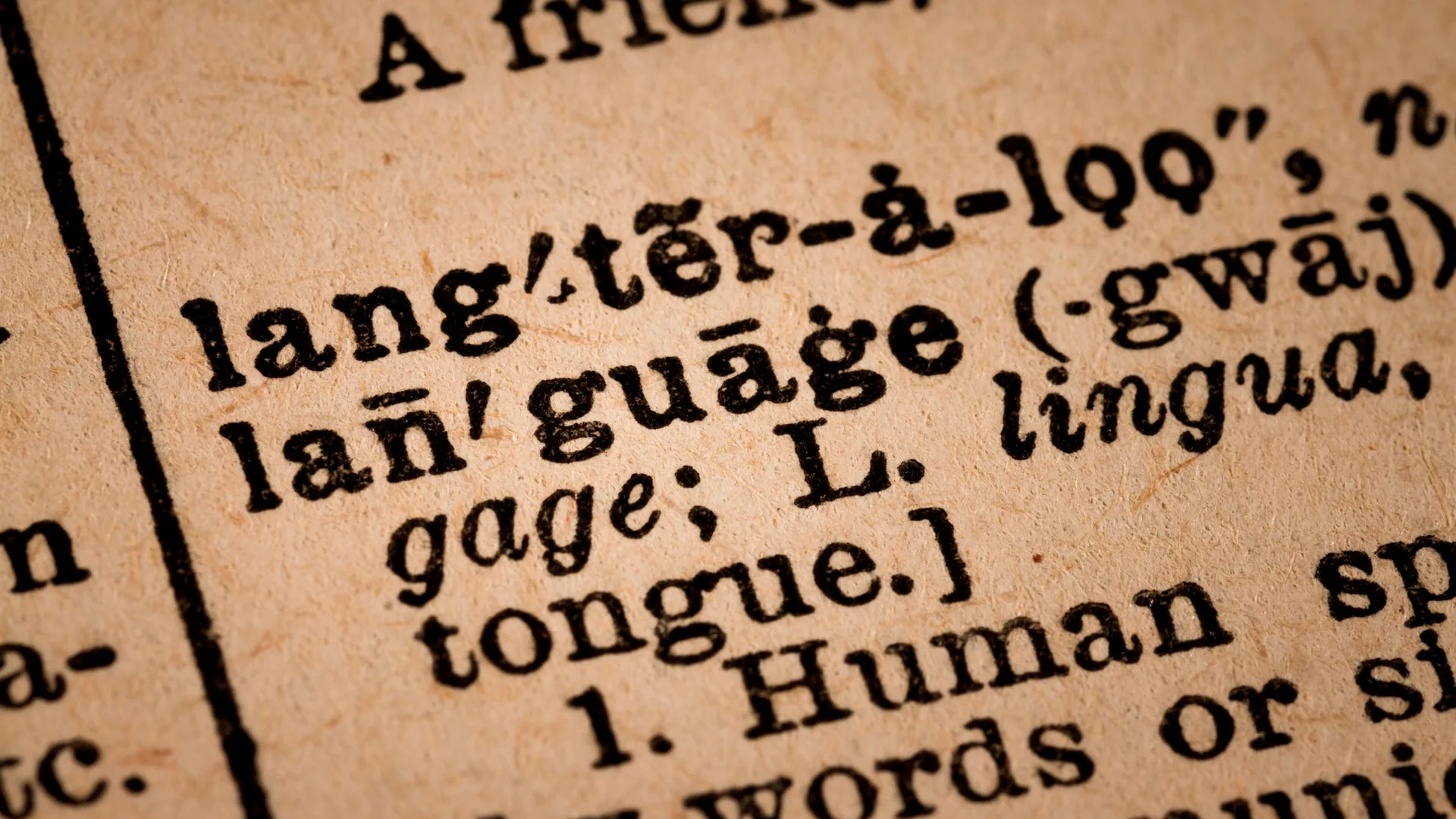
Vocabulary IQ test: how well word knowledge reflects general ability
A vocabulary test can say something real about intelligence, because word knowledge is a core part of crystallized ability and loads strongly on general ability in adult Wechsler data. It can also say almost nothing, because a quiz with no reference group returns a count of words, not an IQ. This page separates the two and covers formats, age, reading, English proficiency and where to take a normed one.
A dictionary entry is one lemma among many, and a 2016 study estimated that an average 20 year old native speaker of American English knows 42,000 of them.
0 The short answer
A vocabulary IQ test is informative only when it is a normed subtest, because word knowledge is a direct sample of crystallized ability in a Wechsler style battery and it loads strongly on general ability, while a word quiz with no reference group returns a count of words rather than an IQ. In the WAIS-IV normative sample of 2,200 adults, Vocabulary loaded 0.70 on the general factor, second among the ten core subtests behind Arithmetic. ACIS is one concrete option: its Quick form (15 dollars, about 45 minutes) includes Vocabulary and Similarities, Optimized (30 dollars, about 110 minutes) adds Antonyms and Synonyms, and Full Scale (50 dollars, about 175 minutes) adds Information, with prices read on October 28, 2026. The decisive limit is that any vocabulary score, online or in a clinic, reflects schooling, reading and English exposure as well as ability, and an unsupervised online test is not a clinical instrument.
0.70
Vocabulary's loading on the general factor in the WAIS-IV normative sample of 2,200 adults aged 16 to 90, second only to Arithmetic at 0.74, per the table in Canivez and Watkins (2010).
42,000
Lemmas an average 20 year old native speaker of American English knows, estimated from 221,268 people by Brysbaert and colleagues (2016).
0.80 SD
The average advantage of older over younger adults across 324 vocabulary comparisons, per the Verhaeghen (2003) meta-analysis.
1 What is a vocabulary IQ test, and what does it measure?
A vocabulary IQ test measures how many word meanings a person holds and how precisely they hold them, which in the Cattell-Horn-Carroll framework is lexical knowledge, a narrow ability inside comprehension knowledge (Gc). The CHC model organizes cognitive abilities into broad families, and Gc is the family that covers acquired knowledge of language and the world. The ACIS technical manual defines lexical knowledge as the breadth and depth of word meanings, vocabulary and semantic network organization, and it treats general information, the factual side of Gc, as a separate narrow ability. A vocabulary subtest sits on the first of those two.
The phrase "vocabulary IQ" is a convenient label with one important caveat. No single subtest returns an IQ in a professional battery. A subtest returns a scaled score, which compares the person with others of the same age, and one or more subtests combine into an index. On the Wechsler adult scale, Pearson's 2025 overview brochure lists Vocabulary in the Verbal Comprehension family alongside Similarities, Information and Comprehension, and it lists only Similarities and Vocabulary as the subtests of the primary Verbal Comprehension index. The ACIS verbal comprehension index is built differently, from five subtests: Antonyms, Vocabulary, Information, Synonyms and Similarities. What matters for this page is that "vocabulary IQ" in any serious battery means a verbal index or a subtest scaled score, never a free standing IQ number.
Two properties of word knowledge are easy to confuse. Breadth is how many words a person recognizes. Depth is how well the person grasps what each word means, its range, its neighbors and its limits. The ACIS Vocabulary page describes the task as measuring depth and precision of word knowledge, not only the count of known words, and the technical manual says the construct is not simply whether the examinee has memorized isolated words. Brysbaert and colleagues, in contrast, measured breadth: their vocabulary size study asked people whether they knew each word on a list. Both are legitimate, and they are different instruments. A size estimate tells you roughly how large a person's mental lexicon is. A normed subtest tells you where that person stands among adults of the same age on a defined set of words and scoring rules.
Vocabulary also differs from the abilities around it. It is not fluid reasoning (Gf), the capacity to solve unfamiliar problems, although the page on fluid versus crystallized intelligence explains why the two are correlated in most adults. It is not reading comprehension, although reading is the main way words are acquired. It is not general knowledge about the world, which has its own page on the general knowledge IQ test. And it is not "verbal IQ" as a whole, a broader score covered on the page about what a verbal IQ score measures. Keeping the construct this narrow is what lets a vocabulary score be interpreted rather than merely reported.
The broader question of what an IQ number represents has its own treatment in the guide to what IQ measures. For this page, the working definition is enough: a vocabulary IQ test samples lexical knowledge, a narrow part of Gc, and its value as a measure of anything wider depends on how strongly lexical knowledge is tied to general ability. That is the next question.
2 How closely does vocabulary track general ability?
Vocabulary is among the best single indicators of general ability in adult Wechsler data, yet about a third of its variance belongs to a verbal factor rather than to g, so it is a strong signal and not a stand in for the whole. The cleanest figures come from Canivez and Watkins (2010), who reanalyzed the WAIS-IV normative sample, ages 16 to 90, with a hierarchical exploratory factor analysis in Psychological Assessment, volume 22, issue 4, pages 827 to 836. Their Table 2 reports the sources of variance in the ten core subtests for the normative sample of 2,200 people. Vocabulary loaded 0.70 on the general factor, which corresponds to 49 percent of its variance. Arithmetic was the only core subtest higher, at 0.74. Digit Span followed at 0.68, then Similarities at 0.67, Block Design and Matrix Reasoning at 0.66, Information at 0.65 and Visual Puzzles at 0.64. Coding (0.58) and Symbol Search (0.54) were lowest. That ordering is our reading of their table, not a ranking the authors state.
The same table shows why a vocabulary score is not a pure g measure. Vocabulary also loaded 0.56 on the verbal comprehension factor, which accounted for another 31 percent of its variance, so roughly four fifths of the subtest's variance was shared with either g or the verbal factor, and the remaining part was specific to the subtest or error. Put plainly, a person with a strong vocabulary tends to be strong across cognitive tasks, and a person with a strong vocabulary tends to be strong on other verbal tasks even beyond what g predicts. Both are true at once.
Canivez and Watkins drew a cautious conclusion from their analysis. Their abstract states that the second order g factor accounted for large portions of total and common variance, while the four first order factors accounted for small portions, and that clinical interpretation should be primarily at the g level. That is a position in an ongoing debate about how much to read into index scores, and it matters for this page in one specific way: it is a reason to hold any single subtest score, including Vocabulary, loosely. A battery that samples several abilities gives a steadier estimate of general ability than one subtest does, because each subtest carries its own error and its own specific variance.
The popular claim that vocabulary "predicts" intelligence deserves the same care. A loading is a correlation between a subtest and a statistical factor, estimated in one sample under one model. It does not say that learning words raises g, and it does not say that a large vocabulary proves a high IQ in an individual. It says that, across a representative adult sample, people who score high on Vocabulary also tend to score high on a wide range of other tasks. The page on the pattern between verbal and quantitative strengths shows how often individual profiles depart from that average tendency, and the ACIS pages for Similarities and Information describe the two verbal subtests that sit closest to Vocabulary in the same domain.
Survey researchers reached a related conclusion from a different direction. Cor, Haertel, Krosnick and Malhotra (2012) examined the ten item vocabulary test used in the General Social Survey, called Wordsum, in Social Science Research, volume 41, issue 5, pages 1003 to 1016. They noted that the battery consists of very difficult and very easy items, argued from item response theory that omitting moderately difficult items weakened it, and showed with national samples of thousands of American adults that a 14 item version, Wordsumplus, performed better on classical quality indicators and on concurrent validity.
3 How does a normed vocabulary test differ from a word quiz?
A normed vocabulary test converts a raw score into a standing relative to a defined group of the same age, using fixed items, fixed scoring and a documented score scale, while a word quiz reports how many items you answered and nothing more. The conversion is the entire point of norming. The page on how IQ scores are normed explains how a reference sample turns raw counts into standard scores, and the guide to the 15 point standard deviation explains the scale. On a subtest the scaled score has a mean of 10 and a standard deviation of 3; on an index or the Full Scale IQ the mean is 100 and the standard deviation is 15. Without that conversion, "I scored 38 out of 50" has no interpretation, because nobody knows whether 38 is typical for a 25 year old, a 60 year old or a person who learned English at 20.
A normed test differs from a quiz in at least five ways that a reader can check.
A stated reference group. The page names who the scores are compared with, by age band and language background. A quiz that says nothing here has no norm frame.
Controlled items. The items are fixed, kept confidential and calibrated for difficulty, as the Wordsum study illustrates. A quiz built from a list of rare words is calibrated only to the author's taste.
Defined scoring. In an open response format, the scoring rules distinguish a complete definition from a partial one. In a multiple choice format, a single key is scored.
A score scale with stated uncertainty. A report states the scale and a confidence interval for the score. The Standards for Educational and Psychological Testing (AERA, APA and NCME, 2014) ask that test users receive clear explanations of the meaning and limitations of scale scores, and that the standard error of measurement be provided in the units of each reported score.
Conditions of administration. A test describes the time limit, the response mode and the setting the norms were gathered in.
The two kinds of product also answer different questions. A vocabulary size checklist, such as the yes or no format Brysbaert and colleagues used, answers "roughly how many words do I know?" A normed subtest answers "how do I compare with adults my age on word knowledge?" A quiz with a clever label, such as "word IQ test" or "vocabulary IQ test," answers neither unless it documents a norm group, which is why the page on taking a free IQ test online and the ranking of the best online IQ tests are the places to compare what each product documents.
A word quiz is not worthless: as a way to find the words you do not know, it can be useful. The error is the label, because a number with IQ attached invites comparison with the 100 and 15 scale, and that comparison needs a norming process behind it. The page on why IQ scores and percentiles cannot be averaged shows how readily even a properly normed number is misread.
4 Which vocabulary test formats exist, and what does each ask of you?
Vocabulary tests come in two families, production formats that ask you to define a word and recognition formats that ask you to pick the meaning from options, and the family changes what the score reflects. The meta-analysis by Verhaeghen (2003) in Psychology and Aging, volume 18, issue 2, pages 332 to 339, makes the point with data. It pooled 324 independent comparisons of younger and older adults from 210 articles published in that journal from 1986 to 2001. The average difference favored the older group by 0.80 standard deviations: 0.68 on production tests and 0.93 on multiple choice tests. In production tests, both age and education were partly independent predictors of the gap. In multiple choice tests, the age effect disappeared once education was taken into account. Same construct label, different pattern, depending on how the words were tested.
Defining words (production). The examinee gives the meaning in their own words, and a rater or a scoring rule decides how complete it is. The ACIS technical manual describes its Vocabulary subtest this way: the examinee is shown a word and types its definition in their own words, credit depends on the precision and completeness of the definition, the opening items admit a single correct response, later items are scored on a graded scale that separates a fully adequate definition from a partial one, and each item carries its own time allowance and advances automatically. Production is the demanding format. It requires retrieving the meaning without any prompt and putting it into words, and the manual lists language production and scoring consistency among the interpretation risks for this subtest. Whether spelling affects credit is not stated in the public materials, so a reader who worries about typing accuracy should treat that as unknown rather than assume either way. The Vocabulary subtest page describes the task without disclosing items.
Choosing the opposite or the closest meaning (recognition). In a recognition format, the answer is on the screen and the work is discrimination between plausible options. The ACIS manual describes Antonyms as showing a single stimulus word and asking for the option nearest to its opposite, so the demand is recognition of an opposing sense rather than the ability to define the word. It describes Synonyms the same way, with single words as both stimulus and options, so sentence context gives no help, and both run under one continuous limit for the whole section rather than a clock for each item. The pages on Synonyms and Antonyms explain what each one samples. Recognition is easier than production for most words, because seeing an answer cues memory, which is a plausible reason the multiple choice gap in Verhaeghen's data was larger and behaved differently, though the meta-analysis does not test that explanation.
Checklists (yes or no recognition). Brysbaert, Stevens, Mandera and Keuleers (2016) used the simplest format of all in Frontiers in Psychology, volume 7, article 1116. Participants saw a random list of 67 words and 33 non-words and marked the ones they knew, and the authors corrected for guessing by subtracting the proportion of yes responses to non-words from the proportion of yes responses to words. The format is fast and well suited to estimating how many words a population knows. It does not test whether a person can use a word precisely, which is why it is a size instrument and not a depth instrument.
Word relations and factual questions. Two neighbors are often bundled with vocabulary and should not be confused with it. In Similarities the examinee is given two words and explains how they are alike, and the ACIS manual notes that the scoring separates a category that captures both words from a concrete resemblance, which is what ties the subtest to induction as well as lexical knowledge. In Information the examinee types answers to factual questions drawn from knowledge ordinarily acquired through schooling and everyday exposure, and the sibling guide to general knowledge tests treats that kind of knowledge in full.
Which format is better? Neither. Production is closer to using words, and recognition is quicker to take and simpler to score. A battery with both, as the Full Scale form of ACIS has, lets the report show whether a person defines words better or worse than they recognize them.
5 Where can an adult take a vocabulary test, and what does each option give?
The real options differ on four things that matter more than the word "vocabulary" in the title: who the scores are compared with, whether anyone supervises, how long it takes and what you receive. The table sets them side by side. Prices and terms were read on October 28, 2026 and can change. Where a source does not state a cell, the table says so rather than guessing.
Option
What it measures
Normed against whom
Supervised
Time
Cost, read October 28, 2026
What you receive
Psychologist giving the WAIS-5
Vocabulary inside a Verbal Comprehension family, within a full cognitive battery
Age referenced norms for ages 16 years 0 months to 90 years 11 months; 2024 edition
45 minutes for the 7 subtest Full Scale IQ, 60 minutes for the 10 primary index subtests, whole battery
The professional's fee is not stated by Pearson; the complete print kit lists at 1,784 dollars to the professional
An interpreted report from the examiner
Research vocabulary size checklist (Brysbaert and colleagues, 2016)
Breadth: which words a person says they know
A very large volunteer sample of 221,268 people, not age banded standard scores
Not stated
Not stated
Not stated
An estimate of vocabulary size in lemmas
Unnormed web word quiz or game
A count of words recognized or defined
Whatever the page states; if it states nothing, there is no reference group
No
Set by the page
Varies; check the page
A number that may be labeled IQ
ACIS Quick
Vocabulary and Similarities, plus four fluid reasoning and working memory subtests
Adult norms for ages 16 to 90, English only
No, online and self administered
About 45 minutes for the whole form
15 dollars, one time
Subtest scaled scores, a partial verbal index, a Full Scale IQ with a 95 percent confidence interval
ACIS Optimized
Vocabulary, Antonyms, Synonyms and Similarities, plus nine other subtests
Same as above
No
About 110 minutes for the whole form
30 dollars, one time
Same, with a partial verbal index built from four of the five verbal subtests
ACIS Full Scale
All five verbal subtests, including Information, within all 20 subtests
Same as above
No
About 175 minutes for the whole form
50 dollars, one time
A complete verbal index, five other indices and a Full Scale IQ with a 95 percent confidence interval
ACIS Custom Test
Any subtests you pick, including the five verbal ones
Same as above
No
Not stated for a custom set
5 dollars per subtest; the five verbal subtests come to 25 dollars
A scaled score for every subtest and the full index of any domain you complete
Three notes on the table. First, the psychologist row is a different product, not a cheaper or dearer ACIS: the examiner observes behavior, handles interpretation and can address questions that an online score cannot, and the page on where to take an IQ test covers every route from clinic to browser. Second, the ACIS rows follow the technical manual's availability table: the Quick and Optimized forms give a partial verbal index and the Full Scale form gives the complete one, and the Custom Test returns the full index of any domain whose subtests you complete. The sum for the five verbal subtests is our arithmetic on the posted price. Third, the free trial, which needs no card, opens five subtests drawn from the working memory and processing speed domains, so it is a way to see how the test runs and not a way to take a vocabulary subtest for free. Adults who want a broader orientation first can start with the guide to an IQ test for adults.
Vocabulary keeps rising for decades while many other abilities fall, which is why a vocabulary score only means something against an age matched reference. Verhaeghen's 0.80 standard deviation advantage for older adults is the headline, but its context matters. The comparisons were between younger and older groups, so age differences mix with cohort differences, and the author reported that the WAIS-R Vocabulary subtest was sensitive to the Flynn effect, the rise in test scores with later birth year. Those findings led the author to question the practice of using age group equality in vocabulary scores as a check that two samples are equivalent. The same analysis found that education was a partly independent determinant of the gap in production tests.
The size studies show the same pattern at the level of individual words. Brysbaert and colleagues estimated that an average 20 year old native speaker of American English knows 42,000 lemmas, and that between ages 20 and 60 the average person learns about 6,000 more, one new lemma about every two days, reaching about 48,200 at 60. A lemma counts a base word together with its inflected forms. Their sample was 221,268 individuals who completed 265,346 sessions, and the analysis used the first three sessions per person. These are volunteers in a research web test, so the figures describe that sample and not a census of all adults.
The timing is less uniform than a simple "vocabulary peaks late" slogan. Hartshorne and Germine (2015) combined 48,537 online participants with an analysis of normative data from standardized IQ and memory tests in Psychological Science, volume 26, issue 4, pages 433 to 443. Their abstract reports considerable heterogeneity in when abilities peak: some peak around high school graduation, some plateau in early adulthood and decline from the 30s, and others do not peak until the 40s or later. The study is a reason to avoid treating all cognitive abilities as if they followed one curve, and a reason to read a vocabulary score next to scores from other domains.
What this means for a test taker has three parts. A 60 year old and a 25 year old who earn the same raw vocabulary score are not equally "high" or "low", because age norms compare each person with their own age group. The page on average IQ by age explains how age norms work, and the guide to IQ testing for seniors covers which scores hold up over time and which do not. Second, vocabulary tends to hold up or rise with age in the research above, so a vocabulary score alone is a poor tool for noticing change. A sharp, unexplained drop in word knowledge would be a reason to talk to a clinician, not to retake an online test. Third, when someone says their vocabulary is large but their reasoning feels slower, that is a pattern consistent with the research above, and the same fluid versus crystallized distinction explains why the two can diverge.
7 What builds vocabulary, and what does that mean for a score?
Word knowledge accumulates through reading, schooling and conversation, so a vocabulary score is partly a record of exposure, and it moves on a scale of years rather than days. Two bodies of research speak to the mechanism. The first is a longitudinal study by Cunningham and Stanovich (1997) in Developmental Psychology, volume 33, issue 6, pages 934 to 945, which followed first graders into 11th grade and measured exposure to print, reading comprehension, vocabulary and general knowledge ten years later. First grade reading ability was a strong predictor of all the 11th grade outcomes, and it remained one when measures of cognitive ability were partialed out. The authors also reported that individual differences in print exposure predicted growth in reading comprehension ability. The design is observational: it shows that early reading skill and later vocabulary go together beyond what the cognitive measures captured, not that reading alone caused the vocabulary.
The second is a meta-analysis of 99 studies covering 7,669 participants by Mol and Bus (2011) in Psychological Bulletin, volume 137, issue 2, pages 267 to 296. Print exposure explained 12 percent of the variance in oral language skills in preschool and kindergarten, 13 percent in primary school, 19 percent in middle school, 30 percent in high school and 34 percent in college and university. The authors read the pattern as an upward spiral of causality, in which better readers read more and, because of more print exposure, improve more with each year. That is their interpretation of correlational data across many studies. What it supports here is the claim that the link between reading and language strengthens with age, which fits the cumulative nature of the vocabulary score.
Several practical points follow, each an inference where it goes beyond the sources. A large vocabulary often reflects years of reading, but a smaller one does not show a lack of reasoning ability, and the page on intelligence versus knowledge explores that difference. People for whom reading has always been effortful may have acquired fewer words from print than their reasoning would predict, because early reading skill and later print exposure are linked in the Cunningham and Stanovich data; the sibling guide to a dyslexia friendly IQ test covers how reading demands shape other kinds of tests, and nothing on this page can diagnose a reading difficulty. And a short burst of study can add words, but a normed test samples a broad range of word difficulty, so the score mostly rewards the years behind it. By Brysbaert's estimate, the average adult adds about one lemma every two days between 20 and 60, and that rate sets the scale for how fast a vocabulary moves in ordinary life.
8 How does English proficiency change a vocabulary score?
A vocabulary test written in English measures English word knowledge, so for a person who learned English later in life it is a valid measure of that knowledge and a weak guide to general ability. Both the research and the ACIS documentation say so. The ACIS technical manual states that verbal and knowledge tasks can be affected by English proficiency and educational exposure, and its glossary describes comprehension knowledge as strongly affected by English proficiency, educational exposure and cultural knowledge. It also calls Vocabulary language and culture sensitive and says that this does not make the subtest invalid, but that interpretation must respect the English speaking norm frame. The population estimates quoted earlier carry the same restriction: Brysbaert and colleagues estimated vocabulary size for native speakers of American English, and nothing in them transfers to people who learned English as a second or third language.
The Standards for Educational and Psychological Testing (AERA, APA and NCME, 2014) frame the issue precisely. Standard 3.2 asks test developers to minimize the effect of construct irrelevant characteristics, naming linguistic, communicative, cognitive and cultural characteristics, and its comment says the level of language proficiency a test demands should be kept to the minimum required to represent the target construct. A vocabulary test is a special case, because language is the construct. Word knowledge in English is exactly what it is meant to sample. The validity problem appears one step later, when a score from such a test is read as a statement about general ability for someone whose word knowledge in English understates their knowledge in another language. The Standards' fairness chapter lists English language proficiency among the factors that may restrict accessibility and interfere with measuring the intended construct.
The APA Ethics Code says the same thing about interpretation. Standard 9.06 asks psychologists, when interpreting results, to take into account the purpose of the assessment and characteristics of the person such as linguistic and cultural differences that might reduce the accuracy of their interpretations, and to indicate significant limitations. The Code binds psychologists and not an online test company, but it states the principle that applies to any reader of a vocabulary score.
For the reader, this reduces to a few rules.
If English is your first language, a vocabulary subtest is a fair measure of your English word knowledge, and its relation to general ability is the one described earlier.
If English is your second language, read a vocabulary score as a measure of your English vocabulary, and give more weight to subtests that carry little or no language, such as the visual and reasoning subtests in other domains.
Whatever your language, avoid concluding anything about ability from one verbal subtest. The page on IQ testing for non-native English speakers walks through what moves and what does not.
ACIS is English only, and it does not offer a vocabulary subtest in any other language. A reader who needs a test in another language needs a different product.
9 Why are vocabulary IQ test answers not published?
Normed items are kept confidential because a test whose answers are public measures memory of the answers, so any list of "vocabulary IQ test answers" should be treated as a reason to distrust the score, not as a study aid. The expectation behind the search "vocabulary IQ test with answers" is understandable, since classroom quizzes come with keys, but a norm referenced test works differently. Its score means something only if the person has not seen the items beforehand, and the norms assume that fresh state.
The professional standards say so directly. In the Standards for Educational and Psychological Testing, Standard 6.7 states that test users have the responsibility of protecting the security of test materials at all times, and its comment lists inappropriate disclosure of test content among the concerns. The APA Ethics Code, Standard 9.11, asks psychologists to make reasonable efforts to maintain the integrity and security of test materials. For this reason the ACIS subtest pages describe the task family and construct but state that they do not disclose item content, scoring keys, adaptive rules or administration details, and this page follows the same rule: it describes formats and never reproduces words, definitions or answers from any test.
There is also a measurement reason that has nothing to do with ethics. The Wordsum analysis by Cor and colleagues showed that a vocabulary battery depends on the difficulty mix of its items: dropping the moderately difficult ones weakened it, and adding four of them improved precision in the middle of the ability range. Items tuned that way are valuable precisely because they were chosen and calibrated, and an answer key circulating online would erase that investment. A person who memorizes the key for a test that is then scored with norms would be reporting how well they memorized, and the norm group never had that advantage.
What can a reader do instead of looking up answers? Three things are legitimate. Read widely and look up words as they appear, which is how vocabulary grows according to the exposure research above. Use a dictionary to learn words, since learning words is different from learning a key. And after a normed test, use the report, which describes what each subtest measures and how the score compares with adults of the same age, to see where your word knowledge stands.
The same logic applies to the shared links that appear in online discussions of vocabulary tests, including threads on Reddit. A link posted in a thread inherits the quality of the test behind it, and a score reported in a thread is only comparable with another score if both came from the same normed instrument. The table earlier on this page gives the questions to ask of any link: who the scores are compared with, whether the items are controlled, and what the report states about uncertainty.
10 How should a vocabulary score be read?
A vocabulary result should be read as a scaled score with a range around it, set beside the other verbal subtests and the rest of the profile, because one subtest carries more error and more specific variance than a battery does. On the usual Wechsler style scale, a subtest scaled score has a mean of 10 and a standard deviation of 3, so a score of 13 is one standard deviation above the mean and 7 is one below. Under a normal model, our arithmetic puts those at about the 84th and 16th percentiles. Indices and the Full Scale IQ use a mean of 100 and a standard deviation of 15, the scale described earlier on this page. A percentile says what share of the reference group scored lower; a score on the 100 and 15 scale and a percentile are two views of the same standing, not two quantities to average.
Uncertainty is the part most readers skip. Classical test theory gives the standard error of measurement as the scale standard deviation times the square root of one minus the reliability. As a purely hypothetical illustration, with a subtest reliability of .80 chosen for the example and not taken from any real test, the standard error on the scaled score scale is 3 times the square root of .20, which is about 1.3 scaled points, and a 95 percent range around an observed 12 runs from about 9 to 15. A wide band like that is why a reported confidence interval matters more than the point value, and why the Standards ask that the standard error of measurement be provided in the units of each reported score and that test users be told the meaning and limitations of the scale. The page on reliability and validity explains how the two ideas differ, since a score can be consistent without measuring what a reader assumes.
Reliability is not the only reason to look beyond one subtest. Canivez and Watkins found that the general factor carried most of the explained variance in the WAIS-IV subtests and that the four first order factors captured small portions, which is the reason they recommended interpretation primarily at the g level. Whether or not a reader accepts that recommendation in full, the practical lesson is to weight the broadest score the battery provides and to treat differences among narrow scores as hypotheses. The page on index score differences shows how often large gaps between indices occur in ordinary profiles, and the page on the General Ability Index explains how that composite differs from the Full Scale IQ.
For vocabulary, the useful comparisons are specific. A strong Vocabulary score beside a weaker Synonyms or Antonyms score could point to defining words well and recognizing them less quickly, or the reverse, and the technical manual says these gaps should be read by pattern. A strong Vocabulary beside a weaker Information score may reflect word knowledge that outruns factual knowledge. The manual's verbal knowledge composite, which it says combines Antonyms, Synonyms, Vocabulary and Information, collects the four into one score. For a view across domains rather than inside one, the guide to the IQ profile test explains when a difference between abilities is worth attention and when it is noise.
11 What conditions help an unsupervised vocabulary test give a fair score?
An unsupervised test depends on the test taker keeping the conditions the norms assumed, which for a vocabulary test means a keyboard, a quiet room, no lookups and no interruptions during the timed items. Online administration cannot control these, and the ACIS technical manual states that it cannot eliminate every environmental influence and that online administration requires careful interpretation. What it can do is tell the test taker what helps.
Type your own answers. The ACIS Vocabulary subtest asks for a typed definition in the examinee's own words, and Information also uses typed responses, so a device with a physical or comfortable on screen keyboard is more practical than a small phone screen.
Do not look words up. A dictionary, a translation tool or a search engine during the test measures how quickly you can look things up. If the screen shows an unfamiliar word, an honest answer is better than a researched one, because the report is only comparable if the conditions were.
Respect the clock. In the manual's description, Vocabulary gives each item its own allowance and advances automatically, while Antonyms and Synonyms run under one continuous limit for the whole section. An interruption during Vocabulary costs an item, and one during Antonyms or Synonyms costs time from the whole section.
Use the breaks between subtests, not within them. ACIS allows breaks, saves progress between subtests and gives 30 days to complete a form, so a long form does not need to be done in one sitting.
Know which subtests need sound. Digit Span, Alphanumeric Sequencing and Arithmetic present their items as audio and need working sound. The vocabulary subtests are not among them, but the Quick and Optimized forms contain Digit Span and Alphanumeric Sequencing, so check your audio before starting any form.
A reader whose main concern is avoiding quantitative content can read the sibling guide to an IQ test without math for how that preference interacts with the choice of subtests.
12 Where ACIS sits, and what a buyer should do
ACIS offers a normed online way to take Vocabulary and its four verbal neighbors, and it is not a clinical instrument, a proctored exam or a test in any language but English, so a buyer should choose a form by the question being asked and treat the result as one piece of evidence. On the plain facts: the test is online and unsupervised, in English only, and not a clinical or diagnostic instrument, and it is not intended for hiring, school accommodations or admission to a high IQ society. Its strengths are adult norms for ages 16 to 90, five verbal subtests that cover vocabulary from several angles, a Full Scale IQ with a 95 percent confidence interval in every form, and a one time price with no subscription. Prices were read on October 28, 2026 and can change. The guarantee as stated at checkout is a "Full refund within 5 days if the report does not deliver the features described at checkout or a technical issue prevents you from accessing your results."
The Standards for Educational and Psychological Testing (AERA, APA and NCME, 2014) are the yardstick for how any such score should be read, and this page has relied on four of them: that the meaning and limitations of a scale score be explained (Standard 5.1), that standard errors be reported in the units of each score (Standard 2.13), that linguistic and cultural characteristics be recognized as possible sources of construct irrelevant variance (Standard 3.2) and that test materials be kept secure (Standard 6.7). The APA Ethics Code applies the same ideas to psychologists in its standards on interpreting results (9.06) and on test security (9.11). A buyer should hold ACIS and every other vendor to them. The technical manual is the place to read how ACIS documents its own subtests, and this page does not restate its statistics.
A concrete next step depends on the question.
You want one verbal number to see how a normed test feels. The Quick form, 15 dollars and about 45 minutes, includes Vocabulary and Similarities, and returns a partial verbal index.
You want a broader read on word knowledge. The Optimized form, 30 dollars and about 110 minutes, adds Antonyms and Synonyms. Alternatively, the Custom Test at 5 dollars per subtest lets you pick the five verbal subtests for 25 dollars, which returns the full verbal index but not a Full Scale IQ, since that needs the Full Scale battery.
You want the complete profile. The Full Scale form, 50 dollars and about 175 minutes, includes all 20 subtests, and at 10 Custom subtests the price is the same.
You want to see a report before paying. The example reports for Quick, Optimized and Full Scale are public, and the free trial needs no card, though its five subtests come from the working memory and processing speed domains.
You need a clinical answer. A psychologist is the right route, and no online score is a substitute.
Every figure on this page traces to one of the entries below, and each study supports only the sample, task and design it describes. The ACIS prices and format descriptions are snapshots read on October 28, 2026. The WAIS-IV loadings come from the table of a published reanalysis, and the ranking among subtests is our reading of that table. The Wordsum study is cited for test design only, and no item from any test appears on this page.
Brysbaert M, Stevens M, Mandera P, Keuleers E. How many words do we know? Practical estimates of vocabulary size dependent on word definition, the degree of language input and the participant's age. Frontiers in Psychology, 2016, volume 7, article 1116.
Canivez G L, Watkins M W. Investigation of the factor structure of the Wechsler Adult Intelligence Scale, Fourth Edition (WAIS-IV): Exploratory and higher order factor analyses. Psychological Assessment, 2010, volume 22, issue 4, pages 827 to 836.
Cor M K, Haertel E, Krosnick J A, Malhotra N. Improving ability measurement in surveys by following the principles of IRT: The Wordsum vocabulary test in the General Social Survey. Social Science Research, 2012, volume 41, issue 5, pages 1003 to 1016.
Cunningham A E, Stanovich K E. Early reading acquisition and its relation to reading experience and ability 10 years later. Developmental Psychology, 1997, volume 33, issue 6, pages 934 to 945.
Hartshorne J K, Germine L T. When does cognitive functioning peak? The asynchronous rise and fall of different cognitive abilities across the life span. Psychological Science, 2015, volume 26, issue 4, pages 433 to 443.
Mol S E, Bus A G. To read or not to read: A meta-analysis of print exposure from infancy to early adulthood. Psychological Bulletin, 2011, volume 137, issue 2, pages 267 to 296.
Verhaeghen P. Aging and vocabulary score: A meta-analysis. Psychology and Aging, 2003, volume 18, issue 2, pages 332 to 339.
American Educational Research Association, American Psychological Association and National Council on Measurement in Education. Standards for Educational and Psychological Testing. Washington, DC: AERA, 2014. Standards 2.13, 3.2, 5.1 and 6.7 and the fairness chapter, read in the open access edition on October 28, 2026.
Pearson Assessments. WAIS-5 overview brochure, 2025. Subtest list by index, read on October 28, 2026.
14 Frequently Asked Questions
What is a vocabulary IQ test?
It is a test of word knowledge whose score is converted into a standing among adults of the same age, either as a scaled score or as part of a verbal index. A quiz that only counts the words you recognized has no reference group behind its number.
Is there a free vocabulary IQ test?
Free vocabulary quizzes exist, but a free result counts as an IQ only when a documented norm group stands behind it. Check whether the page names who the scores are compared with. ACIS offers a free trial with no card, though its five trial subtests do not include a vocabulary subtest.
Are the vocabulary IQ tests shared on Reddit accurate?
A shared link is only as good as the test behind it. Ask whether the items are fixed and confidential, whether scores compare you with a stated age group, and whether the report gives a confidence interval. Scores from different quizzes are not comparable with each other.
What is a word IQ test?
The phrase usually means a vocabulary or word relations test, such as defining words, choosing synonyms or opposites, or explaining how two words are alike. It samples lexical knowledge, a narrow ability inside crystallized intelligence, and not intelligence as a whole.
Is there a vocabulary test for adults with age norms?
Yes. The WAIS-5 covers ages 16 to 90 in a clinic, and ACIS reports adult norms for ages 16 to 90 online. Age norms matter because vocabulary keeps rising for decades, so a raw count means little without a comparison with people of your own age.
Can I get a vocabulary IQ test with answers?
Not from a normed test. Items and keys stay confidential, because published answers turn a score into a measure of memory, and professional standards call for protecting test materials. After a normed test, the report explains what each subtest measures and how you compare with adults your age.
How long does a vocabulary IQ test take?
It depends on the product. Pearson lists 45 to 60 minutes for the core subtests of the WAIS-5 as a whole. ACIS forms take about 45, 110 or 175 minutes for Quick, Optimized and Full Scale, and the time for a custom set of subtests is not stated.
How closely is vocabulary related to general intelligence?
In the WAIS-IV normative sample, Vocabulary loaded 0.70 on the general factor, among the highest of the ten core subtests. That loading describes a pattern across a population. It does not let one vocabulary score stand in for any individual's overall ability.
What is the difference between a vocabulary test and a synonyms test?
A vocabulary subtest asks the examinee to define a word in their own words, while a synonyms task asks them to choose the closest meaning among options. The first is a production format and the second a recognition format, and both sample lexical knowledge.
Does vocabulary increase with age?
On average, yes. A meta-analysis of 324 comparisons found older adults ahead of younger adults by 0.80 standard deviations, and a large web study estimated about 6,000 more lemmas at 60 than at 20. That is why vocabulary scores rely on age referenced norms.
How many words does an adult know?
A large 2016 study estimated that an average 20 year old native speaker of American English knows about 42,000 lemmas. The figure counts base words rather than every inflected form, and it depends on how a word is defined and on the testing method used.
Is a multiple choice vocabulary test easier than defining words?
Usually, because the answer is visible and only needs recognizing. Defining a word requires retrieving the meaning unaided and putting it into words, so the two formats can rank people differently. Aging research found different age and education patterns in production and multiple choice tests.
What does the ACIS Vocabulary subtest ask?
The technical manual describes it as showing a word and asking the examinee to type its definition in their own words. Credit depends on how precise and complete the definition is, and each item has its own time allowance and advances automatically.
Which ACIS form includes vocabulary subtests?
Quick includes Vocabulary and Similarities, Optimized adds Antonyms and Synonyms, and Full Scale adds Information, completing all five verbal subtests. The Custom Test lets you pick any subtests at 5 dollars each. Prices were read on October 28, 2026 and can change.
Does a large vocabulary mean I am intelligent?
A large vocabulary signals accumulated verbal learning, and it correlates with general ability across populations. It does not prove high intelligence in one person, because reading exposure, schooling and language background all contribute, and many capable people have smaller vocabularies.
Can I raise my vocabulary score?
Over years, yes, by reading widely and learning words in context. A short study burst can add words, but a normed test samples a broad range of difficulty, so the score mostly reflects long term exposure. Memorizing a list does not change what the test measures.
Does speaking English as a second language lower the score?
It can, because the test measures English word knowledge. The ACIS manual states that verbal and knowledge tasks are affected by English proficiency and educational exposure. For second language speakers, a vocabulary score says less about general ability than subtests with little language do.
Should I use a dictionary during a vocabulary test?
No. A dictionary, translation tool or search engine changes what is measured and makes the score incomparable with the norms. If a word is unfamiliar, give your best honest answer. Breaks between subtests are fine, but looking words up is not.
Is a vocabulary score alone enough to estimate my IQ?
No. One subtest carries more error and more specific variance than a battery, and it samples only lexical knowledge. A Full Scale IQ combines several domains, and even a verbal index should be read with the rest of the profile and its confidence interval.
Can a vocabulary test diagnose anything?
No. A vocabulary score is not a diagnostic or clinical measure, and group findings never diagnose an individual. A low result can reflect limited English exposure, little reading, fatigue or testing conditions. Concerns about reading, language or cognition belong with a qualified clinician.
Is the ACIS vocabulary test suitable for hiring or school accommodations?
No. ACIS is online, unsupervised and not a clinical instrument, and it is not intended for hiring, school accommodations or admission to high IQ societies. It is meant to give personal insight into your verbal profile against adult norms.
Take the assessment
You get a profile, not a number
ACIS measures six CHC domains across 20 subtests and reports each one with its own normed score and confidence interval, so you can see where you are strong and where you are not.