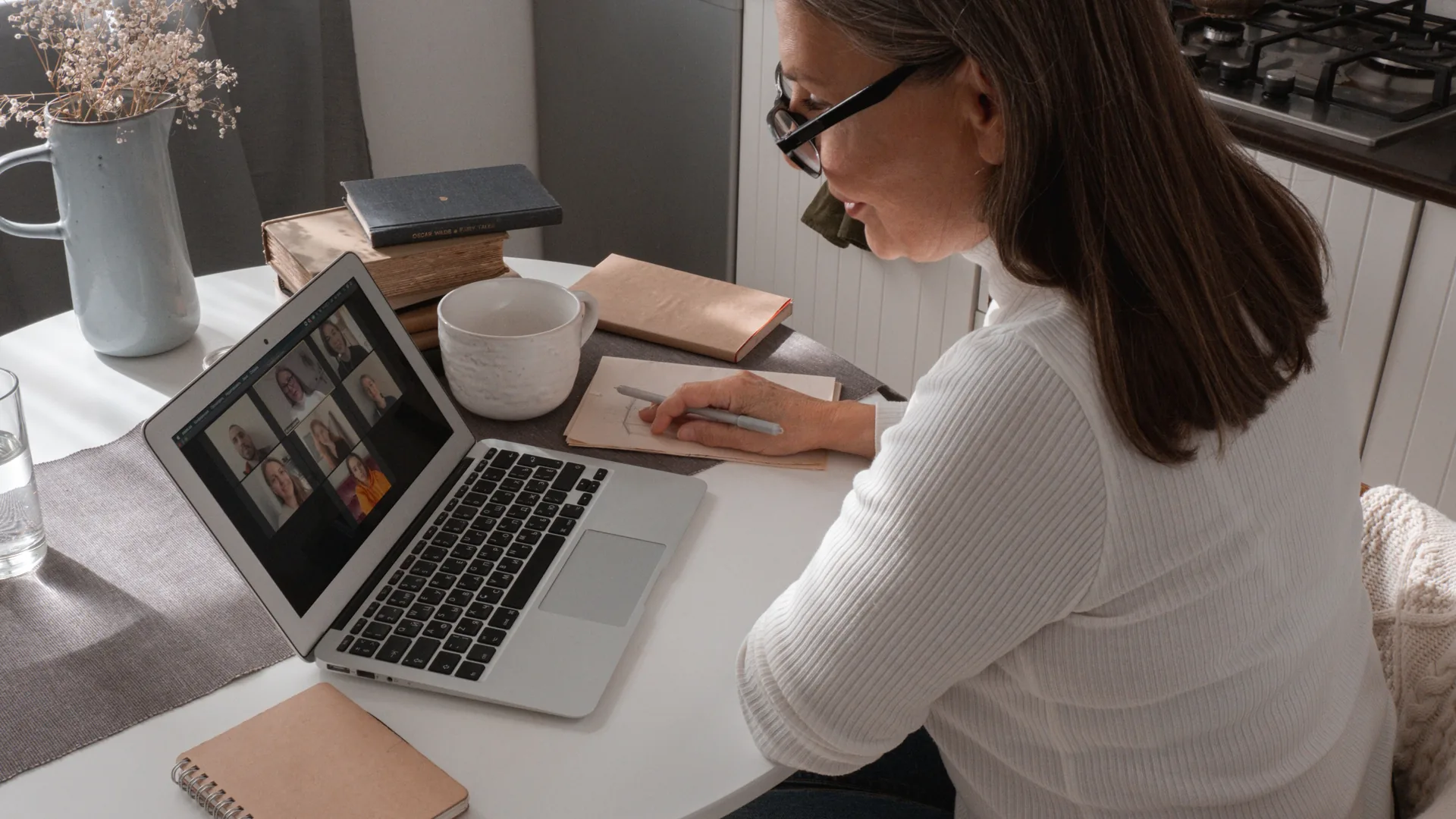
What the Mensa home test costs and what its result means
Two different Mensa products are sold as a home test: an online practice test from American Mensa and a postal Home Test from British Mensa. This page explains what each costs, takes and returns, why neither qualifies anyone for membership, how much weight a home result can carry, and whether paying for one before a supervised sitting makes sense.
British Mensa lists its postal Home Test at 45 minutes and 15 pounds, read on November 4, 2026.
0 The short answer
The Mensa home test is not one test: American Mensa sells a 30 minute online Mensa Practice Test, British Mensa posts a 45 minute Home Test for 15 pounds, and neither is a way into membership, which runs through a supervised sitting or, in the UK, prior evidence. Each result is an indication of how you might do, not an IQ score you can use anywhere. If you want an adult normed picture of where you stand by index before paying a society fee, ACIS offers Quick at 25 dollars (about 45 minutes), Optimized at 35 dollars (about 110 minutes) and Full Scale at 59 dollars (about 175 minutes), one time, with prices read on November 4, 2026 and open to change. The decisive limit is the same for every home route: an unsupervised result near the Mensa cut cannot be told apart from a result just below it, and ACIS is not accepted by any high IQ society and does not predict a pass.
30 minutes
Length American Mensa gives for its online Mensa Practice Test, read on its page on November 4, 2026.
45 minutes
Length British Mensa gives for its postal Home Test, which costs 15 pounds, read on November 4, 2026.
98th percentile
The level at or above which American Mensa says a qualifying score falls, read on its testing page on November 4, 2026.
1 What Is the Mensa Home Test, and Is There Only One?
There are two products behind the search "Mensa home test", sold by two different national organizations, and they differ in format, length, price, scoring and who may buy them.American Mensa's page for its practice product, which we opened on November 4, 2026, calls it "the online Mensa Practice Test" and describes it as a "30-minute test". The web address of that page still ends in "mht", and a checkout instructions page keeps "home-test" in its address, which is why searchers who remember the older name still arrive there. British Mensa uses the name directly: its shop lists the "Mensa Home Test" at 15 pounds, and its testing page, opened the same day, describes a 45 minute assessment that you do at home, send back and have marked.
Everything else follows from that split. The American product is taken on a screen and is bought online with a valid U.S. address, according to its page. The British product arrives by post: the shop says 10 working days should be allowed for delivery, that the price includes second class postage to the UK, that a freepost envelope is supplied for the return, and that results are sent by email, "usually within 21 days of receipt". A reader in a third country faces a third situation, because national Mensa organizations set their own testing rules. The pages on the Mensa Germany IQ test and the Mensa Denmark IQ test cover those two countries, and this page stays with the American and British products because those are the two we could open and date.
British Mensa also offers a free online workout, which readers sometimes treat as the home test. Its page says the quiz is "provided for entertainment purposes only", that it "is not an IQ test" and that the score "will not qualify you for Mensa". It runs 18 questions in 15 minutes, according to the same page, and it is the correct place to start if you only want a taste of the style. The separate page on the free Mensa IQ challenge covers the free challenge that Mensa International publishes, so it is not repeated here.
Neither Mensa organization describes its home product as an IQ test in the clinical sense. American Mensa speaks of "likelihood for success" on its admission test, and British Mensa speaks of an "indicative score". Those two phrases are the right frame for the rest of this page: a home test is a rehearsal with a rough read-out, and the real result comes from a different, supervised sitting.
2 What Does the American Mensa Practice Test Offer?
The American product is an online, roughly 30 minute practice test that Mensa says gives "a strong indication" of your likelihood of success on its admission test, and its own page states that it cannot count as qualifying evidence. American Mensa's practice test page, opened on November 4, 2026, says the test is about 30 minutes long and that it is "not mandatory for membership". It adds that the result "cannot be used as qualifying evidence of prior testing" and that the product can be purchased only with a valid U.S. address. A Mensa product listing for the same test, opened the same day, lists a price of 9.99 dollars and describes the content as including an English-based verbal section. American Mensa's second practice test page and its first page both note that promotional discounts appear in the shopping cart at checkout, so the amount you pay can differ from the listing. We print only the listed price, and we recommend reading the cart before you pay.
Two details matter to a buyer. First, the content is protected. The page states that the Mensa Practice Test is "copyrighted and strictly confidential" and the property of American Mensa, and that it "must not be reproduced in any manner". That sentence is the reason this page shows no sample item and links to nothing that does. Second, the page does not say what the result looks like. We looked for a score, a percentile, a band or a number of correct answers on both American pages and found only the phrase about likelihood of success. If you buy the test, you will see the actual format on screen, but a reader who wants to know in advance whether it returns an IQ number cannot learn that from the pages we opened.
The English-based verbal section deserves a second look. A verbal section that depends on English vocabulary and reading is a measure of crystallized knowledge as well as reasoning, and it is affected by the language a person grew up in and the schooling they had. The page on what different kinds of IQ questions look like describes the formats in general terms without showing real items. For a reader whose first language is not English, a home result built partly on English words can understate reasoning ability, and that is a limit of the format, not a statement about the person.
The price relation is the other point worth knowing: at the listed 9.99 dollars, the practice test costs a small fraction of the admission test fees in the next section. The question the rest of this page asks is what that fraction buys.
3 What Does the British Mensa Home Test Offer?
The British product is a postal test of 45 minutes that you complete at home and send back for marking, and it returns an "indicative score" by email that British Mensa says gives a good idea of how you might do on a full IQ test. British Mensa's testing page, opened on November 4, 2026, lists the Home Test at 15 pounds and 45 minutes. Its shop page for the product, opened the same day, adds that it is "packed with more than 80 stimulating Mensa questions", that the price includes postage in the UK, and that the completed test goes back to Mensa in a freepost envelope. The shop says only that the test "will then be marked", and it does not describe the marking method. It also does not say what the indicative score looks like, whether it is a raw count, an IQ-style number or a band, so a reader cannot tell from the pages we opened what number or range will arrive in the email.
The test is unsupervised by design. You take it at a kitchen table, with whatever interruptions the house offers, in a sitting you time yourself. British Mensa does not claim otherwise, and the use of the word "indicative" is its way of saying that. The conditions matter because a norm-referenced score assumes that everyone in the comparison group sat under similar conditions. The Standards for Educational and Psychological Testing (AERA, APA and NCME, 2014), which we read in the open access edition, state in Standard 6.1 that test administrators should follow the standardized procedures specified by the developer, and a comment under a standard in the chapter on psychological testing and assessment says that the interpreter of the results should be informed if a test was unproctored. A person who holds a home result should therefore describe it as unproctored whenever they quote it.
British Mensa's pages list two further options that readers confuse with the Home Test. The first is the supervised test, offered online and in person, which is the route to membership and is covered in the next section. The second is a newer page titled "Mensa Online IQ Test", which describes a remotely proctored sitting of two adaptive tests, one using diagrams and one using vocabulary, and which says the whole test is complete in less than an hour. That page does not mention the Home Test, and it states no price. Because the British testing page lists the online supervised test at 1½ hours while the newer page says less than an hour, the two descriptions do not agree on timing, and the booking page is the place to settle it. The page on the IQ test in the UK lays out the British routes and their costs for a reader who lives there.
The Home Test is also not the way to find out what you would score on a test you can pass to join: British Mensa's page lists membership as requiring "an IQ in the top two percent" demonstrated through a supervised test or prior evidence, and the Home Test is not named as either. The next section turns that into a plain answer for each country.
4 Does a Mensa Home Test Qualify You for Mensa?
No: in the United States the practice test is stated not to count as qualifying evidence, and in the United Kingdom membership runs through a supervised test or prior evidence, a list on which the Home Test does not appear.American Mensa's testing page, opened on November 4, 2026, describes two supervised routes. Local Group testing is proctored by chapter volunteers and listed at 60 dollars. Private testing is taken at "more than 400 approved testing facilities nationwide", listed at 99 dollars, and delivered electronically. The page says the test takes between one and two hours, that you need a photo ID with proof of date of birth, that you can take a test or battery once every eight weeks, and that a qualifying score means you have tested at or above the 98th percentile of the general population. The same page says Mensa does not provide a detailed report with scores, percentile ranks or an IQ score, and that the test is for admission, not for quantifying intelligence. Mensa's pages also say promotional discounts appear at checkout, and we print only the regular listed prices.
British Mensa's testing page lists the routes in a similar way. Membership requires "an IQ in the top two percent", shown through a supervised test, taken online or in person, or through prior evidence, such as a qualifying report from an educational psychologist. The online supervised test is listed at 49 pounds and 1½ hours, the in-person test at 49 pounds and 2¼ hours, and prior evidence at 49 pounds with an assessment time of four to six weeks. Applicants must live in the UK or Ireland. Those are the entries on the page, and the Home Test sits above them as a separate 15 pound product that returns an indicative score.
What the 98th percentile means in IQ units is a conversion Mensa's pages do not make. On the standard scale with a mean of 100 and a standard deviation of 15, the 98th percentile falls at about 131, which is our arithmetic from the normal curve and not a number from any Mensa page. The page on the score Mensa asks for owns that discussion, and the page on how rare a given IQ is turns any score into a "1 in X" figure. What matters here is the direction of the logic. A home test gives you a position on a rehearsal, the admission test gives you the pass or fail that counts, and no number moves from the first to the second.
For the full route from first search to membership card, the page on how to join Mensa owns the steps, and the page on what official IQ routes exist places Mensa among the others. The page on high IQ society requirements compares Mensa with the other societies and the evidence each accepts. A reader who wants to understand the cut score before paying anything will find that those three pages answer the question this page deliberately leaves to them.
5 What Does a Home Result Look Like, and What About Score Charts, Answers and PDFs?
The pages we opened describe the result only as an "indication" or an "indicative score", they publish no score chart or answer key, and any chart, answer sheet or PDF circulating online is not an official Mensa document. The three searches readers type most often, "Mensa home test score chart", "Mensa home test answers" and "Mensa home test pdf", ask for things that Mensa has not published on the pages we read. The American product is, in Mensa's words, "copyrighted and strictly confidential". The British product arrives and returns by post, so any PDF of it would be a copy of a protected document, not a Mensa download. The British shop page states that the test is marked by Mensa after you return it, which means the marking key is not in your hands either.
A score chart is a different matter from an answer key, and the difference is worth understanding. Turning a raw score into an IQ-style number requires a norm table, a document built from the scores of a reference group, and the table belongs to the test's publisher. The page on how IQ scores are normed explains why. A chart on a third-party site that claims to convert a raw Mensa home test score into an IQ either guesses at the publisher's table or reuses the norms of some other test, and in both cases the reader cannot check it. The same warning applies to charts that show what a "good" result is: the only honest statement from Mensa on the pages we read is that a qualifying admission score is at or above the 98th percentile.
The problem with answers is not only legal. The Standards for Educational and Psychological Testing (AERA, APA and NCME, 2014), in their chapter on fairness, say that unauthorized distribution of items to some examinees but not others could give those examinees an advantage, and that in those situations results should be interpreted with caution. Someone who studies leaked items before sitting a practice test produces a score that no longer says what the norm group's scores said. The result would feel good and mean little. If a practice test is meant to show how you read unfamiliar problems under time pressure, seeing the problems in advance defeats that purpose. The Standards add, in their chapter on test takers' rights and responsibilities, that some programs provide sample questions or complete sample tests when doing so does not jeopardize the validity of future results, and a legitimate practice product is exactly that: a sample provided by the publisher, not an answer key from a stranger.
We link no site that reproduces Mensa material and we show none ourselves. If you want to see what question types look like without compromising any live test, the page on IQ test questions by type describes formats, and the subtest pages of a normed battery show a format without exposing the items used to score you. The page on retaking an IQ test adds the point that seeing the same material twice changes the second score for reasons unrelated to ability.
6 Is the Mensa Home Test Accurate?
The accurate question is "accurate for what", because the home result is an indication of how you might do on a different test, and the pages we opened publish no reliability or validation figure for either home product. We looked for a reliability coefficient, a standard error, a norm group description or a study relating the home result to the admission result on all of the Mensa pages listed in the sources and found none. That is not proof that such work does not exist, and Mensa may hold it internally. It does mean that a buyer cannot check the claim "a strong indication of your likelihood for success" against anything published, and a careful reader should treat the phrase as a description of purpose, not as a measured accuracy.
There are three separate accuracy questions. The first is whether the home test measures the same things as the admission test. The pages say only that the American version includes an English-based verbal section, and the British pages do not say what the Home Test contains. The second is whether a home sitting is as reliable as a supervised one. Here general psychometrics speaks. The Standards (AERA, APA and NCME, 2014), in their chapter on fairness, say that unproctored administrations in which standardization cannot be ensured could provide an advantage to some test takers over others and that results should be interpreted with caution in such cases. The International Test Commission's guidelines on computer-based and internet-delivered testing, published in the International Journal of Testing in 2006, define an "open mode" as one with no direct human supervision and "hence no means of authenticating the identity of the test-taker", and a supervised (proctored) mode as one with a level of direct human supervision. The home products sit in the first group by design, and the admission tests sit in the second or beyond.
The third question is the one that decides whether the money is worth spending: how close to the Mensa cut does a home result put you? Two general principles apply. The standard error of measurement tells how much a score would move if the same person were measured again under equivalent conditions, and Standard 2.14 of the Standards says that where cut scores are used, standard errors should be reported in the vicinity of each cut score. The comment to Standard 2.16 says that when a test is used for classification, the standard error at or near the cut has important implications for the trustworthiness of the decisions. Put plainly, a person whose true standing is a little below or a little above the cut will be classified differently from one sitting to the next, and a short, unsupervised test widens that band.
An illustration makes the point. This is a hypothetical, not a statistic of any test: if a score carried a standard error of 4 points, a 95 percent interval around it would run about 8 points either side (1.96 times 4 is about 7.8). A home result of 131 would then be compatible with a standing anywhere from about 123 to 139, and the 98th percentile sits inside that range. The page on reliability and validity in IQ testing explains these terms, and the page on how to tell whether a score is real applies them to online tests in general.
What "indication" can and cannot carryA phrase such as "strong indication of your likelihood for success" is a statement about purpose, not a published validity coefficient. Without a published relationship between the home result and the admission result, nobody outside Mensa can say how strong the indication is, and a result close to the cut leaves the question open in either direction.
7 What Do the Home Tests Measure, in CHC Terms?
Mensa's own pages name only two things about content, a verbal section in the American product and, for its online test, diagram reasoning and vocabulary, so the honest CHC reading is fluid reasoning (Gf) and comprehension-knowledge (Gc) with the proportion unstated. The Cattell-Horn-Carroll framework treats broad abilities such as Gf and Gc as separate. Kevin McGrew's 2009 editorial in Intelligence describes CHC as the synthesis of the Cattell-Horn Gf-Gc model and Carroll's three-stratum model, and the page on the CHC model lays out the abilities with the vocabulary that the rest of this page uses.
Gf is the ability to solve unfamiliar problems by detecting relationships and applying rules without leaning mainly on learned facts. The ACIS page on Matrix Reasoning describes a visual pattern task of that kind and relates it to Gf. Gc is the knowledge of language and information acquired through schooling, reading and everyday exposure. The ACIS page on Vocabulary describes a definition task and relates it to Gc. Those pages show how such abilities are measured on ACIS, and they say nothing about what Mensa's products contain beyond what Mensa states. Mensa's own online page lists a diagram test and a vocabulary test, and the American product lists a verbal section, so the broad families overlap with what an ACIS user would meet. The overlap is in kind, not in items, and not in scoring.
What a short Mensa-style test leaves out is also part of the answer. A battery limited to reasoning with diagrams and words does not sample working memory, quantitative knowledge, visual spatial processing or processing speed as separate abilities, and an admission test that reports pass or fail reports no profile. That is acceptable for a membership gate whose purpose is one cut, but it limits what you learn about yourself. The pages on what IQ measures and on how to read a score explain how a single overall number summarizes abilities that differ, and why two people with the same total can have very different profiles.
The practical consequence for a buyer is that a person who is strong in reasoning with diagrams and weaker in English vocabulary, or the reverse, can expect a mixed picture on a mixed test, and the home result will not say which part pulled it up or down. A report that separates the abilities, such as an index profile, answers a different question from a pass or fail gate, and the two are not rivals. The gate decides membership. The profile tells you where you stand.
8 How Do the Home Tests Compare With the Other Real Options?
The options differ in who supervises, how long they take, what they cost and what you receive, and only the supervised Mensa sittings and prior evidence can open membership. The table sets the two home products beside the routes that count and beside the three ACIS forms. Every Mensa fact comes from an official Mensa page opened on November 4, 2026, and prices are the regular listed prices, which can change. Where a page did not state a fact, the cell says so. The ACIS prices were read on November 4, 2026. A psychologist's full battery is not priced here, because the page on what an IQ test costs owns that comparison.
Option
What it measures
Normed against whom
Supervised
Time
Cost, read November 4, 2026
What you receive
American Mensa Practice Test (online)
Includes an English-based verbal section; the rest is not stated
Not stated on the pages opened
No
About 30 minutes
9.99 dollars listed; promotions can apply at checkout
An indication of likelihood of success on the admission test; the format is not described
British Mensa Home Test (by post)
Not stated; more than 80 questions
Not stated on the pages opened
No
45 minutes
15 pounds including UK postage
An indicative score by email, usually within 21 days of receipt
British Mensa free online workout
Practice questions
None; it says it is not an IQ test
No
15 minutes, 18 questions
Free
A score that "will not qualify you for Mensa"
American Mensa admission test, Local Group
Not stated on the page opened
Qualifying at or above the 98th percentile of the general population
Yes, chapter volunteers
One to two hours
60 dollars
Admission result; no detailed report with scores or IQ
American Mensa admission test, Private
Not stated on the page opened
Same cut
Yes, approved facility
One to two hours
99 dollars
Result in days; no detailed report
British Mensa supervised test, online or in person
Not stated on the page opened
Top two percent
Yes
1½ hours online, 2¼ hours in person
49 pounds
Invitation to join if in range
ACIS Quick
6 subtests in 3 domains
Adult norms covering ages 16 to 90
No, online
About 45 minutes
25 dollars one time
Full Scale IQ with its 95 percent confidence interval
ACIS Optimized
13 subtests in 5 domains
Adult norms covering ages 16 to 90
No, online
About 110 minutes
35 dollars one time
Full Scale IQ with its 95 percent confidence interval
ACIS Full Scale
All 20 subtests in 6 domains
Adult norms covering ages 16 to 90
No, online
About 175 minutes
59 dollars one time
Six indices and a Full Scale IQ with its interval
Three readings follow. First, the two home products are the cheapest paid Mensa rows, and they are also the rows that say least about content, norms and the form of the result. Second, the supervised rows are the only ones that carry the pass or fail that counts, and they are also the rows that give no profile. Third, the ACIS rows are the opposite on both counts: they give a profile and an interval, and they carry no weight with any society. A reader who wants a longer map of routes, including psychologists and other publishers, will find it on the page about where to take an IQ test. The page that ranks online batteries is the guide to the best online IQ tests.
9 Is It Worth Paying for a Mensa Home Test Before a Supervised Sitting?
It is worth paying only if you want a rehearsal of the format and a rough read-out, and it is not worth paying if you want a verdict, because the arithmetic of cost is small while the information it adds near the cut is also small. Start with the cost, which is our arithmetic from the listed prices. In the United States, the practice test at 9.99 dollars added to the Local Group fee of 60 dollars comes to 69.99 dollars, which is about 17 percent more than the fee alone. In the United Kingdom, the Home Test at 15 pounds added to the 49 pound supervised test comes to 64 pounds, which is about 31 percent more. Those increases are modest, and a buyer who treats the practice product as a rehearsal can reasonably decide that it is worth it.
The information side is harder. The Standards for Educational and Psychological Testing (AERA, APA and NCME, 2014) note, in the chapter on test administration, that retesting policies exist to decrease the probability that a person will be incorrectly classified as not meeting some standard. Mensa's pages set retest limits of their own: American Mensa's page limits you to one test or battery every eight weeks, and its Mensa Online IQ Test page says that people who do not reach the 98th percentile can resit after six months. The pages we opened do not say what a repeat sitting costs. If the cost of a second attempt is the full fee again, then the practical choice for a person near the cut is between spending a small amount on a rehearsal now and spending the full fee after the waiting period.
The research on retesting adds a caution for the practice route. Jana Scharfen, Judith Peters and Heinz Holling's meta-analysis in Intelligence (2018) found significant retest effects, meaning that scores rise when a cognitive ability test is repeated, and no further gains after the third administration. Their abstract also reports that the size of the effect depends on the type of cognitive ability, the equivalence of the test forms, the retest interval and participant age. We read the abstract only, so we report no effect size. The reading that follows is general: a practice test taken first may raise a later score a little, but how much of that carries across to a different test form is not published for Mensa's products, and a person who takes several practice tests in a row may learn the format more than they raise their reasoning. The page on why a second score runs higher explains the mechanism in plain terms.
A simple decision rule follows from all this. Buy a home test if you are cost conscious, curious about the style and willing to read the result as a rough guide. Skip it if you already plan to take the admission test and want only the pass or fail, because the home result will not change what the admission test says. Do not buy it to show anyone: no society, employer or school accepts it, and the pages we opened say so for the American product and list no such role for the British one. If your real question is what your profile looks like, a normed adult battery answers it better than a rehearsal with a single indication.
There is a third reason to hesitate, and it concerns motivation. A person who scores below their hopes on a home test may stop, and a person who scores above may sit the admission test with unwarranted confidence. Neither reaction follows from the evidence. The only result that matters for entry is the supervised one, and the home result is best treated as one noisy observation, not as a forecast. The page on IQ tests for adults describes the options for a reader who wants a broader first look, and the page on a free IQ test online explains the free route.
10 How Should You Read a Home Result if You Have One?
Read it as a position in a reference group that nobody has shown you, with a range of error around it, and compare it with the 98th percentile by percentile and not by raw IQ-style label. If a home result arrives as an IQ-style number, the first question is which scale it uses. The most common convention gives a mean of 100 and a standard deviation of 15, and the page on why the standard deviation is 15 explains what that means. Other conventions exist, and a number from a different scale cannot be compared with one from this scale without conversion. If the result arrives as a band or a statement about likelihood, there is nothing to convert, and the honest reading is the one the publisher gives.
The table converts several standard scores to percentiles on an ideal normal curve. These percentiles are our arithmetic and are not taken from any Mensa or ACIS table. They show how thin the upper tail is near the Mensa cut.
Standard score (mean 100, SD 15)
Percentile on an ideal normal curve (our arithmetic)
115
84.1
120
90.9
125
95.2
130
97.7
131
98.1
135
99.0
140
99.6
The table shows two things. Between 130 and 131 the percentile moves from 97.7 to 98.1, which is why a single point near the cut separates a pass from a fail on the same curve, and why the standard error matters more than the label. And between 131 and 140 the percentile moves only from 98.1 to 99.6, so large differences in score at the top correspond to small differences in rank. The page on IQ scores versus percentiles explains why scores and percentiles cannot be averaged, the IQ score chart shows the ranges, and the IQ percentile calculator converts any standard score. Our table assumes an ideal curve, while a real norm group can differ slightly, so use it for orientation only.
Three habits keep a home result honest. Write down the conditions: where you sat, how long you took, whether anything interrupted you, and whether you had seen similar material before. State it as unproctored when you quote it, in line with the comment in the Standards chapter on psychological testing that interpreters should be told when a test was unproctored. And hold it apart from the admission test: the home result informs a decision about whether to sit, and the admission result is the decision itself. The page on what an IQ score means goes through interpretation in more depth, and the earlier discussion of precision explains what a range around a score can and cannot establish.
11 What Conditions Does an Unsupervised Session Need?
A home sitting is only as informative as its conditions, so create the conditions the instructions describe, and keep the same ones if you ever compare two results. Both Mensa home products are unsupervised, and the pages we opened give few details about conditions, so follow the instructions that come with the product exactly and treat anything they do not say as unknown. For the American online product, the conditions are those of a screen session: a device you can use without interruption and a stable connection. For the British product, they are those of a posted test: a quiet table, a clock you trust and enough time to finish without stopping, since the page gives 45 minutes as the length.
General rules help with any unsupervised test. Choose a time when you are rested and not rushed. Remove other screens and notifications. Do not look anything up, and do not ask anyone for help, since either would change what the score means. Do not split a timed test across sittings unless the instructions allow it. Keep a note of what happened, because a note taken at the time is more reliable than memory a week later. The Standards (AERA, APA and NCME, 2014) say in Standard 6.4 that the testing environment should furnish reasonable comfort with minimal distractions, and its comment adds that in general the testing conditions should be equivalent to those that prevailed when norms were obtained. A comment under Standard 6.1 goes further for unmonitored settings: where testing happens on the Internet or in other unmonitored environments, the report on scores should note that standardized conditions were not guaranteed. A sitting that departs from the instructions departs from that equivalence.
On an ACIS session the conditions are described on the site. Digit Span, Alphanumeric Sequencing and Arithmetic present their items as audio, so they need working sound. Breaks are allowed, progress is saved between subtests, and you have 30 days to complete a form. That flexibility fits an online battery of many subtests, where fatigue would otherwise distort a long session. It does not apply to a Mensa sitting, where the instructions govern. If you take any test at home and the setting was poor, the right response is to say so and sit again under better conditions, not to adjust the number by guesswork.
12 Where ACIS Sits, and What a Buyer Should Do
ACIS is an online, unsupervised, adult normed battery that can show where you stand by index before you pay a fee, and it is not a route into Mensa or any other society. ACIS has 20 subtests in six domains, and three forms: Quick at 25 dollars (6 subtests, about 45 minutes), Optimized at 35 dollars (13 subtests, about 110 minutes) and Full Scale at 59 dollars (all 20 subtests, about 175 minutes), each one time and without a subscription, with prices read on November 4, 2026. Every form reports a Full Scale IQ with its 95 percent confidence interval, and the Full Scale form adds six index scores, which the page on index score differences explains. The Custom Test lets a buyer pick subtests at 10 dollars each. The free trial needs no card, and a person may take one free trial. The guarantee, as the site states it, is "Full refund within 5 days if the report does not deliver the features described at checkout or a technical issue prevents you from accessing your results."
The limits are as important as the features. ACIS is online and unsupervised, and the site says it "is not intended for clinical diagnosis, hiring decisions, accommodation determinations or admission to high IQ societies", a statement on its page for research use. It is available in English only, and the technical manual, which you can read at the ACIS technical manual, says that verbal and knowledge tasks are affected by English proficiency and educational exposure. ACIS is not accepted by Mensa or any other society, it does not predict a pass, and no ACIS score substitutes for a Mensa sitting. What it can offer is a separate piece of information: an adult normed profile by index, with a range around the Full Scale IQ, from a sitting you control. The page on gifted testing for adults covers that kind of question for readers who want to know where they stand without a society's fee.
Read the evidence about score use the same way for every route. The Standards for Educational and Psychological Testing (AERA, APA and NCME, 2014) say that unproctored administration calls for caution, that the conditions of a sitting should match those under which norms were obtained, and that standard errors near a cut score bear on classification decisions. The American Psychological Association's APA Guidelines for Psychological Assessment and Evaluation (2020) say in Guideline 6 that psychologists select tools with sufficient validity evidence for their uses and appropriate to the purpose, population, setting and context. The same logic applies to a buyer who is not a psychologist: ask what the number is for before you pay for it. A home result is for rehearsal, a supervised result is for entry, and an adult normed profile is for knowing your own standing across abilities.
The next step depends on what you want. If you want to join Mensa, read what the score requirement is on the page about what score Mensa needs, then book the supervised test on the Mensa page for your country, and treat any home product as optional practice. If you want to see where you stand first, start the free trial with no card, open an example report, and decide on a form from there. Prices can change, so confirm them on the site before you pay.
Every Mensa fact on this page comes from the official Mensa pages below, opened on November 4, 2026, and every figure we calculated ourselves is labeled in the text as our arithmetic. Prices and policies on commercial pages change, so check the page before you pay. Where we read only an abstract, the entry says so. No competing test product is cited, and none is linked.
American Mensa (2026). Take the Online Mensa Practice Test, web page. Length, purchase restriction, qualifying status and confidentiality notice. Read on November 4, 2026. https://www.us.mensa.org/join/mht/
American Mensa (2026). Testing, web page. Local Group and Private testing fees, duration, the 98th percentile statement, the eight week limit and the absence of detailed score reports. Read on November 4, 2026. https://www.us.mensa.org/join/testing/
British Mensa (2026). Test Yourself, web page. Home Test, supervised test and prior evidence prices, durations and the residence rule. Read on November 4, 2026. https://www.mensa.org.uk/iq-test/
British Mensa (2026). Mensa Home Test, shop page. Price, postage, delivery time, return envelope, results by email and the age and marking notes. Read on November 4, 2026. https://mymensa.mensa.org.uk/shop/view/HT
British Mensa (2026). Online Workout, web page. The entertainment disclaimer, 15 minutes and 18 questions. Read on November 4, 2026. https://mensa.org.uk/online-workout/
British Mensa (2026). Mensa Online IQ Test, web page. Remotely proctored format, the two adaptive tests, the 98th percentile rule, results timing and the six month resit. Read on November 4, 2026. https://mensa.org.uk/mensa-online-iq-test/
American Educational Research Association, American Psychological Association, and National Council on Measurement in Education (2014). Standards for Educational and Psychological Testing. Washington, DC: AERA. Standards 2.14, 2.16, 6.1, 6.4 and 6.5, the comment on retesting policies, and passages in the chapters on fairness, test takers' rights and psychological testing. Open access edition read on November 4, 2026. https://www.testingstandards.net/open-access-files.html
International Test Commission (2006). International Guidelines on Computer-Based and Internet-Delivered Testing. International Journal of Testing, 6(2), 143 to 171. Definitions of open and supervised modes of administration, read in the Commission's PDF on November 4, 2026. https://doi.org/10.1207/s15327574ijt0602_4
Scharfen, J., Peters, J. M., and Holling, H. (2018). Retest effects in cognitive ability tests: A meta-analysis. Intelligence, 67, 44 to 66. DOI checked in Crossref; abstract read, full text not opened. https://doi.org/10.1016/j.intell.2018.01.003
McGrew, K. S. (2009). CHC theory and the human cognitive abilities project: Standing on the shoulders of the giants of psychometric intelligence research. Intelligence, 37(1), 1 to 10. DOI checked in Crossref; abstract fragments read, full text not opened. https://doi.org/10.1016/j.intell.2008.08.004
14 Frequently Asked Questions
What is the Mensa home test?
It is the name searchers use for two separate products. American Mensa sells an online practice test of about 30 minutes, and British Mensa sells a 45 minute test that arrives and returns by post. Both give an indication of how you might do on the supervised admission test and neither is that test.
Can you take the Mensa home test online?
Yes for the American version, which is taken on a screen after purchase and requires a valid U.S. address. No for the British version, which is posted to you and posted back for marking. British Mensa also runs a free online workout, but it states that the quiz is not an IQ test.
Is there a British Mensa home test?
Yes. British Mensa lists a Mensa Home Test at 15 pounds, including second class postage in the UK, with 45 minutes to complete it. You return it in a freepost envelope and Mensa emails an indicative score, usually within 21 days of receiving it. Membership still requires a supervised test or prior evidence.
Does the Mensa home test qualify you for Mensa?
No. American Mensa states that its practice test cannot be used as qualifying evidence, and British Mensa names a supervised test or prior evidence as the routes to membership. The home result is a rehearsal and a rough read-out. The result that counts comes from a supervised sitting at or above the stated cut.
Is the Mensa home test accurate?
Mensa publishes no reliability or validity figures for either home product on the pages we opened, so accuracy cannot be checked. Mensa describes the result as an indication of likelihood of success or an indicative score. Because it is unsupervised and short, treat it as a rough guide, especially near the cut.
Where can I find Mensa home test answers?
Mensa does not publish them. American Mensa says its practice test is copyrighted and strictly confidential, and the British test is marked by Mensa after you return it. Answer sheets found elsewhere are not official, cannot be verified, and would make your own result meaningless if you used them before sitting.
Is there a Mensa home test PDF or score chart?
Not from Mensa, on the pages we opened. The British test comes by post and the American one is taken online. Turning a raw score into an IQ-style number needs the publisher's norm table, so a chart from a third party is a guess or borrows another test's norms and cannot be checked.
How much does the Mensa home test cost?
The American Mensa listing shows 9.99 dollars on November 4, 2026, and its pages say promotions can appear at checkout. The British Home Test is 15 pounds including UK postage. Prices change, so read the cart or the shop page before you pay.
How long does the Mensa home test take?
American Mensa gives about 30 minutes for its online practice test. British Mensa gives 45 minutes for its Home Test, plus delivery time of about 10 working days and a marking wait of usually up to 21 days after receipt. The supervised admission tests are longer, between one and two hours or more.
What does the British Mensa Home Test result look like?
British Mensa says you receive an indicative score by email. The pages we opened do not say whether that is a raw count, an IQ style number or a band, nor what norm group stands behind it. Ask Mensa or read the email itself, and describe the result as unsupervised when you quote it.
Can you buy the American Mensa practice test outside the United States?
American Mensa's page says the practice test can be purchased only with a valid U.S. address. A reader elsewhere should look at the Mensa organization in their own country, because national organizations set their own testing products and rules. Germany and Denmark, for example, each have their own national organization.
What does the supervised Mensa test cost?
American Mensa lists Local Group testing at 60 dollars and Private testing at 99 dollars. British Mensa lists its supervised tests, online and in person, at 49 pounds each. These are regular prices read on November 4, 2026, and promotional discounts, which Mensa mentions, are not counted here.
What percentile does Mensa require?
Both organizations ask for the top two percent. American Mensa says a qualifying score is at or above the 98th percentile of the general population, and British Mensa asks for an IQ in the top two percent. On a scale with a standard deviation of 15, that is about 131.
Can you retake the Mensa admission test?
American Mensa says you can take a test or battery once every eight weeks. British Mensa's online test page says people below the 98th percentile can resit after six months. The pages we opened do not state what a repeat sitting costs, so check the booking page before you plan a second attempt.
Should I take the Mensa home test before the real one?
Only if you want a cheap rehearsal of the format and accept a rough result. It adds a modest share to the total cost, but it cannot change what the supervised test returns. If you only want the pass or fail, go straight to the supervised sitting and skip the practice step.
How should I read a home result near the Mensa cut?
Read it as one noisy observation. Near a cut, a few points of measurement error can place the same person on either side, and an unsupervised sitting widens that band. A result of 131 on a scale with a standard deviation of 15 neither confirms nor rules out the 98th percentile.
Can a free online IQ test tell me whether I would pass Mensa?
No test can promise that, and a free one even less so. A free online quiz usually has no stated norms and no supervision, and the cut is defined by Mensa's own supervised test. A free test can show a format or give a rough orientation, but not a prediction.
Does practicing raise my score?
Often a little. Research on retesting finds that scores rise when a cognitive ability test is repeated, with no further gains after the third administration, and that the size depends on the ability, the test form and the interval. Practice mostly teaches the format. Reasoning ability itself changes slowly.
What can ACIS tell me before I apply to Mensa?
ACIS can show a Full Scale IQ with its 95 percent confidence interval and, in the Full Scale form, six index scores, from adult norms covering ages 16 to 90. That is a picture of where you stand across abilities. It is an orientation before you pay a fee, not a forecast.
Is ACIS accepted by Mensa?
No. ACIS is not accepted by Mensa or any other high IQ society, it is not endorsed by them, and it does not predict a pass. It is an online, unsupervised battery. Admission requires the supervised test or prior evidence that the society itself names, and only that result counts.
What should I do after a home result?
Write down the conditions of your sitting, note the result as unsupervised, and decide whether the supervised fee is worth paying. If the result sits well above the cut, a supervised sitting is reasonable. If it sits near or below it, treat the number as uncertain and avoid reading more into it.
Take the assessment
You get a profile, not a number
ACIS measures six CHC domains across 20 subtests and reports each one with its own normed score and confidence interval, so you can see where you are strong and where you are not.